 BURST
BURST
QUEBEC — It will be a year of inevitable change if only because Quebecers must go to the polls in a general election Oct. 5, 2026 to elect a new government and a new premier.
But after the roller coaster political ride that was 2025, predicting how the politics of 2026 will unfold is a risky business at best.
Analysts who have examined the tea leaves agree. In an article produced for L’actualité magazine , Qc125 pollster Philippe J. Fournier warns Quebecers to “hang on to their tuques,” because the election year will be “thrilling,” with any possible number of outcomes.
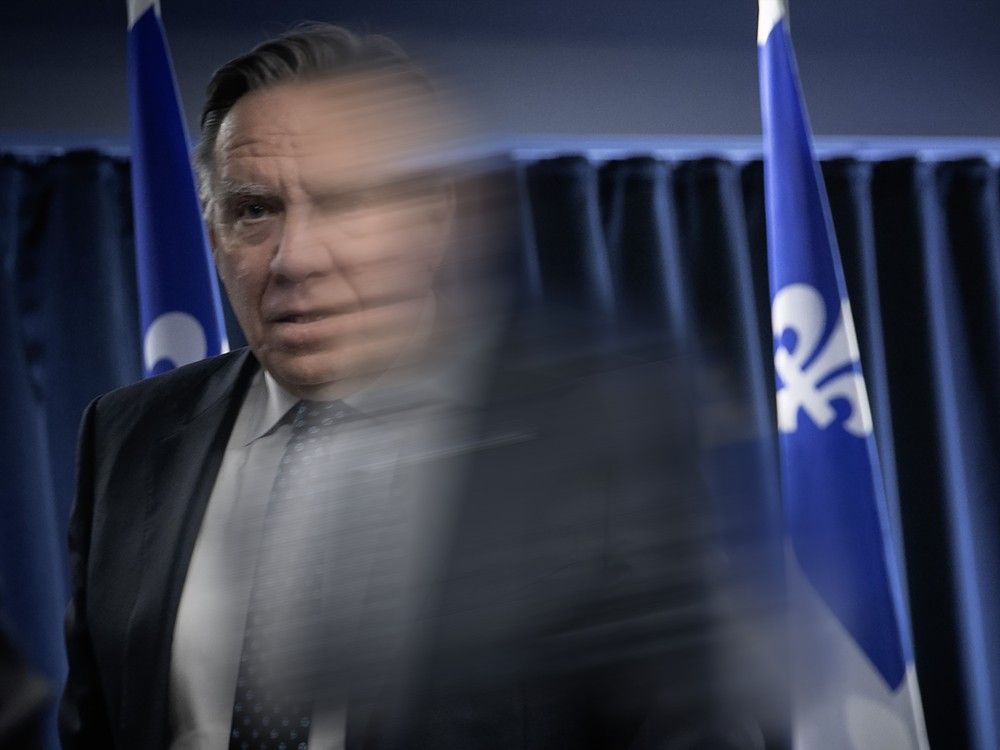
Fournier said that even before one big mystery on the political scene was solved with the announcement by Premier François Legault that he will step down . His departure is not immediate but he will leave politics once a new leader for the Coalition Avenir Québec party that he founded in 2011 is found.
After insisting over the last 12 months that he would seek a third mandate and launching a campaign in 2025 to jump-start his government, the looming trainwreck became too much of a reality .
His decision to leave brings the curtain down on 28 years in politics, including his early years in the Parti Québécois. First elected in 1998, Legault is the dean of the legislature until he officially leaves. The next in line for the title is La Peltrie CAQ MNA Éric Caire.
“For the good of the party and above all the good of Quebec, I am announcing today I will leave my post of premier of Quebec,” Legault told reporters Wednesday at a hastily called news conference in the lobby of his office near the legislature.
The departure was bittersweet for the 68-year-old Legault who had set his sights on an elusive goal: obtaining a third majority government. No party has managed this since Maurice Duplessis’ Union nationale which won four in a row between 1944 and 1959.
By leaving now, on his own terms, however, Legault avoids the humiliation of the October election becoming a referendum about him.
“Who wants to go to the slaughterhouse?” veteran Le Devoir columnist Michel David wrote Thursday. “The great majority of Quebecers may have wanted his departure but it has created an immense void in the political landscape.”
His departure has sparked, for the first time in the CAQ’s 15-year-history, a leadership race to replace him and already names of potential candidates have started to circulate.
On the short list as of Thursday are Municipal Affairs Minister Geneviève Guilbault, Economy Minister Christine Fréchette, Finance Minister Eric Girard, Education Minister Sonia LeBel, Environment Minister Bernard Drainville and International Affairs Minister Christopher Skeete.
As is to be expected this early, none of them have ruled out a possible run. The party itself has started the process of drafting the rules for the race. Officials said the CAQ wants a new leader in place “sooner than later,” and maybe by April because the clock is ticking to the election.
Despite Legault’s many statements that the government intends to respect Quebec’s fixed date electoral law, which sets the vote in October, there has been some speculation it might be tempted to go to the polls earlier, which is technically possible under the law if it invokes a good reason.
On the other hand, with the CAQ in a rebuilding process and in the dungeon in the polls, a hasty election might not be a good idea. The party might want to give the new leader time to find their footing and try and relaunch the CAQ which has been beset with low approval ratings for months now.
There is also no telling how much political damage the CAQ will suffer with the publication Feb. 13 of the Gallant Commission’s report into the SAAQclic scandal . This week Quebec’s Autorité des marchés publics (AMP), the province’s independent watchdog for the management of public contracts, issued a first blistering report into the scandal.
Under Legault’s watch, the government has also sparked the ire of Quebec’s doctors and labour unions, a climate the new leader must fix.
One theory is that Legault’s early step out of the limelight could actually be good for the CAQ because it removes him from the equation in much the same way the federal Liberals benefited from the departure of Justin Trudeau.

That might not be good for the poll-leading Parti Québécois, which has benefited from the population’s distaste for Legault and the CAQ.
That was certainly a factor in the PQ’s last three byelection wins in Jean-Talon , Terrebonne and Arthabaska . The PQ now has lost its main punching bag.
The Liberals might stand to benefit as well if, in the eyes of voters, the new CAQ leader does not have the same style of nationalist, ‘Quebec within Canada’ credentials that Legault successfully milked with great success even among federalists.
In other words, Legault’s departure raises questions about the future of the third option he peddled as an alternative to the quarter-century federalism-independence debate.
Will Quebecers in the next election revert to their old ways of choosing between the PQ and Liberal visions of the future?
The first challenge of whoever takes over the CAQ will be keeping the coalition of politicians of all stripes that Legault created together in such a context.
There is another key change in the landscape as a result of Legault’s decision. The resignation of 58-year-old Liberal leader Pablo Rodriguez in December and the likely election of 46-year-old Charles Milliard this year means Quebec is about to witness the arrival of a new generation of politicians.
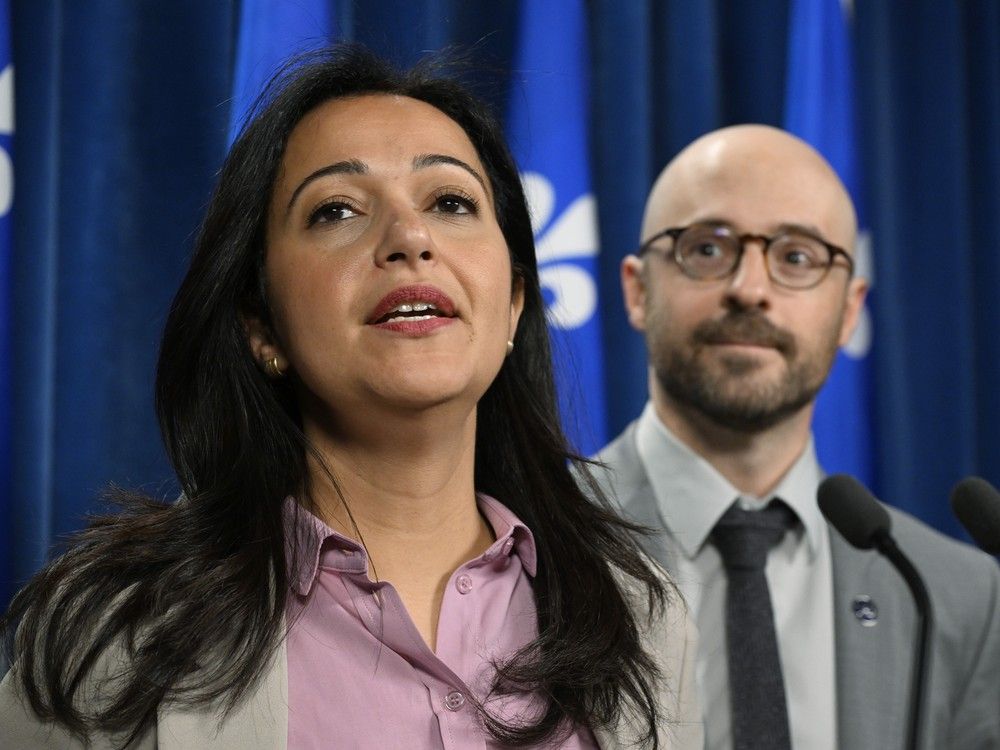
PQ Leader Paul St-Pierre Plamondon is 48, as is Québec solidaire co-spokesperson Ruba Ghazal — and her co-spokesperson Sol Zanetti is 43. Had he stayed, Legault risked having to fend off accusations he was the old leader of a tired old government.
Which leads to questions about the current health of those alternative parties: the Liberals, who form the official opposition with 18 seats in the legislature, QS which holds 11, the PQ which has six. The Quebec Conservatives have none.
To say the Liberals are starting the new year in chaos would be an understatement. The loss of Rodriguez after only six months on the job means a rebuilding process he initiated ground to a halt.
There are other challenges. Allegations of irregularities in party fundraising — in this case during the leadership race which saw Rodriguez elected — will continue to haunt the party in 2026 because a series of investigations, including one by UPAC, Quebec’s anti-corruption unit, are just getting underway.
The new leadership race the party kicked off this week will thus have to be squeaky clean if the Liberals hope to recoup the traction it lost in the tumultuous months of November and December.
Whoever becomes the new Liberal leader will have to move quickly: raise funds, develop a platform plus find candidates willing to stand for a party with a tarnished brand.
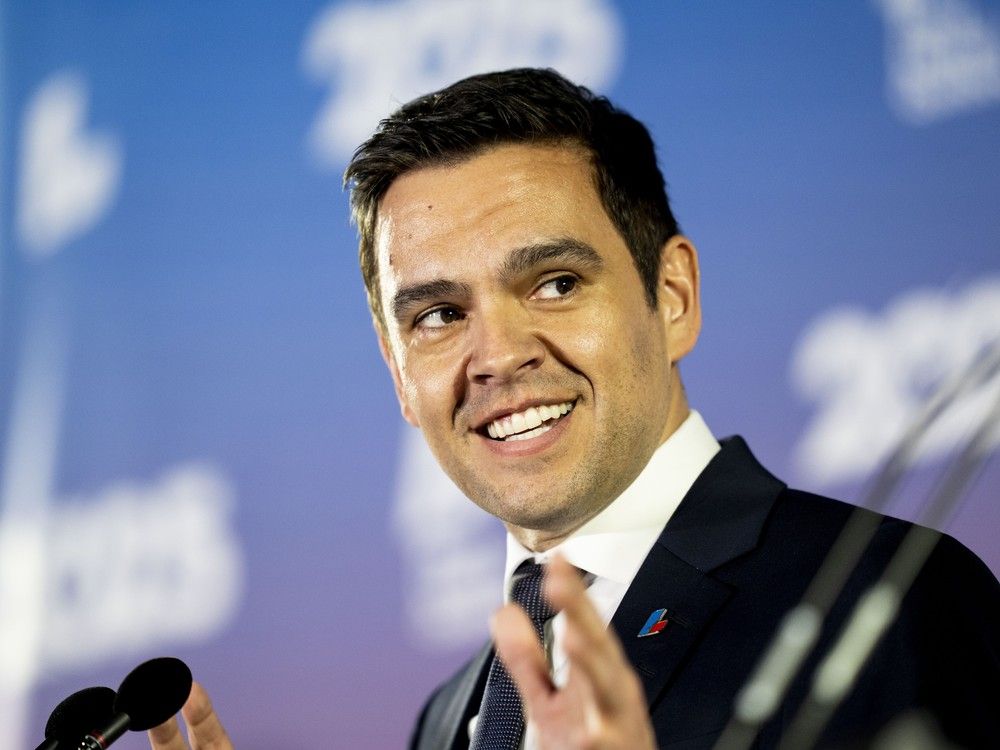
To date Milliard, the former president of the Fédération des chambres de commerce du Québec who placed second after Rodriguez in the last race, has announced he will run. Economist and farmer Mario Roy, who got less than one per cent of the vote in the 2025 race, says he wants to run again but it is unclear he will be eligible.
If there is a race, the Liberals will elect their new leader March 14.
For QS, the election will be a matter of survival and finding a way to move forward in Quebec’s shifting Quebec political landscape. The goal is to somehow become relevant to the average voter again.
QS has yet to really respond to the criticism tossed at it by departing QS MNA Vincent Marrisal as he walked out the door Nov. 22, 2025. Marissal, who is expected to land in the PQ in the new year, said QS has become increasing marginalized in the political spectrum and under the control of a radical pocket of members.
His comments were similar to those of former co-spokesperson Gabriel Nadeau-Dubois who has announced he won’t run again in 2026.
The party also has to find it way minus the presence of the party’s moral compass: Manon Massé. The MNA for the riding of Sainte-Marie–Saint-Jacques announced in October she would not seek re-election .
But all eyes in 2026 will be on what is now the smallest of the opposition parties in the house but one with a long history of showing it can govern Quebec competently: the PQ.
Well entrenched as a viable option for many francophone voters, polls consistently show Quebecers believe the PQ is the best placed to replace the CAQ as Quebec’s next government.
Being the front-runner, however, creates its own kind of pressure and that means St-Pierre Plamondon and the PQ face a year where all their actions will be under close scrutiny by the media and the other parties.
And then there is his plan to hold a third sovereignty referendum in a first mandate should the party take power. Historically, Quebec voters have show an ability to vote for the PQ as a vehicle for change, choosing to leave the tough question of the referendum as something to be decided on later.
St-Pierre Plamondon’s challenge will be to convince voters he can be trusted and that he has a solid plan to make Quebec a country in the event the PQ wins the election and proceeds with its plan.
A key weapon in his arsenal will be the imminent publication in January of the final chapters of the PQ’s Livre bleu d’un Québec souverain, which sketches out the PQ’s vision on everything from currency to the finances of an independent Quebec .
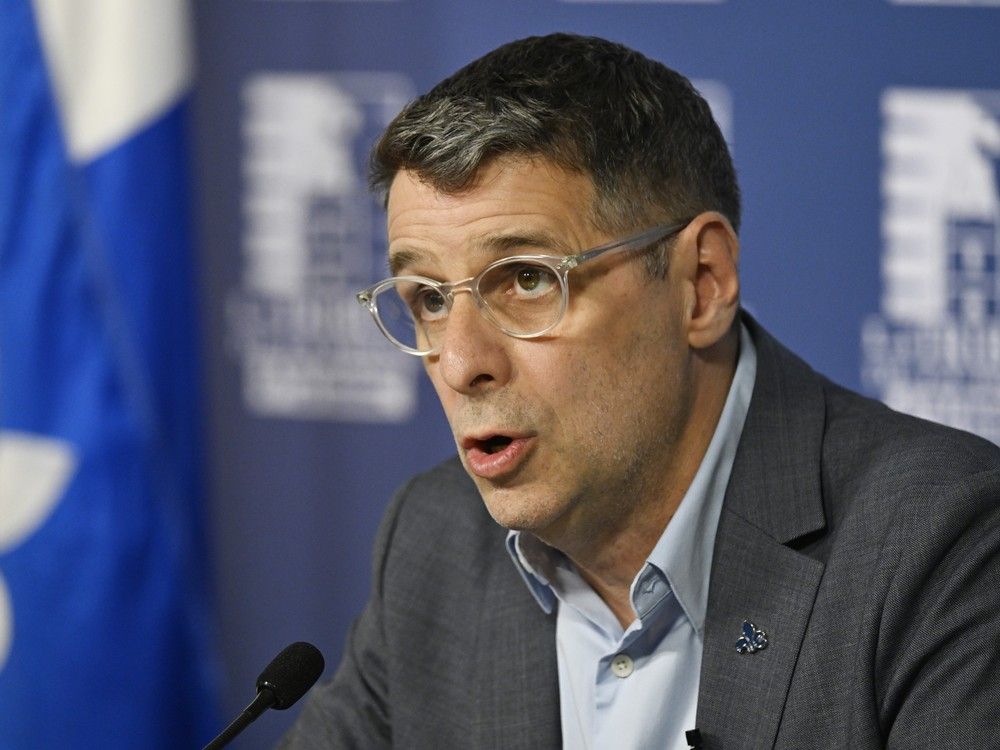
There is another politician who faces a big test in 2026: Éric Duhaime, leader of the Quebec Conservatives . His party desperately needs some kind of breakthrough — and that starts with winning a first seat in the legislature.
Duhaime has failed twice to get elected: in the riding of Chaveau in 2022, and last summer in the riding of Arthabaska. The loss in Arthabaska, a francophone rural riding in the central Quebec region, hurt in particular because the riding had the right profile for a Conservative win.
Benefiting from momentum in the polls, the PQ won the riding, elected former journalist Alex Boissonneault as MNA, leaving Duhaime still out in the cold.
Duhaime’s frustration has started to show, with him saying it is unjust that a party which won 12.9 per cent of the vote in 2022 does not have a representative in the legislature.
In 2025, Duhaime also made a play for votes from the English-speaking community by launching an ad campaign pledging “No referendum and no corruption.”
The five parties, however, get an opportunity to test the mood of voters before the election.
Legault has to call a byelection in the riding of Chicoutimi to replace former municipal affairs minister Andrée Laforest who quit in 2025 to run municipally. Legault has until March to call the vote.
The National Assembly resumes sitting Feb. 3.
Related