 BURST
BURST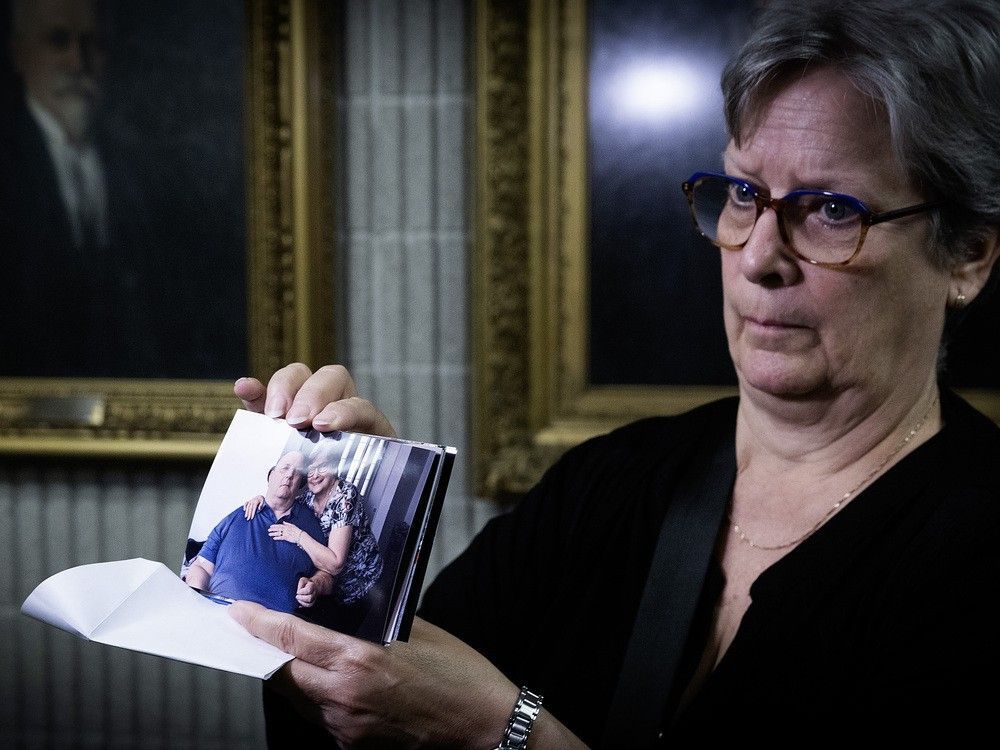
After examining the harrowing case of a 66-year-old quadriplegic who developed such severe and infected bedsores in Quebec’s hospital system that he opted for medical assistance in dying, a coroner has issued 31 recommendations to improve the care of spinal cord injury patients.
Normand Meunier, a truck driver by occupation, was 66 years old when he accessed MAID on March 29, 2024.
The report published Wednesday by coroner Dave Kimpton outlines Meunier’s harrowing experience at Sacré Coeur hospital in Montreal, St-Jérôme Hospital in the Laurentians, and Gingras-Lindsay Rehabilitation Institute of Montreal from January 2022 until his death two years later.
In the report’s introduction, the coroner pays tribute to Meunier’s spouse, Sylvie Brosseau, who worked tirelessly to advocate for proper care for her husband, often in vain.
“It is now undeniable to me, after this research, that the body of someone with a spinal cord injury speaks a different language, and that health care professionals must learn to decode it if they are to anticipate and effectively manage medical complications,” Kimpton writes.
Brosseau, he writes, “had acquired, in the years preceding his death, an understanding of her husband’s body language and was thus able to recognize warning signs. She acted like a true warrior in a very difficult battle.”
Kimpton said he is deeply concerned for other patients with spinal cord injuries who may not be lucky enough to have such devoted support.
In an interview, Meunier’s spouse said she was glad the coroner described the plight of caregivers.
While workers from the CLSC who came to her home worked with her “as a team,” she said she was ignored by the health care professionals in the hospitals.
For example, she knew and told hospital staff repeatedly that her husband needed a special therapeutic mattress urgently to prevent bedsores. Bedsores, also called pressure wounds, are lesions caused by lack of blood flow and are common in people with limited mobility.
At one point, in January 2024, her husband spent five days on a stretcher in the emergency ward at St-Jerôme Hospital, a situation that severely worsened his condition, the coroner noted.
“Passing 96 hours on a stretcher is unacceptable for any patient, and for Normand who was even more vulnerable, it was unthinkable. And they completely ignored us,” Brosseau said.
She said that in the half dozen or so times her husband was hospitalized over the last two years of his life, he was given a proper therapeutic mattress only once. All the other times, the mattress was ordered but never arrived before he was sent home. She said a special mattress adapted specifically for Meunier was ordered in the fall of 2022 by the rehabilitation centre, but it didn’t arrive until after his death.
Meunier had no sensation below the chest, but Brosseau said he experienced pain from bedsores nonetheless. “I will tell you with the last bedsore that he had at the hospital, his suffering was immense. There were no positions, left or right, that he could tolerate.”
Brosseau plans to sue Santé Québec, the government agency responsible for managing Quebec’s public health and social services network, for damages and interest, her lawyer Patrick Martin-Menard announced Wednesday. He added that he and MEMO-Québec, an organization that advocates for spinal cord injury patients, are also considering the possibility of filing a class-action suit.
“We know there are patients all across Quebec that have lived through similar experiences as Mr. Meunier,” Martin-Menard said. ”The coroner underscores issues that are systemic in their nature. This not only pertains to St-Jérôme Hospital. It pertains to the system as a whole.”
“We know that every day in the health care system there are people who are at risk of developing pressure wounds who go to the hospital and do in fact develop pressure wounds because either they were not able to have timely access to a therapeutic mattress or the personnel responsible for putting in place basic measures to prevent pressure wounds neglected to do so.”
Kimpton’s recommendations for Santé Québec, Quebec’s health department, the integrated health and social services centre of the Laurentians, and several health care professional orders, relate to pressure wound prevention, adapting hospital environments for spinal cord injury patients, staff training, and the importance of a coherent and proactive approach to care.
MEMO-Québec issued a statement Wednesday noting that Meunier’s situation is not an isolated case. Since 2023, at least 12 members of MEMO-Québec who have requested MAID were experiencing situations directly related to a lack of care, primarily concerning pressure ulcers.
“The coroner’s investigation showed that Mr. Meunier required specialized oversight, rigorous preventive measures (against pressure sores) and rapid access to adapted therapeutic mattresses” during his hospital stays and at home, it said. “His pressure wounds developed and worsened in the hospital milieu, revealing important issues: incomplete risk evaluations, insufficient documentation, irregular mobilization of the patient, delays in obtaining essential material and delayed access to wound care experts.”
What the coroner said
Here is Normand Meunier’s experience in Quebec’s health system, as described by coroner Dave Kimpton:
In January 2022, Mr. Meunier developed progressive paresis (muscle weakness) of all four limbs, a condition caused by severe spinal cord compression at the C3-C4 and C5-C6 vertebrae. On Feb. 25, 2022, Meunier underwent cervical decompression and fusion surgery at Sacré-Coeur Hospital in Montreal. Four days later, he contracted COVID-19 and received treatment including anticoagulants.
During the night of March 8-9, 2022, he experienced neurological deterioration, and a tense epidural hematoma that caused complete quadriplegia. While at Sacré-Coeur, Meunier also developed a lung infection, difficulty swallowing and the first pressure sore appeared on his buttocks. After stabilization, he was transferred to the Gingras-Lindsay Rehabilitation Institute of Montreal (IRGLM) on April 21, 2022, for rehabilitation.
At the rehab institute, Meunier developed three more serious wounds on the sacrum (a bone at the base of the spine), and on his pelvic bone. He developed a bacterial infection of the urinary tract that spread into his bloodstream in August 2022, and a second COVID-19 infection, complicated by pneumonia in October 2022.
On Nov. 18, 2022, he was discharged from the IRGLM to Sacré-Coeur Hospital, and returned home on Dec. 21, 2022.
Meunier’s personalized care plan emphasized the crucial importance of a specialized mattress designed to prevent bedsores and mobilizations every two hours to preserve skin integrity, the report notes.
On Jan. 3, 2023, Meunier was readmitted with a lung infection, a soft tissue infection of the incision wounds, and infection of the pelvic bone. He was sent home on Jan. 20, 2023, where he received home care by the Lafontaine CLSC, but his condition continued to worsen.
A specific therapeutic mattress costing several thousand dollars was recommended, but not provided, Kimpton writes. A less suitable bariatric mattress was provided, but Meunier again had to be hospitalized in March and May 2023 for a bacterial infection of the skin and tissues. This necessitated debridement, a medical procedure to remove dead and damaged tissue.
Between December 2023 and February 2024, three successive hospitalizations at St-Jérôme Hospital mark a progressive deterioration of his pressure sores. During one of those hospitalizations, in January 2024, “Mr. Meunier remained in the emergency room for five days on a stretcher without a suitable therapeutic surface due to hospital overcapacity,” the report explains, a situation that worsened his pressure sores considerably.
On Feb. 5, 2024, a physician performed “extensive debridement down to the gluteal muscles, noting in his post-operative report the poor prognosis for healing and the lack of a viable surgical option to close the wound.”
Meunier’s final hospitalization at St-Jerôme Hospital from Feb. 22 to March 5, 2024 was “marked by persistent difficulties accessing the therapeutic surfaces despite the spouse’s protests,” Kimpton writes.
A second debridement procedure on March 1 revealed acute bone infection of the sacrum. During this final hospitalization, Brosseau hired a private caregiver to remain with Meunier at all times because she had lost faith in hospital staff.
Faced with a grim prognosis and no hope for recovery, Mr. Meunier made a request for medical assistance in dying (MAID) on March 4, 2024, and returned home. On March 29, 2024, at Meunier received MAID at his home.