 BURST
BURST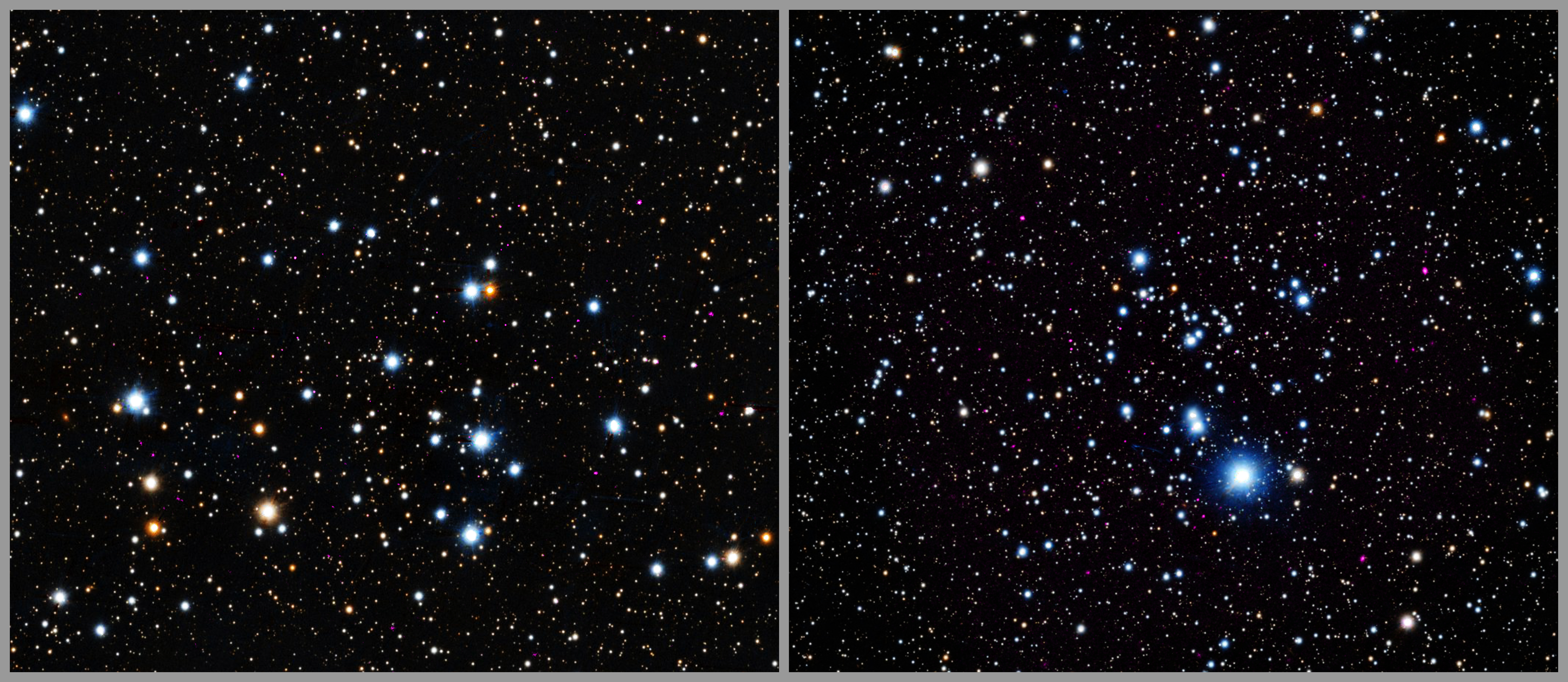
These images, released on April 14, 2026, show two open star clusters, Trumpler 3 (left) and NGC 2353 (right). They represent a recent study from NASA’s Chandra X-ray Observatory that shows how young Sun-like stars are dimmer in X-rays than previously thought.
This latest study looked at eight clusters of stars between the ages of 45 million and 750 million years old. The researchers found that Sun-like stars in these clusters unleashed only about a quarter to a third of the X-rays they expected. This quieting of young stars is a benefit for the prospects for life on orbiting planets around these stars — not a threat.
Learn more about what this finding means.
Image credit: X-ray: NASA/CXC/Penn State Univ/K. Getman; Optical/IR: PanSTARRS; Image Processing: NASA/CXC/SAO/N. Wolk