 BURST
BURST
The B.C. government will not be suspending parts of its signature reconciliation law this session, following an uproar from First Nations leaders and concern from some members of the NDP’s own caucus.
In a statement to reporters Sunday evening, Premier David Eby’s office said it “can confirm that the government will not be introducing legislation on [the Declaration on the Rights of Indigenous Peoples Act] during this session.”
Instead, Eby will be holding a press conference on Monday to “outline next steps.”
The Declaration Act, also known as DRIPA, was passed unanimously by the legislature in 2019 and aims to align provincial laws with the United Nations Declaration on the Rights of Indigenous Peoples, which outlines how treaties and free, prior and informed consent should be handled.
Eby announced he would be making amendments to the legislation in December after the B.C. Court of Appeals ruled that the province’s Mineral Tenure Act was “inconsistent” with DRIPA, as it did not provide for First Nations to have free, prior and informed consent on mineral tenure claims.
The premier has said this decision leaves the province vulnerable to further challenges of provincial laws and that 20 court cases have already been amended to cite the December Gitxaała decision.
Amid anger from First Nations, Eby switched course at the beginning of April from promising to amend DRIPA, with changes that First Nation leaders said would have gutted the legislation, to suspending it for three years while the province appeals to the Supreme Court of Canada.
Initially, the legislation was going to be a confidence vote, meaning that if it failed the province would be forced into an election, with the premier saying it was “non-negotiable.”
But last week, Eby and government house leader Mike Farnworth announced it would no longer be a matter of confidence after Vancouver-Strathcona MLA Joan Phillip, whose husband is Grand Chief Stewart Phillip of the Union of B.C. Indian Chiefs, informed the premier she would not be able to support the suspension or amending of DRIPA.
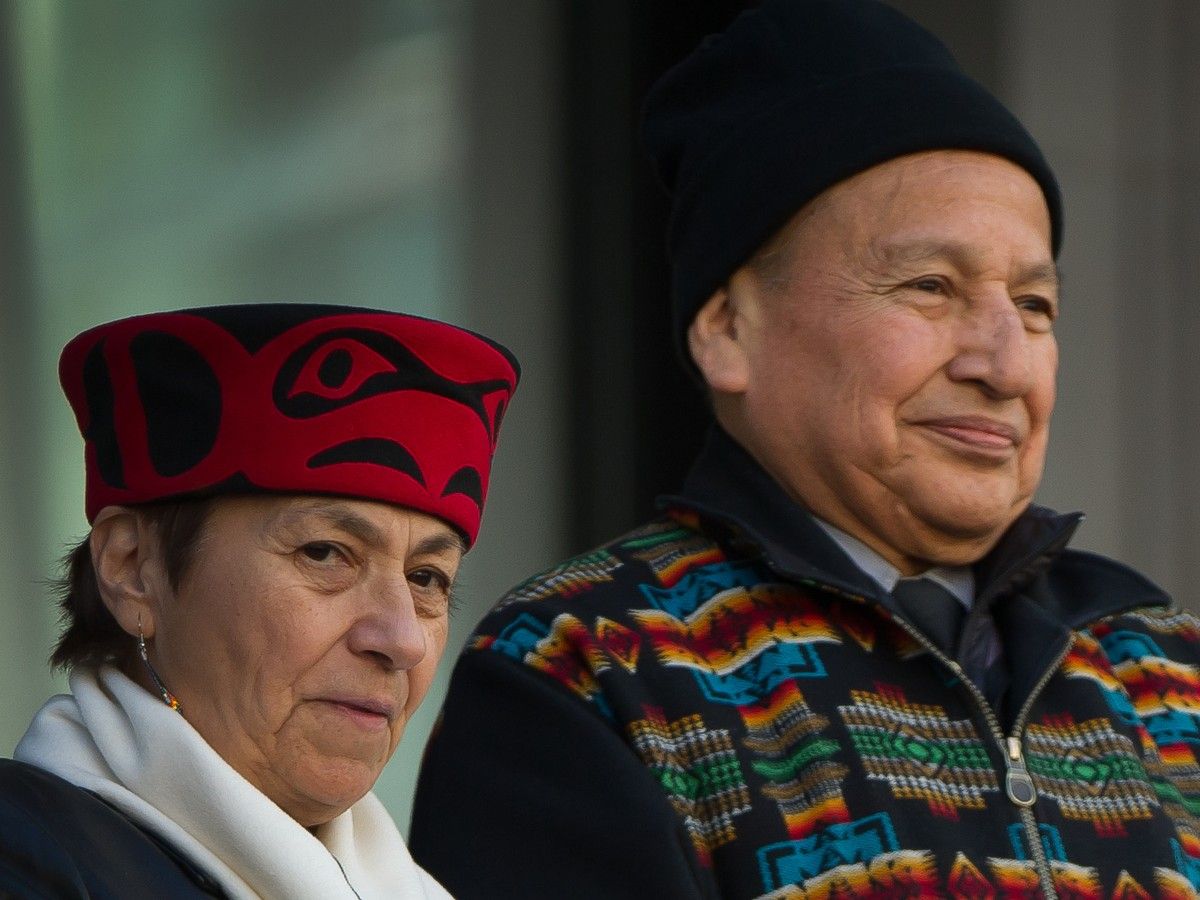
This left the NDP, who only have a one-seat majority in the legislature, a vote short of the required 47 needed to pass the bill.
Sources have also told Postmedia that more than 10 NDP MLAs voiced concern about the suspension of DRIPA at a caucus meeting last Saturday.
Despite this, Eby was saying as recently as last Monday that the legislation would still be brought in this session, which ends May 28, and that the government would be willing to extend the sitting into June to provide enough time to debate the bill.
As recently as Sunday, the First Nations Leadership Council was warning that it had been provided information that suggested the government was readying to introduce the legislation to suspend DRIPA this week.
It urged MLAs to voice their opposition to suspending DRIPA to the premier and oppose any legislation that gets brought forward.
“Our message to MLAs is simple: if you choose to support efforts to weaken these Acts and our co-developed framework for constitutionally required reconciliation, you are not avoiding legal risk – you are increasing it,” wrote the council.
“First Nations around the province have made their position clear – attempts to unilaterally suspend or repeal DRIPA and the Interpretation Act will invite legal challenge.”
Former NDP cabinet minister Melanie Mark, who is Nisga’a, Gitxsan, Cree and Ojibway, posted on her social media that she had also received the same information and urged her former colleagues to oppose the premier’s efforts and to “have the courage and integrity to stand up for DRIPA as we did in 2019.”