 BURST
BURST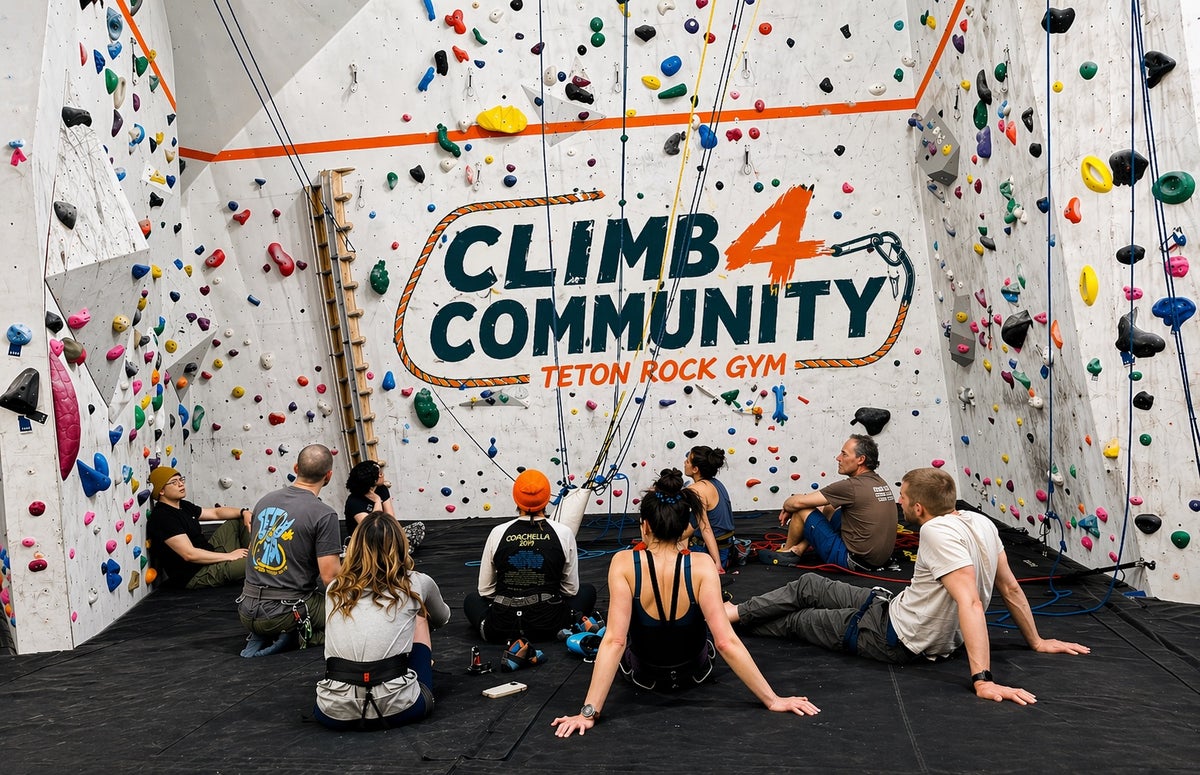
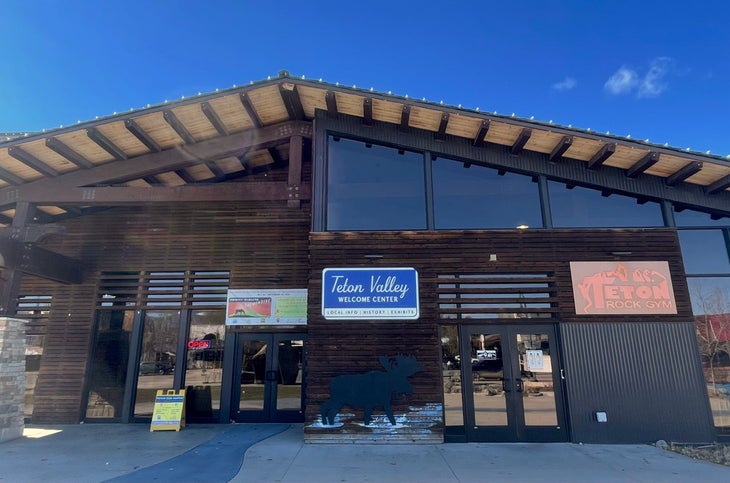
The long-brewing saga of a small town climbing gym in Idaho entered a new chapter this week, when the Driggs City Council voted on May 19 to terminate the gym’s lease. Teton Rock Gym, a nonprofit, has long operated out of a city facility with below-market rent.
Conflict over the nonprofit gym has embroiled the small town of Driggs. The town’s 2,600-some residents have been divided between those who support the gym and its leadership and those who feel that it has been mismanaged for years.
This past Tuesday wasn’t the first time that the Driggs City Council faced the decision of whether to continue offering Teton Rock Gym space within a city building. The measure has come before the council several times over the past six months, since the gym’s lease expired and it moved to a month-to-month agreement. On November 18, 2025, the decision resulted in a tie. Mayor August Christensen broke the tie with a nay vote.
As the fight over Teton Rock Gym reaches a tipping point, the situation reflects a broader tension playing out across climbing. As the sport grows, questions emerge around the role that local climbing spaces serve in their communities. Should gyms act as an accessible entry point for beginners and kids to learn how to climb? Or should they be a place for youth and other performance-oriented climbers to train and compete? Could they function as a hub for the entire climbing community? Ideally, a small town gym might check all these boxes. However, when resources are limited, what’s the most important function of a small town gym?
How did the conflict over Idaho’s Teton Rock Gym start?
As we reported in December, the drama surrounding Teton Rock Gym largely dates back to a conflict between Jacob Yufa, the long-time executive director, and Brady Johnston, the gym’s founder and a former board member.
Personal tensions aside, the other root of the turmoil can be traced to differing perspectives around the role that the gym should play in the community. Johnston and many of his allies wanted the Teton Rock Gym to serve as a hub for the Driggs climbing community, with support for youth competition, a sharper focus on routesetting, and expanded hours, among other things. Meanwhile, Yufa and his supporters have led the gym with a more distinct focus on recreational indoor climbing and recreational youth programming.
Clashing visions for Teton Rock Gym ultimately led to the ban of six local residents from the facility. This in turn precipitated a petition for a tidal shift at the gym signed by over 100 members last April.
Allegations of a conflict of interest
Last fall, one of the members who was banned from Teton Rock Gym, Sarah Johnston—the wife of founder Brady Johnston—ran for Driggs City Council. She was sworn in on January 6, 2026. On May 19, Johnston, along with city council members Jason Popilsky and Miles Knowles, voted to terminate Teton Rock Gym’s lease. Council member Allison Michalski cast the only “nay” vote.
Michalski noted that she was concerned about Johnston harboring a conflict of interest in the vote. She called Johnston’s decision to vote an “abuse of power.”
However, in the May 19 meeting, the Driggs city attorney, Sam Angell, stated that after reviewing the facts provided to him regarding Johnston and the lease termination decision, he did not think she held a conflict of interest under Idaho law. “I do not believe there is a direct conflict of interest,” Angell stated in the meeting. “I think it’s close. My advice on close calls oftentimes is that one should recuse oneself, but that is up to the council member to decide.”
Yufa told Climbing that Sarah Johnston’s husband, Brady, has been involved in a new local climbing organization called Victor Rock Park. While Mayor Christensen told Climbing that she hadn’t heard of the Victor Rock Park, Yufa claims that the organization has “stood at city council and expressed interest in taking this space,” referring to the area where his gym currently operates. Records show that Victor Rock Park was incorporated as a registered 501(c)(3) nonprofit in February 2026.
Seth Weinert, one of the six people banned from Teton Rock Gym, told Climbing that he sees the decision as much broader than just one individual. “It felt more like the culmination of a long period of tension between how the facility was being operated and what many in the community believe a publicly supported recreation space should be,” Weinert said.
For Johnston’s part, in the meeting, she stated that neither she nor her husband “has any monetary gain or loss as a result of the city’s action.” She added that she did not “have any personal bias” that would obscure her judgment on the vote.
Will Driggs become an indoor climbing desert?
In the aftermath of the vote, some Driggs residents started a petition to save the Teton Rock Gym. The online petition calls for the appointment of local board members. Currently, the gym’s board is comprised of three members, two of whom live out of state. Nearly 300 individuals have signed the petition to date.
“I’ve heard concerns that two of the three board members live in a different state and ‘I can’t even get a hold of them,’” Mayor Christensen explains.
Weinert, one of the banned members, added that it’s become “increasingly clear” that “many people no longer view the TRG board and leadership as effective stewards of that vision.” He says the issue isn’t whether the community wants a gym, but whether the gym with its current leadership can effectively serve the community.
If Teton Rock Gym closes, Driggs loses its only climbing gym and along with it, access to youth programs, training equipment, and a popular spot for birthday parties. But as some see it, if the gym closes, they gain the long-term opportunity to create a new facility in its stead that better serves the needs of a variety of climbers in the area.
As residents organize to shift the gym’s leadership with the goal of saving the gym, Yufa is scrambling to find a new home within a month. He says he had worked with the city staff to request that if the lease were terminated, they would have at minimum six months to adequately wrap up operations and avoid cancelling programs for which youth are already enrolled.
While Yufa was not present at the May 19 meeting, the Driggs city administrator and Mayor Christensen passed along this timing request for consideration to the city council. The council opted to give the gym 30 days to conclude operations, though Mayor Christensen noted that additional time would be provided for Yufa to remove all equipment from and decommission the gym.
For his part, Yufa had anticipated that the city would renew the gym’s lease in the May 19 meeting. Yufa had put a staff report on the agenda, requesting an even longer lease term of upwards of 15 years. He told Climbing that he was “extremely surprised” by the vote—he had been working closely with the mayor and city staff on new policies.
Teton Rock Gym has until June 19 to find a new facility and avoid an interruption in service. Yufa says he is exploring every option possible to keep the gym open—though he doesn’t feel optimistic given the compressed timeline. He adds that he is not considering litigation at this time because it would be “a waste of everyone’s time and money.”
As Teton Rock Gym searches for new spaces in the community, Driggs likely faces at least temporary status as an indoor climbing desert, with the nearest gym over an hour away in Jackson Hole. The idea of a climbing gym desert may seem trivial—compared to a food desert, a healthcare desert, or a broadband desert, for example—but in a mountain town where people center their lives upon adventure, the lack of indoor climbing will be sorely felt.
“This is not a win for anybody to not have a rock gym,” Mayor Christensen says.
“I’m really, really sad for all the people who in our community who love Teton Rock Gym and are going to lose this resource,” adds City Council Member Michalski. “I’m grieving the loss for our community like so many other folks here in Driggs.”
As we reflected in December, the conflict illustrates the growing needs and divisions among climbers as the sport expands. The situation in Driggs begs the question: With limited resources, how can climbers come together across disciplines, priorities, and interests to find indoor climbing solutions that work for the whole community?
This is a developing story that will be updated as new information becomes available.
The post The City of Driggs in Idaho Votes to Terminate the Lease of Teton Rock Gym appeared first on Climbing.