 BURST
BURST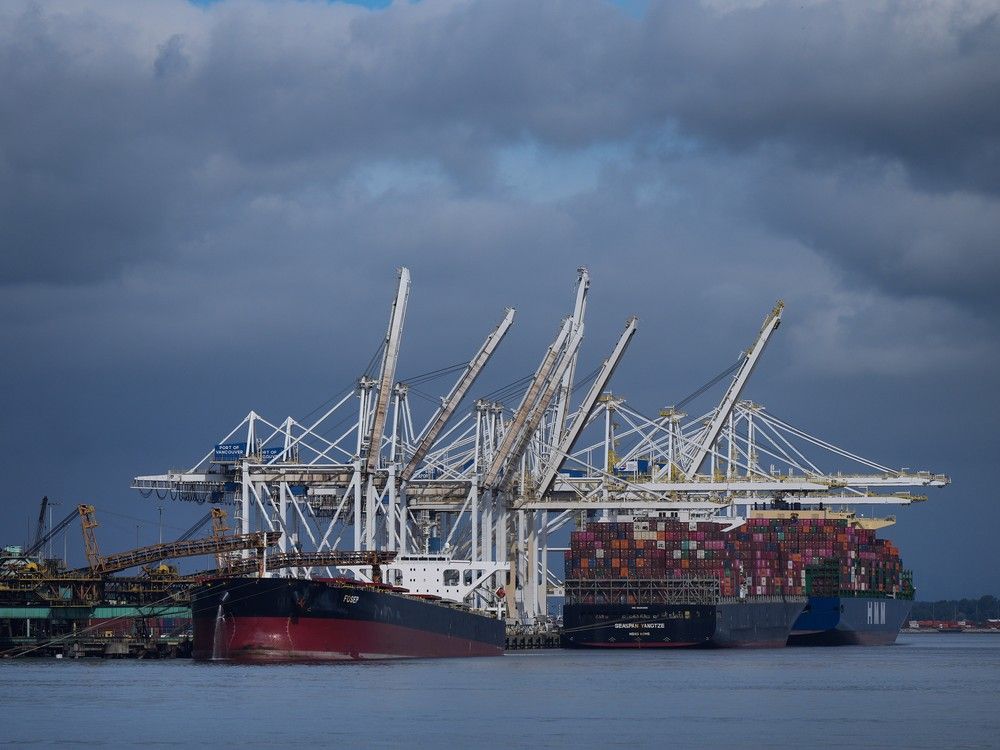
Conservation groups in B.C. are warning that building a new bitumen pipeline from Alberta to a tidewater terminal at Roberts Bank in the Lower Mainland wouldn’t be a less contentious option than a new pipeline on B.C.’s North Coast.
Alberta is weighing the technical details of three routes, including one to the Lower Mainland, which could be seen to sidestep Canada’s moratorium on oil tanker traffic on B.C.’s North Coast as it puts a pipeline proposal together under the agreement signed with Ottawa.
A new terminal at Roberts Bank in Delta, however, would layer the impacts of another major project on a sensitive environment that is already stressed by existing development, groups such as Ecojustice contend.
The Port of Vancouver’s $3.5 billion Roberts Bank Terminal 2 project, which is slated to add a second terminal to double container traffic at Deltaport, was approved in 2023 with acknowledgment that the development would cause “adverse residual and cumulative effects” on juvenile chinook salmon and endangered southern resident killer whales.
A Federal Court judge, in 2025, dismissed an appeal of that decision by conservation groups, but a lawyer from the non-profit organization that represented them said a new proposal would face all the same issues that Terminal 2 dealt with in its review before the Impact Assessment Agency. The owner of Deltaport is suing because the port won’t let Deltaport expand.
“There’s lots of concerns about how stressed the Roberts Bank area already is,” said Margot Venton, a lawyer and director of nature programs at Ecojustice. “To add another major piece of infrastructure there seems like it could push both salmon and whales past a point of no return in that area, just based on what we know already.”
In particular, Venton questioned whether the cumulative impacts of another major development would be able to overcome Canada’s Species at Risk Act protections that apply to southern resident killer whales.
Existing risks to the whales that port-users are already trying to mitigate with the Terminal 2 project range from increasing underwater noise from shipping traffic to the erosion of habitat for juvenile chinook salmon. Adult chinook are the primary food source of these orcas.
The deal Ottawa signed with Alberta last November creates a path for Alberta to pitch a new bitumen pipeline from Alberta to B.C. to the federal government’s Major Projects Office for possible fast-tracking under Prime Minister Mark Carney’s Build Canada Act.
Alberta Premier Danielle Smith telegraphed that her province’s preference was to renew an effort to build a pipeline with a capacity of up to one million barrels of bitumen per day across B.C.’s central Interior to a terminal on B.C.’s North Coast, either Kitimat or Prince Rupert.
Smith, last week, told The Calgary Herald that Kitimat “is not an optimal route,” but their effort is looking at a “couple of different ones in the Port of Prince Rupert.”
Any North Coast option, however, would be a non-starter for B.C.’s Coastal First Nations. And B.C. Premier David Eby, last fall, said B.C. would be open to discuss certain options for getting more Alberta oil to the coast, if carving out an exemption to the North Coast tanker moratorium were taken off the table.
“We’re happy to work with Alberta and the federal government on ensuring access to tidewater,” Eby said this week in response to the political pressure on the proposal that increased after the U.S. action to unseat Venezuela’s President Nicolás Maduro.
Eby’s preference, however, is to look at the options to expand Trans Mountain’s existing, now publicly owned and recently twinned pipeline, which hasn’t been ramped up to its 980,000-barrels-per-day capacity yet.
“What I don’t support is taxpayers paying for another publicly owned pipeline across the north,” Eby added.
The premier suggested Ottawa should consider investing in another domestic oil refinery before approving another pipeline.
Smith told The Herald that the province’s advisory committee does need to consider a Roberts Bank option.
However, the conservation groups that Ecojustice represented in opposition to Roberts Bank Terminal 2 also opposed both the failed Northern Gateway pipeline proposal posed a decade ago as well as the Trans Mountain expansion, and this week said they would oppose another proposal at Roberts Bank.
“We would absolutely oppose it,” said Lucero Gonzalez, a conservation and policy campaigner for The Wilderness Committee.
Misty MacDuffee, a salmon biologist with the environmental NGO Raincoast Conservation Conservancy, said existing developments, such as the Deltaport container terminal, Westshore Terminals and the causeway of B.C. Ferries’ Tsawwassen ferry terminal, have already degraded the habitat of Roberts Bank.
“It’s such an important estuary for a host of other species and we’re losing these kinds of habitats, not just in British Columbia but everywhere,” MacDuffee said.
Venton said government has tried to give itself extraordinary powers to override some provisions to bypass its own environmental regulations with its Build Canada Act.
However, she noted that Indigenous nations are already challenging the act’s legality and she questions whether government would proceed with the optics of potentially risking the extinction of southern resident killer whales.
“If we can’t mitigate these impacts, does that mean they’ll try to force the permits to be issued anyway?” Venton said. “It would be very disappointing to me to see this government take such a short-term view of, for this political moment, we will deprive future generations of killer whales.”