 BURST
BURST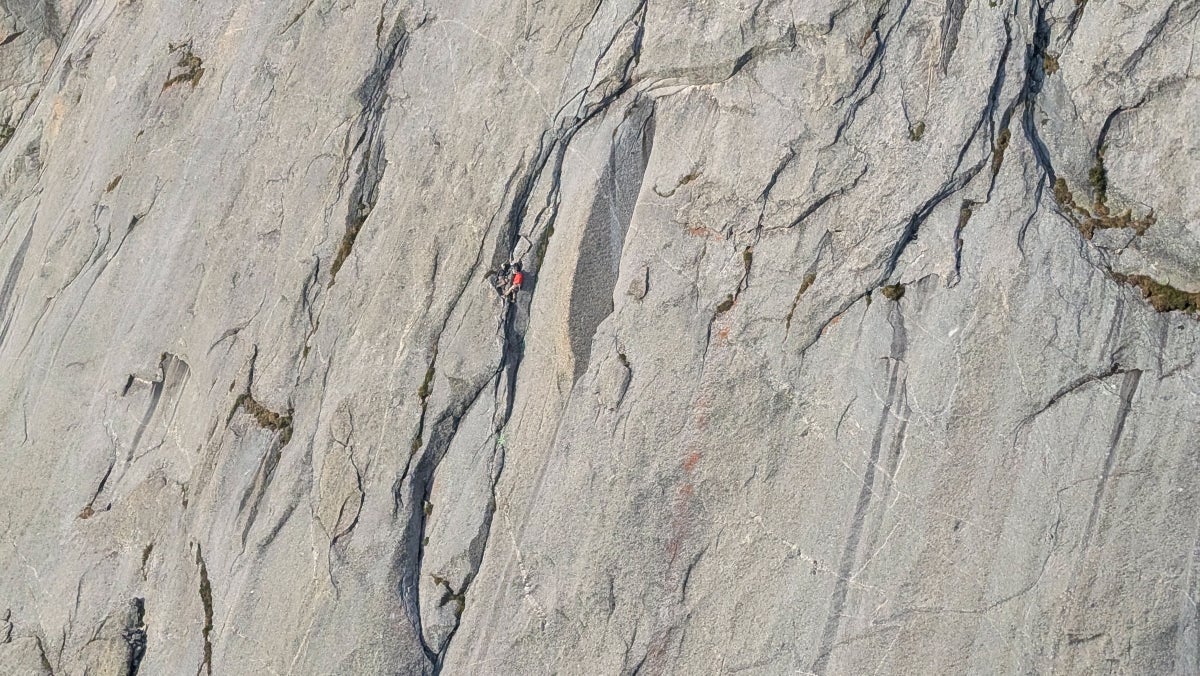
About our reporting: For this story, we interviewed a volunteer with Lander Search and Rescue and one of the two climbers involved in the incident. We also spoke with three experts on the use of taglines in rappelling, including two certified climbing guides and the author of a book on descent techniques for climbers.
A month after a fatal rappelling accident in Norway, a rescue in Wyoming’s Wind River Range once again underscores the risks of rappelling with a tagline.
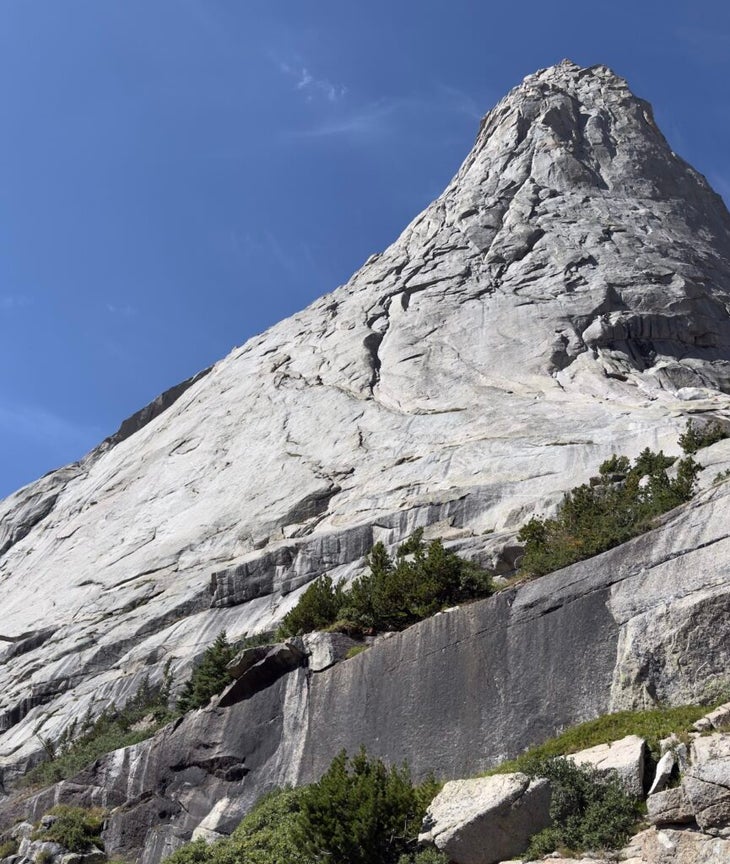
On August 20, climber Jared Martin headed into the Winds with a less experienced, younger partner to take on the Northeast Face of Pingora Peak (5.8+; 1,200 ft). It was both climbers’ first time in the Winds. As a night shift nurse at the Veterans Affairs and father of three little kids, Martin says the remoteness of the area made it hard for him to get to previously. “It’s always a debate how far and how long I’ll be gone,” Martin told Climbing.
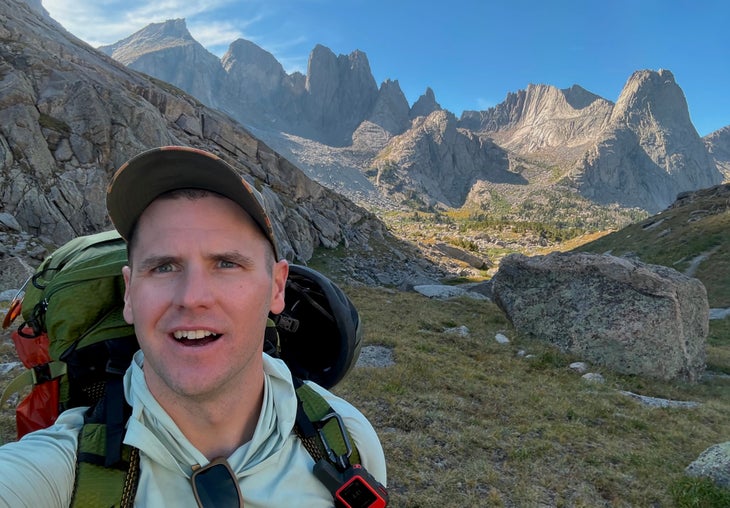
While several publications reported on this rescue in the Wind River Range, none have yet shared the story of what happened from the rescuers and climbers involved. After finding out how Martin and his partner became stuck in the first place—a stuck rope on rappel—we shed light on what climbers should know about rappelling with taglines to avoid the same fate.
How a reasonable descent turned into a rappelling slog
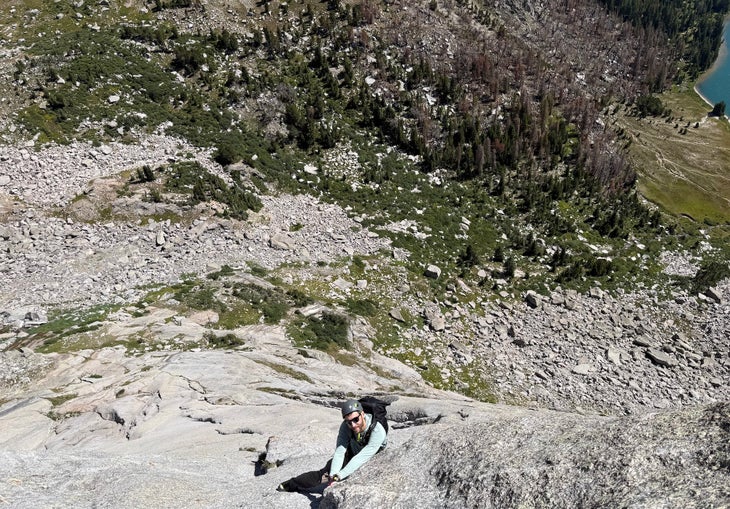
A leaky water bladder marked the start of this August 20 epic. By the top of the physical, pitch-eight crux, Martin’s dehydrated partner became nauseous; then it started to rain. Two pitches from the top, lightning flashed in the distance.
Two pitches loomed between the two climbers and the top of Pingora. If they topped out, the descent would be a relative breeze: four rappels to a walk-off via Pingora’s South Buttress. If they bailed now, however, they’d face a much more involved series of rappels back down the face.
“We made the decision to bail,” Martin said, citing his partner’s deteriorating condition, their dwindling water supplies, and the uncertain weather. “A quiet part of me thought it would be a good experience to bail down this much of a route,” he added.
The pair started rappelling on the double strands of their 70-meter rope, slinging natural features like rock horns with cordelette for rappel anchors. When they couldn’t find any natural features to use, they had to leave behind a gear anchor.
“It became frustrating,” Martin recalled. “Almost 1,000 feet of rapping, 35 meters at a time. We started leaving a lot of cordalette and biners. I didn’t have a ton of cordalette left.” So they decided to hasten the descent by doubling their rappel length with a backup tagline they’d brought along as an emergency bail option: an Edelrid 4mm.
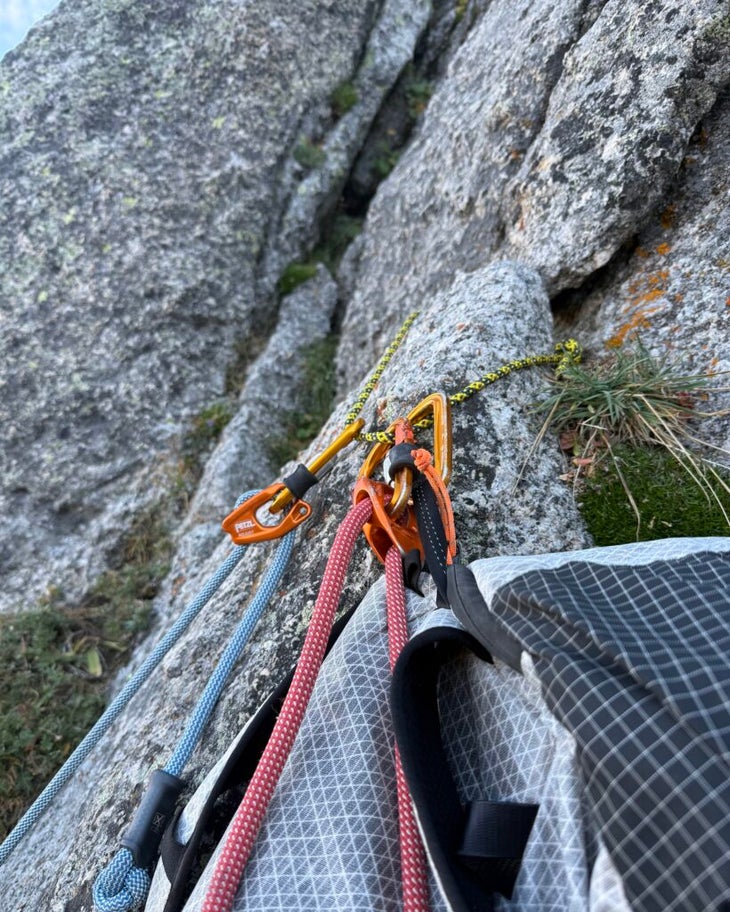
This was both Martin’s and his partner’s first time rappelling on a rope-tagline system. He joined the tagline with his 9.3mm rope using flat overhand knots, leaving a long tail and using a Reepschnur carabiner block.
“I knew the snag hazard of the biner block, but it seemed like the best setup for the situation,” Martin explained to Climbing. He clipped the tagline through the anchor’s masterpoint carabiner and rappelled to a stance roughly midway down the third pitch. After pulling about 70 feet of tagline down, he says he “felt the rope become lodged, which was a really frustrating moment.”
“A long, cold, hard night” on Pingora Peak
With their dynamic rope stuck out of reach somewhere on pitch three or four above them and access only to the tagline, Martin and his partner quickly assessed their limited options. They could take the risk of tying into their 4mm static tagline, which isn’t rated to hold a fall, and re-lead the pitch to where their rope was snagged and attempt to free it. Or they could cut the tagline free and continue their descent with the roughly 20 meters they’d pulled down. The option they ultimately chose was to use their Garmin InReach to call for help. Lander Search and Rescue (LSAR) received the call around 6 p.m., but by the time a response team made it to the heli pad, it was too late in the day to fly in.
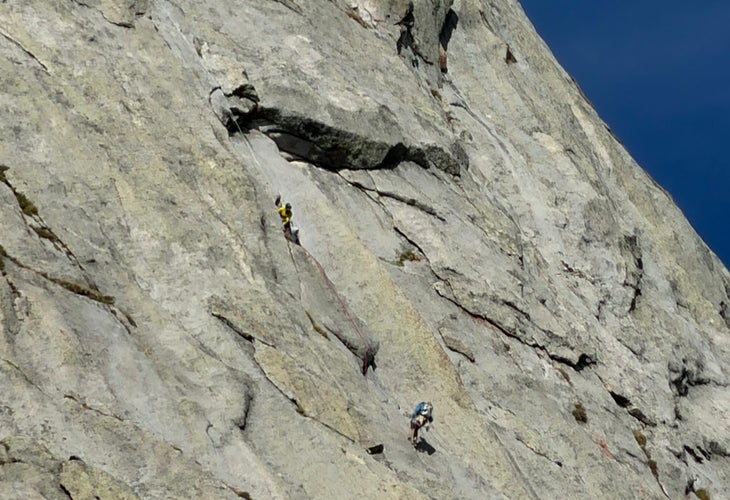
LSAR told the climbers to hunker down for the night at a spot that volunteer Shep Vail described as “a not so comfortable looking stance” a few hundred feet off the ground.
Martin said he gave his weary partner the best spot, where he curled up in a corner. Meanwhile, Martin strapped a chalkbag to each knee like kneepads and rotated through four equally uncomfortable body positions every three minutes. “I was a seventh deployment army ranger,” he said of surviving the night with relative ease. “I’ve been through a lot of tough things.”
The next morning, Vail told Climbing that rescuers reached the Cirque of the Towers by 7:20 a.m. The helicopter had originally rigged a long line to drop off rescuers to assist Martin and his partner, but couldn’t safely get close enough to the wall. Instead, Vail and another rescuer started up the Northeast Face to reach the stranded climbers and lower them down.
What this accident shows about the risk of taglines in rappelling
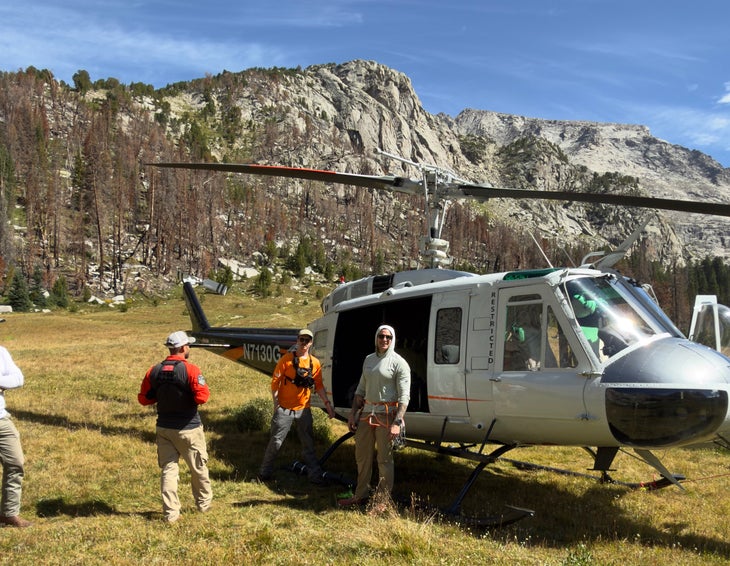
Vail, an experienced climber himself, says that Martin, with his four years’ of climbing experience, and his even less seasoned partner, “made the right call to sit it out and wait.”
With more experience, Martin would have been able to look at the blocky, low-angle terrain below and determine that rappelling it had a high probability of a stuck rope. He could have mitigated that risk by making the dynamic rope the pull-side of the system, so that if it became stuck he could more safely lead back up to free the rope. (But would have faced the very real issue of knot migration.) Or he could have simply stuck with the slow-but-steady 35-meter rappels. As they say, slow is smooth and smooth is fast.
Getting your rope—and your party—stuck on the wall, however, is only one hazard associated with rappelling with a tagline. After reading about the deadly Norway accident, Vail thinks that climbers should be thinking more critically about the utility of taglines. “That’s two events in a pretty close timeframe,” he said. “What’s going on?”
The other potential hazard of rappelling with a tagline
“99.99999% of the time it works,” said rappelling pundit Andy Kirkpatrick of rappelling using a dynamic rope attached to a tagline. Kirkpatrick is a British big wall climber and the author of Down: The Complete Descent Manual for Climbers, Alpinists and Mountaineers. But he adds that every now and then, “for an unlucky climber, it fails.”
After Climbing discussed the lesser-known risk of knot migration in rappel setups involving ropes of differing diameters, Kirkpatrick published a Substack on September 14 with his own insights on what happened. While his post focused primarily on knot migration, he did touch on the dangers of a stuck rope in such systems.
“… If the rope you’re pulling gets stuck while pulling, and you opt for a self-rescue, either climbing the pull strand (Prusik loops, ascenders, hand over hand), or deciding to reclimb while being belayed with what rope you have,” he wrote, “… it’s a damn sight nicer jumaring or leading on a fat, dynamic climbing rope, not a 6mm piece of mountain dental floss.”
Teddy Dondanville, a climber and AMGA rock guide who frequently rappels using a rope and a tagline calls it “a lightweight, versatile system for unlocking full rope-length rappels.” Based near the Shawangunks of New York, Dondanville typically considers the terrain he’ll be rappelling before bringing a tagline into the system. For example, he’s used a dynamic rope-tagline system to rappel off The Diamond in Rocky Mountain National Park multiple times because the wall is steep enough that it’s unlikely your rope will snag when you pull it. But if you’re rappelling in a place like Red Rock, where flakes, horns, and chickenheads that could catch a rope abound, he will “opt to avoid a tagline-dependent system.”
“Regardless of whether you’re using two ropes or a single rope and a tagline, terrain assessment also comes into play when rigging your rappel system,” Dondanville told Climbing. For example, if there’s a flake to the left, he’ll pull the rope on the right side. “I never just pull and pray,” he added, “there’s always decision-making going on.”
Another guide, IFMGA-certified Zach Lovell, reinforced that sentiment: “Lower-angled terrain, especially if riddled with flakes and blocks, can lead to stuck rappels and can be much more problematic with a single/tag system if a climber needs to lead up from a rappel anchor to free a rope, since a static tagline isn’t appropriate to lead on.” Lovell advised climbers to use these advanced systems “only after they’re well-practiced going up and down, the rappels are clean, and/or they want a ‘just-in-case’ option if the party needs to bail on a route that’s otherwise a walk-off”—in other words, the same situation Martin found himself in mid-bail.
As for Vail, after having responded to the stuck climbers on Pingora, he’ll be unlikely to ever use a tagline to rappel. Instead, he would choose twin ropes or half ropes that you could at least use as a lead line to retrieve your rope. Though twin ropes would require doubling up to safely lead with, a single strand of a twin rope would still be preferable over a tagline.
“I think people need to do some long, hard thinking about it if it’s with the extra five pounds,” Vail said of choosing a secondary line. It’s also worth noting that a couple of old nuts are a lot lighter than a second rope, and in some cases provide the necessary margin to establish a new rappel line.
Redemption on Pingora?
Like Vail, Martin won’t be rapping with a tagline anytime soon, even though he admitted that he still likes the idea in theory. Currently, he and his partner are making custom t-shirts that read “No More Taglines.”
But for climbers like Martin, the takeaways shouldn’t be to avoid rappelling with a tagline at all costs. Rather, this incident illustrates the importance of understanding the very specific risks of rappelling with a tagline and mitigating those risks depending on the situation. To learn these skills, climbers can give Kirkpatrick’s Down a read, attend a clinic, or hire a guide.
Martin also learned a few more lessons from his night on Pingora Peak. He wished, for example, that he would have had more patience to finish out the route, despite their challenges, instead of bailing. While the rain and lightning, for example, had been one factor in the decision to bail, the skies ended up clearing. Perhaps if they’d waited a bit longer, they would have felt more confident moving upward. Next time, Martin will also commit to leaving more gear behind if necessary.
Meanwhile, Martin’s stuck rope and tagline remain on the Northeast Face of Pingora (unless a lucky climber has already bootied the gear). And next August, he plans to return to Pingora for redemption—but without a tagline.
The post A Climber and His Rescuer Share Takeaways After Getting Benighted on Pingora Peak appeared first on Climbing.