 BURST
BURST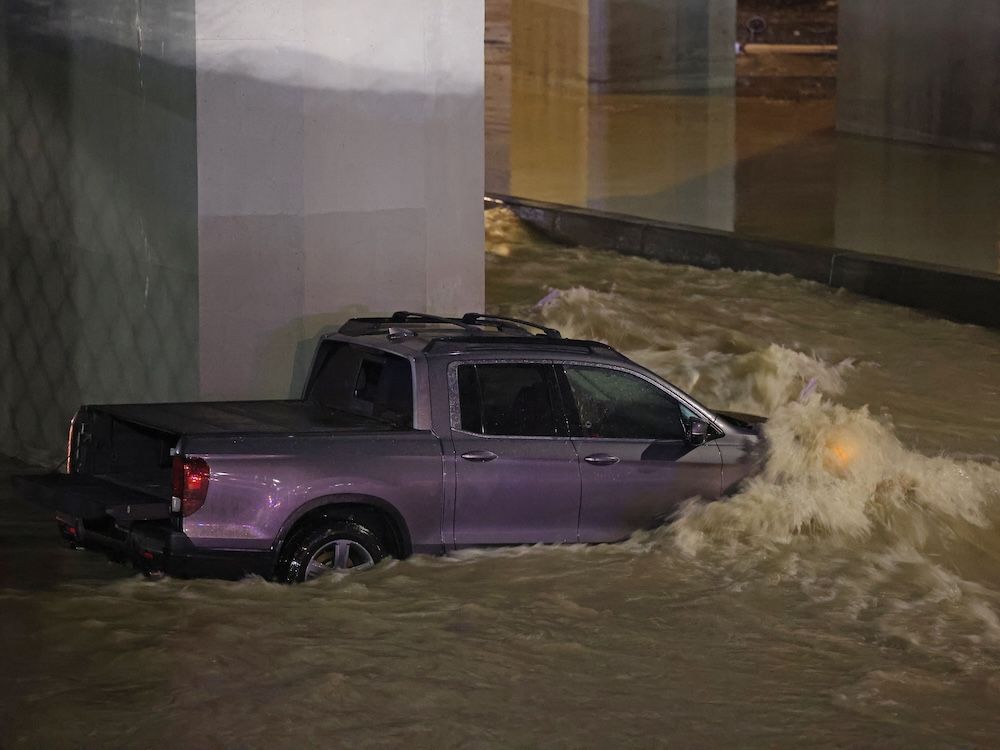
Metro Vancouver is taking steps to monitor a length of water main made of the same material that has catastrophically failed twice in Calgary in 18 months.
Roads buckled, broke and flooded, trapping drivers inside their vehicles as water rushed over their windshields on Dec. 30, 2025. The city pleaded with residents to curtail activities like long showers, frequent flushing of toilets or using washing machines after that break and one in June 2024.
Calgary Mayor Jeromy Farkas said a “mega-project” to replace the about six-kilometre stretch will cost hundreds of millions of dollars, and last at least a year.
The culprit in Calgary is pre-stressed concrete cylinder pipe, made of a concrete cylinder with an outer core of concrete reinforced with pre-stressed steel wires. The wires are susceptible to corrosion, and if too many break, the pipe can fail.
The vast majority of Metro’s 520-kilometre, large-diameter water mains are made just of steel, which are longer lasting and less likely to fail. But there is around 3.8 kilometres of pipe that is pre-stressed concrete — mostly in Coquitlam — and dealing with it is on the agenda for Wednesday’s Metro water committee meeting.
“Metro Vancouver is assessing the expert panel report provided to Calgary (city) council in early January and incorporating relevant recommendations into our ongoing maintenance and inspection programs,” Daniel Roberge, deputy general manager of operations for water services, wrote in an email to Postmedia News.
“Metro Vancouver has a robust process in place for inspecting, monitoring, maintaining and upgrading its system to minimize this risk of leaks and ensure the region consistently receives high-quality drinking water. In the event of a leak or break, Metro Vancouver has highly trained staff who are available to deal with urgent issues and repairs.”

Metro plans to establish a monitoring program similar to Calgary’s, with a technical inspection planned to be completed by this fall. One of the tools Calgary uses is acoustic monitoring, which can detect the steel wires breaking by the pinging sound they make when they fail.
There are no plans to replace the specific sections of pipe, as it’s still well within its life expectancy, said Roberge, but that could change after the inspection this year.
The differences between the cities suggest Coquitlam has a wider safety margin than Calgary.
Sodium chloride was fingered as a partial culprit in the first water main failure in June. Microcracks in the concrete around the pipe caused the wires in the covering to become stressed and snap because of corrosion, a process exacerbated by the high chloride levels in the soil. Sodium chloride is widely used as a road salt during Calgary’s much longer winter months.
Also, Calgary’s water mains are older. They were laid in 1975, more than 15 years before Coquitlam’s, installed in the early 1990s.