 BURST

A North Vancouver wildlife sanctuary has closed its trails to give black bears room to forage before hibernation, as unusually high bear activity in Lower Mainland communities puts more animals at risk of being killed.
The Wild Bird Trust of B.C. closed trails at Maplewood Flats Conservation Area on Oct. 4 after five bears were repeatedly spotted near buildings, in the parking lot and along the barge channel.
The closure comes as provincial data show 137 black bears were killed across B.C. between January and July 2026, up 5.4 per cent from 130 during the same period last year.
The bears spotted at Maplewood Flats included a mother and her two cubs, and one young bear who had to be coaxed away with a leaf blower.
“Because of the density of trails and visitors on site, we are closing the trails to reduce the amount of human-bear contact during this critical feeding time,” the trust said in its closure notice.
Bear activity at the conservation area has increased since mid-September.
“Bears that find themselves in ‘human spaces’ have been killed,” the trust added.
Of the 137 bears killed in the first seven months of 2026, 99 were killed by conservation officers over public safety risks. Another 25 were euthanized by conservation officers or other agencies for animal welfare reasons, such as severe injuries.
B.C. conservation officers responded to 763 black bear-human conflict calls from January to July 2026, up 16.5 per cent from 655 during the same period in 2025.
While figures for this fall are not yet available, an Environment and Parks Ministry official told Postmedia reports of human-wildlife conflicts involving black bears have been increasing throughout Metro Vancouver.
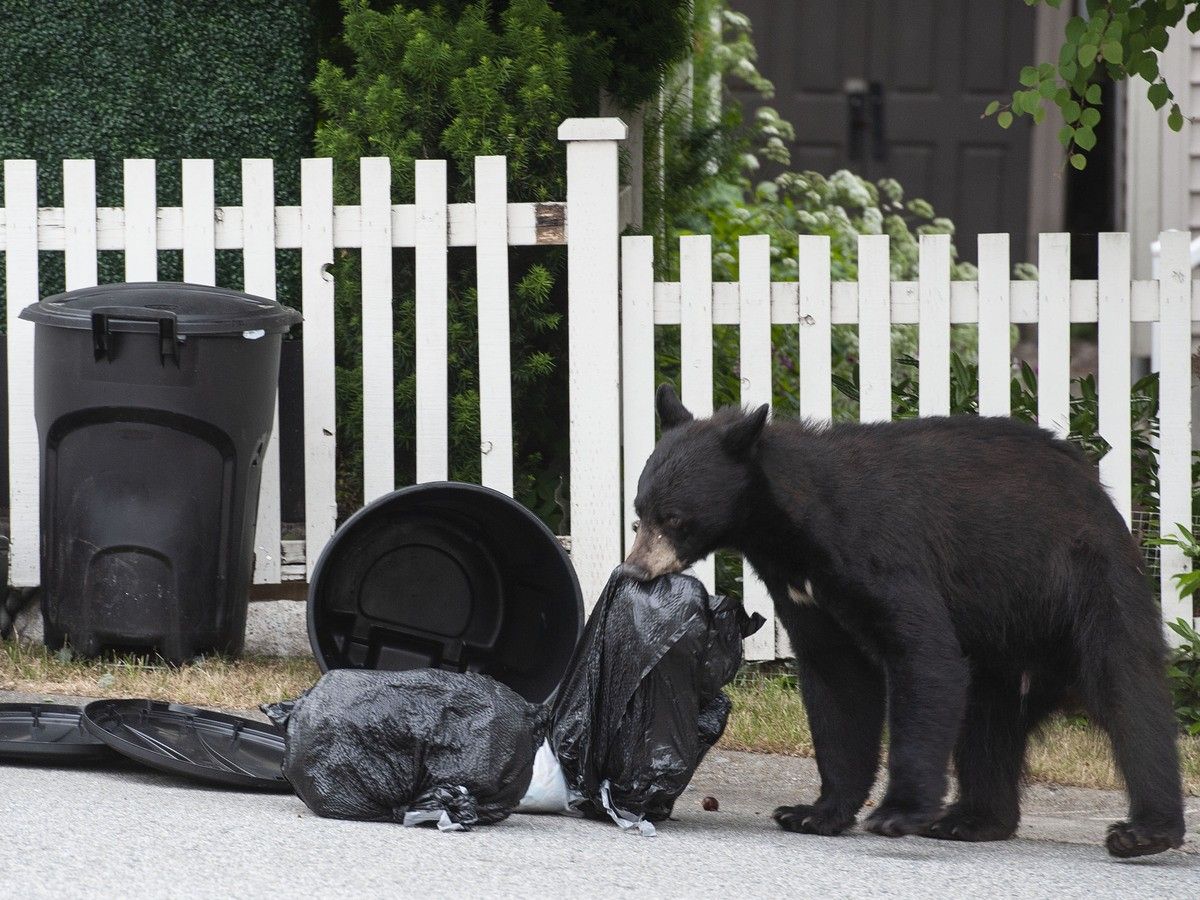
The City of North Vancouver described bear activity across the North Shore and Metro Vancouver as “unusually high” in a Facebook post Thursday, calling it an “incredibly challenging” fall as bears increasingly search for food in residential areas due to a poor foraging year.
In Lower Lonsdale, North Vancouver RCMP shot and killed a black bear on Sept. 29 after it was seen eating from garbage and green-waste bins near Lonsdale Avenue and First Street. Police said the bear showed no fear when approached.
The killing was the sixth on the North Shore this fall by police or conservation officers, according to the North Shore Black Bear Society.
The society attributed the uptick in bear activity across the Lower Mainland to years of drought, which have reduced berry crops and salmon availability, forcing bears to travel greater distances in search of food.
“We are hoping for the rain to return to help the chum salmon return, which may help many bears in the Lower Mainland put some needed fat on for winter,” the society said, warning bear activity could extend beyond November this year.
The Environment Ministry told Postmedia that wildfires and poor berry crops in some parts of B.C. may also have played a part in reducing the species’ natural food supplies.
“We all have a role to play to prevent human-wildlife conflicts,” the agency said in a statement.
“Bears may be travelling further and looking in novel places for sustenance, and this means it is more important than ever to not give bears a reason to linger in communities,” it said.
The ministry warns that bears that find food in neighbourhoods may start breaking into homes and vehicles. Residents are urged to secure garbage, pet food, birdseed, pumpkins and other things that attract bears.
The B.C. Conservation Officer Service recommends putting pumpkins outside only on Halloween night and otherwise keeping them indoors.
[/related links]