 BURST
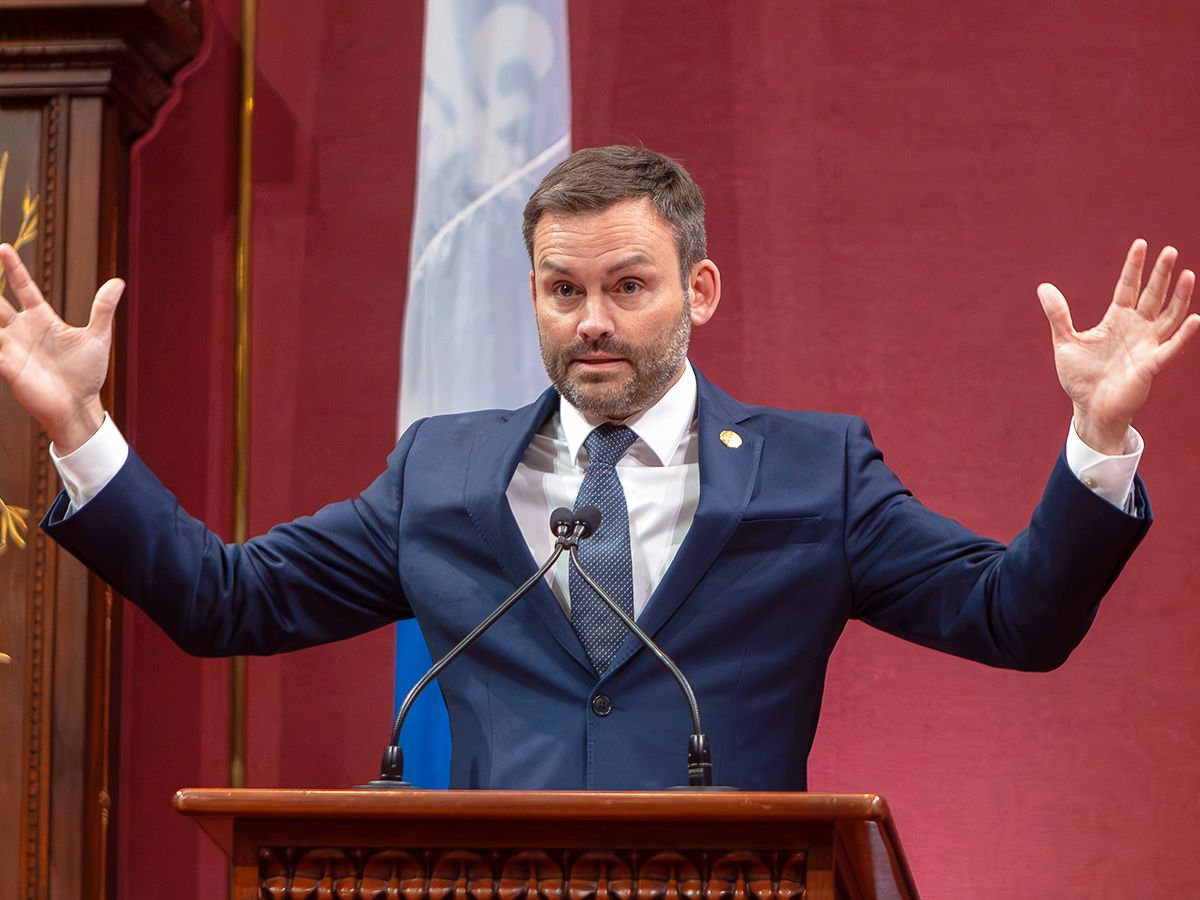
OTTAWA — Quebec Premier Paul St-Pierre Plamondon may have received congratulations from U.S. President Donald Trump on his election win, but that won’t deter him from his goal to force big U.S. streamers to showcase more French content on their platforms.
In unveiling his cabinet last week, St-Pierre Plamondon named his most experienced member of caucus, Pascal Bérubé, to become his minister of culture. He described him as a man “who knows how to stay on course when the wind is blowing hard.”
In a speech, the premier said Bérubé will have the mandate to negotiate a 30-per-cent quota of French content on large U.S. online platforms such as Netflix and Spotify.
“From now on, Quebec will represent itself in this regard. Because we cannot rely on the federal government — that has been demonstrated so many times,” he said.
“Our culture is at stake. We will mobilize all available resources and negotiate directly until our Quebec culture can once again flourish and shine,” he added.
Bérubé told reporters after the fact he did not intend to sit idly by in his new role.
“Just watch us go — we are very determined. He didn’t send me to the culture portfolio for nothing; he’s sending his most experienced elected official. We have big plans, and it won’t be long now. My first actions will be taken very quickly,” he said.
Bérubé was not made available for an interview to describe his new mandate, which arrives at a critical time for trade talks between Canada and the United States.
Experts and political insiders consulted by National Post have questions about the leverage a single province would have in these negotiations, what these talks would achieve exactly and how they could affect Canada’s efforts in alleviating U.S. tariffs.
“The United States will take a tougher stance toward Canada. Is that their goal?” openly wondered a Canadian diplomatic source speaking in Washington D.C.
The Trump administration has already listed Quebec’s Bill 109, which seeks to promote cultural sovereignty and increase the discoverability of French cultural content for streaming services, as a potential trade barrier in a report issued earlier this year.
The former Coalition Avenir Québec government adopted Bill 109 in December 2025, but the legislation has yet to be in effect with regulations that will determine, among other things, the level needed of French content on these platforms.
As one source close to the file put it, the new Parti Québécois government already has all the legislative tools in place and simply has to enforce the law with regulations.
“They want to negotiate… but what is there to negotiate exactly?”
Michèle Rioux, a professor in the department of political science at UQÀM and director of a research laboratory focused on discoverability and the transformation of cultural industries, said Quebec’s leverage against U.S. streaming giants is “zero.”
However, she said the task at hand for Bérubé may be to instead raise awareness among the platforms about the importance of ensuring the discoverability of French cultural products that are consistently sidelined in favour of English content.
Peter Menzies, a Macdonald-Laurier Institute senior fellow and former vice-chair of the Canadian Radio-television and Telecommunications Commission, said Quebec going at it alone would create “an absolutely chaotic situation” for everyone involved.
“As far as the federal government is concerned, broadcasting and telecommunications are federal jurisdiction,” he said, noting that since the passage of the Online Streaming Act in 2023, online video and audio platforms were brought under federal jurisdiction.
But he noted that Ottawa probably does not want to get into a fight on that issue.
The office of the Minister of Canadian Identity and Culture, Marc Miller, cited “cooperative federalism” when asked to comment on Quebec’s intentions.
“We will continue to work constructively with Quebec’s new government to support French-language culture and ensure it can thrive,” said press secretary Hermine Landry in an email.
Then, there is the issue of whether those streamers could realistically get to 30-per-cent of French content — which is the stated goal of the Quebec government.
“Should they be designing a different Netflix for instance for Quebec than for the rest of Canada? Should Spotify have to play different music in Quebec, and how do you manage that jurisdictionally, legally and practically?” Menzies asked.

Bill 109 mentions “cultural content originally expressed in the French language.”
That could mean that platforms could use original francophone content from France, Algeria, Tunisia and other French-speaking countries, Menzies noted. Or, if that is not possible, he said there is a risk some smaller platforms simply pull out of Quebec.
“How is BritBox going to do 30-per-cent original French language content?” he asked of the subscription streaming service focused on British television.
Another unfortunate scenario for consumers could see streamers pulling out some of their English content in Quebec to satisfy the government criteria, according to a source that worked closely on the file and who thinks 30-per-cent is simply too high.
However, those percentages are in line with current European regulations on cultural discoverability which require that at least 30-per-cent of each service’s catalogue be titles from the European Union and that these titles must be made prominent.
France requires at least 60-per-cent EU titles and 40-per-cent titles in French.
Gilbert Gagné, a professor at Bishop’s University who studies cultural trade, said the government of Quebec had little choice but to step in to protect its culture at a time when the federal government has “yielded” to U.S. pressure to avoid trade retaliation.
“I feel the government of Quebec is doing the job that Ottawa should have done months ago,” he said.
Prime Minister Mark Carney has recently said he will not change his mind about his decisions to eliminate the digital services tax and Canadian content contributions which were put in place by the government of his predecessor Justin Trudeau.
But Miller’s office said the federal government has taken concrete action to make Canadian content easier to discover with more than $1.5 billion invested in arts and culture over the past year.
Bloc Québécois Leader Yves-François Blanchet said he believes Quebec has what it takes to go it alone to improve discoverability of French cultural content.
Ultimately, he said the full weight to make these decisions come with independence.
National Post
calevesque@postmedia.com
Our website is the place for the latest breaking news, exclusive scoops, longreads and provocative commentary. Please bookmark nationalpost.com and sign up for our newsletters here.