 BURST
BURST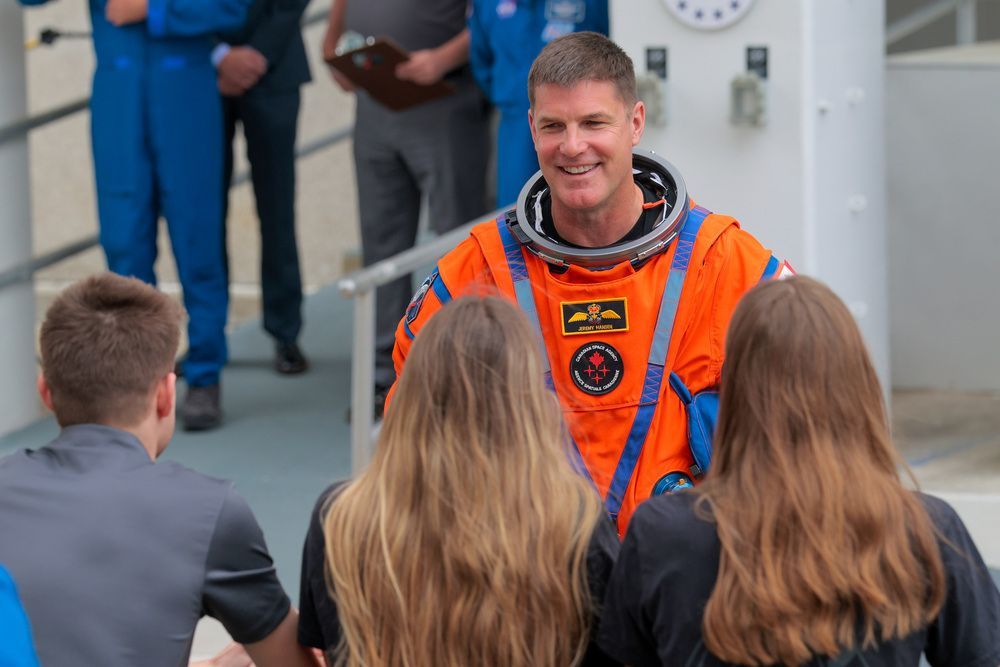
As the Orion spacecraft prepares for its Friday night return to Earth, astronaut Jeremy Hansen, who was born in London and raised in Ailsa Craig and Ingersoll, will complete a historic journey – becoming the first non-American to travel into deep space. Here’s what happens next, how to watch the return live, and his mom’s plans for a “big hug.”
WHAT’S NEXT FOR JEREMY HANSEN?
His mother, Nancy Hansen, told The Free Press that as the spacecraft splashes down off the coast of San Diego, the crew members will be picked up by the U.S. Navy.
From there, medical evaluations are expected to take place and the crew is scheduled to be flown back to Houston for further evaluations. NASA says the “splashdown” will occur at 8:07 p.m. ET on Friday.
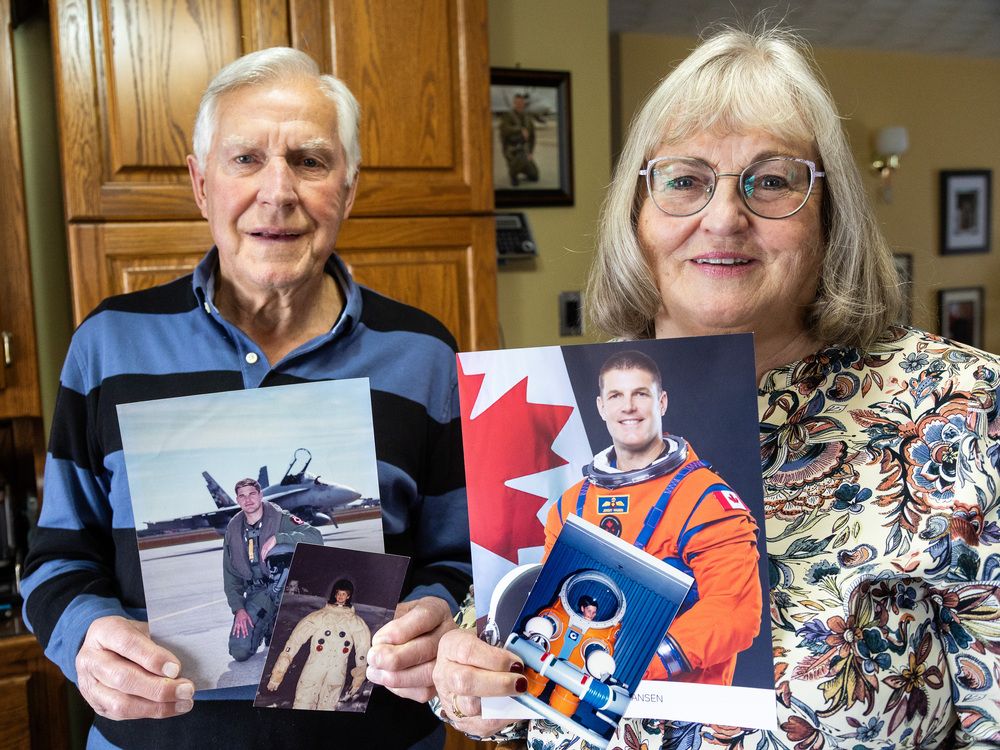
Hansen’s mother and father, Gary, live in Ingersoll but were on the road Thursday from the launch site in Florida to mission control at the Johnson Space Center in Houston to watch a live feed of the return with other family members.
Nancy says that, from speaking with her son before the launch, medical evaluations in Houston could take a couple more days before he’s reunited with his family at his home in a Houston suburb.
“There’s just a lot of medical checks they have to do, and it all depends on how his body has adapted. But he said, likely one night for sure, possibly two before he gets to go to his house,” Nancy said.
As for what’s next for the Canadian astronaut’s career, Nancy said: “I don’t think he really knows yet. When we talked to him before the launch – he was just thinking ahead to the mission. That’s all he could concentrate on.”
HOW DO HIS PARENTS FEEL?
Hansen’s parents are excited to be reunited with their son after his record-breaking voyage around the moon.
“We’ll be there for a few days. We won’t stay very long, but, yes, we’re going to get to see him and give him a big hug,” Nancy said.
For them, it’s been a whirlwind, with Hansen quickly becoming one of the most famous people from Earth over the last week. But one thing that stood out to them was the 50-year-old’s enthusiasm in videos and pictures from the spacecraft.
“It’s just amazing, but to see that smile on his face, it’s like the smile he had when he was a little boy,” Nancy said.
Nancy mentioned that she and Gary received an email from him earlier this week while they were having breakfast.
“I looked at my phone and there was an email from Jeremy, and I read it, and I started to cry with happiness that he took the time to email us because he’s so busy,” she said. “But he said he’s having an amazing adventure, and he said it’s just so amazing up there.”
In a media call from space on Wednesday, Hansen said being in space added to his perspective on what’s important down on Earth.
“The perspective that I’ve learned through life is that our purpose on the planet as humans is to find joy, to find joy in lifting others up by creating solutions together instead of destroying,” he said. “When you see it from out here, it doesn’t change it. It just absolutely reaffirms that. It’s almost like living proof.”
WHAT DID ARTEMIS II ACCOMPLISH?
Artemis II completed the first crewed lunar flyby in more than 50 years and its four astronauts travelled farther from Earth than any humans ever have.
According to NASA, the Orion spacecraft travelled about 252,757 miles (406,000 kilometres) before looping back toward Earth.

The Artemis II’s main role was to test the Orion spacecraft and the overall mission systems in deep space with humans aboard. According to NASA, photos, videos, mission telemetry and communications will all be used to inform future missions as the agency embarks on development of its moon base and, eventually, Mars.
During an audio exchange this week, U.S. President Donald Trump praised Hansen for having “a lot of genius” and invited him and the three American astronauts to the White House. It’s unclear when such a visit may happen.
HOW TO WATCH THE SPLASHDOWN
NASA’s coverage of the return can be streamed on NASA+ as well as platforms including YouTube and Amazon Prime. The broadcast is expected to begin at 6:30 p.m. ET on Friday.
In a NASA news release from last year, the agency said the Orion capsule will keep the crew safe as it slows down from nearly 25,000 miles per hour to 325 mph. A system of 11 parachutes will deploy, allowing the crew to splash down at a relatively gentle 20 mph, or 40 km/h.