 BURST
BURST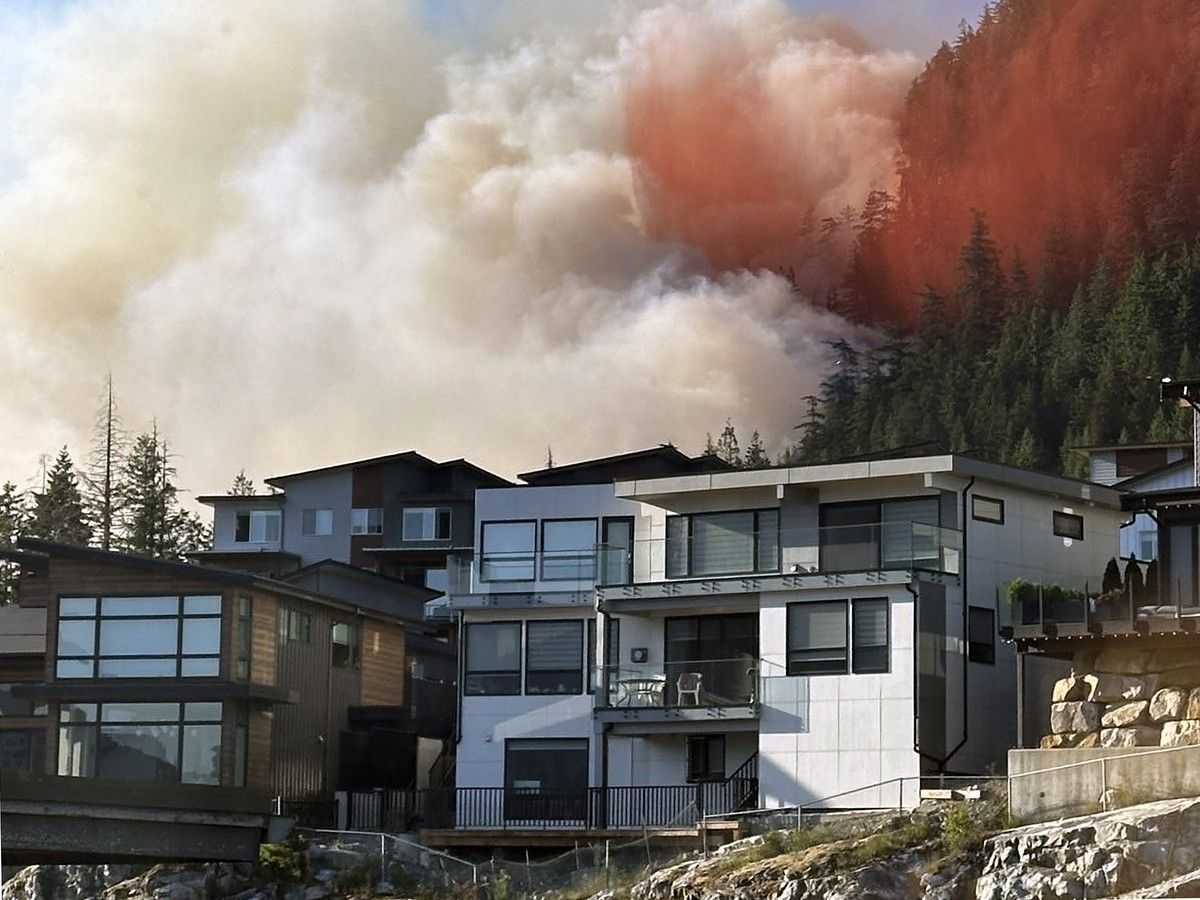
As a fast-growing fire near Pemberton forced an evacuation order and alerts Thursday, a veteran fire ecologist questioned whether the region’s forest-edge communities are as ready as officials say.
The Signal Hill fire, discovered south of Pemberton on Wednesday, had grown to 38 hectares by late Thursday morning and remained out of control, according to the B.C. Wildfire Service’s website . Two evacuation alerts and one evacuation order were in place as of 3:03 p.m., with the fire burning about five kilometres from Highway 99. Human activity is the suspected cause of the fire.
Conditions are expected to worsen.
Fire danger on the South Coast and North Shore is rated moderate to high, said Olivia Fenton, an information assistant with the Coastal Fire Centre, and it could climb next week as an upper-atmosphere system draws subtropical moisture over the coast, raising the risk of lightning with little rain.
The centre reinstated a ban on campfires across most of its territory, including the North Shore and Sea to Sky, at noon Thursday.
The Signal Hill fire sits in the Sea to Sky corridor north of Squamish and Whistler, in the kind of wildland-urban interface — where homes back onto forest — that communities around Metro Vancouver work year-round to guard against.
Robert Gray, a Chilliwack-based fire ecologist with four decades in the field, said that preparation often falls short because it’s done at too small a scale.
Municipalities point to FireSmart programs — assessments that urge homeowners to clear brush, screen vents and strip flammable material from around a house to create “defensible space” — and to fuel treatments, the thinning of dense stands of trees and removal of dead wood that can carry a fire.
Gray said both work only when carried out across whole neighbourhoods and the land around them.
“You can do everything that’s required and you can still lose your home,” he said, if neighbouring properties and the forest beyond go untreated. Fuel treatments, he said, must match the scale of the fire they’re meant to stop.
Most municipalities in the region have adopted a community wildfire resiliency plan — a document, often tied to provincial grant money, that is meant to map a community’s wildfire risk and set out concrete steps to reduce it.
Coquitlam’s plan has 43 recommendations; Squamish drew up 16 after reviewing a fire near the town last year.
Speaking of such plans in general, Gray said they too often “sit on the shelf,” satisfying government funding requirements while doing little to guide actual firefighting or prevention on the ground.
Coquitlam pushed back. In a statement, Fire Chief Scott Young said Coquitlam is making steady progress on its 43 recommendations, has completed fuel-treatment prescriptions for its high-risk areas and is hiring contractors to treat its three highest-priority zones by spring 2027.
Nearly half the recommendations are “ongoing actions rather than one-time projects,” he said, such as annual pre-season training.
As for other communities, West Vancouver, which updated its plan in December, said it has completed FireSmart assessments on more than 140 homes and thinned about 19 hectares of forest near neighbourhoods and critical infrastructure.
The district is “concerned enough to be actively monitoring and preparing, but not in a way that should cause unnecessary alarm,” said Natalie Roizman, acting senior manager of communications, in a statement.
Squamish, which fought the Dryden Creek fire last summer, said it “has concerns for the wildfire risk” given below-average snowpack, strong daily winds and dense interface development. It has added wildfire apparatus and a second trailer of structure-protection gear and cleared more than 40 tonnes of brush from private properties this year.
Gray said the communities’ most useful role may be as advocates.
Because much of the most dangerous fuel sits on Crown or private land they don’t control, he said, municipalities should use their political weight to push for “more aggressive fuel treatments” on the ground around them, tighten bylaws so new homes are built to FireSmart standards and keep evacuation plans current — while first clearing the fuel on land they do own.
The harder problem, he said, is the housing already standing.
FireSmart rules can shape new construction, but older homes that don’t meet them are left to owners to retrofit, at a cost he said governments have yet to confront.
“That’s not being addressed,” he said.