 BURST
BURST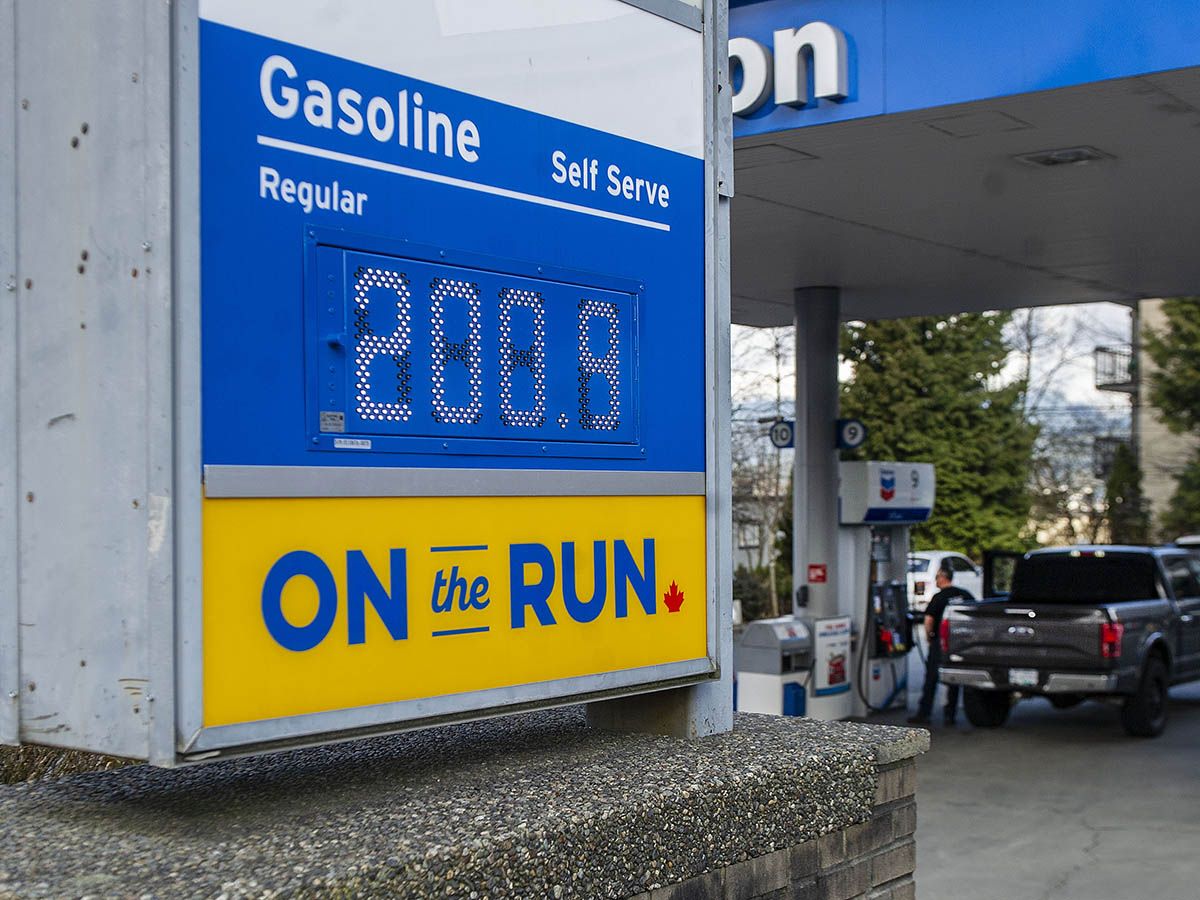
Prepare for “weeks, if not months” of sticker shock at the gas pumps here and around the world as the U.S.-Israeli war in Iran threatens to keep driving up crude oil prices, warns a UBC energy expert.
Werner Antweiler of the University of B.C.’s Sauder School of Business said Monday that the price of gas could easily eclipse $2 per litre as a bottleneck of oil shipments through the Strait of Hormuz reverberates through the supply chain.
The price of a barrel of oil has jumped from the $70 range to around $100 in the past week, and the cost at the pumps is only starting to reflect that in the past few days, said Antweiler. Around Metro Vancouver on Monday, prices hovered between $1.80 and $1.90 per litre.
If the war isn’t over as quickly as U.S. President Donald Trump hopes — he has predicted four or five weeks but warned it could take “ far longer than that ” — the barrel price is likely to keep climbing to $120 or more.
Antweiler said each dollar increase in the barrel rate translates to a rise of about 1.4 cents per litre in British Columbia. So if it goes up by $30 or more, that could result in around a 40-cent jump in prices at the pump.
TRY OUR GAS TRIP CALCULATOR: How much do you spend every day on fuel?
Four factors go into the price of fuel in B.C., with the crude price being the most volatile. Other factors like refining cost and retail margin also fluctuate, but don’t move the needle nearly as much. And Antweiler points out that taxes, the final factor, have actually dropped since the consumer carbon tax on fuel was eliminated last year in B.C.
That’s why 2025 often saw prices consistently lower than the years prior — often dipping below $1.50 a litre — with supplies fairly steady and the carbon tax gone. But the oil crisis that’s developing could easily wipe out those savings and send prices skyrocketing well over $2 per litre, Antweiler predicted.
Consumers often gripe that the price at the pump jumps almost immediately during a supply crisis then fails to come down as quickly, but Antweiler said that’s because regional supply evaporates quickly.
“The cost is pushed down the supply chain very, very quickly,” said Antweiler. “Inventory at the local level is quite small. These tanks are replenished every few days.”
The last big supply crisis, when Russia invaded Ukraine in 2022, led to prices over $2 a litre in B.C., and this crisis is likely to be no different, Antweiler said.
“It’s a world market that is completely integrated,” he said. “Whatever happens worldwide happens locally.” Since Canada neither produces enough of its own oil nor subsidizes local supply, consumers are at the mercy of the market.
Antweiler — who himself drives a plug-in hybrid Volvo that runs 98 per cent on electricity and still hasn’t used up its first tank of gas since he bought it in August — said switching to at least an electric-assisted vehicle makes financial sense for frequent drivers.
That’s because the cost of B.C.’s clean electricity is unlikely to be as volatile as the price of gas, now and for the foreseeable future.