 BURST
BURST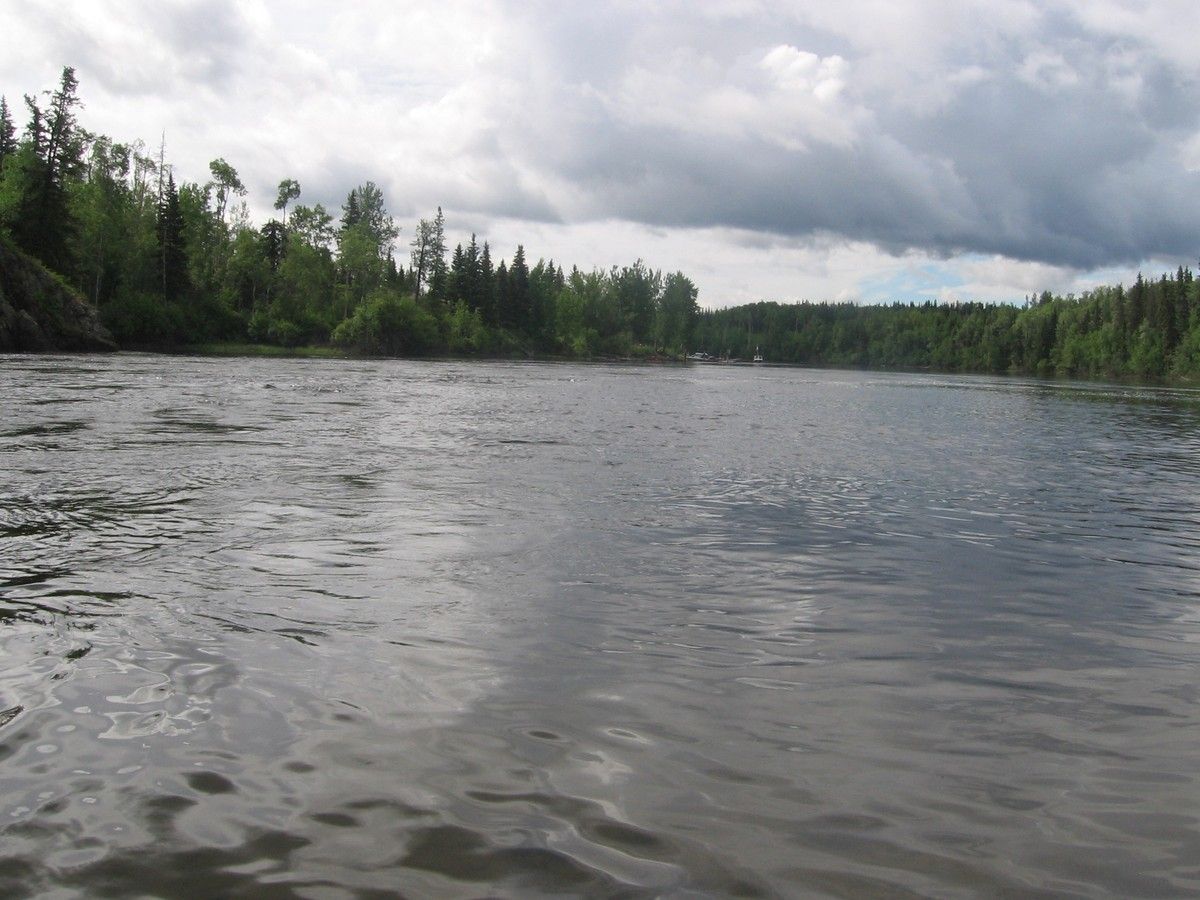
Some First Nations are not immediately saying no to Alberta’s push to build another oil pipeline to the B.C. coast.
But the First Nations are clear, before they make any decision, there must be meaningful consultation.
“As a matter of principle, Nak’azdli Whut’en is not opposed to development in our territory. We have a long history of working with proponents and government where projects are properly assessed,” Maddison Sam, a councillor with the Nak’azdli Whut’en in north-central B.C., said in a statement to Postmedia.
Factors the First Nation considers include impacts on its rights, title, lands and waters, and the lives of its members, families and future generations. It also looks at what benefits are on offer and what proponents suggest to accommodate its concerns.
“What we expect, and what the law requires, is meaningful consultation with rights and titleholders before decisions are made; not after,” said Sam.
The Nak’azdli said no route has been made public on the Alberta proposal and no information has been brought to them with any specifics that would allow them to understand its location or its impacts, and no consultation has been initiated by government.
“Until that changes, we don’t have a position to share,” said Sam.
The Lake Babine Nation, which opposed the later-cancelled Northern Gateway oil pipeline, said its stance on an oil pipeline across its territory in north-central B.C. has not changed.
While the Nation has signed benefits agreements for natural gas pipelines, an oil pipeline is different because if it leaks it can contaminate the environment, particularly lakes and rivers that are important for salmon, said Chief Wilf Adam.
“If Alberta and Canada decide to build at all costs, then we’re going to have a problem,” he said.
The Nation’s representatives travelled to Prince Rupert earlier this month to meet with Alberta Energy Ministry officials to explain their position and to listen, said Adam.
He said they told the Alberta officials they should pursue a southern route.
If there was to be a southern route, possibly to Roberts Bank in Delta, another option Alberta says is on the table , the Tsawwassen First Nation says it also does not have a position as there is no proposal to consider yet.
“Any major project in our territory requires our consent and involvement at the earliest stages and throughout the life cycle of the project,” Tsawwassen First Nation said in a statement. “It’s through the consultation and environmental/impact assessment processes that we understand the impacts on our people, territory, and treaty rights, and make informed decisions about consent.”
These perspectives point to a significant amount of work that would need to be completed to reach any consensus with First Nations.
The aim of Alberta Premier Danielle Smith is to submit a proposal to the federal major projects office on or before July 1, 2026, with the possibility of construction starting in 2027.
The Nak’azdli Whut’en and Lake Babine Nation were among many First Nations in northern B.C. that opposed Enbridge’s Northern Gateway oil pipeline more than a decade ago. The pipeline’s route would have crossed the salmon-bearing Stuart River, called Nak’alkoh in the Carrier language, in the Nak’azdli’s traditional territory, as well as Lake Babine Nation territory.
In June 2016, the Federal Court of Appeal quashed the approval of the Northern Gateway pipeline , ruling that Ottawa had failed to adequately consult First Nations.
Later that year, then-prime minister Justin Trudeau killed the Northern Gateway project, imposing an oil tanker ban in northern B.C. waters and approving another oil pipeline project, the Trans Mountain expansion to Burnaby.
While there was First Nation opposition to the Trans Mountain expansion, and also legal action, it was completed in 2024 at a cost of $34 billion, more than six times its original price tag.
According to the federal government, $650 million in benefits agreements were signed with First Nations for Trans Mountain, and $6 billion in contracts went to Indigenous-led companies and 10 per cent of the workforce hired was Indigenous.
Smith, the Alberta premier, has raised the idea of First Nation ownership in the latest oil pipeline proposal.
But First Nations on the northern and central B.C. coast have already said that no offer of equity or ownership will change their opposition to an oil pipeline to the northern coast.
The Coastal First Nations include the Haida, Gitg’at, Gitxaala, Kitasoo Xai’xais, Heiltsuk and Lax Kw’alaams.
“There is no technology that can clean up an oil spill at sea, and one spill could destroy our way of life,” said Marilyn Slett, president of the Coastal First Nations-Great Bear Initiative and the elected chief of the Heiltsuk Nation.
Terry Teegee, the regional chief of the B.C. Assembly of First Nations, said there is a lot of mistrust on the part of First Nations of governments, in B.C., over implementation of the United Nations Declaration on the Rights of Indigenous Peoples, and in Alberta, over the separation referendum.
“It will be a very difficult hill to climb, especially if (Smith) continues to push for a northern pipeline,” said Teegee.
Daniel Sims, an associate professor of Indigenous studies and social sciences at the University of Northern B.C., says a key question will be how many First Nations one needs agreements with to move a project forward.
“I think that’s one of the factors that comes into play,” he said.
Another problem when governments are trying to fast-track a project is how they obtain adequate consultations with First Nations, Sims said.
Edward Kallio, an executive adviser with Calgary-based energy analytics firm Incorrys, said the project will need to be “de-risked” to get a pipeline company to build it and to gain oil producers support.
He said, importantly, it would need First Nation backing, which could be boosted with a significant ownership stake.
The best option to de-risk the project would be for the federal government to designate a pipeline corridor, appropriate the land that would now be under federal jurisdiction, deem the project in the public interest, and carry out the consultations with the First Nations upfront, before industry comes on board, he said.
Kallio says it would also be best to build a pipeline to Prince Rupert, a deepwater harbour that can accommodate super tankers.
Ottawa would also have to remove the northern oil tanker ban.
“I don’t know how it is going to play out. I don’t have a lot of hope. … I don’t see a political will on the federal side to actually do it,” said Kallio.
Richard Masson, the former CEO of the Alberta Petroleum Marketing Commission and a consultant, said he doesn’t believe there is industry interest right now.
He said that there is already another one million barrels a day of oil pipeline expansion underway or planned, including a 300,000 barrel expansion of Trans Mountain, which might lessen the interest in a new one-million barrel-a-day oil pipeline.
Another obstacle is that heavy oil pipelines requires diluent to thin heavy oil to transport it, which requires more natural gas production and additional liquefied natural gas export facilities, added Masson.
“It seems pretty far-fetched to me that this would even work,” he said.