 BURST
BURST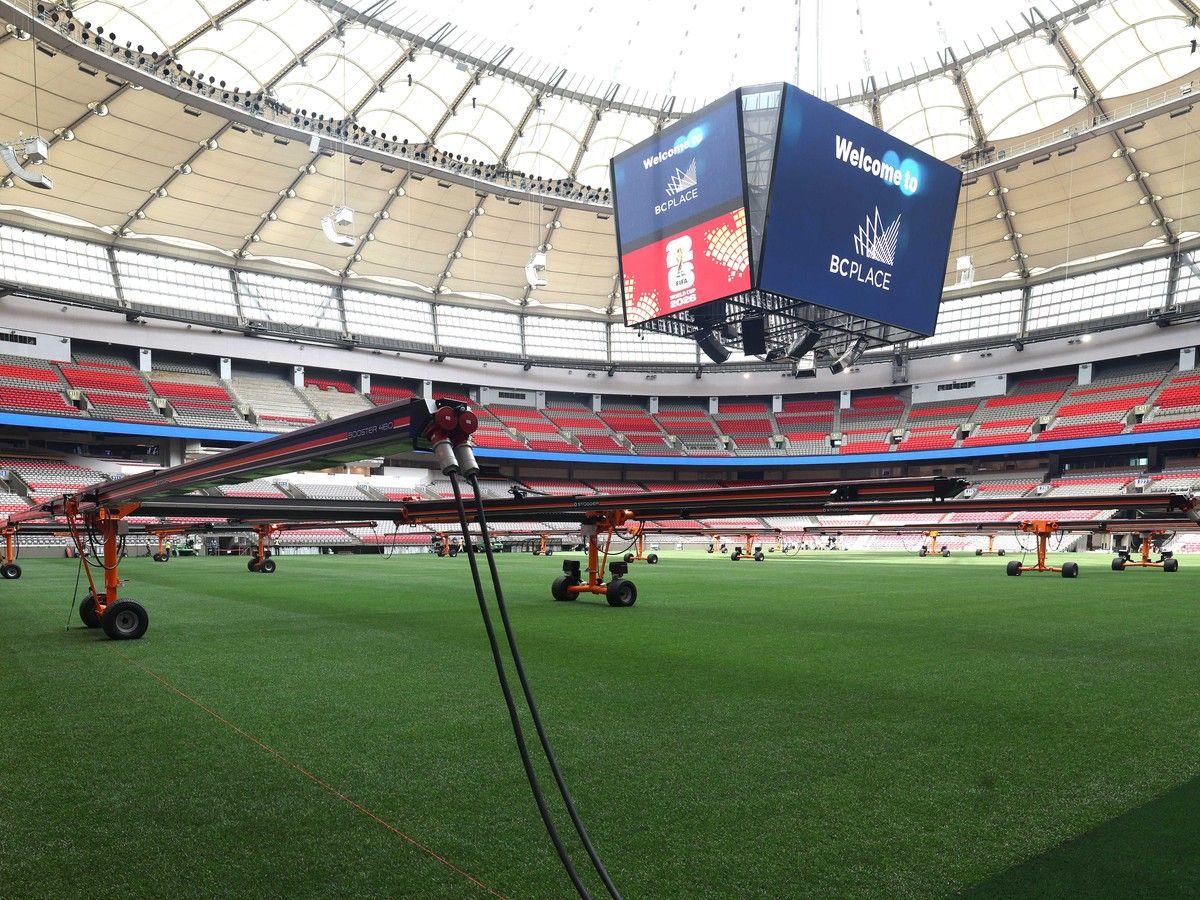
Ticket holders will be wearing jerseys and their national pride for Vancouver’s World Cup games, but they’ll need to do some research and find a ruler before entering B.C. Place Stadium.
That’s because FIFA has a very strict list of rules for the sizes and types of bags, flags and musical instruments that people can — and definitely can’t — take to the matches.
And everything footie fans bring will be screened by a new “weapons detection system” that FIFA is installing in B.C. Place. The OpenGate system, sold by an American company, resembles security gates that passengers walk through at airports.
The provincial Crown corporation that owns the stadium, PavCo, plans to spend $600,000 to buy the gates from FIFA after the games to replace an old system that is “nearing end-of-life.” This is expected to save taxpayers money, a spokesperson said.
“In addition to acquiring the units at approximately half the original price, B.C. Place will also realize cost savings on customized installation, freight, and training for team members, as those costs will be covered by FIFA for the tournament’s initial use,” said Jenny McKenzie, spokesperson for PavCo, or the B.C. Pavilion Corporation.
On game day, World Cup fans will scan their tickets, then their bodies and bags will be screened by the new magnetometer machines, she said.
It will be “a more robust security process” than the one typically in place at the stadium, so people should plan to show up earlier than usual for the soccer games, said Dave Jones, FIFA Vancouver’s head of security.
Here’s what else ticket holders need to know:
Bags
Leave your regular backpacks and purses at home. Clear plastic bags, made of out materials such as vinyl or PVC, are mandatory so security workers can see what’s in them.
The bags allowed by FIFA are smaller than the ones fans have been allowed to bring into the stadium for past events. The Vancouver organizing committee tells ticket holders to download the World Cup app onto their phones for the dimensions of permitted bags: no larger than 30 centimetres by 15 by 30 — or as a tall and wide as a standard one-foot ruler, but only half as deep.
Wallets don’t have to be clear, but they need to be about the size of your hand.
If your bag is too big or not see-through, or contains prohibited items, you can pay $20 to check it. But the storage area has limited capacity and will be available on a first-come, first-served basis.
Musical Instruments
The FIFA app and the local “Know Before You Go” website do not appear to include any information about the types of drums or bells that fans can bring to cheer on their teams. Some details can be found in a FIFA 2026 “ Stadium Code of Conduct ” document, which is not easy to read nor obvious to find online.
It says mechanical or manual musical instruments must be smaller than 12 centimetres by 12 centimetres by 12 centimetres. A Canadian passport, for example, is 12 centimetres tall.
“The Swiss national team and their fans are big on ringing cow bells. So bells are allowed of a certain size,” Jones said last month. “But you’re … not bringing in the big church bell.”
While the document doesn’t list exactly what types of instruments are allowed, it does spell out those that aren’t: vuvuzelas, whistles, air horns, loudspeakers and anything else that makes “excessively loud sounds.”
Flags and Banners
Country or team flags are allowed if they are no larger than two metres by 1.5 metres, about the size of a Queen mattress, and do not include political or offensive messages, the code of conduct document says.
Poles on flags or pompoms are prohibited, unless they are “flexible” plastic sticks that measure no more than one metre long and one centimetre in diameter.
Flags and banners must be used in only “a festive and friendly manner,” and cannot be attached to stadium surfaces.
Prohibited Items

This is a long list that includes common-sense items, such as weapons, fireworks and your own food and drinks, as well as some more unusual ones, like permanent markers, seat cushions with “pockets,” rolls of paper and large binoculars — except for ticket holders who are visually impaired.
McKenzie said the new security gates are expected to make it faster for B.C. Lions and Vancouver Whitecaps fans to get into the stadium in the future due to “more seamless bag searches.”
A PavCo procurement contract written in May says it intends to pay $599,046 for the OpenGate system.
FIFA security policies at B.C. Place are the same for stadiums in other host cities in Toronto, the United States and Mexico, McKenzie added.
Vancouver is to host seven World Cup games in June and July.