 BURST
BURST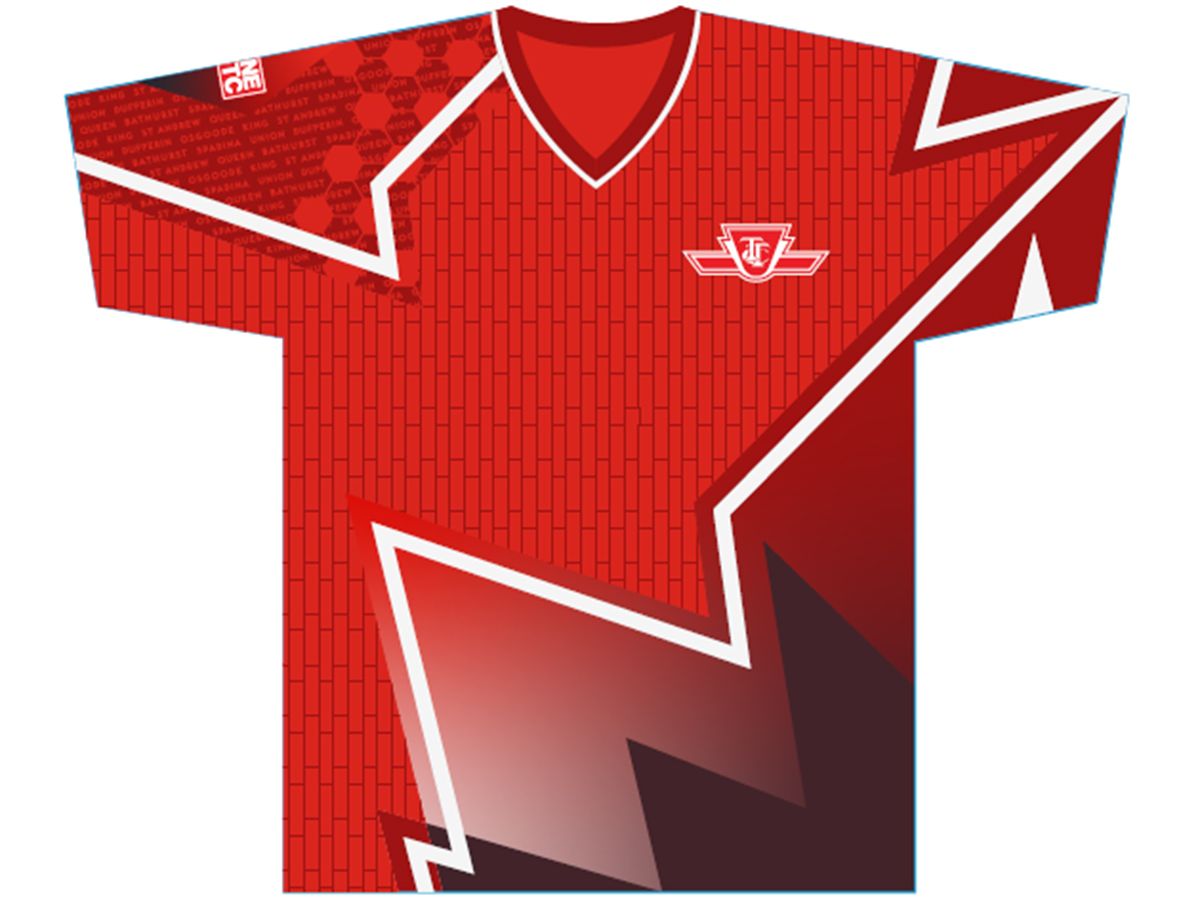
The Toronto Transit Commission is facing criticism from the Jewish community over its new staff jerseys dedicated to the FIFA World Cup.
Photos show an upside down red triangle emblazoned on the jerseys’ shoulders. In the abstract, a triangle is just a geometric shape, a common design element in sports branding. In the current climate, however, that specific motif is politically loaded, say Jewish leaders.
Since late 2023, an inverted red triangle has been widely used in Hamas propaganda videos to mark individuals and targets for attack, and has migrated into Western protests and even antisemitic vandalism of Jewish homes and institutions.
“Everybody has Google, Grok, Gemini, and can check in 10 seconds if there are any cultural or political references,” Talia Klein Leighton, president of Canadian Women Against Antisemitism, told the Post.
“Like at best, it’s an oversight. At worst, somebody is targeting the Jews with their shirt design. Well, I tend to be a little more cynical, because I’ve just seen so much in the last two and a half years.”
She added: “If I was the TTC, I would be taking it very seriously, because it’s their employees walking around with the political symbol.”
Toronto Councillor James Pasternak, whose York Centre district has one of Canada’s largest Jewish populations, told the Post that he “wondered how it (the red triangle) contributed to the jersey design, and whether a member of the anti-Israel mob inside the TTC or one of its suppliers played a sick trick. I’m going to look into it.”
The Post first learned of the story from a photo via the X feed of Caryma Sa’ad, a Toronto lawyer and video archivist, who captured the new jersey on June 3.
Not only is that an incredibly poor use of money for an organization perpetually crying for cash, but the upside down triangle looks like the Hamas symbol used to target people for death. https://t.co/mQ7vEWC1km
— Jon Fraser (@JonFraserTF) June 4, 2026
“(It’s) more than just tone‑deaf,” said Matthew Taub, director of advocacy group Unapologetically Jewish. “Toronto is home to one of the largest Jewish populations in the country, already on edge from a sharp rise in harassment and intimidation.”
“It suggests that no one in the decision‑making chain paused to ask what it might resemble,” said Taub. “Even my own (group’s) logos and apparel, five pairs of eyes see it, several times over, before we all sign off on it. I don’t think this was missed. I think it was intentional.”
He added: “The question is why, in 2026, an organization so steeped in equity jargon appears oblivious to one of the most discussed hate symbols of the last two years.”
Jon Fraser, a technology executive, chimed in on X, saying “not only is that an incredibly poor use of money for an organization perpetually crying for cash, but the upside triangle looks like the Hamas symbol used to target people for death.”
The image of a cash‑strapped transit system rolling out bespoke shirts is itself a jarring sight, given the TTC’s perpetual warnings about budget shortfalls and service constraints, Taub added.
Facing a $232 million budget hole this year from decreased ridership and fare evasion, “now’s not the time to spend money on fancy shirts,” he said.
Taub said riders who endure delays, overcrowding and safety concerns are entitled to ask how many bus repairs or platform staff hours “this marketing gimmick could have funded instead.”

The Post asked TTC media relations about the cost to design the shirts, the time involved, the cost of the current inventory, and how they respond to the apparent similarity between symbols.
They replied via email: “The TTC Ambassador shirt design features a modern, stylized maple leaf, a traditional and iconic Canadian symbol, blended with distinct TTC station tiles and names, tied together with the same TTC red that is seen on our vehicles.”
Isha Chaudhuri, spokesperson for the Brad Bradford mayoral campaign, told that Post that “If these new uniforms actually helped move traffic and transit more efficiently, that’d be a conversation. But they don’t,” she said.
“So, we see a system that is chronically saying they don’t have enough money, spending on something that will literally do nothing to help them achieve their mandate. Which is to move people safely and efficiently. We believe the TTC should focus more of its time, energy and resources on fixing transit and serving riders. Torontonians work hard for their money, and they expect taxpayer dollars to be spent wisely.”
Our website is the place for the latest breaking news, exclusive scoops, longreads and provocative commentary. Please bookmark nationalpost.com and sign up for our daily newsletter, Posted, here.