 BURST
BURSTLots of monopoly news, as usual. Big law gets snagged in an insider trading conspiracy, the politics of pricing heat up, and cabinet member Sean Duffy is doing a seven month road trip reality TV show sponsored by companies he regulates.
But before getting to all of that, I want to go hopeful. On Thursday, I co-authored a New York Times oped with the actor Mark Ruffalo on how artists are responding to the Paramount-Warner merger. They are afraid of retaliation, but they are banding together in solidarity to oppose it nonetheless. What I’m noticing, whether it’s Hollywood standing up, or the Colorado legislature just passing a bill banning surveillance pricing, or Oregon chasing corporate ownership out of medicine, we are seeing that good populist politics is bubbling up.
And with that in mind, let’s take a look at an antitrust lawsuit filed a few days ago against a private equity backed bowling monopolist called Bowlero. It may seem like a small fry, since the company is worth just a few billion dollars. But the legal conflict actually brings to bear many parts of our current political struggle. This fight is, in a nutshell, about who will control American culture, and whether we will remain, as Senator Chris Murphy notes, a lonely society, or whether we can rebuild our social and community centers.
Let’s get into it.
Bowling is classic Americana, a quintessential middle class experience, featured in classic movies like Kingpin and The Big Lebowski. 70 million Americans bowl annually, and there are a million people in 28,000 bowling leagues. Said one bowler, “The bowling alley felt to me like the last egalitarian, fun, middle-American thing.” These are community places, centers opened early to allow seniors to bowl, or to let bowling teams practice.
At the peak of bowling mania in the 1950s and 1960s, some alleys offered day care services “so parents could enjoy their game with a bit more peace of mind.” Bowling was also a field of study; sociologist Robert Putnam wrote his famous book Bowling Alone to describe changes in the American experience, using bowling leagues as the classic mechanism to create different forms of social capital.
Yet, like similar experiences, such as skiing, cheerleading, youth sports, movies, and video games, it is being rolled up by financiers, and changed from a community activity for the middle class to an upscale corporatized asset. This episode starts, as many of these stories do, in an ugly moment. In 2012, just after the financial crisis, private equity firm Cerberus and Credit Suisse bank helped supercharge a company called Bowlero, with $450 million in financing. The CEO was a man named Tom Shannon. Over the next fourteen years, Bowlero engaged in dozens of bowling center acquisitions across the country, including the brand Lucky Strike, as well as purchasing the Professional Bowler’s Association.
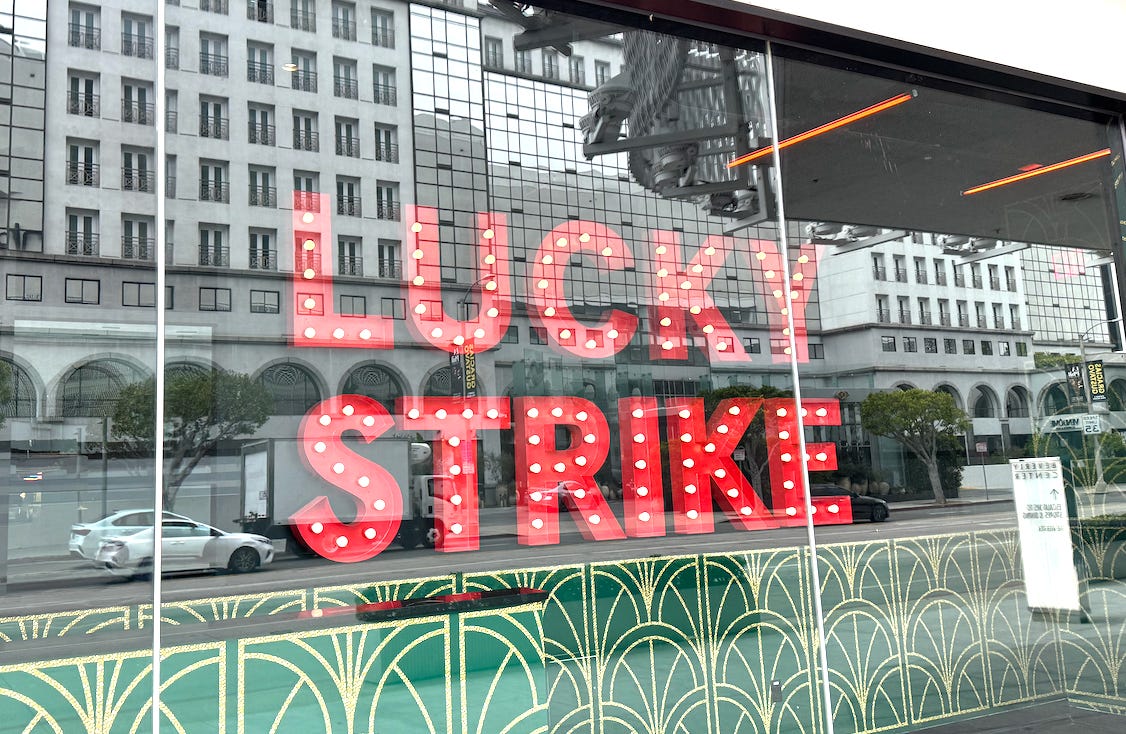
This rollup was intended to change bowling from a respected sport and middle class activity to something more akin to an extractive nightclub experience. as Amos Barshad of the Lever observed, the people behind the acquisition didn’t even like bowling. “I don’t think anyone takes bowling seriously,” Shannon told Bloomberg in 2011. “Why would you?”
Today, Bowlero owns 360 bowling centers and takes in 35% of the total industry revenue. For frame of reference, the next biggest competitor has just 64. And in all but four markets, its acquisitions led to significant market share increases. Take Northern Virginia, where its market share increased from 34% to 95%.
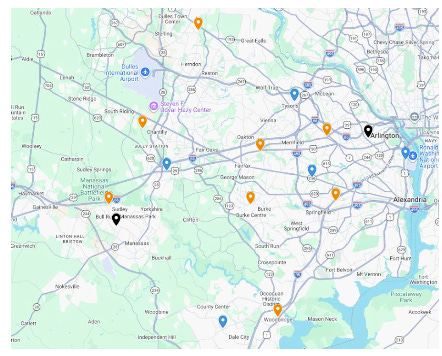
Bowlero has seized dominant shares in markets such as Los Angeles, San Francisco/Oakland, Santa Rosa, Seattle, Phoenix, Denver, Appleton, Milwaukee, Chicago, Grand Rapids, New York, Philadelphia, Baltimore, Richmond, and Ft Myers.
One result is higher prices. For instance, the complaint reads, “some reports show a year after Bowlero acquired Northrock Lanes, the cost of lanes, food, and beverages had tripled at this bowling center.” They also implemented dynamic pricing. As Bowlero President Lee Ekster put it, “[o]ur goal is to fill the centers on the weekends at the highest price we can” and “ultimately dynamic pricing allows you to do that.”
There is also a fundamental change in the quality of the sport. It cut less profitable hours; Lucky Strike L.A. doesn’t even open until 4pm on the weekdays. Bowlero centers feature loud nightclub-style music, with shoddy service. As the Lever noted in 2024, “The bowlers say prices have gone up. They say the pinsetters keep breaking down, and since there are no mechanics on site.” Then there are the constant attempts to upsell customers on food and drinks, and the dive into gambling through Bowlero’s MoneyBowl app. Here’s the complaint:
For instance, Bowlero launched its MoneyBowl app in 2022. MoneyBowl solicits bets from customers on various bowling outcomes (e.g., bowl a certain score) and provides odds-based payouts or, in states in which gambling laws prohibit such activity, coupons to be redeemed within the Bowlero center. Bowlero estimated to market analysts that successful implementation of MoneyBowl would increase games played by customers. And, because MoneyBowl is linked to each lane’s scoring system, it is constantly tracking customers and providing what one market report called “an attractive opportunity to learn more about the customer.”
There are also ways that Bowlero uses its scale to disadvantage rivals. The company gets special pricing from the small number of companies who provide bowling infrastructure, like lanes, pinsetters, and lane management software. It has deals with Kegel, the leader in lane conditioning oil, so it gets better prices than rivals. And a major marketing channel is the Professional Bowler Association, which it owns, hosting PBA tournaments at its own centers while charging rivals significant amounts to host.
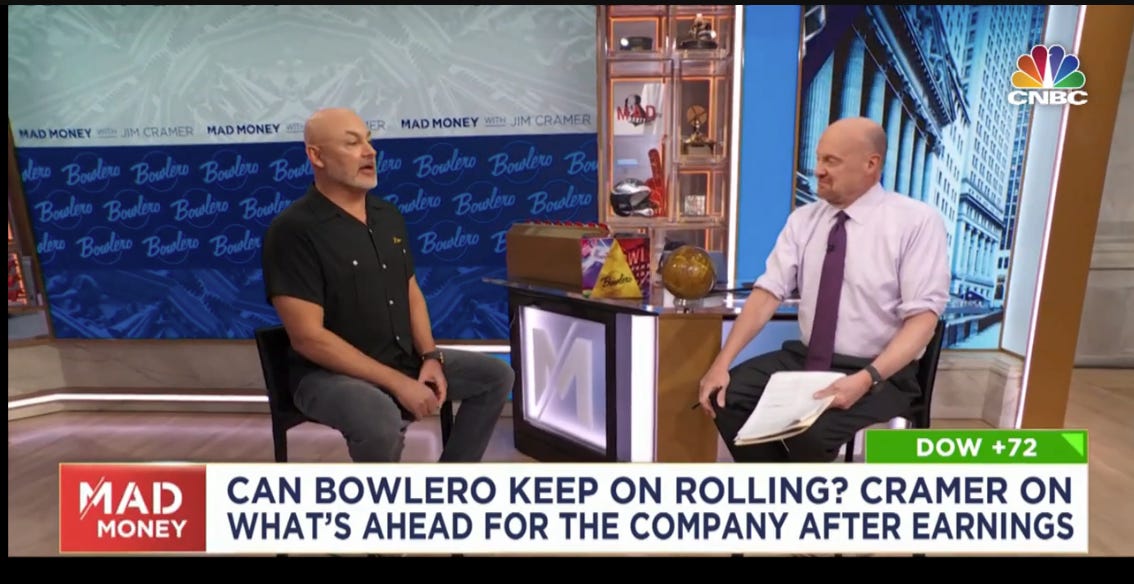
And the plan isn’t to stop just at bowling. Since 2024, Shannon has been pursuing the acquisition of water and amusement parks. “The playbook,” he said, “is the same as it has been for bowling.” And of course, CNBC’s Jim Cramer loves the company.
But that’s not the end of the story. In 2024, The Lever, an independent reader-funded outlet did an in-depth investigation of Bowlero, likely prompted by reader complaints. “For the most part, Bowlero doesn’t build its own centers,” said the piece. “Instead, it purchases existing ones and makes them over in the Bowlero style: dim lights, loud music, expensive cocktails. At Bowleros, bowling isn’t bowling. It’s “upscale entertainment.”
Then this week came the class action complaint. The lawyers are primarily using the Clayton Act, but also a host of state laws against unfair practices. What they are asking for are not just the standard plaintiff lawyer request, which is to say, money. They want a court-ordered breakup of Bowlero to unwind what they say are its legion of illegal acquisitions, an end to favorable terms from suppliers, an injunction against further mergers, and damages for bowlers. And they are seeking a jury trial, meaning they want to present this case in front of normal Americans.
And these aren’t just any old lawyers, they are part of a new generation of legal talent. The lead is Catherine Simonsen, who did merger work at the Federal Trade Commission under Khan. Before that, she was a leader in the Antitrust Section of the California government. The firm, Simonsen Sussman, is part of a new constellation of law partnerships using creative interpretations of the antitrust laws to get relief.
So there we go. It’s an ugly time, but the anti-monopoly argument is simply getting stronger and deeper. And I think that says something about how the argument over market power explains the world most of us see. Ultimately, that’s why we’re going to win.
And now, for the rest of the news round-up. This one’s got a bunch of insane stories. Oligarchs say that asking for higher taxes on the rich is a form of racism, the Secretary of Transportation is taking a seven month road trip to do a reality show sponsored by companies he regulates, and signs of recession keep bubbling up. Plus, Trump invites the Fortune 500 CEO class on his trip to China, and big corporate law firms run by Yale law grads got caught in a massive insider trading scandal around mergers.
Read on for more.