 BURST
BURST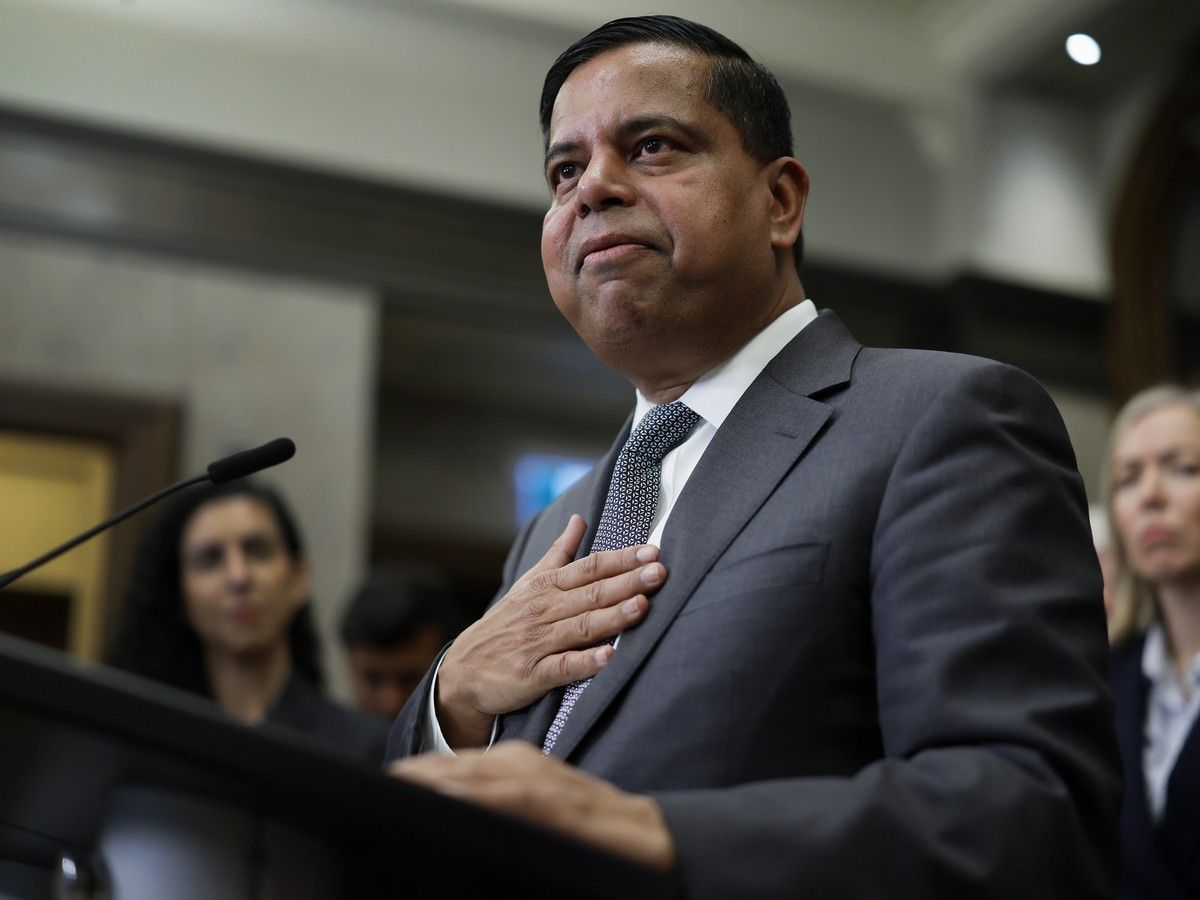
OTTAWA — Public Safety Minister Gary Anandasangaree says he wants his embattled bill facilitating police and intelligence agencies’ ability to intercept and collect personal information to be law by June 19.
“My expectation is to get it done before we rise. I want this as law before we rise,” Anandasangaree told National Post Wednesday about his Bill C-22.
With the House of Commons set to rise for the summer break on June 19, the minister’s ambitious timeline for the controversial bill suggests he’ll be pressuring both the Commons public safety committee (which is currently studying the bill) and then the Senate to move quickly.
“I’m known as an optimist,” Anandasangaree noted during the interview while arguing that police and intelligence forces are telling him they needed the changes in Bill C-22 “yesterday”.
That doesn’t mean the bill will remain untouched, though, as the minister promised amendments to address growing privacy and security concerns about the legislation.
Whether opposition parties — who have all decried the limited number of committee meetings to study the bill and expressed profound discomfort with the current bill — and the Senate play ball with the minister’s timeline is a completely different question.
Already on Tuesday, the Conservatives tabled a motion at the public safety committee to extend the study on Bill C-22 for another eight hours in order to hear a coterie of other ministers and experts. Witness hearings on the bill are expected to wrap up Thursday evening.
Conservative MP Frank Caputo and Bloc Québécois MP Claude DeBellefeuille accused the Liberals Tuesday of trying to “ram” the legislation through committee and not giving MPs enough time to study the contentious bill.
In the interview, Anandasangaree also argued that threats from certain tech companies such as Signal or NordVPN that they may leave Canada if the bill passes are “overstated.”
“Essentially, every major democratic jurisdiction has a similar framework,” he said of lawful access regimes.
Bill C-22 proposes a new lawful access regime which would make it easier for police and intelligence agencies to intercept private communications or personal data as part of their investigations.
Lawful access is one of the most intrusive powers afforded to police and intelligence agencies. Creating such a regime for the digital age in Canada has been the subject of fierce debate for decades.
Bill C-22 proposes that police and the Canadian Security Intelligence Service (CSIS) be able to approach telecommunications companies and ask them if, yes or no, an individual is a client before having to get a warrant for more information. It then sets out a new path for authorities to obtain client information from the companies with the appropriate warrant.
The bill also proposes new obligations to electronic service providers to organize and retain various types of client data for up to one year in a way that makes it obtainable by law enforcement or CSIS with a warrant.
That means that if passed, the bill would compel electronic service providers to store and make information like device locations or cameras available to police or CSIS with the requisite warrant. That could be used to track a person’s live location in case they pose a threat to national security or are considered to be in danger, the government cited as examples.
The bill is strongly supported by police services across Canada and CSIS, who argue that their investigations into serious crimes like extortion, terrorism or child sex abuse material are significantly hampered because of Canada’s lack of a modern-day lawful access regime.
But there has been a recent groundswell of opposition against the bill by civil liberties advocates and tech companies like Apple, Meta and Google who argue that the bill goes too far and could significantly undermine Canadians’ right to privacy.
The tech companies have charged that the bill could allow the government to order them to create a “backdoor” into their systems, creating a vulnerability that could also be exploited by criminals.
In the interview, Anandasangaree bristled at the use of the term “backdoor,” which he swears the bill does not create. But in the face of growing concerns about that possibility, he promised he would propose an amendment to make it clear that won’t happen.
“Oftentimes, the concept of this ‘backdoor’ is what comes up repeatedly,” he said of criticism of Bill C-22. “I think we’re going to clarify that there is no backdoor, no attempts to breach encryption.”
National Post
cnardi@postmedia.com
Our website is the place for the latest breaking news, exclusive scoops, longreads and provocative commentary. Please bookmark nationalpost.com and sign up for our politics newsletter, First Reading, here.