 BURST
BURST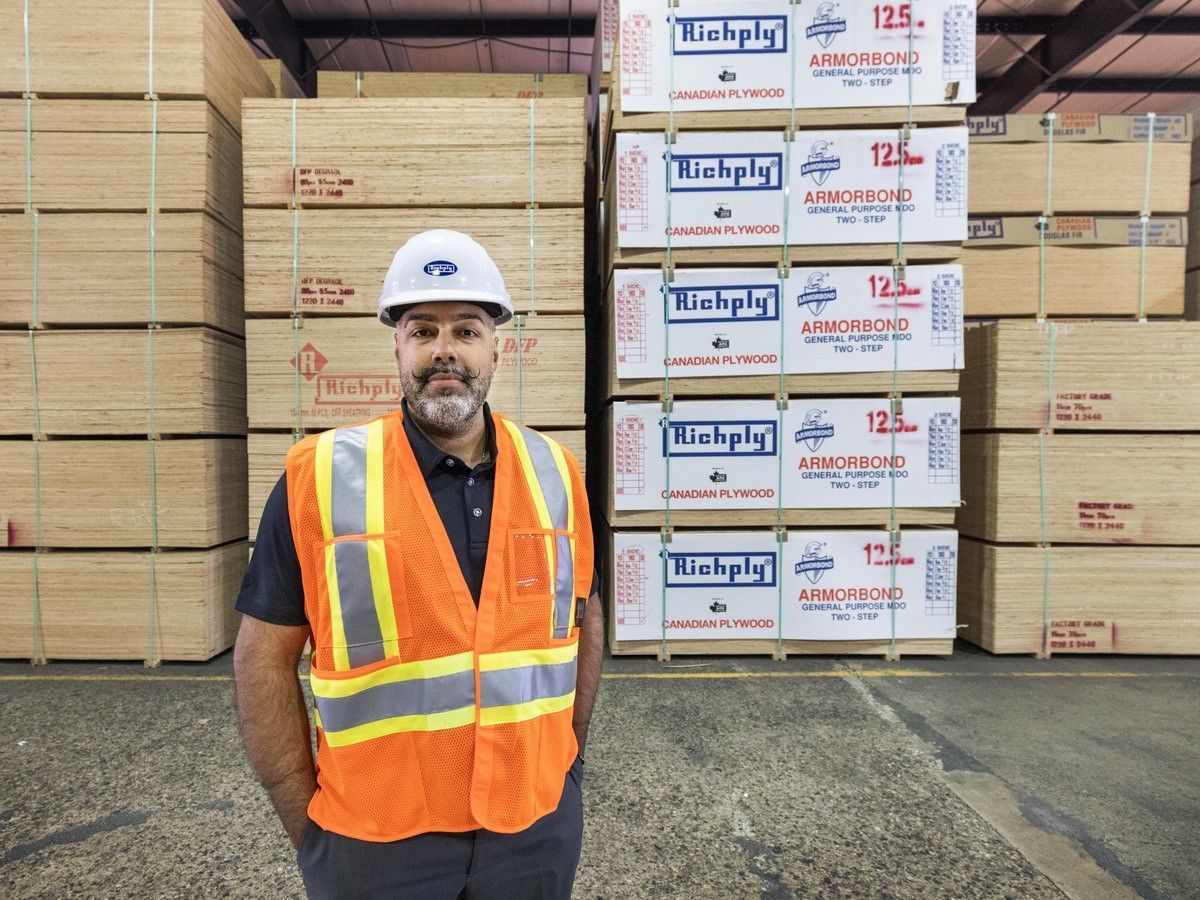
With Canada and the U.S. now entrenched in a full-on trade war, companies in B.C.’s forestry sector are looking for governments to add measures to support the industry beyond the initial round of counter tariffs.
On Tuesday, Prime Minister Mark Carney’s cabinet rolled out its response to U.S. President Donald Trump’s Section 338 tariffs, which included 25 to 50 per cent counter tariffs, due to take effect Sept. 8, on the same categories of wood product, as well as $7.5 billion in financial supports.
“Yes, those will help us, because they will protect our market, so it’s not a one-way street,” Bhavjit Thandi, the chief financial officer at Richmond Plywood. “It’ll be at least what they did to us.”
The company’s corner of the forest-products industry hopes that, beyond counter tariffs, Ottawa and Victoria will add steps to “Buy Canadian” policies that will help build the market for their product.
The industry wants governments to focus on other measures and to streamline regulations that reduce costs and improve access to timber.
“Not a bailout, but some sort of way to protect the industry until things get better,” Thandi said. “Because the way that Trump is talking now, I think it might get a lot worse.”
Tariffs are a new reality for plywood makers, which previously weren’t caught up in the Canada-U.S. softwood lumber dispute, which sees Canadian lumber exports hit with punitive duties that totalled an average of 45 per cent in 2026.
Richmond Plywood’s immediate response to the breakdown of trade talks last Friday was to call back a shipment of eight truckloads of its product waiting to cross the U.S. border, which Thandi estimated could have carried a tariff bill of up to $800,000.
“And we’ve reduced our production (by) a day as well,” he said. “So these are immediate impacts.”
Thandi added that there are measures government can take to help his company sell that plywood in Canada. Richmond Plywood, along with its competitors, formed a coalition to formally present those measures to Ottawa and Victoria at the end of July, when Trump first threatened this round of tariff escalation.
Last fall, Ottawa started a “Buy Canadian” mandate for wood products used in federal public projects, and Thandi said their industry group would like to see it prioritize the purchase of Canadian-manufactured plywood and veneer to help replace lost U.S. sales.
The group, known as the B.C. Plywood and Veneer Manufacturing Coalition, is also asking Ottawa to review international plywood imports for compliance with Canadian standards, which would include checks for third-party certification and engineering documentation of product for structural use.
Thandi said companies have received reports of plywood imported from China and Vietnam, which hasn’t received Canadian certification, being used on public projects. He added they can’t compete with those producers “on an uneven playing field.”
“We got responses from both levels (of government),” Thandi said. “They’re trying, but we’re not the only industry affected by tariffs.”
Kim Haakstad, CEO of the Council of Forest Industries, which represents the major lumber producers that have been embroiled in the softwood lumber dispute for the past nine years, said her group backs the new plywood coalition’s requests.
“We make fantastic plywood here in B.C.,” Haakstad said.
B.C. is already ahead of Ottawa in prioritizing wood products in public projects through requirements in its Wood First Act.
But Haakstad said the Council of Forest Industries is aware of the same reports of international plywood imports finding their way onto construction sites. So her group “would actually like to see a real doubling-down on the use wood in all provincial government procurement.”
In an unattributed email response to Postmedia questions sent before counter tariffs were announced, a ministry of forests said B.C. is willing to “fill any gaps in the federal supports,” and will look for other ways to get businesses and workers additional assistance.
“While Trump wanted to tie our hands and prevent us from finding new trading partners, B.C. is going to keep aggressively pushing forward with our work to find new markets for B.C. products with countries who want to trade with us,” the statement said.
Haakstad added that the new uncertainty underlines the need for both Victoria and Ottawa to speed up efforts to overhaul and streamline regulatory requirements that reduce their costs.
The ministry is in the process of working with Indigenous nations and industry on new rules for managing forests, aiming for area-based tenures for forest companies that will give them more certain access to timber.
Haakstad said the Council of Forest Industries is supportive of those efforts, but “it’s not moving fast enough to meet the moment and to address the challenges the sector has right now.”