 BURST
BURST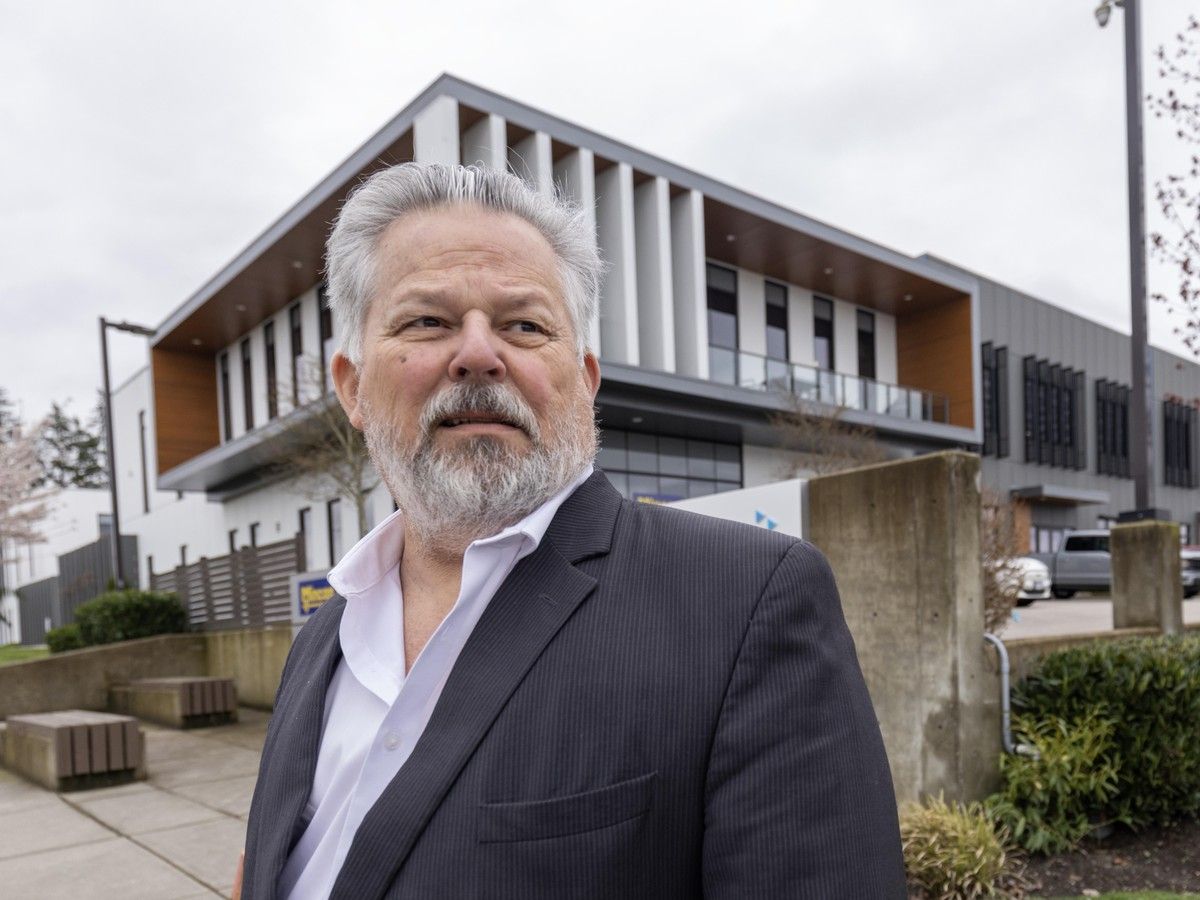
When Scott Wheatley raised the idea of an airport for Surrey at a recent business lunch where Mike Farnworth, B.C.’s transportation minister, was guest speaker, it wasn’t some airy notion.
The head of the Cloverdale district chamber of commerce had been hearing from business owners about the need for better air access to Campbell Heights, the Lower Mainland’s largest industrial area.
But Wheatley wasn’t prepared for the response his “simple question,” asked during a public Q&A session after Farnworth’s speech, would receive.
“I never really expected any kind of response,” he said.
The idea took off, particularly online , where some people said Surrey needed its own airport to keep up with the rapid growth, with its population predicted to surpass Vancouver as B.C.’s largest in a little over a decade. Others pointed out that the city was already well-served by airports in Langley and Boundary Bay, not to mention Abbotsford and Vancouver.
Wheatley said he plans to talk to Surrey City Hall and South Surrey MP Ernie Klassen, before possibly making a more formal pitch to Farnworth, although what he has in mind is quite modest and would primarily serve local business.
Although Surrey once had an small private airport , it, like Vancouver, now does not have an airport within city limits. As the city grows, it will likely become more difficult to find a large enough piece of land to accommodate an airport.
Farmer Tyler Heppell posted a video to TikTok to share his thoughts on using farmland for an airport, in particular a 1.2 square kilometre field in Campbell Heights that was once a federal government radar site.
Heppell, whose family leases the field to grow potatoes and other vegetables, has spent the last four years advocating to keep the field in agricultural production.
“We’re talking about developing our farmland that feeds all of Vancouver for two to three weeks a year at a time when basically no other fields are producing food,” he said in the video. “Protecting farmland shouldn’t be this difficult.”

At the business event, Farnworth appeared to take Wheatley’s question seriously.
As reported in the Surrey Now-Leader, he said airports are federal jurisdiction, so it would need to be a “case of the province working with the federal government to say ‘Hey, we think there’s an opportunity here for an airport.’”
Farnworth said that in order to advance a proposal, he would need a better understanding of the location, size and “things like that,” and invited Wheatley to send his ideas.
Wheatley said that as the City of Surrey continues to grow, it makes sense to be thinking about an airport.
“I don’t know if an airport should be the top priority, but I think it’s something we could see in the next 20 years,” he said.
Wheatley said Campbell Heights, with its proximity to the U.S. border, is one of the Lower Mainland’s employment centres. He has heard from businesses that would like easier access to the area for private jets carrying executives and, in the case of the movie industry, talent. That would require some kind of customs building and longer runways than what is available in some neighbouring cities.
As the U.S. continues to put pressure on Canadian businesses through tariffs, he is worried about some deciding to relocate south to Washington.
“I think (an airport) would make the city more attractive to business, and from a chamber perspective, anything I can do for my members, to make things easier, I’ll do it,” he said.

But government seemed cautious about the idea.
In a statement, the City of Surrey said it has had “no discussions with (other levels of) government about a new airport.”
The B.C. Transportation Ministry reiterated that airport planning and certification fall under federal jurisdiction.
“Any future proposal would need to be evaluated based on a range of considerations, including land use, environmental impacts, transportation integration and community interest. At this stage, neither the City of Surrey nor the federal government have approached the province on developing a new airport in the Campbell Heights area.”
Transport Canada said it had not received a proposal for a new airport in Surrey.
In his video, Heppell urged governments to prioritize food security.
The field, which the federal government has indicated it is planning to divest, can be planted and harvested in even the wettest conditions, providing a supply of local potatoes, carrots and cabbage before any other B.C. field crops are ready, he said.
For years, it had been eyed for a new industrial park, but in 2022, a petition signed by 80,000 people and supported by some local politicians led to a movement to add it to B.C.’s farmland reserve.
That idea stalled after three B.C. First Nations made it clear they were seeking the field’s return in “government-to-government” discussions , as it is the last substantial piece of Crown land in their shared traditional territory and a key part of their cultural and economic future.
Semiahmoo Chief Harley Chappell said at the time that the Semiahmoo, Katzie and Kwantlen Nations had been “at the table on and off” with the federal government for over 20 years discussing the land.
Wheatley said he isn’t proposing an airport on the potato field, but there are several other sites that might be appropriate in Campbell Heights if the discussion ever gets off the ground.
“But honestly, at this point, I’d rather get buses into Campbell Heights than airplanes,” he said.