 BURST
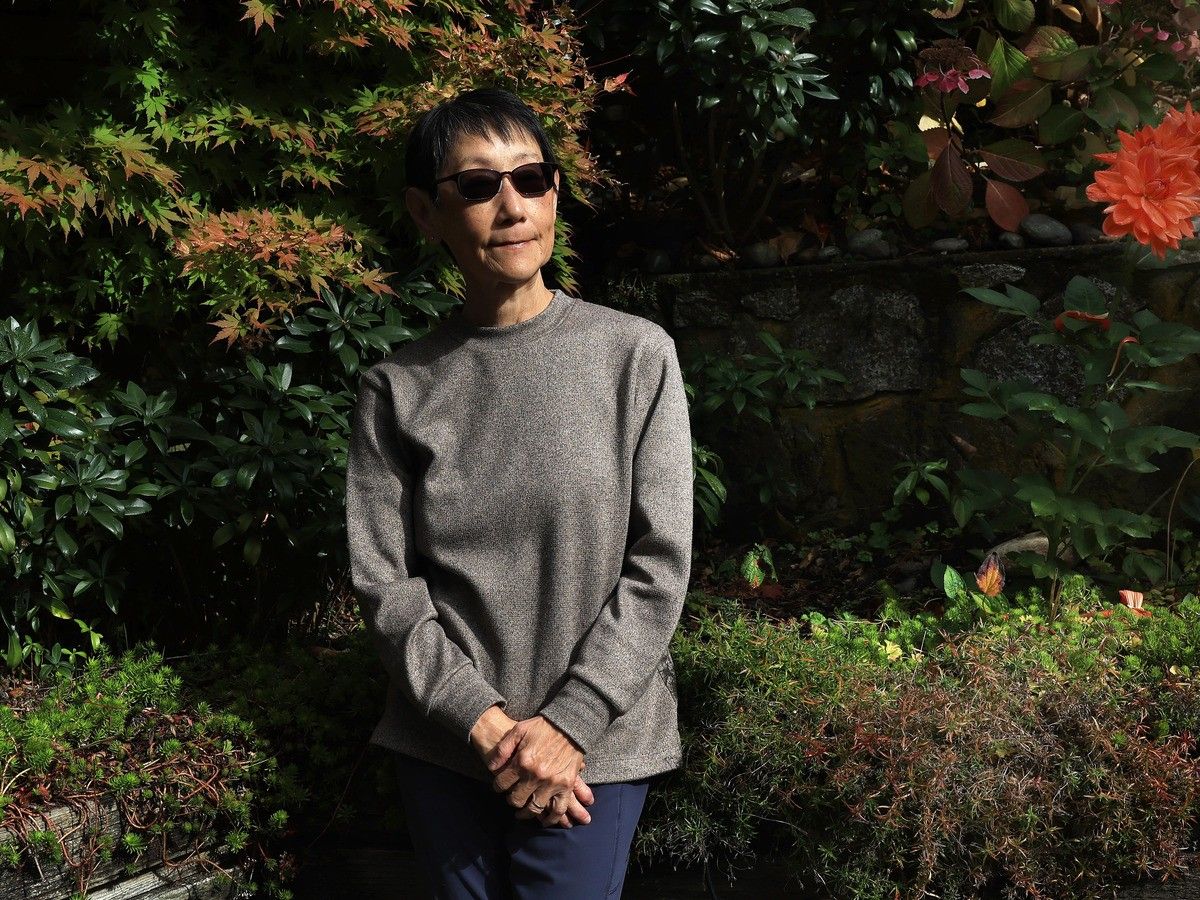
When Floria Tsui stepped back from her career as an obstetrician-gynecologist in Edmonton and moved to Vancouver in 2020, she looked forward to a retirement filled with travel and new joys.
In the spring of 2022, when she felt an unusual discomfort in her central upper abdomen, she wasn’t alarmed. But she did bring it up with her new family doctor.
“Half-joking I said, ‘I hope this is not pancreatic cancer,'” said Tsui, 63, of White Rock.
Tsui had no idea that her abdominal discomfort really was the beginning of a harrowing pancreatic cancer journey, but she knew something was wrong. The discomfort in her body was new.
Now Tsui is now sharing her story to raise awareness of pancreatic cancer and the importance of early diagnosis and self-advocacy ahead of a 5K run, Kicking PancreAS , taking place in Vancouver on Nov. 7 and organized by Craig’s Cause Pancreatic Cancer Society .
Tsui is urging others who think there might be something wrong to advocate for themselves, as she had to do herself.
Pancreatic cancer is the third-leading cause of cancer deaths in Canada, with a five-year survival rate of just 12 per cent, according to the Canadian Cancer Society . In B.C., 1,200 new pancreatic cancer cases and 970 deaths are expected in 2026.
The pancreas is an organ, hidden deep in the abdomen, that produces digestive enzymes and releases insulin. Pancreatic cancer symptoms aren’t always obvious, and often appear only after the cancer has spread. Early detection is critical for survival.
On her first doctor’s visit, Tsui said she wondered aloud if she should have an ultrasound. But the doctor ordered an H. Pylori test instead, looking for a bacteria that causes digestive issues. The test came back negative.
Tsui felt lucky to have a family doctor, and didn’t want to push too hard. But in the spring of 2023, the pain became more bothersome. She asked her doctor again about getting an ultrasound. Instead, the doctor decided to repeat the H. Pylori test. It, too, came back negative.
He then prescribed a medication to reduce stomach acid. “I said, ‘OK, fine, I’ll try it. But do you think I could get an ultrasound?'”
The doctor told her she didn’t need one, said Tsui. She tried the medication for a month. No difference.
She explained that the medication wasn’t helping her at all, and said definitively she needed an ultrasound.
“I didn’t want to lose the GP by confronting him or being angry, although I was really scared of having pancreatic cancer. It’s something all medical people know is a death sentence.”
The doctor, Tsui said, wanted her to complete other routine tests, including a Pap test, before doing an ultrasound. Precious time was wasted waiting to get in for the pap smear, said Tsui.
In September 2023, her doctor finally gave her a requisition for the ultrasound, which she then had to wait for. It had taken more than a year.
“It showed a mass in the head of the pancreas. He called me that afternoon,” said Tsui.
Once the ultrasound showed the mass in her pancreas, things kicked into gear — blood work, a CT scan, a referral to a surgeon for a biopsy. But Christmas holidays brought further delays. She spoke to the B.C. Cancer agency on Jan. 2, 2024, and was informed her first appointment with the oncologist would be Jan. 23. Another three weeks.
She asked to be put on a cancellation list. Two days later, she called again only to learn that request had not been recorded on her file.
That same afternoon, they called back and offered an earlier appointment. “By persisting, I got in to see the oncologist on Jan. 12,” said Tsui.
Her oncologist gave her a grim prognosis. The tumour was close to a major vein, and chemotherapy was needed to shrink it before surgery could be done. More waiting meant a greater chance the tumour would spread.
“I had no hope. It was very tough,” said Tsui.
Tsui decided to get a second opinion in Seattle. There, the physician approved of the treatment plan she was on, and confirmed the tumour was shrinking. He also said something she hadn’t heard before.
“He said: ‘We are aiming for a cure.'”
What she heard was hope. “The fog of depression just lifted.”

Relieved, Tsui continued her chemotherapy in B.C. Although it was physically debilitating, the tumour shrank enough to allow for surgery. In June 2024, Tsui had a successful Whipple procedure in B.C., a complex seven-hour surgery to remove the tumour, and 12 lymph nodes.
Tsui now has no detectable signs of the disease. She joined a peer support group through Craig’s Cause Pancreatic Cancer Society.
“We share our difficulties and victories on a Zoom call every week,” said Tsui. “I really encourage people with cancers of any kind to get into a peer group for ideas and support.”
Although the U.S. Food and Drug Administration recently approved a promising new oral medication for metastatic pancreatic cancer — Rasonque (daraxonrasib) — the drug is not yet available in Canada, although some unapproved drugs can be accessed through Canada’s special access program .
Tsui said she believes everything happens for a reason.
“It’s important to become proactive, not reactive.”
For others who may feel dismissed by their physician, or find themselves waiting and wondering, her advice is simple: “Make the call. Follow up. Failures can happen. You don’t want to fall through the cracks.”
Most importantly, she said, “When you think there is something wrong, you know your body best. You need to keep asking and keep pushing.”