 BURST
BURST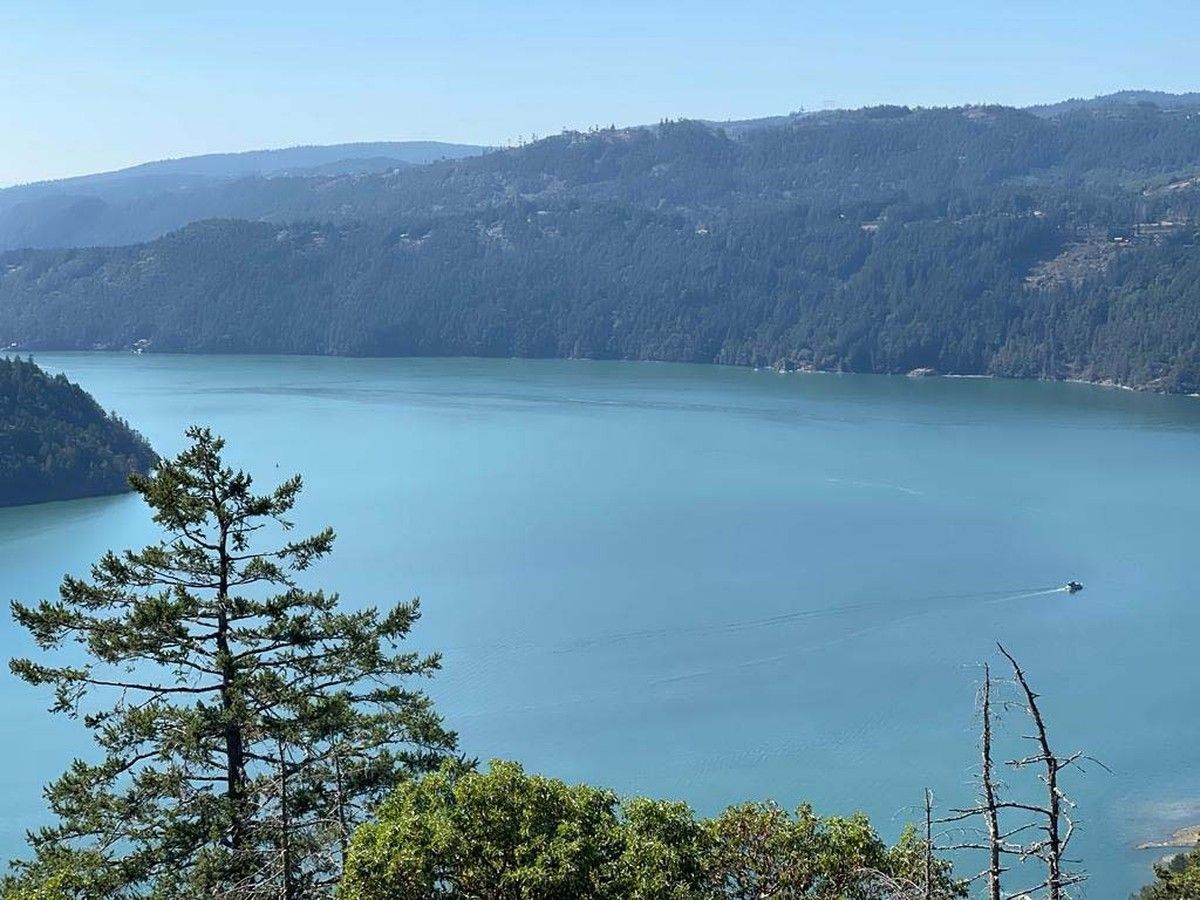
U.S. President Donald Trump signed an executive order this week to rename Lake Ontario to Lake America, a move swiftly dismissed by Prime Minister Mark Carney.
“We know that America is changing. Their trading relationships, their foreign policies, their national monuments, their hydronyms,” Carney posted on social media. “Canadians also know that naming reality means calling it Lake Ontario — then, now and always.”
The name Lake Ontario has been around for centuries, named after a Wendat word, Ontar’io, which means ‘the lake is beautiful, the lake is big.” The name predates both the Confederation of Canada and the Declaration of Independence of the U.S.
For now there is no indication that Trump is coming after other landmarks that cross the Canada-U.S. border. But if he does, there are several in B.C.
From towering peaks and glacial rivers, to freshwater lakes and a giant ice field B.C. shares some remarkable pieces of geography with its southern neighbour. Here are 10 natural features that cross the border and the origins of their names.
Osoyoos Lake

Location: Osoyoos Lake lies on both sides of the border, with the town of Osoyoos, B.C., sitting on the northern part of the lake and the city of Oroville, Wash. and its dam on the southern tip.
Named after: The Okanagan First Nations word sw̓iw̓s, which means the “place where two lakes meet.” It refers to the narrows formed by two sand and gravel spits across the lake.
Did you know: Osoyoos Lake is widely known as Canada’s warmest freshwater lake, with summer temperatures averaging around 24 C in July and August.
Columbia River

Location: The largest river in the Pacific Northwest, the Columbia River weaves its way roughly 2,000 kilometres from the Rocky Mountains through southeast B.C. to Washington state and Oregon before reaching the Pacific Ocean.
Named after: The river was named by American Captain Robert Gray after his ship Columbia, which entered the mouth of the river near present-day Astoria, Ore., in 1792. The ship honoured Italian explorer Christopher Columbus whose 1492 expedition reached the Americas.
Did you know: The Columbia River is heavily harnessed for hydroelectric power. It is home to 14 dams, including three in Canada which produce roughly half of B.C.’s electricity.
Mount Fairweather

Location: Part of the spectacular Saint Elias Mountains, Mount Fairweather sits along the B.C.-Alaska border, with its Canadian side within Tatshenshini-Alsek provincial park and its American side in Glacier Bay National Park.
Named after: Captain James Cook gave the mountain its optimistic name in 1778, apparently after encountering unusually favourable weather in the area
Did you know: At 4,671 metres, Mount Fairweather is B.C.’s highest peak and the seventh-highest in the U.S..
Mount Quincy Adams

Location: Also on the Alaska-B.C. border, Mount Quincy Adams rises just five kilometres from Mount Fairweather
Named after: John Quincy Adams, the sixth U.S. president, in 1923.
Did you know: At 4,150 metres, the mountain is B.C.’s second highest peak, which means the province’s two highest mountains are shared with Alaska (The highest mountain that’s entirely within B.C. is Mount Waddington at 4,016 metres).
Skagit River

Location: The Skagit River is in Manning Provincial Park in southwestern B.C. and winds about 240 kilometres through Washington state before emptying into Puget Sound.
Named after: The Coast Salish Skagit people. But the meaning is unclear, although the B.C. geographical names office says it may derive from a Salish word meaning “to hide or conceal.”
Did you know: The Skagit is the subject of an unusual Canada-U.S. deal. Three dams harness its waters, including Ross Dam near the Canadian border. Under a 1984 treaty, the U.S. agreed not to increase reservoir levels so it wouldn’t flood into Canada. In return, Canada agreed to supply the U.S. with electricity to compensate for the lost generating capacity. The treaty is guaranteed until at least 2065.
Stikine Icecap
Location: A vast expanse of ice spanning the Alaska-B.C. border in the Boundary Ranges of the Coast Mountains. The Stikine Icecap feeds a constellation of glaciers, including the Dawes and LeConte glaciers in Alaska and B.C.’s Great Glacier.
Named after: The name Stikine comes from the Tlingit word Shtax’heen, which means “muddy river” a reference to the silt-heavy waters of the nearby Stikine River.
Did you know: The region is a magnet for alpinists and adventurers, who have likened its landscape to Patagonia because of its jagged granite peaks and notoriously unpredictable weather.
Taku River

Location: The 576-kilometre Taku River starts in the Coast Mountains in northwestern B.C. and flows south into Alaska, ending at Taku Inlet in the famed Inside Passage.
Named after: The Tlingit word T’aaḵu, which means “the people.”
Did you know: The Taku River watershed is one of the most productive in the Pacific, supporting all five species of Pacific salmon. Salmon stocks are jointly managed by Canada and the U.S., with the Taku River Tlingit First Nation playing a key role.
Alsek River

Location: The glacial river starts in the Yukon, near Kluane National Park, and flows roughly 250 kilometres through B.C. and Alaska.
Named after: “Place where people rest” in the Tlingit language. It was recorded as Alsekh by Russian explorer Mikhail Tebenkov in 1825. Canada and the U.S. officially adopted the name Alsek in 1891.
Did you know: Glaciers calving into the Alsek river have periodically blocked the flow of the river. In one instance in 1850, it created an 80-kilometre long glacier-dammed lake that then drained, causing catastrophic damage.
Salish Sea

Location: A network of inland waterways in the Pacific Northwest that stretches from Desolation Sound in B.C. to near Olympia, in Washington state.
Named after: The Coast Salish, whose traditional territories surround the sea. The name was first proposed by Stz’uminus elder George Harris and was officially adopted by geographical naming authorities in the U.S. and Canada in 2009.
Did you know: The Salish Sea did not replace the names of individual waterways. Instead, it is used as an encompassing term for the interconnected waters of the Strait of Georgia, Juan de Fuca Strait, and Puget Sound.
Chilliwack River

Location: The 80-kilometre Chilliwack River begins at Hannegan Pass in Washington state’s North Cascades and flows north across the 49th parallel into B.C. It winds through Chilliwack Lake before continuing west toward the city of Chilliwack.
Named after: The St?:lo word Ts’elxwéyeqw, which has been translated as “valley of many streams” or “going as far as you can go upriver.”
Did you know: After passing beneath the bridge at Vedder Crossing, it becomes the Vedder River. Together, the Chilliwack and Vedder are well-known for whitewater rafting and its salmon and steelhead runs.