 BURST
BURST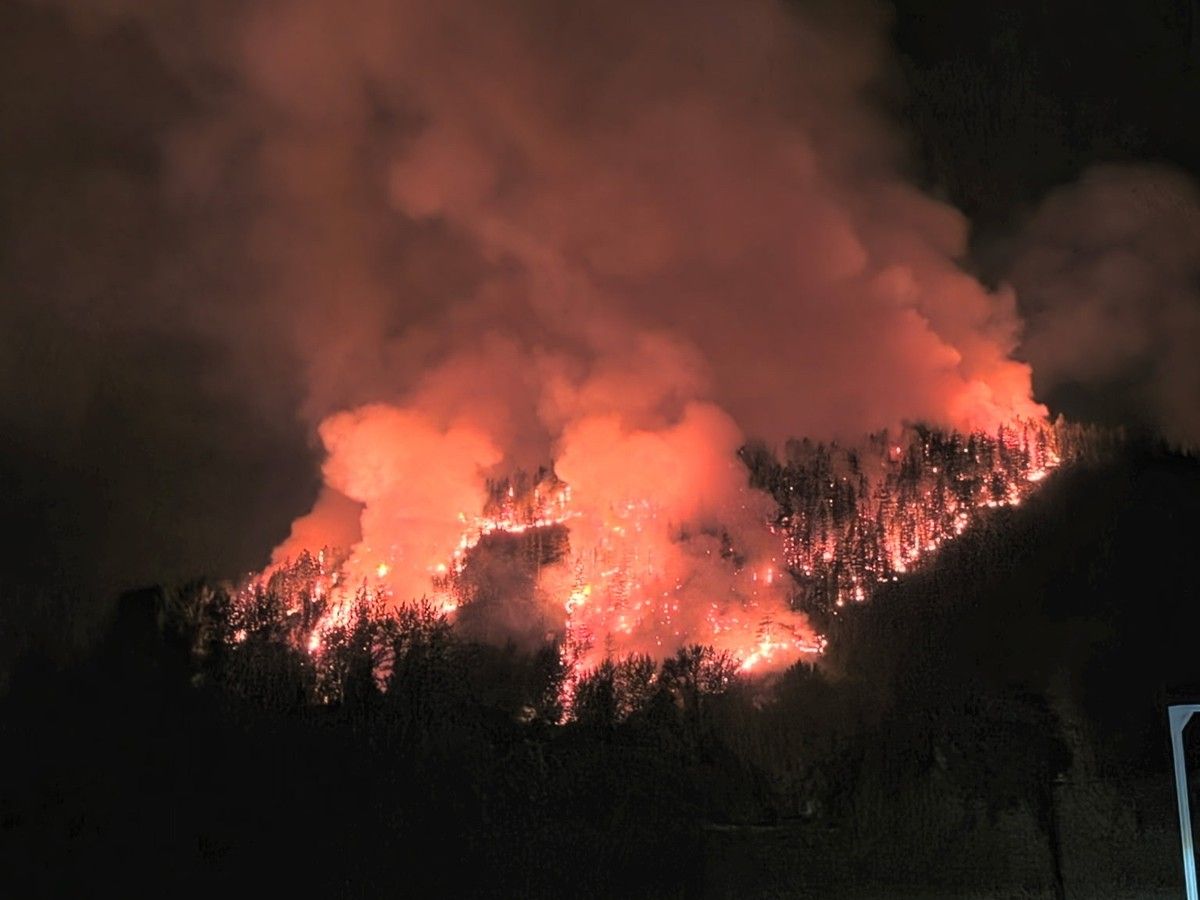
The wildfire season in B.C. is starting to ramp up.
Following a quiet early-season start, wildfire activity has jumped significantly since mid-July, after about 34,000 lightning strikes hit the province in a weeklong period.
So far, about 975 square kilometres has burned, or less than one third the size of Metro Vancouver. Most of that in the southern half of the province. The total is much smaller than the 20-year average of 5,100 square kilometres or the area burned in extreme years which has topped more than 10,000, and even 20,000 square kilometres by this point in the season.
But there’s two months left in the fire season — and there are fires raging in parts of the province where it is expected to continue to be hot, dry and windy, and where the forest is loaded with fuel.
There’s also more lightning in the forecast.
“I think we are just now starting the core of the our wildfire season here in British Columbia,” Ravi Parmar, B.C.’s forests minister, said in an interview on Friday.
He said the wildfire service’s initial attack success rate to date, keeping 90 per cent of fires under five hectares, is likely to be challenged in the weeks ahead.
“We expect to see some pretty extreme fire behaviour in the southern half of the province,” said Parmar.
The province is already gearing up for increased wildfire activity, including making provisions to bring in out-of-country firefighters if necessary, he said.
There are more than 100 active fires in the province, with growing major fire complexes in the Boston Bar area in the Fraser Canyon, in the Clinton area of the Cariboo, and near Kimberley in the southern Interior, some of which have burned homes and resulted in evacuations and alerts.
About 1,900 personnel are on the ground fighting wildfires in B.C., about 800 to 900 of them with the B.C. Wildfire Service.
The province also utilizes personnel from the forest sector and contractors to help bolster the firefighting force.
About 105 helicopters and other fixed-wing aircraft are being used to tackle the blazes.
And for the first time, the province used drones to light back fires to help stop the advance of wildfire in the Boston Bar area.
Robert Gray, a wildfire ecologist with decades of experience in B.C., said even if this season does not end up burning a large area, or become a record year, smaller fires can be very consequential.
That can include homes burning and major highways and railways being closed, as has happened in B.C. this fire season, which can have a huge impact on commerce, he noted.
And the smoke can have significant health impacts on people, said Gray.
“You don’t have to burn a half a million hectares to have a really big, bad impact,” said Gray, who contributed to the 2003 firestorm provincial review, which launched B.C.’s approach to building wildfire resiliency.
He said it’s why it is so important for the province to do more to reduce wildfire risk, particularly for communities in the highest risk zones, including Indigenous communities.
The Village of Lytton, in the Fraser Canyon, part of which was burned to the ground in 2021, was threatened this season again by wildfire, as was the Lytton First Nation and the Skuppah Indian Band, which resulted in evacuations.
Lori Daniels, a forestry professor at UBC with extensive experience in wildfires, said the fires spreading in the southern half of the province are doing so in areas hit by drought, where there was lower than normal snowpacks in the spring.
“The fires in the Fraser Canyon, just the incredible rate at which they’ve been spreading, and then the fire behaviour that they’ve been exhibiting, leading to those big pyrocumulus clouds observable from the Lower Mainland, are quite shocking,” said Daniels.
The cauliflower-like clouds form when wildfires create extreme heat powerful enough to force an upward rush of hot air and moisture, which cools and condenses on ash and smoke particles, punching high into the atmosphere.
The first one in Canada was documented in 2001, but they have been growing in frequency and there were 147 across the country in 2023, noted Daniels.
“Now, it’s common,” she said. “It’s an indicator of just how intense the fires are burning and how much fuel is available for them to consume and the impacts they’re having on the atmosphere, the ecosystems and people,” she said.
Daniels also said it points to the need to reduce the wildfire risks in the forest, returning resiliency by, for example, using different logging methods to thin forests over time and using Indigenous practices of lighting fires to reduce fuel loading in the understory.
Parmar said the B.C. government is using and examining these types of practices.
“If we don’t, we are going to be dealing with even bigger challenges in the years ahead,” he said.
ghoekstra@postmedia.com
x.com/gordon_hoekstra