 BURST
BURST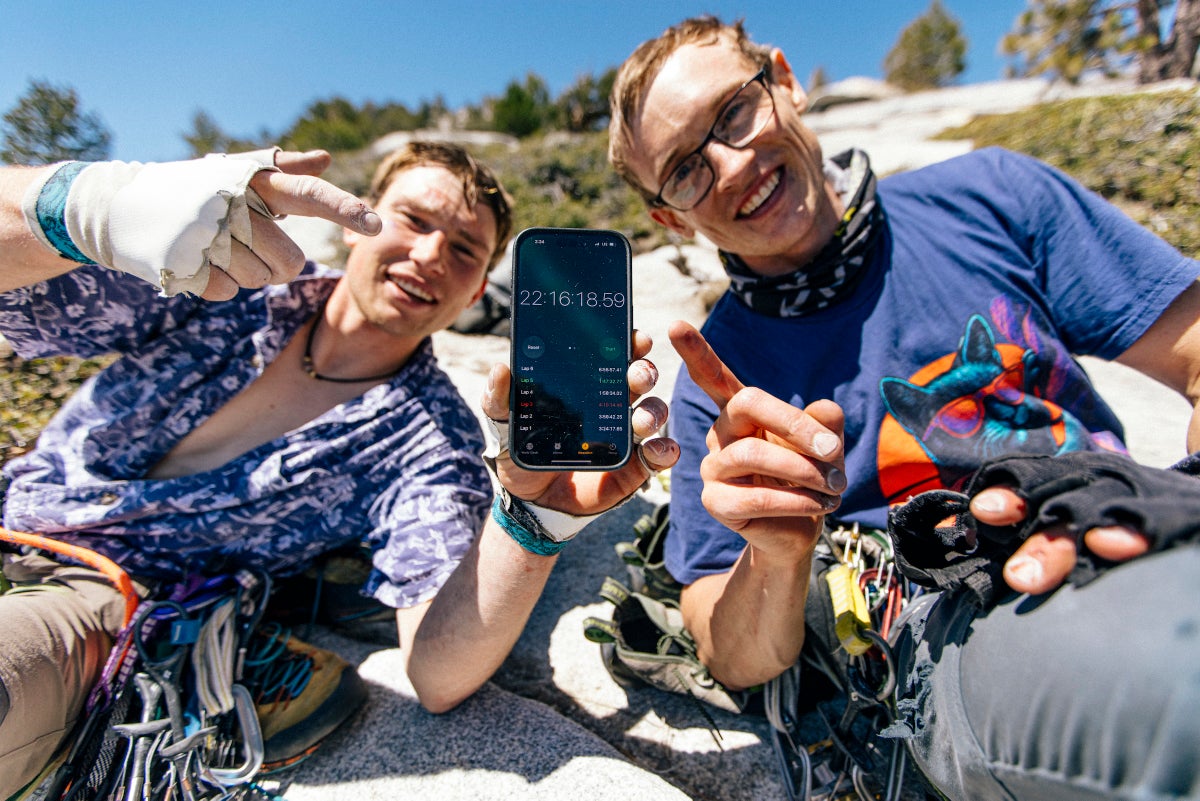
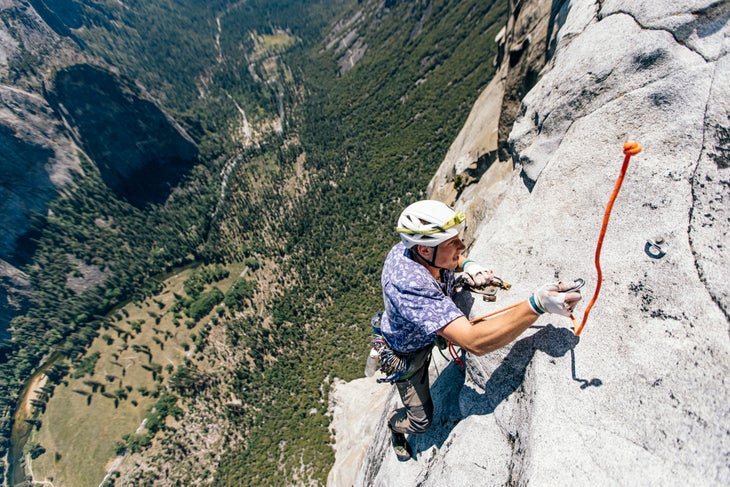
At 22, Chris Deuto from Boulder, Colorado, is now the youngest person in history to complete the Yosemite Triple Crown, a link-up first accomplished by Dean Potter and Timmy O’Neill in 2001.
Just past midnight on Saturday, May 9, I trudged back to the base of Half Dome after a 16-hour ascent and looked up at two headlamps on the wall. The tiny dots bouncing up the blackened silhouette were my friend Chris Deuto and his climbing partner, Erik Andersen. But for them, Half Dome was not just a singular mission; it was their second monolith of three in a 24-hour push to climb the Yosemite Triple Crown. My climbing partner and I shouted up monkey noises in encouragement.
Less than 12 hours later, Deuto and Andersen stood on top of El Capitan, having climbed Yosemite’s three biggest formations—Mount Watkins, Half Dome, and El Cap—in 22 hours and 16 minutes. Deuto’s best friend, Ben Sotero, was dancing to EDM music at the historic top-out tree. And Deuto’s girlfriend, Katie Kelble, had rappelled into the final pitches of the Nose (5.9 C2; 3,000ft) to cheer them on.
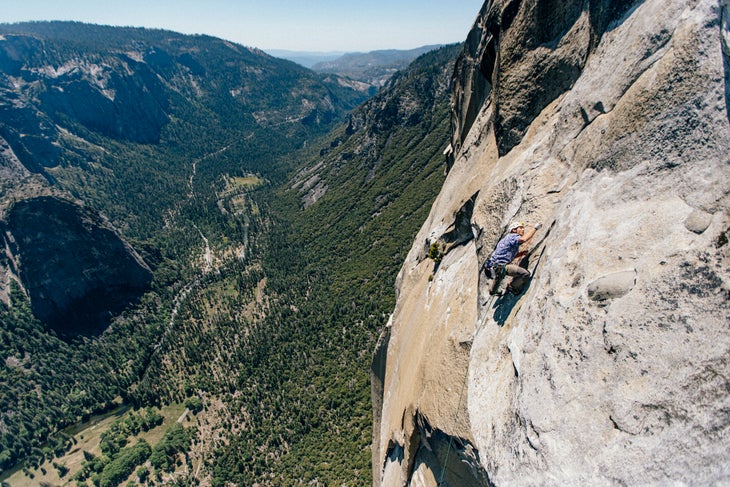
Only 11 teams, plus Alex Honnold solo, have completed the feat. The previous record for youngest Triple Crown climber belonged to Cheyne Lempe, who was 23 when he and Dave Allfrey climbed it on June 23, 2014.
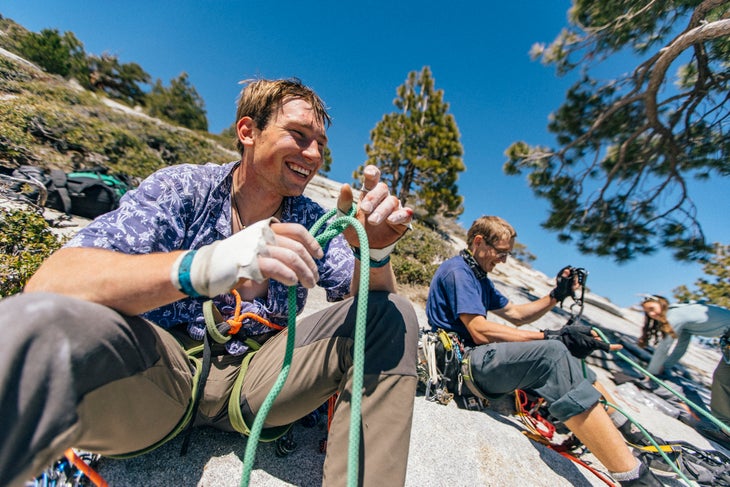
Compared to other Triple Crown teams, Deuto and Andersen’s journey to speed climbing was surprisingly accelerated; the two only practiced each formation once before going for the Triple. Deuto first met Andersen, 31, in the Camp 4 parking lot last May. Chris asked, more or less on the spot, if he wanted to climb the Nose the next morning. Andersen said yes. Their first time climbing together, they completed the Nose, which takes most big wall teams three to five days, in roughly 13 hours. That same season, the duo successfully completed the Yosemite Double: the Regular Northwest Face (5.9 C1; 2,200ft) of Half Dome and the Nose of El Cap in a single day. The Triple Crown was the natural next step.
Most Triple teams climb Mount Watkins, then the Nose, then Half Dome. But because Deuto and Andersen wanted to travel between formations on foot and by bicycle, they opted to climb Watkins and Half Dome first, then end on the Nose. They set personal records on both El Cap (6 hours, 55 minutes) and Mount Watkins (3 hours, 24 minutes).
Deuto grew up just west of Denver, Colorado, started climbing at age eight, and was competing nationally by age 13. As a teenager, he bouldered V12 outdoors, and ticked 5.14c and V14. But the competition circuit started to feel like diminishing returns. He walked away from it at age 16, and pointed himself toward the mountains. In the past year and a half, Deuto has climbed the hardest free wall in Brazil with Ben Sotero, completed the Southeast Ridge of Cerro Torre in Patagonia, made the first free rope-solo winter ascent of the Casual Route (5.10a; 800ft) on the Diamond at Longs Peak, and now this.
The morning after the Triple Crown, sitting in the Yosemite Lodge parking lot with Andersen, Deuto was still processing. “The experience changed me,” he said. “There’s sort of a disassociation from the accomplishment itself and the experience that made that accomplishment. The action of doing the thing is transcendent of anything else.”
A conversation with Chris Deuto and Erik Andersen
The following interview has been lightly edited for brevity and clarity.
Sam Ruderman: The Triple Crown involves more than 71 pitches of climbing. How did it start for you?
Chris Deuto: The most emotionally intense part was getting started, honestly. Everyone was like, “Good luck, good luck,” while you’re trying to plan and think and make last-minute preparations. We drove over to Curry Village, and there’s so many people, it took so long to park. I was like, “Oh, God. We’re on a schedule already.”
Erik Andersen: I woke up around 7:30. Got breakfast. It felt chill, actually—no alpine start, which was the plan. I just started building the psych, listening to music on my speaker. But before we started walking, I was kind of tweaking out. Which is usually the case for me before a big adventure. It’s like going into a battle. You know it’s going to be hard.
Deuto: We hiked in slow, took our time, we got to chill for two hours in the shade at the base of Watkins. We racked up around 3:30 p.m., went up the fixed lines to the base, and went.
Ruderman: Right before you started on Watkins, what were you thinking about?
Deuto: I was just thinking about Dean [Potter] a lot on that approach. His energy. And I was like, “Dude, we’ve got to be like Dean and Timmy. Be humble with what we’re trying to do.” Because there are stories about them waking up and making up reasons to bail because they were so intimidated. I can relate to that so much. I’ve been there. That’s so real.
Andersen: Dean was the guy for me when I got into climbing. Even before that, I’d seen him wingsuiting as a kid on early YouTube. He was just a different kind of character, charting his own path, staying true to his art. And Jim Reynolds—he and Brad Gobright doing the Triple so fast [18 hour 14 minutes]. That was stuff that really inspired me when I was first starting to climb in Yosemite. It’s another really sad thing that Brad passed away. But it is cool to follow in their footsteps.
Ruderman: The order—Watkins first—was a last-minute change. How did that come about?
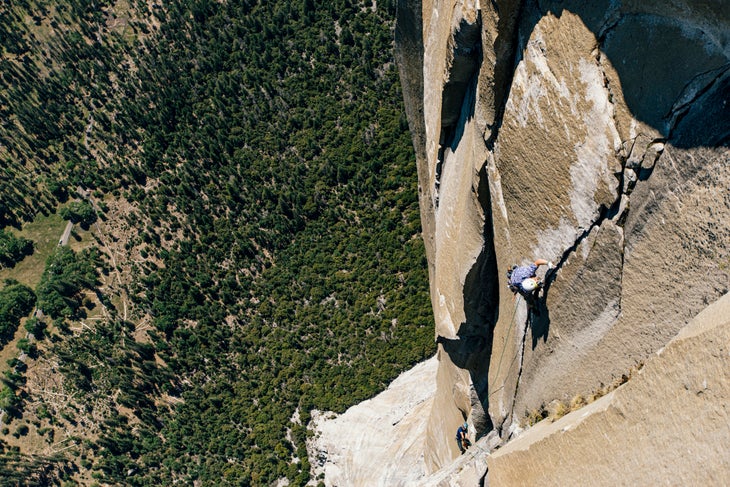
Deuto: I had a rest day where I biked from the Manure Pile [at the base of El Cap] to Mirror Lake [at the base of Half Dome] and walked the approach from the Death Slabs [on Half Dome] to Snow Creek, just to time it. And I was running the math in my head. I was like, wait: It would be an hour and a half shorter if we start on Watkins and don’t do the East Ledges. Because no matter which order you go, you still have to go up and down the Death Slabs. That doesn’t change. So I was like, “Oh, we don’t have to do the East Ledges if we start on Watkins.”
Andersen: When Chris first suggested it, I was like, “Ooh, I don’t know.” In my mind, I was really looking forward to getting El Cap done first. It’s a mental hurdle. But when we did the math, if we went the other way, we’d just have to go a lot faster everywhere to hit the margin. And it also meant we’d finish on El Cap, which felt right. Top out at the tree. The classic finish.
Deuto: And it made the time-of-day strategy more efficient. Watkins in the shade, Half Dome overnight, El Cap in the morning when it’s not blazing hot. I was like, “This is just logical.” Don’t let the stigma of the order get in the way of the math.
Ruderman: When I was at my bivy on Half Dome watching you guys go up, I heard some sounds of frustration. Did you have any low points on your ascent where you thought you wouldn’t make it?
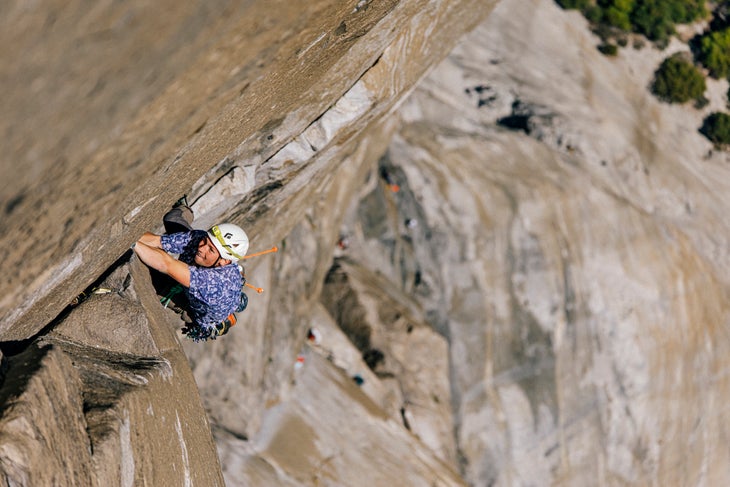
Andersen: On Half Dome, my legs were cramping. A lot of those pitches are high steps and mantles, blocky terrain, and it’s the middle of the night. I almost fell on a 5.5. Just lost my balance and caught myself. Then on the bolt ladders, my headlamp ran out of batteries. I had spares, but I hadn’t thought about how to change them with no light. I ended up just swapping them out by feel, one at a time, figuring that if the lamp came back on it meant they were oriented right.
Deuto: The whole time from when Erik almost fell [at pitch TK] to the bolt ladders, I could feel the vibes dropping. He was like, “Yeah, man, I’m not doing that great.” And I started to be like, “Fuck, I’m pretty tired, too.” And we were so far from done. That negative energy is so contagious. It felt like trying to eat the elephant all at once. We were like, “And now we have to go climb El Cap? What the hell?”
Andersen: Chris was like, “Are you okay? Are we still doing this? Are we still in?” And I was like, “Well, I’ve got these cramps. And he was like, “Let me know if you want me to take over.” I just felt like I wanted to finish. I said, “I’m going to Big Sandy [a bivy ledge 6 pitches from the top of Half Dome].”
Deuto: Then he climbed that corner pitch way faster the second time than the first. I could tell because he was already at the bolt when I got on belay. And I was like, “Fuck yeah. We’re in it, baby.”
Ruderman: When you both thought about giving up on Half Dome, what turned it around?
Deuto: Just getting back into the groove. Once Erik finished his block and I started leading, I just turned it on as hard as I could. By the top of El Cap — 70 pitches in — I could put my foot on anything. I was just getting in the corners and going. Ben and I have this saying from our climbs together: start like a cat, finish like a lion. You start graceful and slow and then you evolve into full beast mode. Leave nothing.
Andersen: Chugging pickle juice after Half Dome, honestly. Anti-cramping remedy. I don’t know. I think it worked.
Ruderman: What was the moment you knew you had it?
Deuto: I looked at my timer when Erik was jugging the last pitch on Half Dome and it said 3 hours and 58 minutes. I was like, oh, bet. We’re doing it. We’re doing it. That was the moment.
Andersen: Later on the Nose, We saw Noah Fox up at the Great Roof; he told us we had five hours when we got there. So I kind of knew. But you still don’t fully believe it until you’re standing at the tree.
Deuto: And then Ben was just dancing at the tree, music going.
Ruderman: Chris, you didn’t know you would be the youngest ever to complete the Triple until I told you just before the climb. How does it feel now to hold that title?
Deuto: It’s cool. Honestly, it still hasn’t really set in. It’s weird. It’s hard to explain. Like, now you’re the youngest person to do it, and I’m like, yeah, also pretty cool. [laughs] But I think the idea of “firsts” is a bit oversaturated in climbing in general. It becomes convoluted. First free solo, first ascent, first in a day, rope solo, youngest in a day, rope solo. Like, huh?
If it had been done 150 times in every manner and shape of badassery you could imagine, I would still just want to do the thing, just for the sake of doing it. It’s the same reason I want to climb the Nose. You look at it and you want to climb it. It’s sick: “Look at that stone. Are you kidding?”
Andersen: If Chris were trying to do it for some super external reason, I probably wouldn’t be that psyched to climb with him. We share values on that.
Ruderman: What does it mean to be part of the lineage of Triple Crown climbers, including Potter, O’Neill, Honnold, and Gobright?
Deuto: I didn’t realize until we started trying it that all of the ascents of the Triple—11 of them—were done by people I really admire. Childhood heroes. Just to be in that ballpark is cool as fuck. That’s the thing that actually gets me, if I’m honest. Not the record, just those people. And now we’re in that group.
Andersen: When you’re climbing these classic routes, you’re thinking about all the history. You’re interacting with it. It’s like sharing something across time, across decades. I thought about Dean and Timmy basically the whole day.
Deuto: I’ll always come into the Valley and be like, “Man, it was so cool when we did the Triple. Like, we did that. That’s so cool.” It’ll be like that for the rest of my life.
Ruderman: It’s still early May, the beginning of many Yosemite climbers’ spring seasons. Now that you’ve completed the Triple Crown, what’s next for you?
Deuto: Honestly? Free climbing. I want to pull on holds. Nothing big. This was the spring goal. At least for now, I just want to go climbing.
Andersen: [laughing] Yeah. I think we’ve earned that.
The post This 22-Year-Old Just Became the Youngest to Complete the Yosemite Triple Crown appeared first on Climbing.