 BURST
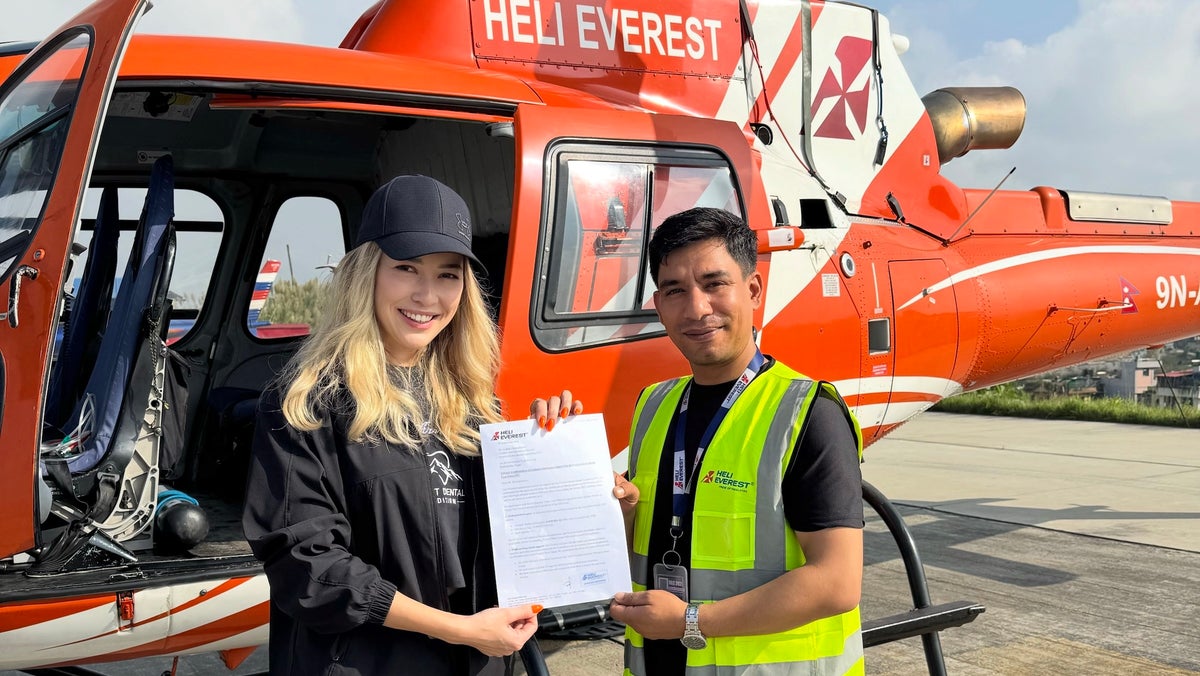
This spring, a Kazakh dentist plans to establish the first-ever dental clinic at Everest Basecamp (5,364 meters/17,598 feet). While medical clinics are relatively commonplace in bustling basecamp during climbing season, dental clinics at high altitude are a novel concept. Spearheading this idea is a 29-year-old dentist and mountaineering enthusiast: Dr. Aijan Jumabayeva.
While Jumabayeva has dabbled in trekking—for example, hiking up Kazakhstan’s Big Almaty Peak (3,680m/12,073ft.)—most of Jumabayeva’s alpine enthusiasm comes from mountain lore. Her favorite book? The Climb (1997) by the late Kazakh legend Anatoli Boukreev. “Our expedition is dedicated to him,” Jumabayeva told Climbing.
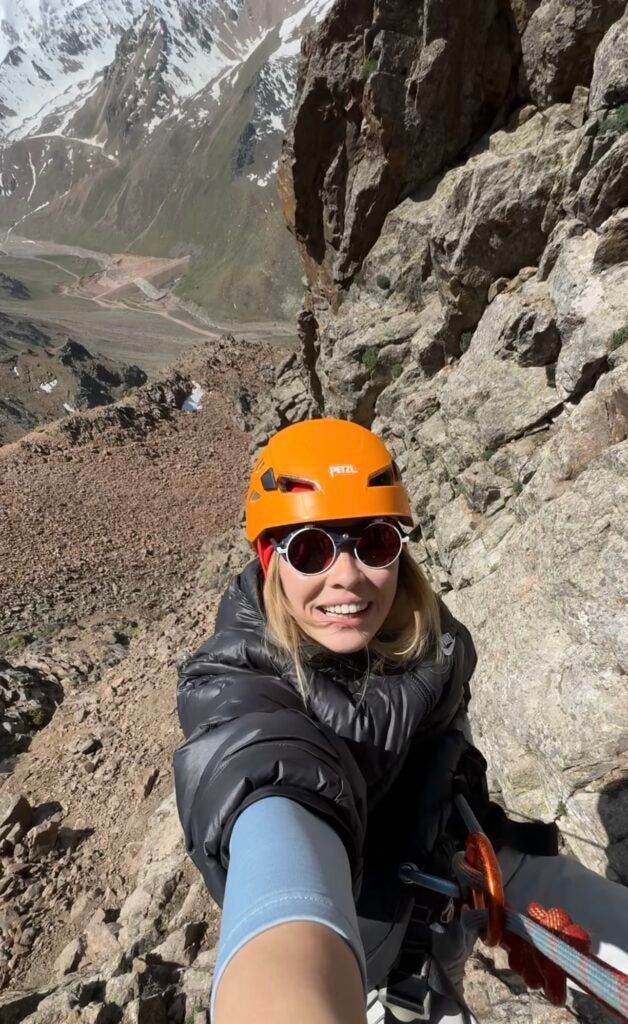
But the more documentaries about high-altitude alpinism Jumabayeva watched, the more she wondered why most stories sidelined “the people behind the beautiful summit picture and the happy faces”—namely, the Sherpa and other high-altitude mountain workers that make every Everest summit possible.
“One day, I started thinking, ‘How can I give back to this community?’” said Jumabayeva, who is currently licensed as a dentist in Kazakhstan, Turkey, and the United Arab Emirates.
At first, she considered volunteering her dental services in Nepali villages, but ultimately decided that wouldn’t be enough. Rather than limit her reach by going village to village, she concluded that if she stationed her volunteer efforts at Everest Basecamp, she could help the 900-some high-altitude workers that show up there for about six weeks every spring.
“Dentistry is one of the most expensive fields in medicine, and climbing is one of the most expensive sports. So we’re bringing them together,” Jumabayeva said.
What specific dental issues do alpinists face?
Before you dismiss this dentist as the orchestrator of a publicity stunt, you should know something about teeth at high altitudes. On the highest mountains, a condition known as barodontalgia can wreak havoc on climbers’ teeth. A 2018 study even dubbed barodontalgia a “more common” problem for anyone partaking in alpine sports than dental traumas caused by hazards (e.g., rockfall).
Also known as “tooth squeeze,” barodontalgia is caused by dramatic increases or decreases in altitude. Changes in air pressure make existing cavities, abscesses, and cracks extremely uncomfortable. In 2019, for example, the late Nims Purja posted about severe toothache while on Shishapangma, calling his wisdom tooth “so painful.” The solution is to treat the underlying cause of the problem, not simply to prescribe pain medication. Without access to dental care, a bad case of barodontalgia could force a climber to abandon their summit plans.
From Everest Basecamp, the nearest dental clinic can only be reached through an approximately 21-mile trek across rugged terrain to Namche Bazaar. In other words, unless you have the means to order a helicopter evacuation, it’s far away enough to mean the loss of an elusive weather window for climbers, or a week or more without work for sherpas.
This is a problem if you’re a climber on a time crunch, hoping to summit, or a high-altitude worker whose livelihood depends on staying on the mountain during the full climbing season. “A severe toothache can cost someone their entire expedition,” Jumabayeva says.
Dental issues on his own past expeditions may have been in part what motivated Italian mountaineer Simone Moro to help Jumabayeva in finding a partnership with a local outfitter. According to Jumabayeva, Moro met with her shortly after his time on Manaslu this fall. He introduced her to his contacts with Seven Summit Treks, which has since signed on as the Everest Dental Clinic’s partner in helicopter transport, infrastructure, permitting, and other logistics.
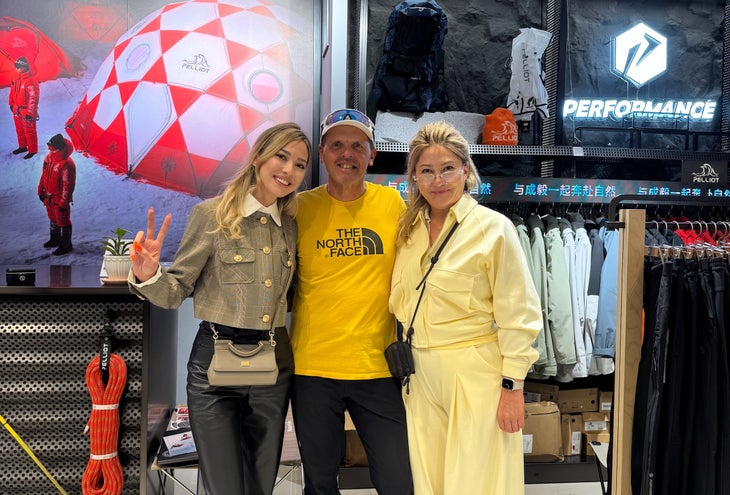
“It is our great honor to support humanitarian aid like this,” Seven Summit Treks director Chhang Dawa Sherpa told The Himalayan Times on September 29. He called dental hygiene “one of the least prioritized things” for high-altitude workers.
In a reel Dr. Jumabayeva shared on her Instagram on September 29, Moro shared why he decided to become involved with the Everest Dental Expedition. He cited the fact that the project was dedicated to Anatoli Boukreev, his former climbing partner. On Christmas Day in 1997, Moro, Boukreev, and Russian cinematographer Dimitri Sobolev were attempting a new route on Annapurna in Nepal when an avalanche struck, killing both Boukreev and Sobolev.
“[Boukreev] was a Kazakhstan hero,” Moro said, adding that he considered the Everest Dental Clinic unique, unprecedented, and “the most authentic way to pay back the local community for the long and silent work that they did for all the mountaineers of the planet.”
This self-styled humanitarian’s mission? Healthy Sherpa teeth.
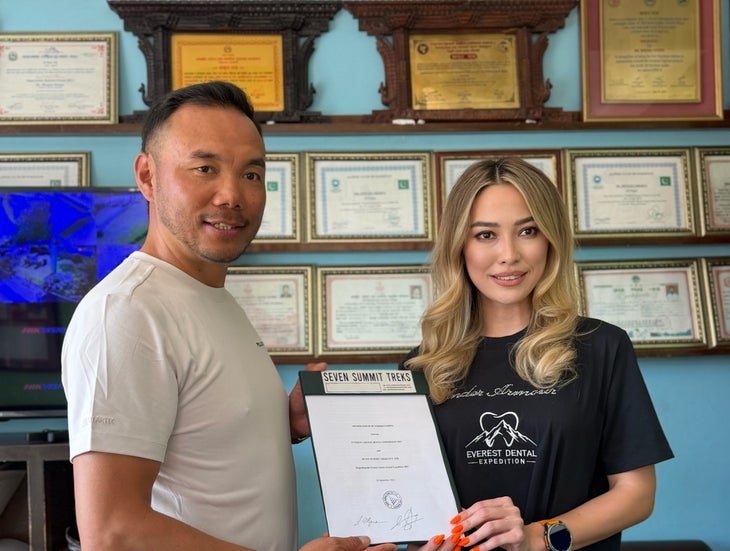
High-altitude dental emergencies aside, Jumabayeva’s overarching goal is to provide Sherpas with high-quality dental care. “We are doing this for high-altitude workers,” Jumabayeva told Climbing, emphasizing that this is a humanitarian project.
Jumabayeva insists that the most efficient way to reach as many high-altitude workers as possible is to station a clinic at Everest Base Camp. She is aiming to meet the highest concentration of workers where they are, versus traveling across a number of villages where these workers live outside of climbing season. That said, she plans to do just that this summer after her inaugural Everest season, visiting a couple villages as well as one monastery to provide dental care not only to Sherpas, but to their “mothers, fathers, wives, sisters, and children.”
While she won’t turn away a climber looking for dental care at her basecamp clinic, the workers remain her priority. This spring, her goal is to serve 1,000 patients, mostly workers. “The clinic is first of all for Sherpas, guides, porters, and high-altitude workers,” she said, but added that it would be “unethical” to refuse service to a guided climber who needs care.
As far as the specific services the Everest Dental Clinic will provide, Jumabayeva plans to focus on dental emergencies, including addressing barodontalgia, filling cavities, and performing root canals. More complex or cosmetic procedures like implants, as well as routine cleanings, will not be on the menu. The patient cost? Totally free, no matter the client or procedure.
The logistics of a high-altitude dental practice
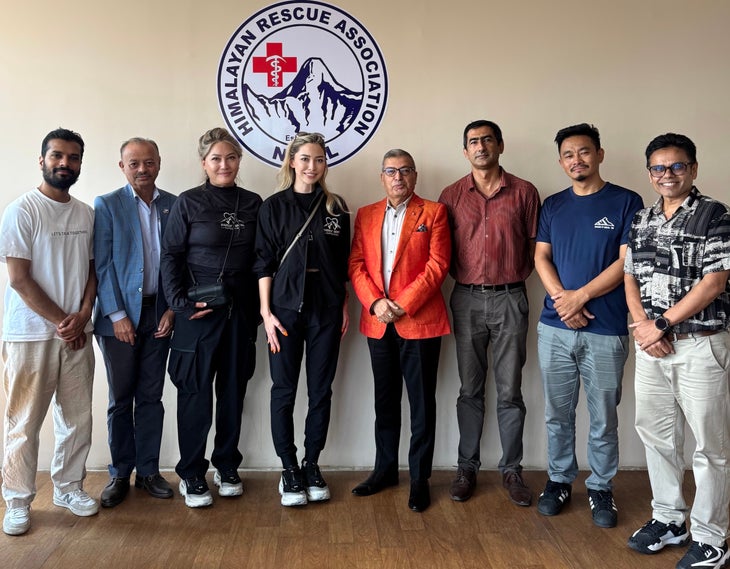
For two years, Jumabayeva, who operates dental practices in three countries, has been saving up to fund her high-altitude dental dream. She has also put her dental practice in her homeland of Kazakhstan up for sale, as well as the practice she established in Istanbul, Turkey, where she completed her dental studies. Going forward, she plans to split her time between Dubai, where her last remaining dental practice is based, and Kathmandu, where she intends to stage her Everest Basecamp and village clinics annually.
As far as this coming spring, Jumabayeva will arrive at Everest Basecamp seven to 10 days prior to commercial climbers so she can serve the workers that arrive prior to clients. While Jumabayeva will be stationed at Everest for the entirety of the spring climbing season, she will staff the clinic with a team of 15 dentists and dental assistants. Her project will pay for each volunteer dentist’s stay in Kathmandu, their trekking fee, and their living costs during their time at basecamp. The teams will rotate out every two to three weeks.
“Dentistry is a super physically demanding job itself—even more demanding at 5,365 meters,” Jumabayeva explains in answer to why she’ll rotate through teams of volunteers. Jumabayeva’s family will also join her at Everest Basecamp, including her parents, her younger brother (a dental technician), and one of her two younger sisters (a dental assistant).
So far, the position of volunteer dentist at Everest Basecamp has proven to be awfully coveted, with Jumabayeva reporting 700 emails of interest from dentists from New Zealand to Europe. “I was predicting people would be interested, but the amount of responses is really overwhelming,” Jumabayeva says. “The whole dental society is uniting for this project.”
Between the costs of bringing dentists to basecamp and equipment expenses, Jumabayeva expects to spend at least $500,000 on the expedition. She plans to fill the tent Seven Summit Treks provides with three dental units, plus one back-up, each of which cost $30,000. Jumabayeva is still seeking more sponsors and partners to help cover the remaining costs.
Possible unintended consequences of an Everest dental clinic
Maybe it’s the slick Instagram content. Or the AI-generated imagery of dentists prodding Sherpa teeth in a tent with Himalayan scenery beyond. Perhaps it’s the sidequest pursuit of three Guinness World Records. Or it could be Jumabayeva herself, a young woman unaffiliated with any established nonprofit, whose own Instagram grid includes a bizarre blend of glamorous selfies and graphic close-ups of the teeth of her clients.
Whatever the reason for the skepticism, in various Instagram comments, some have suggested that the Everest Dental Clinic might harbor ulterior motives of personal gain and grandeur.
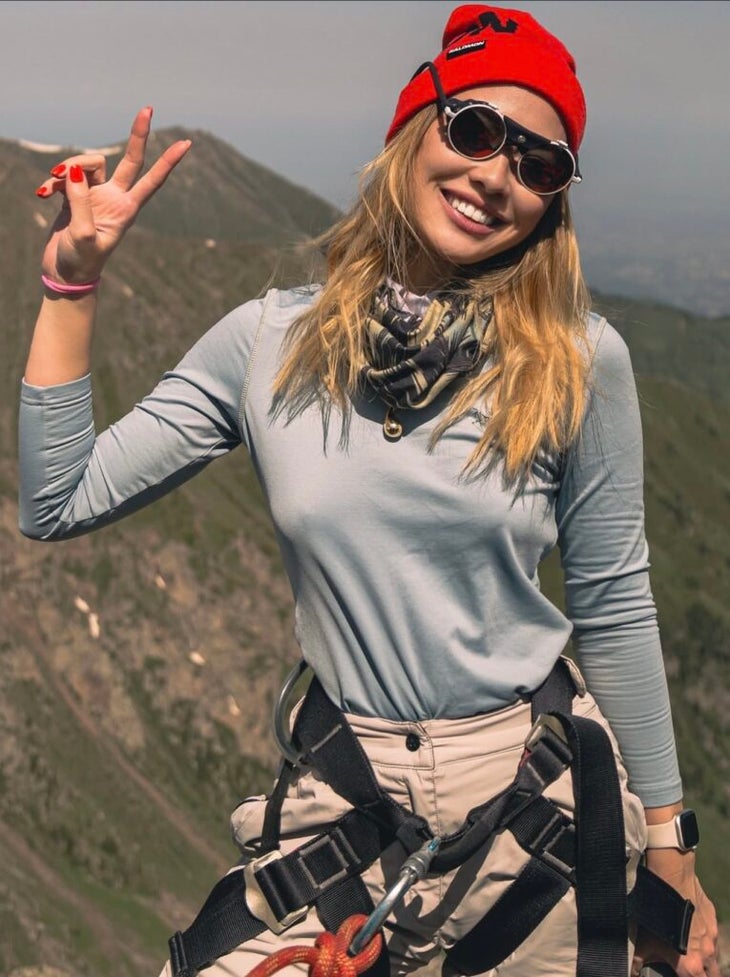
“Love the idea, not as keen on seeing this beautiful ai blonde girl fixing this old Sherpa’s tooth,” one climber commented. Jumabayeva snapped back: “I’m the ‘blonde girl’ aKa [sic] doctor leading this world-first expedition.”
“Can I open up a specialty coffee shop at base camp?” another alpinist joked.
That last comment implies a particular superfluity to opening a dental clinic at the basecamp of the world’s highest mountain. Every year, the concerns and critiques of the extent to which Everest has become more crowded and commercialized grow. Adding a dental clinic tent to the mix, plus a team of 15 to 20 non-climbers, may contribute to the chaos, albeit under the banner of a good cause.
Another possible negative impact of the Everest Dental Clinic is that it may step on local toes. For all of Jumbayeva’s self-professed good intentions, could this take business away from existing Nepali dental practices? Currently, the nearest dentist to Everest is the Namche Dental Clinic, supported by the American Himalayan Foundation (AHF). Opened in 1991, the clinic is currently the highest dental clinic in the world at 11,300 feet, according to AHF. Based in Namche Bazaar, this dental clinic is at least a two-day trek from Everest Base Camp.
“There is already a long-established dental clinic in Namche Bazaar, which AHF supported for over 35 years,” Norbu Tenzing, the president of AHF, told Climbing. Recently, the organization turned the dental clinic over to a local committee. Tenzing added that a small dental clinic exists at Khunde Hospital, about a mile north of Namche Bazaar as well. “Both clinics serve the needs of the entire Khumbu region,” Tenzing said. Though neither explicitly aim to serve high-altitude workers or climbers.
A 2017 study counted 1,800 dentists as of June 2015 in Nepal, but added that the dentist-to-population ratio was “decreasing exponentially” in urban areas. However, the ratio was “very high” in rural areas. But Jumabayeva doesn’t see herself as competing with Nepali dentists. Rather, she envisions providing better access to an underserved population, in an environment where dental emergencies often arise.
However the first Everest Dental Clinic pans out, Jumabayeva is locking in to humanitarian dental work in Nepal. After spending the summer volunteering in remote Nepali villages, Jumabayeva plans to set up shop at Manaslu Basecamp come fall. The following spring, she says she’ll be back at Everest Basecamp. “This land is going to test us, protect us, and become our home,” Jumabayeva reflected from Nepal.
Climbing reached out to the Nepal Dentist Association for comment and has not yet received a response.
The post Why a Kazakh Dentist Is Bringing Dental Care to Everest’s Mountain Workers This Spring appeared first on Climbing.