 BURST
BURST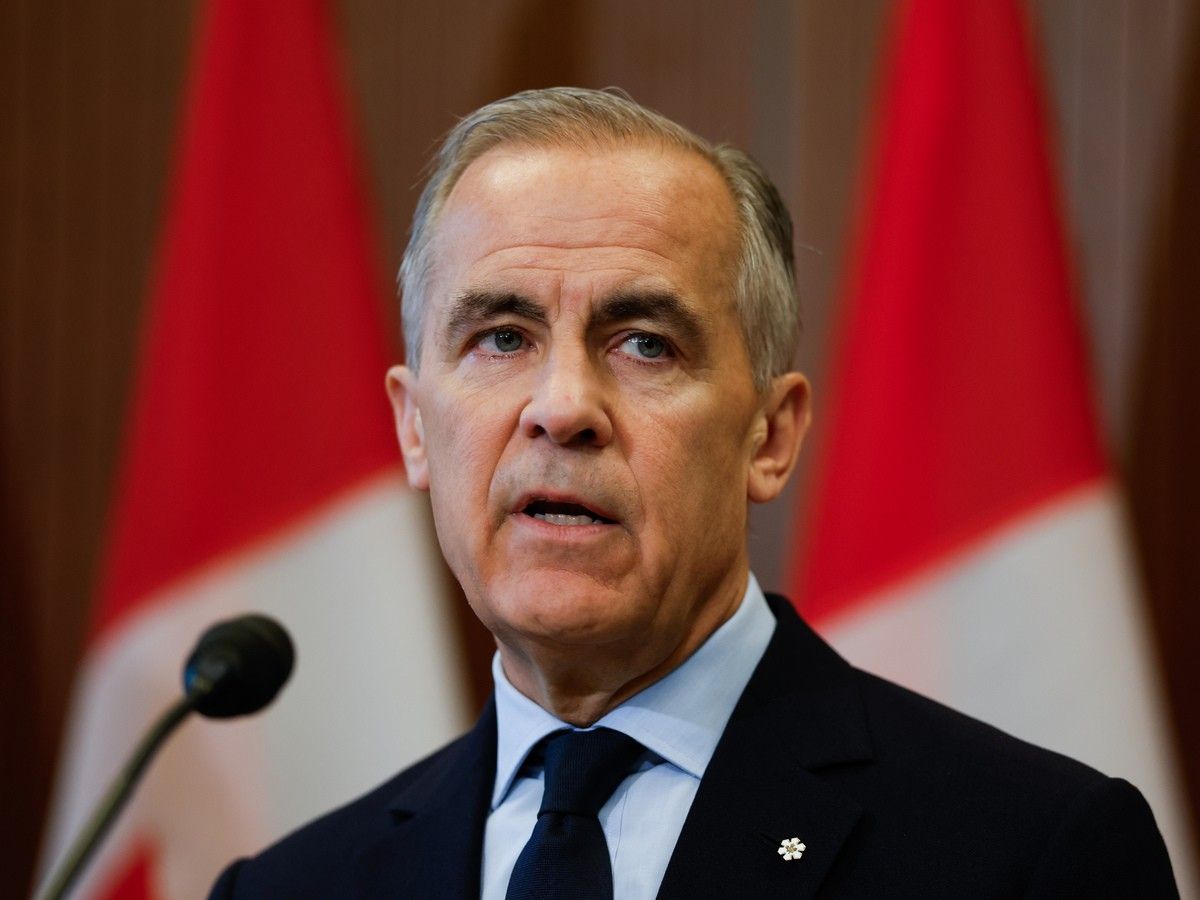
OTTAWA — Prime Minister Mark Carney said that the federal government is ready to help Newfoundland and Labrador Hydro reach a new energy deal with Hydro-Québec, while the Quebec government is confident to reach a “win-win” agreement for both provinces.
Speaking in Saint-Michel-des-Saints, Que., Carney said that he has had a “number of conversations” recently about the issue with the premiers of Quebec and Newfoundland and Labrador, as has his Minister of Energy and Natural Resources Tim Hodgson.
While the issue is principally between the two provinces and their Crown corporations, Carney signalled that the federal government is ready to smooth things over for a deal.
“If there are things that we can do, we will do them,” he said.
Those comments were made Tuesday, hours after the release of a report commissioned by N.L.’s new Progressive Conservative government that found that the memorandum of understanding (MOU) announced in late 2024 is not in the province’s best interest.
That MOU was signed by former N.L. Liberal Premier Andrew Furey and former Quebec Premier François Legault. Its goal was to replace the contentious 1969 Churchill Falls contract that has allowed Hydro-Québec to buy N.L.’s electricity at a discount price.
The proposed deal would have seen Hydro-Québec pay a price for N.L.’s electricity on average 30 times more over the next 50 years. In exchange, the province would have authorized Hydro-Québec to build two new power plants at Churchill Falls and Gull Island.
After Newfoundland and Labrador Premier Tony Wakeham came to power last year, he convened an independent review committee to evaluate the MOU. On Tuesday, he said there would need to be “material improvements” before he would consider signing it.
“If the experience of 1969 taught us anything, it is that we must always look past the big promises and best intentions, and always, always read the fine print,” Wakeham said.
The committee that authored the report found that while the MOU has “important financial and economic benefits for the province” up until 2041 — when the 1969 agreement was set to expire — a key concern is that it might hinder long-term economic development.
Specifically, it raised the “problematic” power pricing and payment models, the lack of transmission infrastructure to enable Churchill Falls power to reach export markets and the challenge of “sustaining joint ventures between partners with divergent interests.”
“The (committee) concludes that, despite the benefits, the MOU in its current form is not in the public interest,” reads the report.
The committee also argued that the MOU’s total financial benefit to the province is best represented by the net present value amount, estimated at $31 billion, rather than the nominal amount of $227 billion presented by the former Liberal government.
It is estimated that, of the $31 billion, $9.2 billion will be received by N.L. prior to 2042.
Despite the criticism, Wakeham said his goal is to get the best deal for his province.
“We are not tearing anything up, and we are not starting over from scratch,” he said.
Quebec Premier Christine Fréchette said in a statement that she will take the time to review the report and that she will soon meet with Wakeham to discuss future steps.
“We both agree on the importance of reaching a win-win agreement in the near future.”
Time is however ticking for Fréchette, who could lose her job to the separatist Parti Québécois Leader Paul St-Pierre Plamondon during the Quebec election in October.
St-Pierre Plamondon has already said that he disapproves of the proposed deal, which he said was “humiliating” for Quebec and too advantageous for Newfoundland and Labrador.
Wakeham said his province stands ready to commence negotiations. To that end, he appointed a three-person team which includes NL Hydro CEO Jennifer Williams, former PC cabinet minister Jerome Kennedy and Barry Perry, former president and CEO of Fortis Inc.
Michael Sabia was the CEO of Hydro-Québec who negotiated the MOU before Carney appointed him last year to become Canada’s head of public service.
In a short statement, Hydro-Québec said it welcomes the appointment of a negotiating team and the N.L. government’s “desire to resume discussions.” It also said it believes it is possible to reach “a final agreement that will enable the creation of sustainable value.”
“That said, any final agreement must reflect balanced terms and deliver clear benefits to Hydro-Québec’s customers. In this respect, no agreement will be reached on terms that are less favourable than those initially agreed upon,” the unattributed statement added.
Quebec’s Minister of the Economy Bernard Drainville said he remains committed to coming to a good deal with N.L. over what he hopes will be “a short period of time.”
“We think that it is possible to have a final agreement with the government of Newfoundland and Labrador which will be, yet again, a win-win agreement for both of our provinces.”
National Post
calevesque@postmedia.com
Our website is the place for the latest breaking news, exclusive scoops, longreads and provocative commentary. Please bookmark nationalpost.com and sign up for our newsletters here.