 BURST
BURST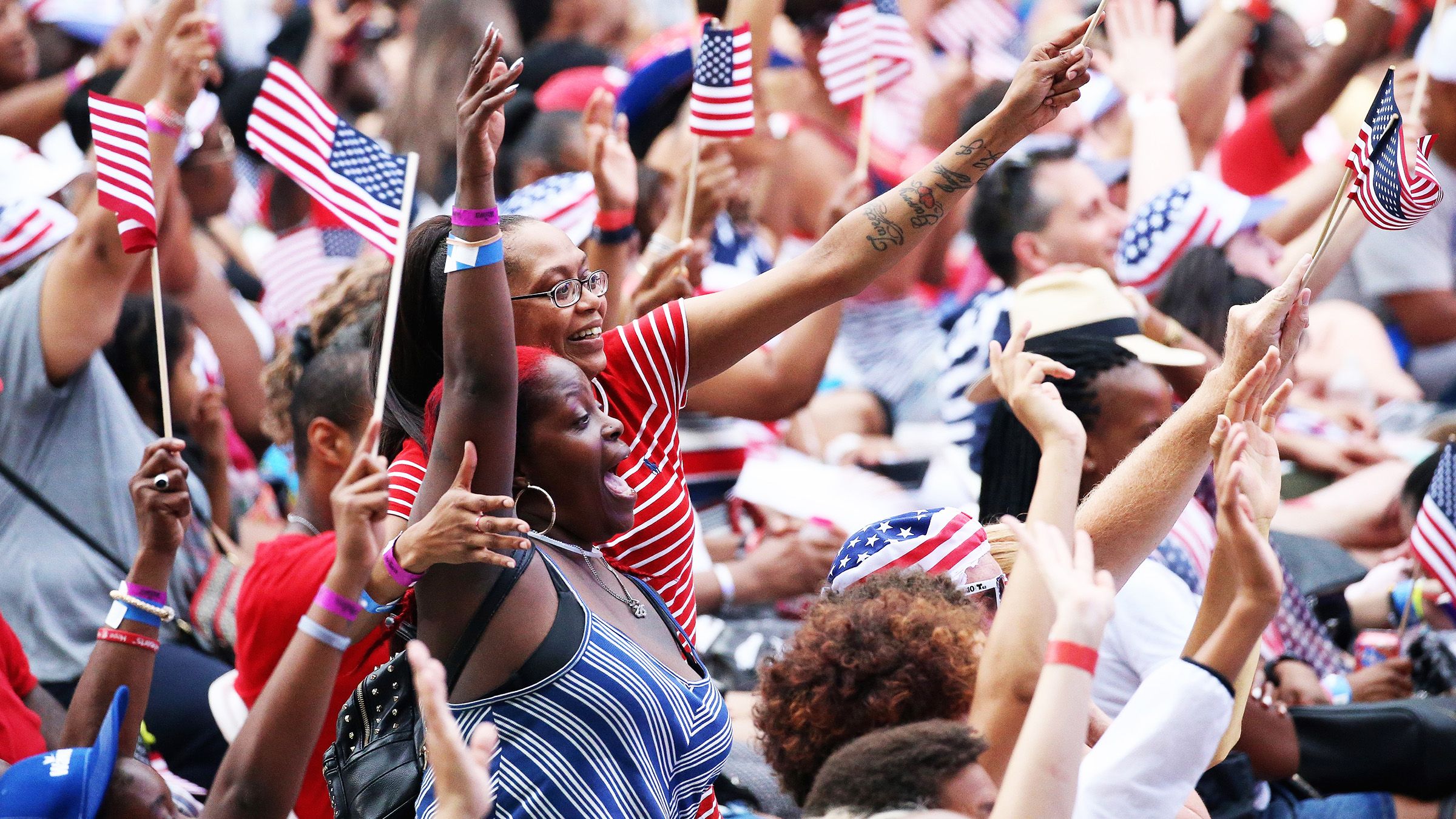
WASHINGTON — About 40 of us commoners are hanging around Statuary Hall at the United States Capitol, waiting for the King of Canada.
It is April 2026, and Charles III — finally a sovereign after all those decades in the bullpen — has come to the Capitol to put the best possible spin on the worst road defeat his ball club ever suffered — the loss of 13 prideful and persecuted colonies in the American Revolution 250 years ago this summer.
In that seven-year, savage, earth-shaking and probably unnecessary conflict, the United States of America came to be a country, but Canada didn’t. It was a war invoked by philosophers in powdered hairpieces but fought by peasants who desired to be governed not by a hereditary monarch — as was the case everywhere else in the world at the time — but by each other.
Every nation is a myth of its own making, and the United States is no exception. For decades, schoolchildren here were taught to sing of a “sweet land of liberty” favoured by God and protected by His terrible swift sword — a still-young republic cleansed in blood of its original sin of human bondage, extending from sea to shining sea, welcoming and tolerant with liberty and justice for all, dominant in trade, victorious in war, but covetous of no further land or Greenland.
“This country and this people seem to have been made for each other,” said John Jay, a Founding Father who negotiated the treaty of peace with the British after the war was over.
In Washington, the glorious Fourth of July will feature the BIGGEST TRUMP RALLY of all time (caps not mine) and the largest ignition of fireworks ever attempted, but not performances by Martina McBride or Bret Michaels, who signed up to sing and then turned tail as soon as it became clear that the event would be a tribute to the 47th president himself.
To one part of a fractured polity of 350 million Americans in the Donald J. Trump era, celebration equals collaboration, flag-waving is for fascists, and five years of chaos blot out the other 245 years. Not only will these folks not be picnicking on July Fourth, some are organizing protests.
But to tens of millions of other Americans, this anniversary is a perfect excuse for the displays of patriotism that Americans do best, and the reiteration of the airy principles of the long-dead, imperfect men — some of them the owners and ravishers of human property — who, in 1776, pledged “their lives, their fortunes, and their sacred honour.”
Some of this year’s most enthusiastic celebrants are the direct descendants of the patriots who autographed the Declaration of Independence on a hot Philadelphia day. Others are the beneficiaries of two and a half centuries of personal liberty, capitalist wealth-creation, the welcoming of newcomers and perpetual cultural reinvention that continue to define the United States as a society without equal.
We will follow the campaign for governor of Maryland by a woman named Taylor Swift who died two weeks before Primary Day, who has been succeeded on the ballot by her daughter MoHawk, because Life.
We will hear from a member of the United States Congress who avows that gun-free school zones must be outlawed, because Liberty.
We will meet a man who is cycling across all 13 breakaway colonies, because the Pursuit of Happiness.
And we will kneel among the believers who aver that this nation’s true and only founder was Jesus Christ Himself — men and women who agree that, as Woodrow Wilson proclaimed in 1915: “Think first of humanity. America was created to unite mankind.”
But it may surprise you to learn that there are Canadians who hold that the American Revolution of 1776 was Canada’s formative rebellion, too.
A British King at the Capitol
Back to Statuary Hall.
Behind King Charles III, as he exits the Rotunda on his way to address the United States Congress, are sculptures and paintings that celebrate the humiliation of his own royal ancestors and the annihilation of their red-coated troops. He walks past effigies of George Washington, Thomas Jefferson and Alexander Hamilton, and giant canvases depicting Britain’s surrender at Saratoga, N.Y., in 1777, and the decisive checkmate at Yorktown, Va., four years later.
Further along the corridors are astronauts, inventors, evangelizers, integrationists, governors, commanders, cowboys and Johnny Cash — two and a half centuries of conquest and passion and genius moulded into monuments to what could have been Great Britain’s greatest and most loyal protectorate, had it not all been squandered by a stubborn young 18th-century monarch who never in his lifetime crossed the sea.
“The Founding Fathers,” Charles III tells the gridlocked Congress, “were bold and imaginative rebels with a cause. Two hundred and fifty years ago — or, as we say in the United Kingdom, ‘just the other day’ — they declared independence.”
The royal address is boycotted by Representatives Alexandria Ocasio-Cortez, Ilhan Omar and other sisters of the Far Left, who may take their turn at the helm of the American state in the next election, and who someday may welcome King William V.
“Standing here today, it is hard not to feel the weight of history on my shoulders,” says the noble Charles III, and by “history” he means Britain’s surrender. At the United States Capitol, there are no statues of the 948 Loyalists who signed a Declaration of Dependence in New York in November 1776, declaring, “That we bear true allegiance to our rightful sovereign George the Third, as well as warm affection to his sacred person, crown and dignity.”
Talk about the world turned upside down: 250 years ago, it was the British king whom Americans reviled. Today, the British king is warmly welcomed in his erstwhile colonies, while millions renounce their own president elected by popular vote.
Descendants of the Founding Fathers gather
The audacious rupture with the Crown, whose 250th anniversary is being marked this summer, was made by men of means and comfort. Look at the palaces they lived in and the broad fields they owned and the human beings they forced by whip to tend their lands and their persons for more than 200 years.
On the James River in Virginia is one of those magnificent domains, a mansion and farm called Berkeley Plantation that must have been even more idyllic before they built the gas-fired Hopewell Power Plant across the mile-wide stream.
It was by a window in this house in July of 1745 that a squire named Benjamin Harrison, the fourth of that name in his line, was killed along with two of his little daughters by the fateful lightning of a summer storm.
Now a brighter occasion brings a few dozen of us here on a cloudless spring Saturday. We are going to sing Happy Birthday to the thunderstruck squire’s successor, Benjamin Harrison V, whose portrait on the program handout makes him look pretty good for 300 years old. Harrison V lived to the ripe age of 65, fathered eight children, and both his youngest son William Henry and his great-grandson Benjamin were elected president of the United States.
It was this particular Harrison who would become the governor of Virginia, a delegate to the Continental Congress in Philadelphia, and a signer of the Declaration that placed in jeopardy everything he cherished and everyone he owned.
“You don’t know how it ends and you step over the edge anyway,” a woman says in a fine speech to the attendees, encapsulating the story of 1776, and the mortal risks these rich men took for paper ideas.
In attendance are members of the Society of Descendants of the Signers of the Declaration of Independence, the Sons of the American Revolution, the Daughters of the American Revolution, the Virginia Society of the Dames of the Court of Honor, and sundry other groups. Talk about pure Americana — a bald eagle is turning circles high above the river and our heads.
“Is America a success?” I ask Leroy Anderson Keller Jr., president of the Descendants of the Signers, who currently number about a thousand members with verifiable patriotic pedigrees.
“Yes,” he answers.
“Is it a greater success than it would have been had it remained in the Empire?”
“No.”
“The irony of the American Revolution,” Keller says, “is that Louis XVI paid a fortune to save America, and then he lost his head anyway.”
“What do you say to people who hold that there is nothing worth celebrating in this country this year?” I pose.
“I can understand why some people would feel that way,” the president answers, “but in 1776 we created a republic that has lasted for 250 years, and that has evolved from one that was a very narrowly based republic to a much broader one, and that evolution never stops,” says the president.
“This is a serious situation we are in, but it is self-correcting,” he continues. “Anytime you have a pendulum that swings so far in one direction, it is eventually going to swing in the other direction. But right now, it is proving difficult to get back to somewhere in the middle.”
Keller’s own ancestor was a wealthy Virginian named Thomas Nelson Jr., who not only financed many of the regiments that, with French help, won the ultimate battle of the Revolution at nearby Yorktown, but who took personal command of his troops and even ordered the bombardment of his own house.
“Have you ever risked your life for anything?” I ask Keller.
“Crossing the street,” he replies.
The ceremony at Berkeley Plantation comes with a colour guard in period costume. One of the marchers is a Black man named William Tugman, a U.S. Army veteran who recently learned from a website called Family Search that he is a distant cousin of Gen. Washington himself.
The vainglorious but childless Washington was the Father of his country but not of anyone else. Tugman says that his connection was established through Washington’s mother’s side, then sideways and downward. He also learned that he is connected to Abraham Lincoln, Charles III and Babe Ruth.
The American pot began melting long before they put up the Statue of Liberty and invited Europe’s tired, poor and huddled masses to sail west and breathe free. In Connecticut, an insurance executive named Scott Lewis, a member of the Descendants of the Signers through signer Josiah Bartlett, was researching his biochemistry when he discovered that he is in fact three per cent African-American, probably via the daughter of a Revolutionary War fife player who hooked up with one of Bartlett’s great-grandkids. “There was always a mystery about that side of the family, as my grandfather never wanted to talk about it,” Lewis says.
In his first draft of the Declaration of Independence, Jefferson included a paragraph that called for the abolition of the “execrable” slave trade, writing of George III that, “he has waged cruel war against human nature itself, violating its most sacred rights of life & liberty in the persons of a distant people who never offended him, captivating & carrying them into slavery in another hemisphere.” That sentence never made it into the final version.
“They took it out because they couldn’t get anybody to sign it,” says Tugman.
This is true; witness the admission by Patrick “Give me liberty or give me death!” Henry, one of the most famous of the early firebrands, who refused to free his own slaves, explaining that, “I am drawn along by the general Inconveniancy of living without them.”
Freedom-loving Jefferson’s legacy
A similar scene unfolds the next noon a few miles from Berkeley at Jefferson’s own manse at Monticello, in Charlottesville, Va., where the principal author of the Declaration bunked when he wasn’t in Paris or Philadelphia.
If not for Jefferson and his propaganda about King George’s “long train of abuses,” and how “these United Colonies are and of Right ought to be Free and Independent States,” the Revolution might not have happened at all, and the U.S. and Canada would be one big, happy Dominion today.
We gather at the Monticello cemetery for speeches in honour of the freedom-loving slaveholder’s 283rd birth anniversary.
“Without teaching what we belong to, we don’t belong,” the keynote speaker notes. This is a Harvard professor emerita of history named Jane Kamensky, the Monticello CEO.
“America,” she tells me, “remains the last best hope on Earth.”
Yet in this same celebratory springtime, on the campus of the University of Virginia that Jefferson himself founded in 1819, a commencement speaker is telling graduates that Jefferson’s “ethically corrosive claims about human capacity reflected his ignorance and his hubris.” And then there are the children he spawned with his slave Sally Hemings, reflecting the humanity and the hypocrisy of the most eloquent of the Founding Fathers and making him a sitting duck for the latter-day Left.
“My son liked to call himself ‘the most woke person on the planet,’’’ Kamensky says. “Then he came to one of our naturalization ceremonies for new American citizens on the Fourth of July.
“By the time it was over, tears were streaming down his face and he was stuffing American flags in his pocket.”
Canadian descendants of the Founding Fathers
“I actually believe that Canada wouldn’t have developed the way it did if it hadn’t been for the American Revolution,” Brent Cameron tells me from Central Frontenac Township, north of Kingston, Ont. Cameron is another United Empire Loyalist related to an American Founding Father; in his case, both Washington and his presidential successor, John Adams.
“I am one of those people who is very proud of my Loyalist heritage and regret nothing,” he says. “I think the American Revolution was something that was bound to happen. I understand the ideological underpinnings of it. In the U.S. context, the Loyalists who stuck around had to be dealt with. My family didn’t stick around.
“Revolutions come from people saying ‘no more — this has gone far enough.’ What’s the breaking point for people? For the monarchy? I respect the high-handed aspects of the American Revolution — life, liberty, the pursuit of happiness.”
Cameron served for eight years on the Township of Central Frontenac council before losing a bid for re-election by 20 votes. He is trying again this year.
“I think the American system is more libertarian, and by that measure we are always going to seem less so,” he tells me by phone, “but if we measure by outcome, by what the machine puts out, I don’t think life in Canada is diminished compared to the United States. We tend to be less dynamic and less innovative. But we’re like Mac and Windows — different operating systems that get to the same result.”
“Are you excited to be George Washington’s and John Adams’s cousin?”
“Not really,” Cameron replies. “I have respect for them, and it’s kind of neat to have that connection. But one thing that bothers me is that so many people will take a connection like that and think it says something about them as individuals. It’s not anything that I did personally. It’s an accident of birth.”
Brian Hayes is a retired stockbroker in Comox, B.C., and another United Empire Loyalist with proven ties to two of the signers and a more roundabout link to John Adams. “I would say the United States has been an unqualified success,” says Hayes. “It hasn’t been what I would call an even ride. They’ve always faced issues, and I believe that’s a function of a democracy. But I think it has been a beacon of ambition, ingenuity and results.”
Hayes tells me that two of his ancestors fought against each other at the Battle of White Plains, N.Y., in 1776.
“If you had to pick a side back then, which one would you choose?” I ask.
“I would have picked the patriot side. The patriots weren’t bad people. It is often portrayed, certainly in Canada, that the big problem was obviously slavery, which runs right in the face of the first page of just about every constitutional document.
“That said, in my family anyway, all the abolitionists were the patriots. It was my great-great-great-grandfather who actually was a slave owner, and he was the Loyalist.”
In 2026, Comox is not the sort of place where one would profit reputationally by waving the Stars and Stripes.
“The ‘elbows up’ concept of everything’s bad in America, that’s about 80 or 90 per cent of the people around here,” Hayes says. “They’re all boycotting the liquor store. But I have a cousin who owns a winery in California.
“And, you know, I’ll still drink his wine regardless.”
Taylor-Swift for governor
In 1963, a woman from Delaware named Nancy Taylor who sometimes told people that she was the Queen of France married a bricklayer named Robert Swift — thus, Nancy Taylor Swift — and, although he was a violent and abusive man, she gave him 13 children.
In 2024, one of those offspring, a big-rig truck driver and fanatic Pittsburgh Penguins supporter named Rachel, who goes by MoHawk, decided that she needed to run for the presidency of the United States of America against Joe Biden and Donald Trump.
MoHawk spent $10,000 that she didn’t have to place her name on the primary ballot in five states. The result was that Rachel Hannah MoHawk Swift garnered 2,326 votes — more than one per cent of the total number cast — in enlightened West Virginia and decided to try it again.
“I make politics sound so fun,” she says.
Last winter, Swift convinced her mother to contest the Republican Party nomination to become the next governor of the state of Maryland, with MoHawk to be her running mate as lieutenant — “the Taylor-Swift ticket!” the daughter exults. After all, this was their constitutional right and duty as heirs to the Founding Fathers and the mad proposition that ordinary citizens should elevate each other to be their chiefs.
Voting in Maryland commenced on June 11. By then, Nancy Jane Taylor, 82, was dead.
It was too late to reprint the ballots, so now I am sitting in a McDonald’s in Hagerstown, Md., with MoHawk, who is wearing a blond fright wig and a Penguins cape and carrying a red umbrella in case it begins to rain indoors. I show her a copy of the Sample Ballot that is mailed to registered voters, and which still lists mother Taylor and daughter Swift along with eight other pairings.
“Everybody always says, ‘You’re just delusional, it’s not going to work,’” Smith reports. “But honey, we’re actually printed on there, indicating that it’s official.”
This is a woman who says that she grew up in foster homes and attended 15 schools, who worked as a janitor, drove 16-wheelers, has been in and out of mental-health facilities and assorted jails for misdemeanours that included trespassing in Joe Biden’s yard. Yet come November, she could be the governor-elect of one of the original 13 states.
“In America,” says MoHawk Taylor Swift, “it feels like you can just propel forward and have success. You might have a hard day, or you fall behind on a few payments or whatever, but it always feels like you could go forward.”
“What do you say to people who hate this country because of Trump?”
‘Oh, my golly! Trust me, I tried to stop him. I did everything.
“I would tell them that we still have a lot of plus. We still have a lot of plus. We could rebuild again. You know, like the New Deal and the Great Depression.”
“Could you be gubernatorial if you wanted to?” I ask MoHawk Taylor Swift.
“I’d rather be a clown,” the candidate replies. “People take you more seriously.”
Guns and unalienable rights
Back in Washington, the Committee on Homeland Security & Government Affairs of the United States Senate convenes a hearing “to examine threats to the Second Amendment” and almost nobody shows up. Eleven of the committee’s 15 members skip altogether.
The Second Amendment, of course, is the one that guarantees all Americans “the right to keep and bear arms.”
Chairing is Rand Paul, Republican of Kentucky, who opens the session by heralding the Semiquincentennial and recalling the depredations of what he calls “the tyrannical British Crown.”
One of the guest “witnesses” is a member of the House of Representatives named Thomas Massie — soon to be deposed in a primary election for insufficiently supporting Trump — who announces that he favours the abolition of “gun-free school zones,” because they restrict the ability of law-abiding citizens to shoot back at the marauders who, on average, kill at least one person in an American schoolhouse about 24 times a year, most commonly on a Tuesday or a Friday.
Massie quotes good old Patrick Henry — “The great object is that every man be armed” — and confesses, “I carry virtually every waking moment.”
Erich Pratt, senior vice-president of the Gun Owners of America, wearing a lapel pin in the shape of a semi-automatic rifle, tells the room that “the Second Amendment is the right that protects all other rights,” taking us right back to Thomas Jefferson and 1776.
“Is owning a gun the pursuit of happiness?” I ask Pratt when the performance ends.
“Well, it’s certainly a right of self-defence,” he replies. “And I like that you asked it from the standpoint of the Declaration of Independence. The Constitution does not give us the right to keep and bear arms. Our rights come from God, and that’s why they’re unalienable.”
‘America is a Christian nation’
About 40,000 of us sinners — including a few lost Hindus and Jews — are lining up for a security check on the National Mall so that we may reconsecrate the nation to the “shared Christian faith” that the King invoked on Capitol Hill.
Officially, the mid-May event is called “Rededicate 250: A National Jubilee of Prayer, Praise & Thanksgiving.” I arrive just in time to watch seven police officers zip-tie a pair of unlicensed souvenir vendors and confiscate their wares, which include T-shirts featuring Trump’s mug imposed on an image of the White House and the warning DADDY’S HOME.
On a bench nearby is a woman in an “I (heart) Jesus” cap who gives her age as 69 and describes herself as “a punk from Boston who aged out of foster care.”
She rises and proclaims that “America is a Christian nation!”
“Don’t you believe in the separation of church and state?” I ask her.
“That’s not in the constitution,” the Bostonian replies. (Technically, she’s right — the Bill of Rights mandates that “Congress shall make no law respecting an establishment of religion,” meaning that the president is not officially the Defender of the Faith.)
Into the field of vision now comes a real-estate broker from Michigan who is shouldering a 65-pound cedar crucifix. This is Dan Beazley, who says that the Lord has called him to load this symbol of Christian compassion into his Ford F-150 and travel to the scenes of mass shootings, stabbings and massacres, and to happier occasions like Rededicate 250.
“Is there any place in the United States for people who are not Christians?” I ask him.
”When Jesus walked the Earth, he knew that not everybody was going to believe,” responds Beazley, who is wearing a white ball cap with the number 47 — Trump’s the 47th president — stitched in gold. “He said, ‘You have eyes to see and you can’t see, and you have ears and you don’t hear.’
“I’m not going to say that they don’t belong, because eventually our prayer is that their eyes will be open, and then they will see. But that’s between them and God.”
My conversation with Beazley is going well when my attention is captured by a man in the security line who is wrapped in the flag of the province — and possible future Republic — of Alberta.
This is Leo Sirait, an Indonesian-American-Canadian from Calgary who was raised in Jakarta and lived in Denver, where he worked in the catering department of United Airlines.
“What is there to celebrate here?” I ask Sirait, who is accompanied by his friend Dennis Dueck, who sells irrigation supplies out of Airdrie, Alta.
“Celebrating God’s work in this land,” Sirait replies. “I lived in this country a third of my life, you know, and my daughter is a dual citizen with an American passport.
“I think the U.S. doesn’t have everything right. We get that. However, the basis of what the U.S. has been based on is dedication to God. I don’t know if you believe in God or not, but that’s the truth. And we embrace that part, one hundred per cent,” says Sirait.
“That dedication can be found in Canada as well, but Canada has gone so far south on moral values that any citizen should be concerned,” the Albertan says.
“Is there a place in this country for people who are not Christian, or who don’t believe in God at all?” I ask.
“God will never force you,” Dueck answers. “The enemy of God would, but God does not. He gives you a free choice. That’s called love.”
“Is America getting it right now, better than it has been in recent years?”
“I don’t believe Trump gets it right every turn he takes. However, he’s not confused if women should play in men’s sports or vice versa. He doesn’t get that confused.”
Flag-waving in Philadelphia
Finally, Philadelphia, on Flag Day, June 14, 80 years to the day after Donald J. Trump was born in Queens, N.Y.
In the colonial quadrant of the City of Brotherly Love, cobbled streets once trod by statesmen and slaves are thronged with tourists, many of them proudly garbed in red stripes and white stars on a field of blue. They are joined by half the population of Ecuador, blowing vuvuzelas — there’s a World Cup match here tonight.
In front of Independence Hall, where the break with Britain was formalized on the Fourth of July, 1776, young Army cadets are raising the 50-starred banner and a soldier is singing the national anthem with power and purpose. We remove our caps and pause in reverence, then go back to our phones.
Behind the building, a man is holding up a sign that reads “F**K the Orange Fascist Felon,” and there is your USA250 in a nutshell.
One of the most endearing, enduring, and almost certainly untrue legends of the American infancy is that Gen. Washington personally asked a Philadelphia upholsterer named Betsy Ross to stitch a new flag for the new republic and that her handiwork was adopted by the Continental Congress on June 14, 1777.
It is likely that this yarn was sewn in the 1870s by Ross’s great-grandson, but that is no reason to let facts fracture a fairy tale, and so dozens of us, including the Ecuadoreans and a battalion of kilted bagpipers, are gathering in the courtyard of the Betsy Ross House on Arch Street to proudly hail. And there is no disputing that Betsy Ross was a real person, or that her first two patriot-husbands were killed in the Revolutionary War.
One of Ross’s descendants, a 70-year-old Marylander named Eric Conrad, has come to donate to the museum a sewing table from his family’s farmhouse that may well have been his great-great-great-great-grandma Betsy’s. Conrad is dressed in cycling tights — he has been pedalling his way through all 13 of the colonies that broke with George III, replicating a Bicentennial journey he accomplished back in 1976.
“I knew at a young age that I was related to Betsy Ross,” Conrad tells me, “probably by the time I was four or five years old. I remember going down to the family farm and seeing a table in the great dining room and as a curious kid, I would open the drawers and there were bobbins and pins and thread in the drawers.”
“What is there to celebrate in 2026?” I ask him.
“We’re celebrating the founding of a nation, a republic that became the United States of America, that had freedom and liberty for the people who fought for it.”
“Does Trump obscure all that, or does Trump amplify it?” I wonder.
“I go back to history,” Conrad answers, “and there have always been disruptions in politics. If you look at some of the first presidential battles, like Adams versus Jefferson in 1800, it was some of the most terrible slander ever in politics.
“It’s always going to change in four years or eight years or whatever,” Conrad assures me. “It will change because our structure still allows the people to get what the people want.
“That’s what our government’s all about. It’s for the people. If we don’t get involved in the elections, it’s our own fault.
“All around the world, the U.S. is known as a place of opportunity, and I think we’re still seeing that,” says Conrad. “If people are not happy with their current country, they still want to get here, or they want to come here to learn in our universities and take their knowledge back to their country.
“I think we’re still seen as that.”
“Even now?” I ask the flag-maker’s descendant.
“Even now,” he replies.
Main image: Revellers mark the Fourth of July in Philadelphia in 2019. Bill McCay/Getty Images for Welcome America