 BURST
BURST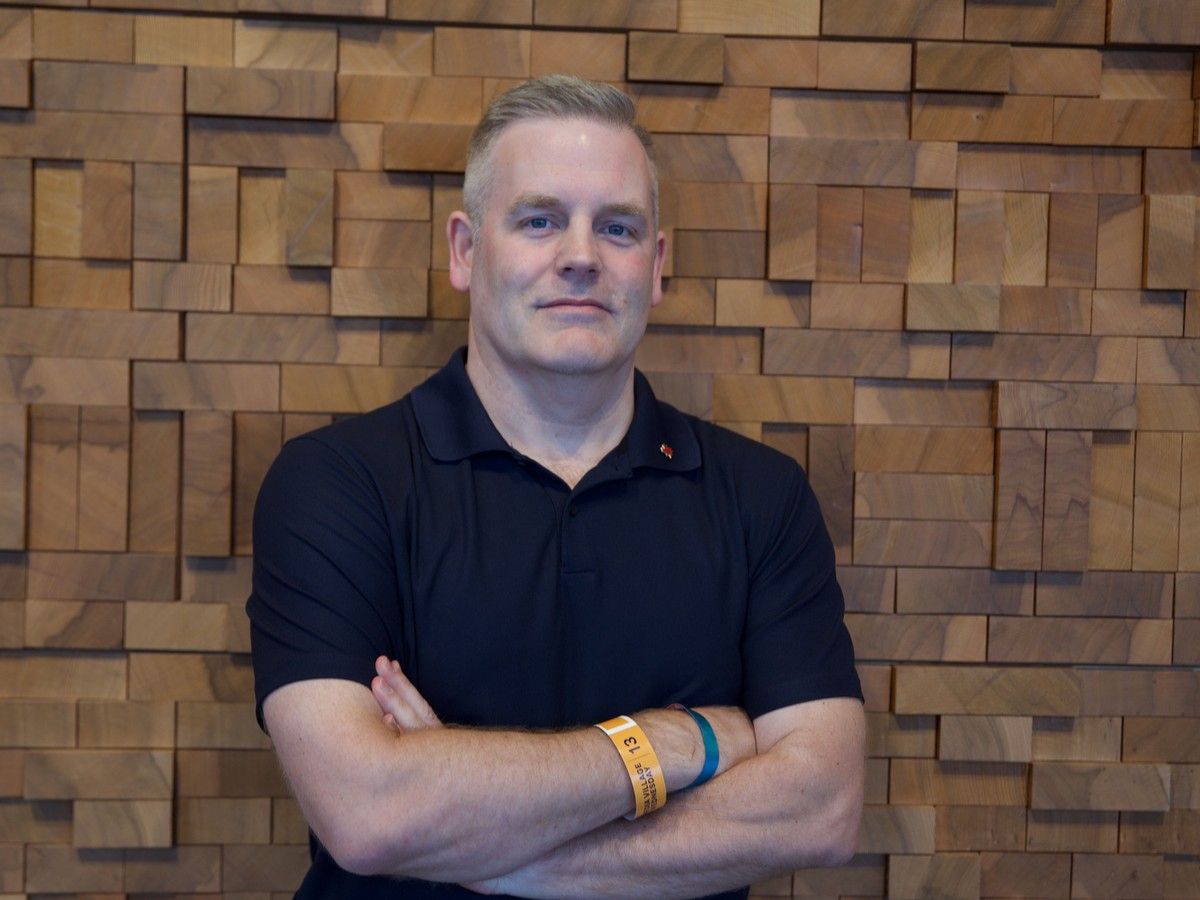
The big picture of artificial intelligence is dominated by the giant data centres of foreign players, where Canada is fighting to carve a niche for its burgeoning domestic industry.
But B.C. faces limits to the amount of electricity it can supply to its power-gobbling infrastructure.
Underneath the clamour, a smaller picture is developing in AI referred to as the inference, or so-called edge-computing space, where companies distribute smaller-scale data infrastructure to where customers will use it. That’s where a B.C. based company is trying to stake its own “sovereign” ground.
“We’re going see a lot of that,” said Jeff MacMillan, CEO of Victoria-headquartered Green Edge Computing Corp. “Whenever you hear terms like smart city, smart buildings, smart grid, that’s basically code for we need to bring more computing (power) to where they’re needed in the real world.”
Green Edge’s bid is to provide AI capability in a ruggedized, suitcase-sized data-centre-pod that can house up to four servers which his company’s engineers have shrunk down to something akin to a big computer hard drive.
The pods won’t replace big cloud-based AI data centres, MacMillan said, but they do deliver higher-powered AI applications — data analysis and automation — closer to customers, which in Green Edge’s case has turned out to be mines and electric utility substations.
MacMillan talked to Postmedia on the sidelines of the big web tech conference this week in Vancouver, where the federal and provincial governments made a splash by backing a major data centre expansion by the B.C. based telecom Telus Inc.
Telus announced the expansion of its “AI factory” data centre in Kamloops, which it is adding to with two data facilities in Vancouver, one it has named M3 in Mount Pleasant that is due to come online later this year and one yet to be built downtown on West Georgia Street expected to come online in 2029.
Federal AI Minister Evan Solomon, who was in town for conference, referred to the Telus project as the definition of AI sovereignty, “Canadian companies building things that will function under Canadian law, free from the coercion of others … at a time when the political realignment is happening as fast as the technological acceleration.”

A dollar figure wasn’t mentioned Monday, but Solomon said Ottawa had reached a memorandum of understanding with Telus to support the project through the federal government’s $2-billion sovereign AI compute strategy.
Data centres are measured by their power consumption. Big U.S giants such as Amazon and Microsoft run cloud-computing facilities each larger than one gigawatt, or roughly the generating capacity of B.C. Hydro’s Site C dam. The Telus AI factory looks small at a cumulative 130 megawatts.
Solomon, speaking at a conference on Tuesday was emphatic that Canada can remain competitive in AI.
Despite it’s smaller size, Solomon said Canada is one of four countries where a domestic company has developed a “foundational” AI large language model — Toronto’s Cohere AI — and its universities produce some of the industry’s top talent.
“Waterloo is graduating more engineers than Stanford,” Solomon said, referring to the Ontario university. “Straight up.”
“There’s lots of ways to compete that are not just firepower in terms of compute,” Solomon said.
The Telus 130-megawatt AI factory takes up a huge chunk of the 400 megawatts of new electric capacity from B.C. Hydro that government policy has set aside for AI and data centres as the province tries to balance demand from proposed new mines and liquefied natural gas projects.
This week, Energy Minister Adrian Dix announced the results of B.C. Hydro’s next round of new independent power projects that are expected to provide a total of 3,500 gigawatt-hours of new electricity supply by 2033.
In the meantime though, groups such as the think-tank Energy Futures Institute question B.C. Hydro’s ability to deliver the power B.C. will need on time.
Executive director Barry Penner, a former B.C. environment minister, noted that Telus made the announcement before government has unveiled results for the bidding process to allocate the 400 megawatts under provincial policy.
“British Columbians still do not know which projects B.C. Hydro intends to prioritize, how much electricity will ultimately be committed to AI-related loads, or how those allocations may affect other job-creating industrial projects already waiting for access to electricity service,” Penner added.
MacMillan said this is where edge computing, with Green Edge’s data pods, can play a bigger role.
“The market is very quickly moving to smaller, more distributed data centres,” MacMillan said. “They’re easier to build, they’re easy to power, they’re easier to licence and regulate and permit, and you can build them fast enough that once they go online, they’re not obsolete.”
Rob Goehring, executive director of the AI Network of B.C. called Green Edge’s device “the perfect solution at the right time,” because it delivers computing power that ticks all the boxes for sovereign computing, and customers don’t have to wait for big new data centres to be built.