 BURST
BURST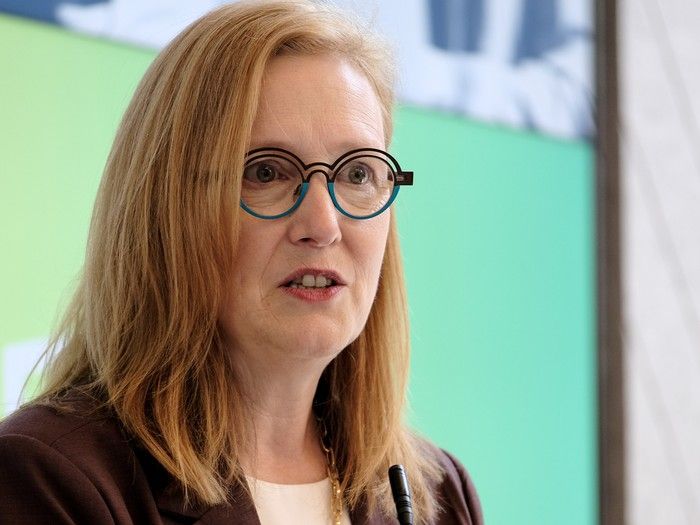
Finance Minister Brenda Bailey touted her government’s efforts to bring down the provincial deficit this week, announcing for the 2025-26 fiscal year it was $7.7 billion — well short of the initial projection of $10.9 billion.
A big chunk of that reduction — $2.6 billion — came from a B.C. settlement with tobacco companies.
So far, the government has received only $942 million, with the remainder to come over about 20 years. But the province accounted for the full amount.
Some economists see no problem, while others see it as a cynical ploy to make the province’s finances seem rosier than they are.
Here are three things you need to know:
What was the settlement?
Last year, the Government of Canada reached an agreement with tobacco companies JTI-Macdonald Corp., Rothmans, Benson & Hedges and Imperial Tobacco Canada Ltd. The settlement has those companies paying $32.5 billion to provinces over 18 years.
Negotiations had taken five years and centred on claims by the federal and provincial governments that tobacco companies were responsible for increased health-care costs due to an uptick in diseases such as lung cancer.
The money paid out from the settlement is meant to help provinces and territories keep up with these costs. Over 40 per cent of B.C.’s budget is currently taken up by health-care spending, a number that has only grown in recent years.
“No amount of money will ever bring back the people we’ve lost to tobacco-related illnesses, nor will it make up for those lives ruined by addiction. However, this is a welcome step in our mission to see justice delivered to British Columbians,” Attorney General Niki Sharma said last August when B.C. got the initial tranche of its share of the settlement.
“Regardless of any settlements or future payments, our government will continue to invest in cancer treatment, primary care and treatment research, and to promote smoking cessation for the benefit of all British Columbians.”
Is the money being used for health-care costs?
Kevin Milligan, professor of economics at the Vancouver School of Economics at UBC, said that money is combined into one big pot and then distributed to different programs and services based on need and government priorities.
Because of this, he said it’s difficult to tell what the money received by the province through the tobacco settlement will be used for.
“This goes into the big pot. If they decide to increase spending in some area, they can choose to do that or not. But this money doesn’t go into a jar with a label on it,” said Milligan.
“If this money hadn’t come in, you can ask the question: Like, would they have finished that hospital or whatever the health priority might be? They would have done that anyway. So I’m not sure that this has a meaningful change in the trajectory of health spending. It does not go into a jar with a label on it.”
What does this mean for government finances?
B.C. is set to receive $3.6 billion over 18 years, but it chose to record it one time as $2.6 billion in revenue in the 2025-26 public accounts.
“This amount is the $3.6 billion discounted to its net present value to reflect the long-term nature of the payment schedule,” the government said.
It added that the province expects to continue to receive payments over the course of the payment plan and that the payments “are dependent on the companies’ reported after-tax profit on tobacco-related sales each year.”
Some economists say the government engaged in an accounting trick to make the deficit seem smaller and will do nothing to help the province with its projected $13.3 billion deficit this year.
In a statement, the Ministry of Finance said the total settlement amount was recorded in one fiscal year based on the recommendation of B.C.’s auditor general “under generally accepted accounting principles.”
Andrey Pavlov, professor of finance at SFU, says that “no reasonable person” would put money toward their own budget that they don’t currently have in their bank account.
He did concede that what the government did may not break any accounting rules but argued it is still misleading.
“This is a particularly obvious accounting scheme to reduce the current deficit, to make things look not quite as bad as they would have otherwise, with the money not being there at all,” said Pavlov.
“At the very minimum, this money should be set aside, like many people have advocated, and targeted specifically to treat lung disease and other diseases, you know, that have been caused by smoke.”
Jock Finlayson, chief economist for the Independent Contractors and Businesses Association, said the money won’t do anything to fix the province’s overall fiscal situation.
“I presume the minister wanted to flatter the financial bottom line for 2025-26,” said Finlayson.
“In any case the tobacco money does nothing to fix or mitigate the province’s structural deficit and is basically a fiscal sideshow that is irrelevant going forward.”
Milligan was less negative, saying that any money for the province right now is a good thing.
At the same time, it doesn’t provide an indication of where the province’s financial situation will be moving forward.
“Some good news to celebrate, but it does not tell us a lot about what goes on now in the future,” said Milligan. “That will require some hard work by the finance minister to get the revenues and expenditures working on a better trajectory. And last update we had, they were not on a good trajectory.”