 BURST
BURST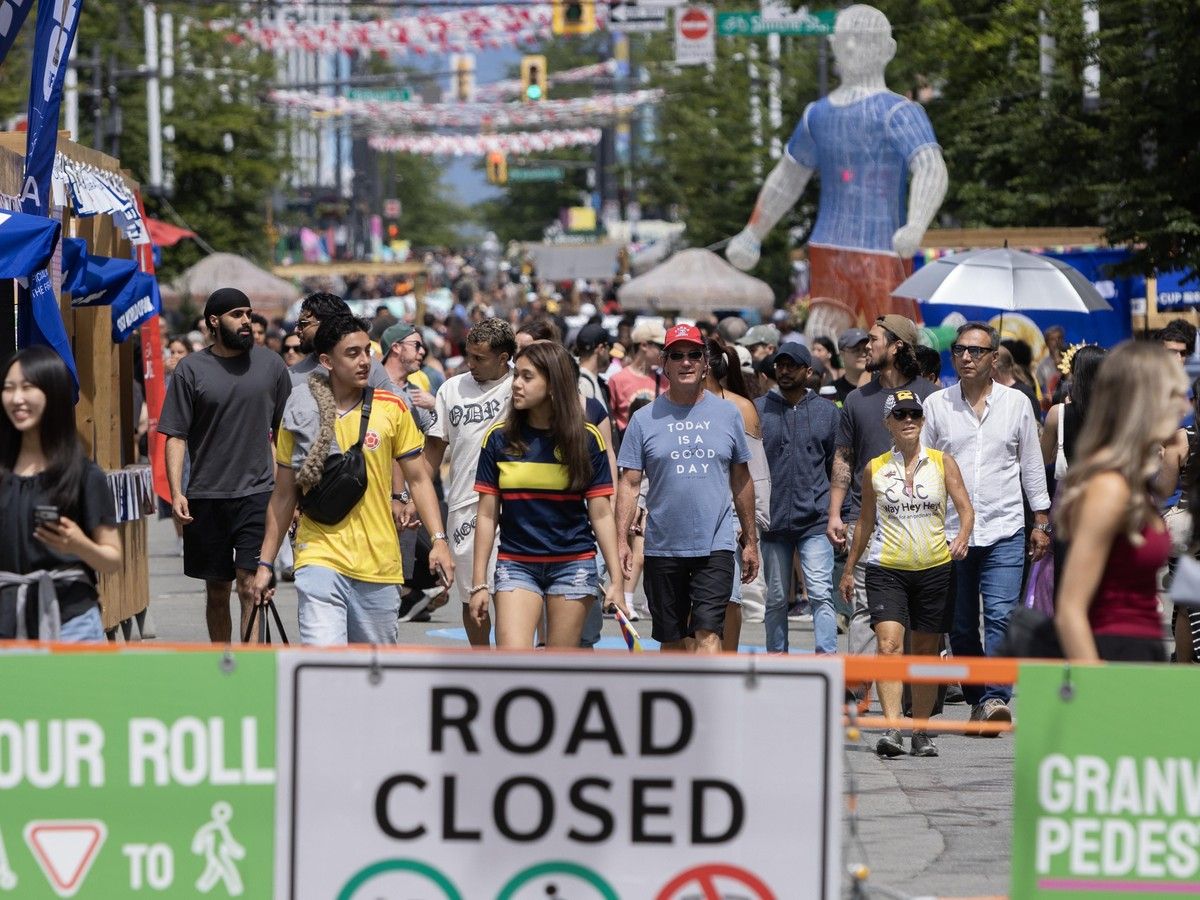
A “baby rave” for kids, a painting workshop and a cowboy celebration with live country music are being planned for Granville Street next week, in an effort to keep the World Cup celebratory atmosphere on the downtown strip.
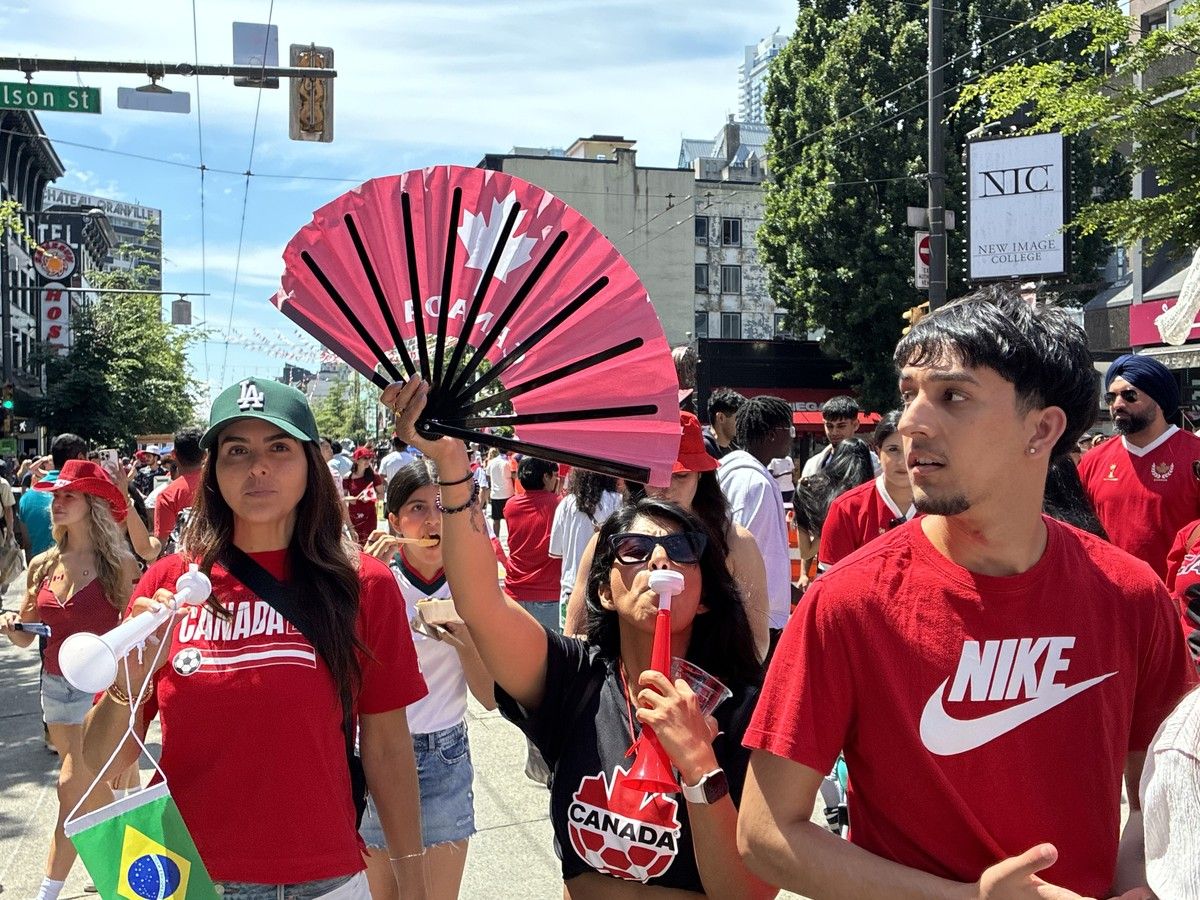
For the last month, five downtown blocks on Granville were transformed into a pedestrian-only corridor of overflowing patios, cheering soccer fans and thousands of visitors. But as the crowds disappear, businesses and city officials are facing a tougher question: Can that transformation last ?
As the tournament nears its end, those blocks have become noticeably quieter, said Kevin Martin, regional manager for Dublin Calling.
“The streets were empty,” he said Wednesday afternoon.
While the crowds have faded, Martin said the area remains “cleaner” and “much more colourful” than it was before the tournament, when businesses and residents raised concerns about visible street disorder, including open drug use and public-safety issues.
“Now, it’s up to us to create some energy and reason for people to want to continue to come down here,” Martin said.

Earlier this month, Vancouver city council voted to extend the Granville Street pedestrian zone for another seven weeks, approving up to $4.75 million for continued policing, sanitation, traffic management and programming.
Downtown Van, the area’s business improvement association, was given $1.25 million of that money to plan activities to persuade people to visit Granville between Sunday’s final World Cup match until Labour Day weekend.
The tentative plans for next week, shared with Postmedia, include buskers and other types of live music daily, as well as three free special events:
• Monday, July 20 at 2 p.m.: Workshop on mandala painting, which uses geometric and circular designs, for up to 40 people.
• Saturday, July 25, the National Day of the Cowboy: Live country music and celebrations of Western culture.
• Sunday, July 26, from noon to 4 p.m.: Family-friendly “Baby Rave,” featuring a DJ, bubble machines, interactive games and a children’s street party.
“We want to bring a different crowd into downtown. We want to provide different kinds of opportunities,” said Downtown Van president Jane Talbot.
Convincing families to come to Granville is the challenge facing her organization.
“While some pedestrian streets can succeed with passive amenities, such as seating and occasional buskers, Granville Street requires a different approach,” says a Downtown Van planning document written Wednesday.
“With approximately one in four storefronts currently vacant and long-standing social challenges affecting the corridor, simply removing vehicles is not enough. People need reasons to come to Granville Street, and programming creates those reasons.”
Cabana Lounge owner Dave Kershaw said the World Cup showed what Granville Street could become — but the underlying challenges facing the strip remain.
During the tournament, he said the nightlife venue saw more than 1,200 customers a night walk through its doors, with profits reaching levels comparable to its two busiest annual events: New Year’s Eve and Halloween.
“That was the best month we’ve ever had … No one was expecting an outcome this good after years of struggle,” Kershaw said.
“(But) as soon as FIFA started slowing down, we saw a little bit more of people openly consuming narcotics and passed out in the street.”
Talbot said Vancouver police will help with safety and security during this summer’s events, and her organization is continuing to push for improved supports for unhoused people and those with drug dependencies.
As a result of Vancouver city council’s hasty vote on July 2 to extend the pedestrian zone, Talbot said plans for the street are “a work in progress” and the schedule of events is still being set for the following six weeks.
Other ideas for Granville include interactive games, craft stations, dance activations, street performers, and patios continuing to show sporting events, such as baseball.
Nearly half of the $1.25 million will go to programming, with one third for furniture, art and lighting, and the rest for operations and contingency plans.
“I think we’re going to deliver a great summer on Granville,” Talbot said.
Patrick Shaughnessy, who has owned Golden Age Collectables on the strip since 1979, is skeptical that more events organized by the Downtown Vancouver BIA will solve the corridor’s deeper challenges.
“I don’t know we could throw any event that even compares to the world-class draw that is FIFA,” the longtime business owner said.
Shaunessy added the BIA’s programming initiative isn’t new.
“There have been summers where every week there’s a different event being held here. It didn’t make much of a difference. People are still wary of coming here because of the strip’s reputation.”
For Shaughnessy, the bigger issue is the number of empty storefronts.
“There have been storefront vacancies here from three to eight years,” he said, noting that big retailers including 8th & Main, Helly Hansen and Urban Outfitters have left the area, citing the accumulation of rising security costs and decreased foot traffic caused by broader street disorder.
“Some of those storefronts are operating as warehouses now.”
According to the Downtown Vancouver BIA, the corridor continues to have the highest storefront vacancy rate in downtown Vancouver, at roughly 29 per cent — meaning nearly one in three commercial spaces sits empty.
“There needs to be a lot more resources than simply increased street activities; there needs to be an investment in mental health treatment and supportive housing for people here,” Shaughnessy added.
Kershaw’s venue sits beneath the St. Helen’s Hotel SRO, one of three single-room occupancy buildings that have become cited as a main reason for disorder along the strip. During the pandemic, B.C. purchased the old hotels and converted them into rapid supportive housing. Since then, Kershaw’s business has been plagued by repeated floods, fire alarms and open drug use.
In March, the province announced plans to close the three SROs and relocate residents to supportive housing elsewhere in the city. So far, only residents of one, the Luugat, have been relocated.
“I hope the province will find homes quickly for people in those buildings who need that extra care, so Granville Street doesn’t just revert to a place full of people just passed out on the street,” said Kershaw.