 BURST
Follow our B.C. municipal election live-blog throughout the night for the latest election news from around Metro Vancouver, and we’ll update the story below with New Westminster election results after the polls close.
For municipal voters in the city of New Westminster, there are only two candidates running.
And all but one candidate hoping to land a seat on council or school board also belong to one of two parties: Community First New Westminster, led by incumbent Mayor Patrick Johnstone, or the New Westminster Progressives, led by mayoral hopeful (and former councillor) Daniel Fontaine.
But voters may be confused if they’re trying to suss out a candidate’s position based on traditional political leanings, says Sam Schechter, a Douglas College communications professor with an interest in local politics.
He said the Progressives had disconnected themselves from right-leaning politics by dropping the word Conservative from the well-known Progressive Conservative brand.
But a clue to the candidates’ ideology lies with the fact those with Progressives lawn signs tend to also have signs supporting the provincial B.C. Conservatives, he said.
“Houses with either NDP or Green party (provincial election) signs, are more likely to have Community First signs,” he said.
And further differentiating the two parties requires more than hearing their similar platforms, said Schechter.
Both parties pledge more housing for the unhoused, for instance, but in council meetings, “Community First is more likely to vote in favour of housing initiatives” and the Progressives not.
“Key issues in the campaign focus on the downtown area,” he said.
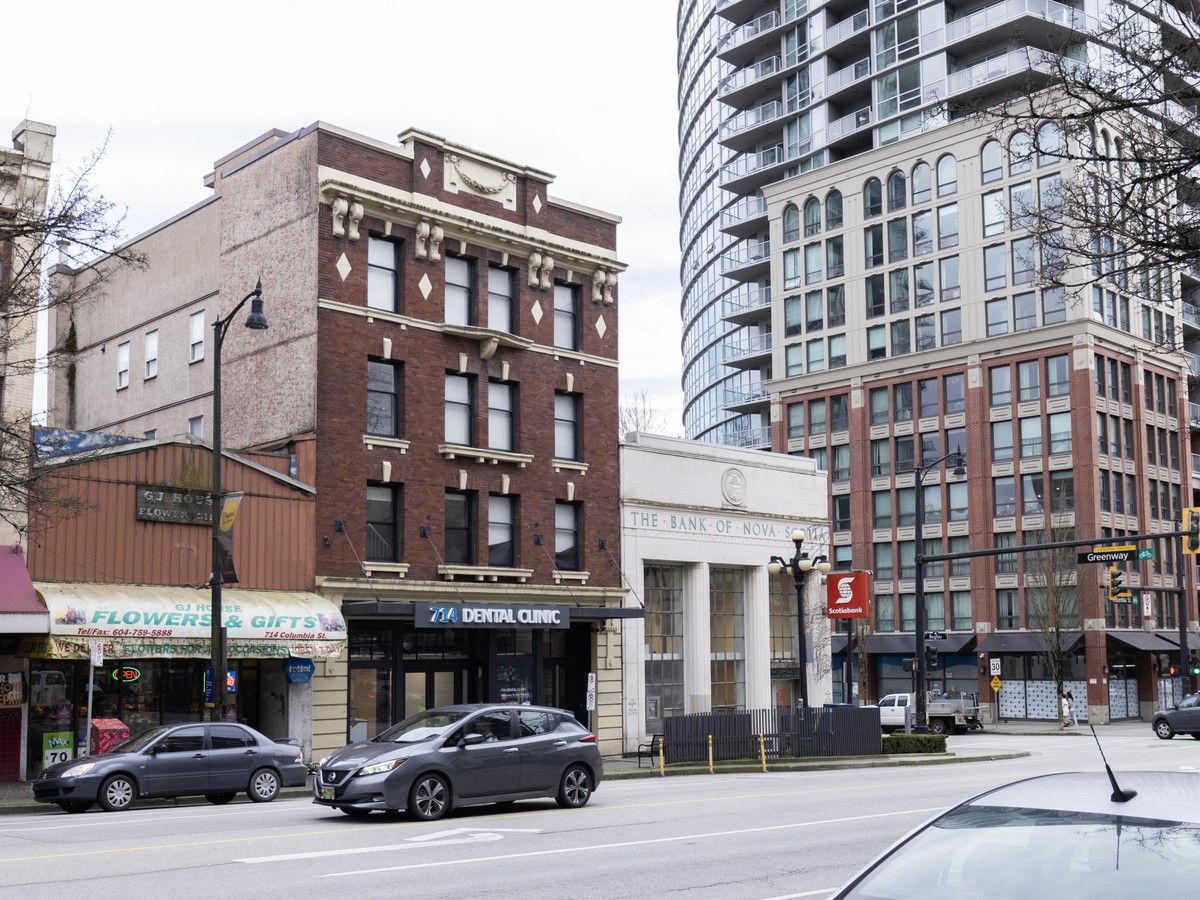
The main downtown strip, Columbia Street, that decades ago had its own Eaton’s, Kresge’s and Woolworth’s department stores that drew shoppers from Burnaby, Coquitlam and even Vancouver, has long suffered from a lack of commercial vibrancy.
Council recently purchased downtown property and the Community First candidates are “suggesting the land could be used for a rec centre, a library or a firehall,” he said. But “the NWP has been critical of the land purchase.”
And he said the Progressives are pushing hard for Fontaine as mayor by including his photo on all lawn signs, but “they’re not responding to some of the issue-based and community voter surveys.”
In an email, Fontaine said property taxes have gone up since the last election without a rise in services, and traffic is getting worse because of the city’s density and location as a major transport hub in Metro Vancouver.
Fontaine aims to tie taxes to inflation and improve core services, such as parks, traffic management and increased staff, he said in the email.
Johnstone, meanwhile, is hoping to hold on to his job and the majority Community First enjoyed on the previous council, with four of the six seats. His party also elected six of the seven school trustees.
Fontaine, who sat on council during the last term, is hoping to better the results of his predecessor, lawyer Ken Armstrong, who ran as mayor for the Progressives in 2022. (Fontaine and Armstrong have swapped places, as Armstrong is running for council this year.)
This year Johnstone and Fontaine are going head to head.
“NWP is trying to break through, Community First is trying to repeat their past success,” said Schechter.
Only two of the four Community First candidates for council who sat last term, Tasha Henderson and Jaimie McEvoy, are running again.
The two parties are running six candidates each for the six council seats. The lone Independent running for council is Geoff Homel, an archeologist and small business owner, who wants more parks and green space, better accessibility to the city for commuters and locals and “programs to support small, unique and weird businesses,” according to his online city profile.
For the seven school trustee positions, Community First is running five candidates while the Progressives are running six.
The city, at about 15 square kilometres in size with a population of 78,916, according to the 2021 Statistics Canada census, is the 17th most populous municipality in B.C. It grew 11 per cent from 2016.
About half the population is of European descent, 14 per cent East Asian, 10 per cent each South Asian and southeast Asian, and African, Latin American, Indigenous and Middle Eastern, each at about three per cent, make up the rest.
Almost half of the population has no religion, while about 40 per identify as Christian, with Sikhism, Islam, Hinduism, Buddhism, Judaism and Indigenous spirituality, at between five to less than one per cent each, making up the rest.
The average age is young, with those of working age, between 15 and 64, making up about 71 per cent of the population, higher than the national average of 65 per cent.
Meanwhile, those 65-plus make up about 15 per cent of the whole, below the national average of 19 per cent, with those 14-and-under make up the remaining 12 or so per cent.
New Westminster, named after England’s Parliament, was named the capital of The Colony of British Columbia by Queen Victoria in 1858, and remained the capital for about seven years, until legislators moved it to Victoria.
Examples of late 19th and early 20th century buildings, many built after the Great Fire of 1898, remain in the downtown core.
The completion of Highway 1 in 1964, which bypasses the city to the north, and the end in 1950 of the railway that ran from Vancouver to Chilliwack, both contributed to the eventual commercial death of the downtown, once known as the Golden Mile.
The retail hub moved north several blocks to an indoor mall. The city has in recent years developed its waterfront with a seawall and other developments, including condo towers.
The city’s commercial areas include the Quay and Waterfront districts, River Market and Pier West development near the quay.
For more on the civic elections in Metro Vancouver, follow our coverage of the following municipalities:
• Vancouver
• Burnaby
• Delta
• Langley: City and Township
• New Westminster
• North Shore
• Richmond
• Surrey
• Tri-Cities: Port Moody, Coquitlam, Port Coquitlam