 BURST
BURSTLots of monopoly-related news this week, as usual. Apple and OpenAI got into a bitter legal fight over trade secrets, and Intel is now doing well after Trump pursued policies to break the monopoly of Taiwan Semiconductor in chip fabrication. Populist Senate candidate Graham Platner dropped out of the Maine Senate race over a rape allegation, in a major loss for the left. Also, someone mailed a squirrel to the Meta offices, and somehow it got loose.
But today I want to go over the likely coming challenge to the attempted merger of Paramount and Warner Bros Discovery, a combination that would put much of Hollywood and media assets such as CNN in the hands of billionaire Trump ally Larry Ellison. CNN’s Brian Stelter reported that state attorneys general, led by California Attorney General Rob Bonta, are readying a complaint as soon as tomorrow to block the merger. David McCabe in the New York Times added more color, saying the complaint will focus on ‘tentpole movies,’ aka blockbuster films.
If this merger challenge is filed, it would kick off the biggest legal fight over corporate power in the Trump era. And I have to say, that a challenge might happen is shockingly good news, and a real testament to the anti-monopoly arguments that have been percolating for years, as well as the organizing savvy of groups like Block the Merger and the thousands of courageous artists who spoke out and risked their careers to do so.
Here’s why. Last year, this merger was supposed to go through without a hitch. Wall Street has wanted Hollywood to consolidate for years, and the Ellison family has a very close relationship with Trump. So it was almost impossible to imagine that it could be stopped. But what few expected, except BIG readers, is that a different set of enforcers, state attorneys general, might intervene.
States are not taken seriously in the antitrust realm, or at least, they traditionally hadn’t been. But over the past year, state attorneys general have made their presence known. They won a temporary injunction against a different Trump-approved media merger, NextStar-TEGNA, and beat Ticketmaster against the wishes of the Trump Antitrust Division. And several had been investigating the Paramount-Warner deal for months. Still, I don’t think the Ellison’s really took seriously the prospect of having to justify their merger in a court until recently.
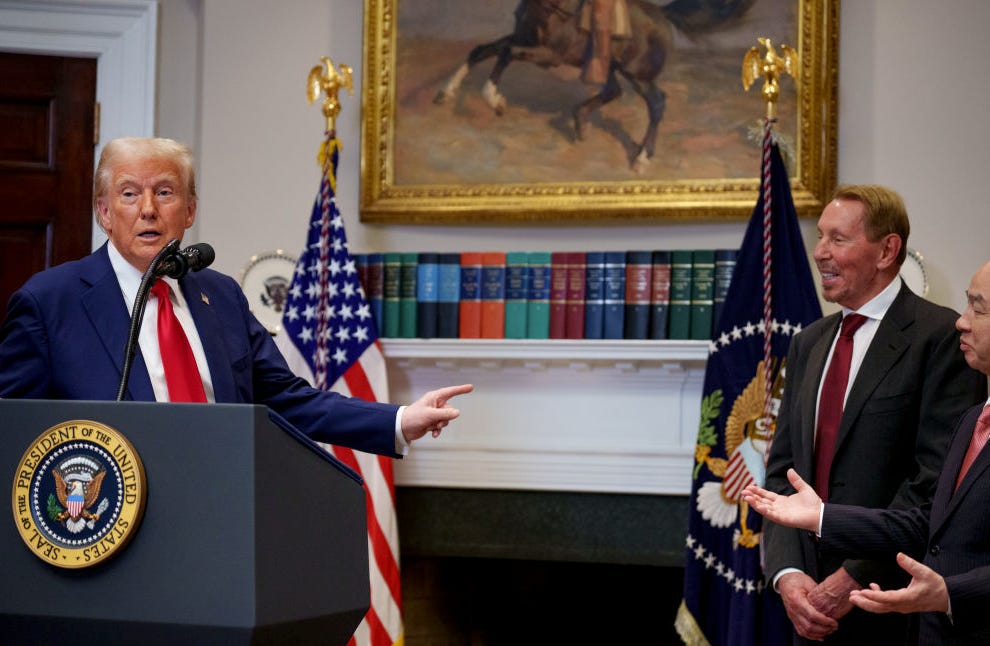
But they have now, and they are really pissed. The longer the deal is delayed, the more expensive for them, because the Ellison’s agreed to pay a “ticking fee” to Warner shareholders of $650 million for every quarter it’s delayed. One result of the dashed expectation they could close the deal without challenge is wild threats. For example, they are leaking that they might take both studios and leave California, which is sure to generate yet more hatred in Hollywood for the Ellison’s, and demonstrate just how powerful this combined entity is.
Indeed, if this case does go to trial, it will be extremely weird, and highly political. The Ellison’s are powerful Republican donors, and they seem to perceive opposition to their acquisition of power as rooted, and I’m not kidding when I write this outrageous sentence, in treasonous leftist disdain for their support of Israel and America. Their lawyer, a former Trump official named Makan Delrahim, has been hurling insults at me personally on LinkedIn. I’ll get into all of this political weirdness below, because it’s important, funny, and immensely stupid all at once.
But first, let’s recall the stakes of the merger itself. There’s a full FAQ here, but to recap, this deal would consolidate two studios that make movies and TV shows, the industry which is effectively mass production of professional storytelling. Here’s the gist of the market power problem, which I wrote up in February.
Paramount and Warner are both significant media conglomerates, with assets spanning film production, distribution, and news. They are each one of the big five studios, which make and distribute most of the commercial films that go into theaters. They each have significant TV production and streaming assets, from Paramount Plus to HBO Max. The merged company would hold broadcast rights for the NFL, NHL, MLB, NCAA, PGA, NASCAR, NCAA March Madness, the College Football Playoffs, UFC, and the French Open, and will rival Disney/ESPN if they are allowed to combine.
On a political level, Paramount owns CBS News, while Warner has CNN. The President has indicated he expects the Ellison family to reorient CNN to become a more conservative and friendly media outfit, as they have done for CBS under the leadership of Bari Weiss. Pairing CBS, CNN, and HBO with the Ellison family’s ownership of TikTok will give this family outsized political control of the American tech and media ecosystem, and their alliance with the Trump administration is the fusion of corporate and government power that anti-monopolists have warned about.
This deal will place huge debt on the combined company, and there will be significant bloodletting as a result. In total, Paramount/Warner will have around $90 billion in debt, which is roughly seven times what it will earn. The only way to cut that debt is cost cuts. And sure enough, the Ellison family is projecting $6-9 billion in “synergies,” which is to say layoffs. As of 2024, Warner had 35,000 employees and Paramount has 17,600. If you assume that half of the cost will come from firing people, and budget $200,000 in cost per employee, that’s 15,000 to 20,000 layoffs out of a total of 52,600, about a third of the company. But don’t worry, Warner CEO David Zazlav will get $567 million if the deal goes through, and become a billionaire. So he’ll be fine.
Opponents of the deal argue the industry backstory makes the problem even worse, since Hollywood has been consolidating already for years. In 2019, Disney bought Fox, which cut the bargaining leverage of movie theater owners, as well as the workers who make movies and TV shows.
And the consolidation won’t stop with Paramount-Warner; Comcast’s recent spinoff of NBC Universal is seen as a prelude to a merger of that studio. By the end of the Trump era, if this trend isn’t stopped, we could get down to three remaining studios. It’s likely at that point that the capacity of Hollywood to create stories would collapse, with Los Angeles becoming akin to Detroit and autos, a once-great center fallen on hard times.
\And what is the rationale of the Ellison’s for the merger? Well,they would argue they have a small market share, so a merger is just not a big deal. Moreover, they will be creating competition by combining HBO and Paramount+ into a big viable streaming competitor. I don’t find that compelling, turning two products into one doesn’t increase competition. And the last time we saw this particularly dynamic promised, when Microsoft bought Activision, what happened was layoffs and price hikes. But a judge might accept this argument.
So what is the legal case against the merger?
Enforcers will look at market shares and pricing power. In terms of movie tickets sold, Paramount was the number five movie studio in 2025 with 6.47% market share and Warner was number two with 21.70% market share. That doesn’t quite hit 30% of the market, which is a legal threshold for presumptively illegal, but it’s close. According to standard antitrust methodology, this merger would take the market from un-concentrated to moderately concentrated.
But there are lots of other markets, from distribution of movies to sports to streaming to labor power that are at issue here. In streaming, for instance, prices have gone up dramatically. In 2021, Paramount+ was $4.99/month for its ad-supported tier. Last month, that price increased to $9. That’s an 80% price hike in four years, or four times the rate of overall inflation. No one thinks that Paramount+ is a monopoly, but all of the streaming firms seem to have pricing power or some sort of coordinated capacity to raise costs on consumers.
And then there’s basic easy-to-understand pricing power. If you’ve sold a script and two of the bidders were Paramount and Warner, then this deal reduces competition for your work. In 2022, the Antitrust Division blocked a merger between Penguin and Simon & Schuster in the book industry, which was like these studios consolidating an industry from five to four major players. That deal got blocked over concerns it would cut bargaining power to writers.
The state enforcers are likely to challenge the deal on a number of grounds - reducing the leverage of theater owners, increasing prices, and cutting the wages and compensation of artists. A letter from those artists now has more than five thousand signatures, and growing, of concerned industry stakeholders. The challenge is likely to come from Democratic attorneys general, because as the Capitol Forum also reported, the GOP attorneys general are frightened of the Ellison’s power in GOP circles.
“They’re completely driven by antisemitism and socialism.”
Normally, I’d address the legal elements of the merger case, and go over merger law. But this situation is highly political, and the law is a minor part of the story.
There seem to be four planks to the Ellison strategy to get this merger through. The first is to make a legal case, to argue they are promoting competition by creating a new effective competitor to Netflix. Ellison has promised to increase output to 30 movies a year, which would mitigate the risk of a combination that cuts the amount in production, as Disney-Fox did. No one really believes David Ellison can actually make that happen, even proponents of the deal, largely because of the massive debt load and his own poor track record. But that’s their legal plank. We’re going to make Hollywood better!
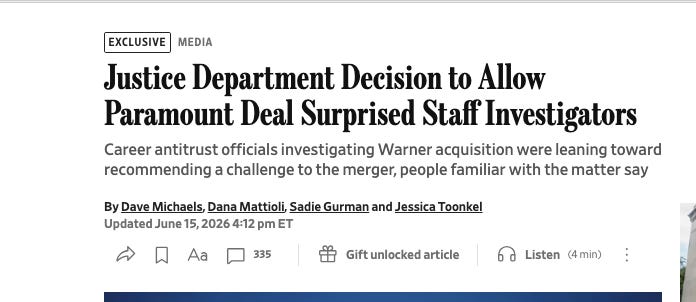
The second is use corruption. Back in June, the Antitrust Division cleared the merger, and issued a very unusual full-throated endorsement of the deal. The Antitrust Division can let mergers go through they shouldn’t, but they never issue statements on behalf of mergers. So this legal analysis raised eyebrows.
A few days later, we learned why. The Wall Street Journal reported that antitrust staffers wanted to block the deal, but were overruled by Trump officials. And it turns out that Larry Ellison had made a secret $45 million donation to a Trump-aligned electoral group, and had promised to overhaul CNN if the merger went through.
The third plank of the Ellison strategy is to withhold necessary information from investigations, to block enforcement. According to the Capitol Forum, Trump antitrust officials “imposed tight restrictions on career staff’s investigation of Paramount, preventing agency attorneys from deposing key Paramount executives or demanding data and documents considered necessary to the review.” Staff were told not to talk to third parties, especially with “questions about the impact of Walt Disney’s 2019 acquisition of Fox’s studio business.”
It’s not just Antitrust Division staff, but more importantly, state enforcers. Oregon’s attorney general Dan Rayfield recently asked a court to delay the merger, saying that the company “has spent weeks dodging and delaying a straightforward records request.” Rayfield withdrew that request, likely because there’s a bigger complaint coming shortly from Bonta.
And the fourth plank from the Ellison’s is, well, let’s called it a specialized communications strategy. For months, someone at Paramount has been orchestrating a smear campaign against deal opponents. In leaks to the New York Post, people close to Paramount, perhaps Delrahim, are offering quite a set of arguments. “They’re communists, so of course they will oppose this deal,” said one anonymous source. “They’re completely driven by antisemitism and socialism.” The Post has been writing, no doubt with prompting, that opposition to the deal is coming from Chinese espionage and those trying to “infiltrate the political system.”
And that’s not all. Delrahim has taken multiple swipes at me personally in posts on LinkedIn, on everything from my views on Iran and Graham Platner, and in one bizarre rant, he makes an ardent defense Mark Zuckerberg. In the most relevant post, Delrahim alleges that I use “antisemitic innuendo,” followed by what read like threats on his part to use his political influence to destroy merger law. (As an fyi, Delrahim and the Ellison’s are Jewish. As am I. Read into this whatever subtext you want.)
The key part of what he said is as follows:
For some of us who believe in antitrust enforcement, please don’t destroy antitrust law while you push your extreme views. Remember the 1960’s Supreme Court decision Philadelphia National Bank’s “presumption” isn’t in the statutory text and I would bet at least 7 votes, maybe 8 or 9, at the Supreme Court who would overturn it today.
Philadelphia Bank is a Supreme Court precedent saying that mergers that create more than 30% market share are presumptively illegal. Delrahim is implying he will have no choice but to appeal a loss all the way up to the Supreme Court, at which point they will overturn this critical bulwark against consolidation. The Associate Attorney General, Harmeet K. Dillon, is heartily approving his posts, as are a host of big law antitrust attorneys. He’s even hired Paul Clement, a prestigious conservative Supreme Court litigator. Basically, Delrahim is saying ‘Nice Supreme Court precedent helping you stop mergers, shame if anything happens to it.’
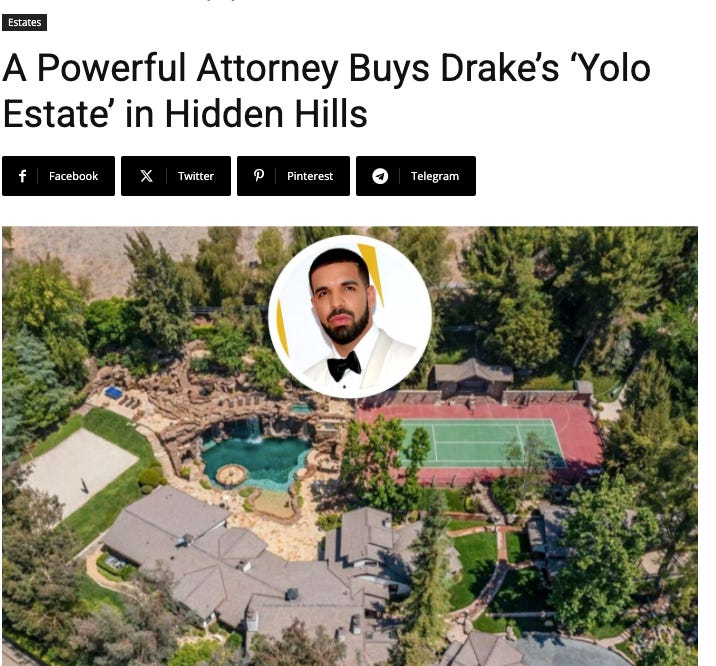
How reasonable is his prediction? Well, Delrahim wasn’t a very good lawyer, losing the AT&T-Time Warner merger challenge when he ran the Antitrust Division, and then shrinking from further conflict. His threats, like trying to saddle states with the ticking fee, are silly. One of his subordinates ran the disastrous Nexstar-TEGNA merger, and tried a similar argument, and was pretty much laughed out of court. But Delrahim is very skilled at a certain kind of elite messaging; he was, for instance, the lead in getting Neil Gorsuch through the Supreme Court nominations process. He’s also very rich, after leaving the first Trump administration, he bought Drake’s house in LA for $11 million.
So is Philadelphia National Bank really at risk? I don’t think so. But even if it were, it’s kind of a stupid threat, considering the deal bonanza happening now as a result of explicit non-enforcement and pay-to-play policy. Does the ability to enforce antitrust law really matter when the rule of law has become a joke precisely because of men like Delrahim? Not really.
So what would a case feel like? Bonta challenging a major deal would look shockingly out of place, since there will is effectively no big merger enforcement on a Federal level. Wall Street and the entire legal profession will try to characterize this one instance of lawfulness as an anomaly, and something a judge should correct by allowing Paramount to have the same corrupt free ride every other corporation is getting.
All that said, it is of course possible that there is no challenge, that there’s some sort of settlement. I think that’s unlikely, considering Bonta has been raising expectations for months, and thousands of artists put their careers on the line by publicly opposing a merger sought by an extremely vindictive group of partisans.
If Bonta does takes the deal to court, there will be an amazing trial, win or lose. We will learn a lot about how Hollywood operates, and about the deal-cutting and corruption of the Ellison’s, Trump, and Delrahim. Obviously it’d be great to win. But as we watch Americans angrily look for someone to stop the endless corruption on both sids of the aisle, a public reckoning is what we need more than anything else.
And now, the rest of the round-up. If you aren’t a paid subscriber, now’s a good time to sign up. We at BIG don’t particularly love being personally singled out by the attack dogs of billionaires, but it does show that we’re doing something right. And we’d appreciate your support. You can sign up here.
The full round-up after the paywall has a bunch of good stories. For instance, a judge upheld a securities fraud judgment against Elon Musk, some thoughts on the Iran War sort of restarting, and some implications of anti-monopoly candidate Graham Platner quitting his Senate race after a rape allegation. Plus Facebook board member and crypto investor Marc Andreessen is now an advisor to both the Pentagon and the Fed, and someone let a squirrel loose in Meta’s offices. All that after the paywall.