 BURST
BURST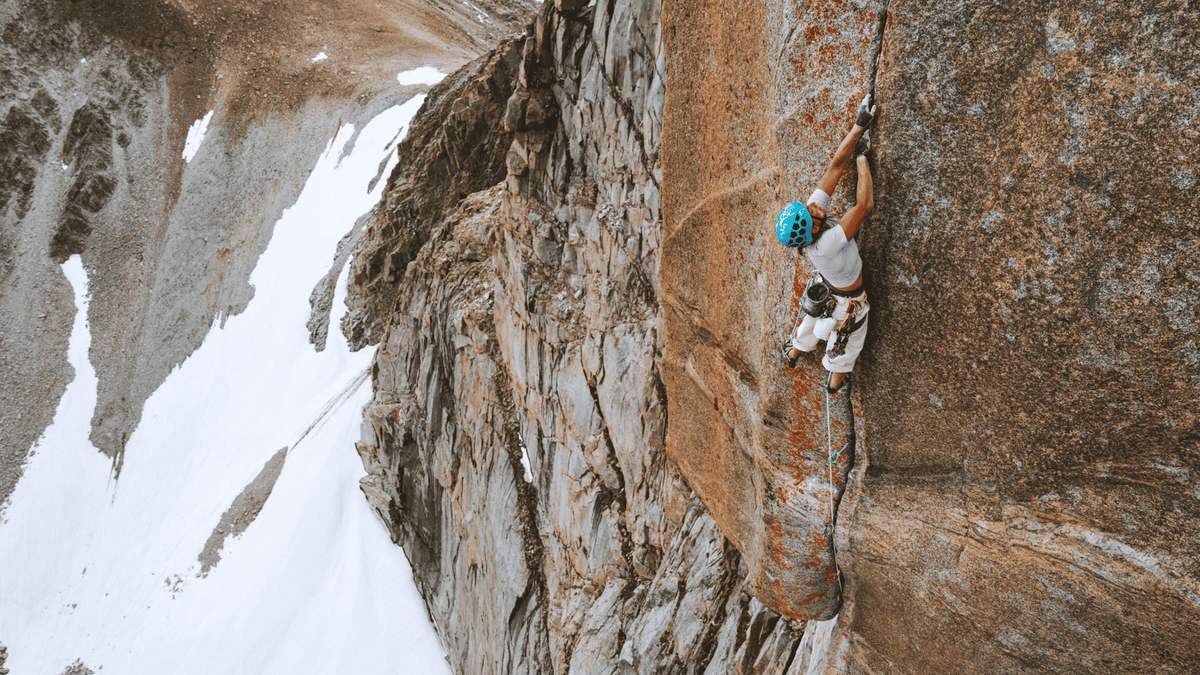
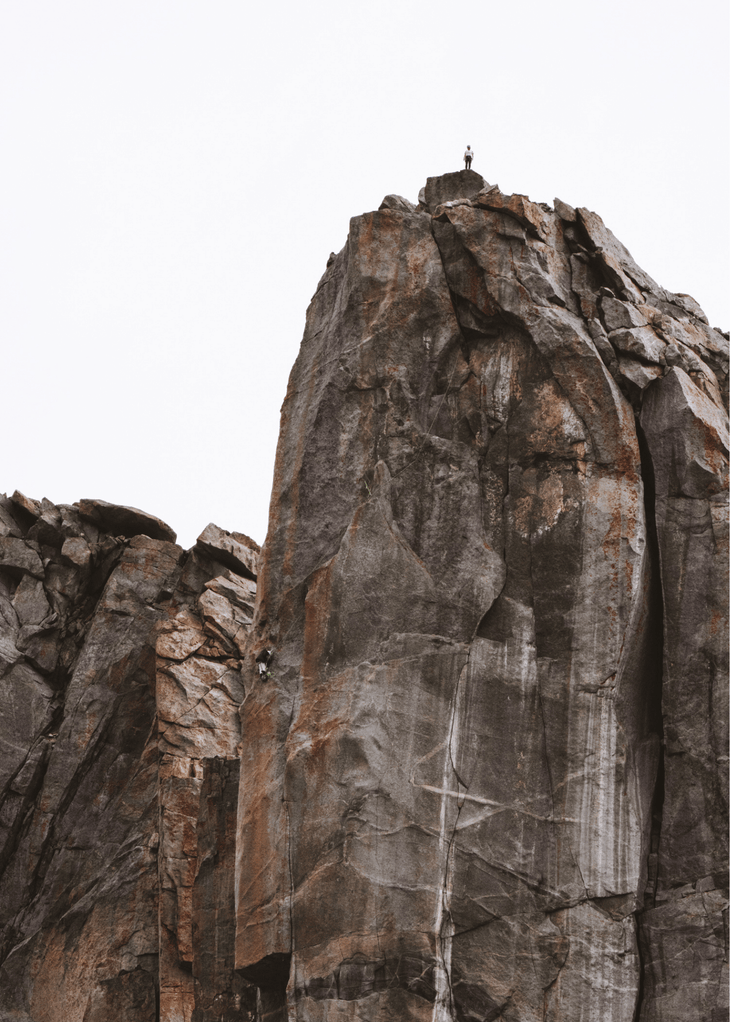
About our reporting: Senior Editor Anthony Walsh spoke with professional rock climber Amity Martin (previously Warme) about her first ascent of Time is Dancing (5.14a; 1,000ft) on Lost Temple Spire, in Wyoming’s Wind River Range.
“Did you hear about Amity’s new route in the Winds?”
The question floated past me several times this August before I could snatch it from the air. Rumor had it Amity Martin had put up a 10-pitch 5.14, the hardest route in Wyoming’s Wind River Range, stacked with hard trad climbing and very few bolts.
I played it cool before reaching out; since redpointing Time is Dancing on August 9, Martin hadn’t yet shared the news with the world. She was taking time to process the experience, and making some truly incredible images with the photographers Drew Smith and Cheyne Lempe.
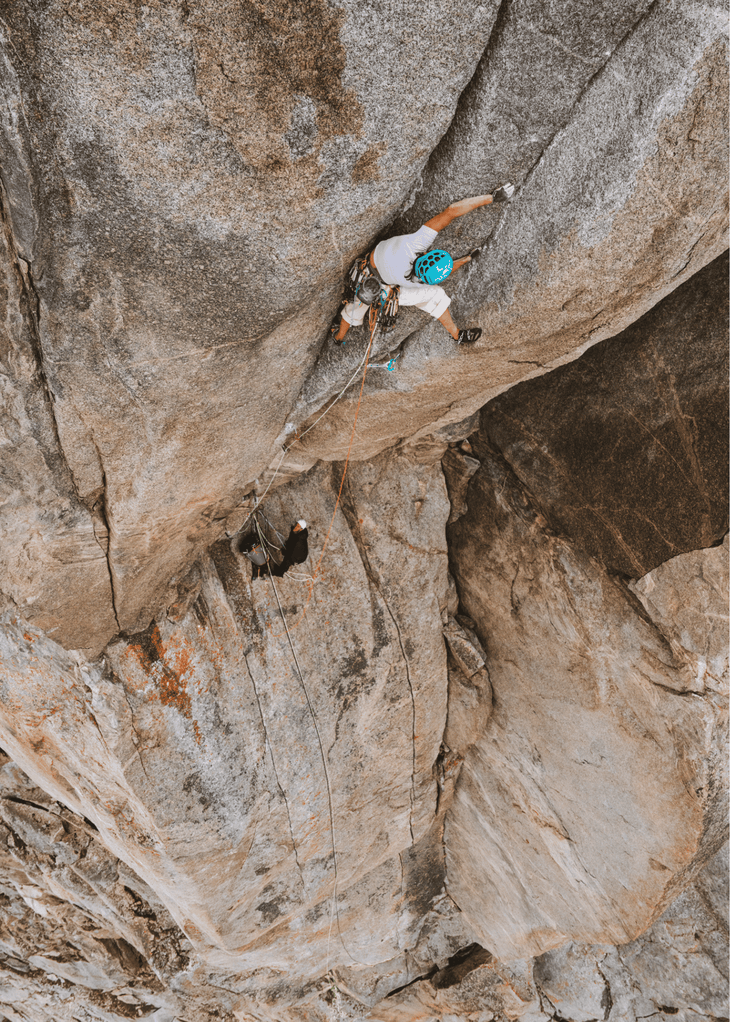
Finally, when we connected earlier this month, Martin was ready to talk. She called in from her wood-paneled van parked in Canmore, Alberta, living the good life of single-pitch sport climbing after a long summer of big-walling. “I’m over remote multi-pitches for the time being,” she joked. The basecamp from Lost Temple Spire sits nine miles from the trailhead, providing a proper leg day before even starting the route.
Finding Time is Dancing
Martin started developing the line that became Time is Dancing at the end of last summer, with Joel Unema, a friend, talented climber, and contracted coach by Martin’s main sponsor, Arc’teryx. “It’s a very obvious feature, that you can see for most of the hike in, but it’s difficult to access the top of it because it’s on a totally free-standing spire,” Martin said. She and Unema initially climbed the easiest way to the top of the spire, the Southwest Arete (5.10b), just so they could rappel into the overhanging headwall and swing around to find their line.
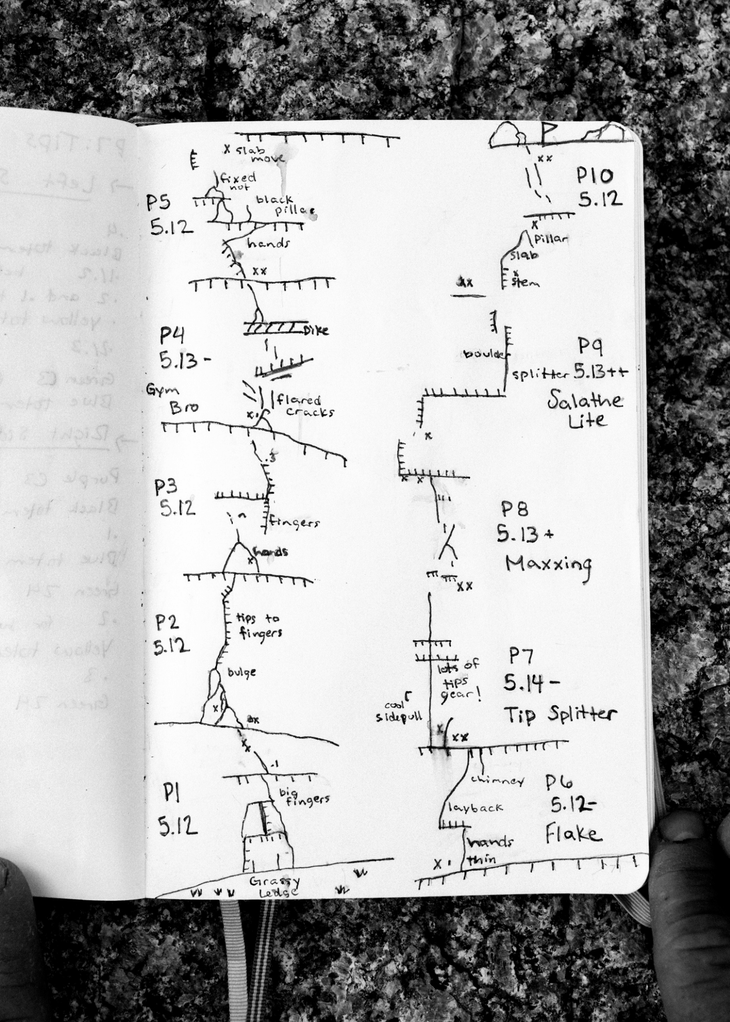
Then, this summer, Martin spent all of July and most of August in the Winds working through the sustained line, which includes six mid-5.12 pitches, a 5.13a, 5.13c, 5.13d (“5.13++” notes the topo for pitch nine, “Salathé Lite”), and a beautiful 5.14a tips splitter. She called the three crux pitches “some of the steepest gear-protected pitches I’ve ever climbed.”
“Working the route was quite difficult because of how steep the line is,” Martin explained. “You can’t easily rappel in to work the crux pitches (the top three) so everyday you’re climbing six 5.12 to 5.13- pitches just to reach them.” I asked her if she thought to fix ropes from the crux to the base, to avoid such a heinously physical daily commute. “We did have ropes fixed for shooting, but it seemed easier just to rock climb those pitches to reach the crux, rather than ascending ropes. Plus we wanted to dial in those pitches, anyway.”
One day, I hope to be as good at climbing 5.12 as Amity Martin.
The 5.14a crux pitch is 120 feet long and holds numerous V5 to V8 boulder problems separated by marginal rests. A single bolt protects a V7 slab move off of the belay ledge, before gaining the thin crack, which protects with a triple set of micro cams. Pitches eight and nine are the impossibly steep money pitches: overhung cracks, compression boulders, and as much exposure as you could ever want or need.
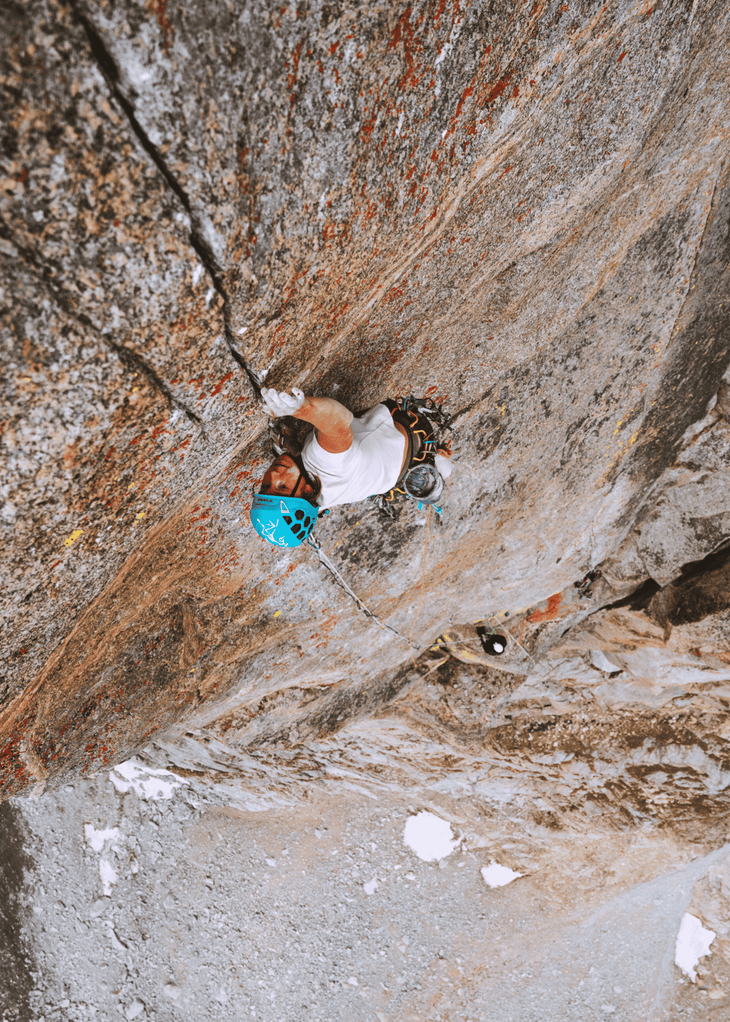
Just 10 protection bolts dot the 1,000-foot-tall face, where, without them, climbers would otherwise face a catastrophic fall on difficult terrain. “The idea in developing was to give people the chance to give a safe, ground-up effort,” Martin explained, “but it’s still going to be exciting.”
The first ascent of Time is Dancing
Typically, before a first ascensionist proposes a grade for their new route, they think of similar routes they’ve climbed. Sheer arêtes can be compared to one another, as can blank corners and thin cracks. But Time is Dancing was unlike any trad route Martin had encountered before. “None of the crux pitches reminded me of other classics I’ve done,” she said. “It’s crazy how pumped you get. It’s so physical. You can’t tech it out on your feet like a normal granite pitch.”
Martin’s five ground-up free ascents of El Cap, plus her tick of the former hardest route in the Winds, Sendero Luminoso (5.13d; 1,500ft), no doubt helped her settle on Time is Dancing’s grade.
On the day Martin sent the route, she hadn’t planned to redpoint even one crux pitch. “Most of the days up there felt hard, like I wasn’t making any progress…,” she said. “Starting up the 5.14a pitch, my goal for the day was to link from the anchor through the crux of the pitch, about one third of the way.” But when she stuck the crux move without falling, she battled upwards through more technical boulder problems, surprising herself with her first send of the pitch.
“I was psyched after that, and I knew it was a really big step in the process of this route, but I still wasn’t in the mindset that I was going to send the whole thing today,” she said. There’s still two very physical 5.13+ pitches to go.”
She topped out a few hours later, having sent all of the route’s cruxes on lead.

Learning to develop, and what’s next
Time is Dancing is Martin’s first time wading into the blue-collar world of route development. “In the past, maybe I’ve been hesitant to take the time to learn how to develop because it’s … a lot of effort that isn’t actually rock climbing,” she said. But this route felt like a worthy investment, as did the time it took learning from her climbing partner Unema on the finer points of route development.
“[Lately] I’ve been most inspired by routes that ask me to grow in certain ways, either physically or by learning new skills,” Martin said. “I like the combination of drawing on my reservoir of experience, plus being pushed to learn something new.” Martin is at an exciting confluence in her career: 5.14 fitness, a famous work ethic, and now a taste of new routing. I can’t wait to catch whispers of what she gets up to next.
The post Exclusive: Amity Martin Establishes Stunning 5.14a Deep in the Winds appeared first on Climbing.