 BURST
BURST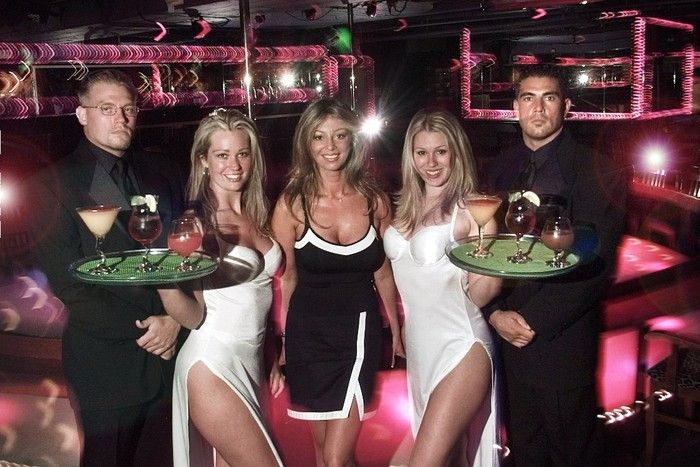
Madelyn Summers, a former performer at Brandi’s Exotic Show Lounge, was shocked when she heard the downtown Vancouver venue will close its doors on May 4.
“It’s hard to process the loss,” she said. “It’s devastating.”
Brandi’s was the last venue for “true showgirls” performing at the intersection of creativity, art, sexuality, music and theatre in Vancouver, Summers said. Brandi’s performers invest thousands of dollars on music, costumes, props and signature routines featuring aerial ribbons, hoops, light and fire shows.

Working there is considered an honour, said Summers, who, like many performers in the shrinking industry, is currently on the road performing as a travelling feature dancer, with her own signature: feathers, boas and fans.
“I was inspired by the other dancers every day.”
Brandi’s, billed as “Vancouver’s sexiest show lounge,” announced on its website recently that after “26 unforgettable years” it would be closing after unsuccessful lease negotiations.
Brandi’s, run by the late Brandy Sarionder , opened in the early 2000s, and was located on the fifth floor of a featureless office block at 595 Hornby St.
Brandi’s drew sports stars and celebrities and sold itself as a classy show lounge complete with velvet curtains, bottle service and private booths, at a time when strip clubs were repositioning themselves as luxury, VIP entertainment.

The club had the dubious distinction of being blamed by the National Enquirer for the downfall of “Bennifer,” when actor Ben Affleck allegedly dallied with a dancer, leading to the breakup of his engagement with singer Jennifer Lopez.
“It’s the end of a legendary club,” said Annie Temple, a former dancer and founder of The Naked Truth, an advocacy group that supports adult industry professionals. “They are falling away one by one.”
Temple cited the “strip club index,” an informal indicator of economic health, in the demise of Brandi’s and other strip clubs across North America.
“When people have less disposable income, revenues at clubs go down,” she said.
Summers agreed.
“Strip clubs are a luxury,” she said. “You have to spend a lot of money to have a good time.”
Along with rising operating costs, changing demographics, young people with less disposable income, and free alternatives on the Internet, the trend is hitting strip clubs and VIP lounges across North America.
In January 2026, Filmores Gentlemen’s Club, a 45-year-old staple in downtown Toronto, closed its doors. A 46-storey condo tower will take its place. In 2025, Centerfolds, the legendary Las Vegas topless dance watering hole, closed and was replaced by a sports-themed adult venue. In 2010, Vancouver’s gritty 101-year-old Cecil closed to make way for a 23-storey condo.
Strip clubs aren’t the only venues finding it difficult to survive in Vancouver.
“What is going on is affecting the whole night-time economy and nightlife, and is endemic to live music clubs,” said Aaron Chapman, author of Liquor, Lust, and the Law: The Story of Vancouver’s Legendary Penthouse Nightclub , and a OneCity candidate for council.
“At the root of what happened with Brandi’s is they don’t own the building. Their determination of what they want to do will always be at the whim of the property owner.”
Rents driven up by commercial property taxes that are calculated at the highest and best use of the property often get passed on to leaseholders.
“That’s why the Penthouse survives,” said Chapman, referring to The Penthouse Cabaret, which has operated at 1019 Seymour St. since 1947. “They own the building.”
Chapman said the city needs to do a better job of protecting its alternative and non-traditional performance and music spaces, whether it’s Brandi’s or Lanalou’s, a “rock ‘n’ roll eatery on Powell Street.
“We need our venues, cultural spaces and arts spaces,” said Chapman.
For decades, Vancouver had a rich nightlife, said Becki Ross, a retired UBC sociologist and author of Burlesque West, Showgirls, Sex and Sin in Postwar Vancouver.
Burlesque dancers were an integral part of that culture.
The city was a spoke on the hub of a glittering circuit, where showgirls tried out acts before taking them to Vegas, and headliners such as Gypsy Rose Lee and Big Fannie Annie might perform on the same night as Sammy Davis Jr. or Lena Horne.

“These were incredibly rich places of ferment, experimentation and innovation, and a lot of the dancers were recruited by the club owners to come north,” said Ross.
“In the 1970s, about 35 pubs and supper clubs with burlesque, striptease and exotic dancing in Vancouver were raging,” said Ross. “There seemed to be no barrier to opening a pub or a showroom, or a club or a lounge, installing dancers and making a success of it.”
In the 1920s, the State Theatre (formerly the Pantages Theatre) on East Hastings Street featured burlesque dancers on its stages, and hosted international artists such as fan dancer Sally Rand.
The Palomar at Georgia and Burrard, and other supper clubs like the Cave at 626 Hornby St., featured burlesque along with cabaret acts that included comedians, jugglers, sketch acts and knife throwers.
Since that time, clubs that featured striptease and burlesque have come and gone: the Kublai Khan at 488 Main St., the Harlem Nocturne at 343 East Hastings St., the Smilin’ Buddha at 109 East Hastings St., Isy’s on West Georgia, and Oil Can Harry’s at 752 Thurlow St. all tapped the cabaret trend through the 1950s and ’60s.
The advent of television crushed that moment, said Ross — people had something to do at home — but the scene evolved and the independent, free-standing strip club emerged in tandem with the 1960s and ’70s sexual revolution.
“People became super curious about sexuality, about nakedness, about bodies, about beauty,” said Ross.

Women who worked in underpaid pink-collar jobs — nurses and social workers — found they could make good money on stage, although it was a high-risk business, said Ross. Strippers were stigmatized, misunderstood and had few legal or labour protections.
In the 1980s and ’90s, higher-end clubs became more mainstream thanks to movies like Flashdance , Striptease and Showgirls, and hip hop culture that used the clubs as promotional spaces. The scene was no longer just for expense accounts and middle-aged stockbrokers.
Audiences became more diverse, including celebrities, sports figures and couples, groups of women, straight, gay and non-binary audiences.
Over the last decade, strip clubs have faced what Ross calls “a generational shift.”
Virtual venues such as OnlyFans, TikTok and Instagram have impacted the brick-and-mortar industry, as the cost of going out has increased beyond what many young people can afford.
Clubs like the Penthouse still draw crowds that make it rain, showering dancers in $5 bills, but more so on weekends.
“Vancouver is an expensive place to live,” said Chapman. “That’s part of it.”
For Temple, the loss is about more than Vancouver’s disappearing nightlife.
“It’s one less workspace for people who can’t wodrk other jobs.”
Temple said the industry helped lift her out of generational poverty.
“I grew up poor. I couldn’t find a job that provided enough to live on. I started dancing out of financial necessity.”
The work, although highly stigmatized, worked for her.
“I was self-employed, it was flexible, it was entrepreneurial,” said Temple.
She put herself through university, learned boundaries, assertiveness, relationship management, de-escalation, scheduling, how to prepare and file legal briefs, and how to talk to “people in suits.”
“I became stronger, and I stopped feeling inferior. I came into my own power.”
For showgirls like Summers, it’s another stage gone dark.
“There aren’t a lot of places we can be anymore.”
With photo research by Postmedia librarian Carolyn Soltau and Postmedia News
