 BURST
BURSTWe’re near a midterm election, and corporate power, expressed through rage towards data centers, Flock cameras, AI, political corruption, and high prices, is on the ballot for the first time that I’ve ever really seen. This one is shaping up to be a Democratic wave year, and the party out of power typically has the more vibrant intra-party debate. And so it is this time. For instance, Abdul El-Sayed, who has a strong anti-monopoly platform, won the Michigan Democratic Senate primary, despite being outspent by eight to one. El-Sayed is not an isolated occurrence, there have been many such cases, including unusual defeats of incumbents.
Typically, Democratic internal disputes are framed as moderate vs progressive. After El-Sayed’s win, a frequent reader of BIG sent me a note that got me thinking. He asked whether it would be possible for the “moderate wing” of the Democratic Party to be part of the anti-monopoly fight. He is afraid that the left will not do well in the upcoming elections and that will discredit the prospect of taming corruption within corporate America.
And he then approvingly sent me a link to this profile of Pat Ryan, a Congressman from New York. Ryan frequently bashes greedy billionaires, but also told the reporter that he doesn’t disdain all wealthy people. “I actually think it’s very important to say there are good, very generous, and patriotic, and selfless wealthy people,” he said. This politician, framed in the piece as more moderate, has been one of the best anti-monopolists in Congress, investigating United Health Group, as well as the local utility Central Hudson.
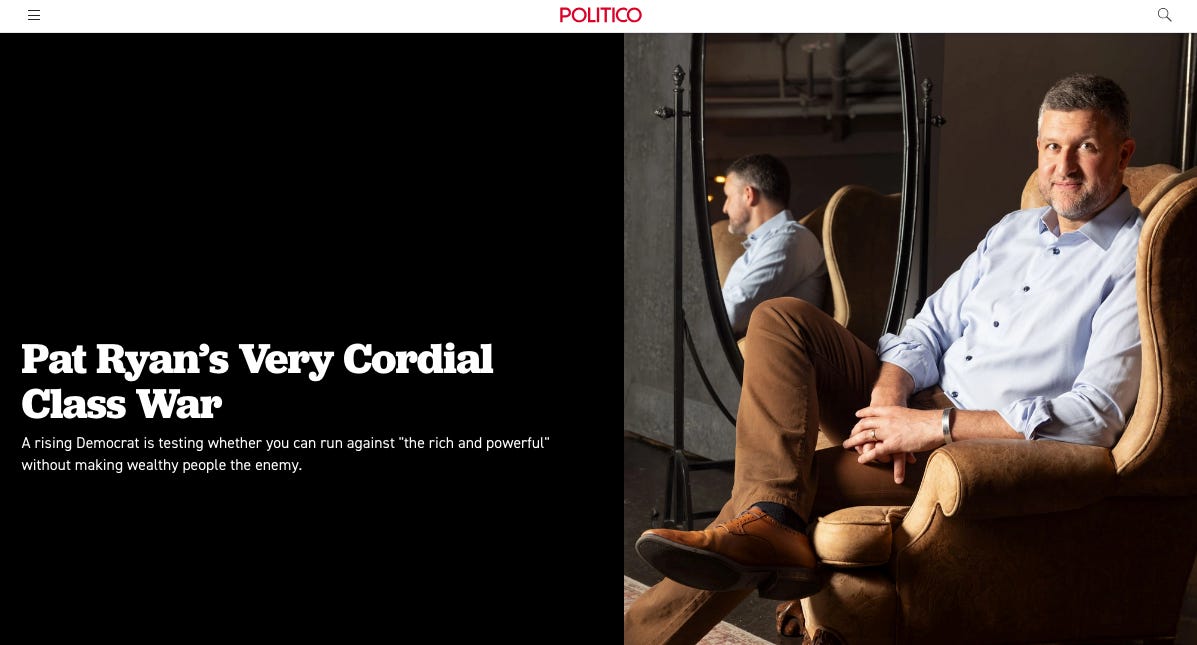
El-Sayed and Ryan share similar politics, but one was written up as a radical and the other as a more moderate figure. And I think what this dynamic shows is how our political debates disguise actual ideological dispute through the lens of empty political sloganeering. But it also illustrates the political establishment is changing, becoming ready to accept more strident arguments against the dominance of capital as the public shifts its views.
The Early History of the Moderate
What makes a political moderate? To most Americans, moderate means reasonable, not too hot and not too cold, guided by logic. Americans have usually liked to be thought of as moderate, even when taking on big corporations or discussing such questions as nuclear war. In 1984, 46% of Americans called themselves moderates, vs just 17% liberal and 28% conservative. There’s been a slow decline, but even today, when asked, between 30-40% of Americans call themselves moderate.
And so, to demonstrate how normal and in touch they are, Presidents usually cast themselves as moderate. In 1904, one of the most aggressive American leaders, Teddy Roosevelt, described some of the great virtues of the American people as “moderation” and “good sense,” particularly in addressing “whatever of mischief of evil” there was in the “conduct of great corporations.”
Others used moderate to frame their very Americanism. Calvin Coolidge argued the American Revolution, which was surely as sharp a break from tradition as any in U.S. history, was strong precisely because it was not extreme. The “very moderation increased the influence” of the continental Congress, he said, against the vicious demands of Parliament. Teddy’s distant relative, Franklin Delano Roosevelt, talked in the depths of the Great Depression about the “moderate and wise measures” he had taken to address the emergency.
And Lyndon Johnson eviscerated his opponent Barry Goldwater by saying that “as far as the American people are concerned: extremism in the pursuit of the Presidency is an unpardonable vice, and moderation in the affairs of the Nation is the highest virtue.” Ronald Reagan discussed the U.S. global influence as pursuing “moderation,” while Obama praised “moderation and common sense,” even as he was trying to defeat Mitt Romney, the so-called “Massachusetts moderate.”
The idea of moderation as a virtue comes from something very basic in our historical DNA, the recognition that excess political conflict can be dangerous. It was, for instance, awful to live through the English Civil War in the 17th century, which in many ways created republican ideas behind what would become the United States. That event birthed not only parliamentary supremacy but also concepts like free speech, which was meant to allow peaceful politics to work to fuse a society before partisans took to war. When Coolidge discussed the moderation of the American revolutionaries, he meant their strength came from their repeated attempts to avoid political violence, such that when Parliament forced it on them, they had the legitimacy to wield it and then limit it.
Closely related to moderation is the notion of civility, which has two sides. The first is that civility forces political disagreement into specific nonviolent channels, and that’s important for any democratic order in terms of being able to challenge the powerful. The second is that it privileges people who know the rules of polite society and understand what important subjects are off-limits, and that is useful for elitism. Moderates like to imagine themselves as offering civility, but civility can be populist or anti-populist.
Moderates often characterize themselves as “not political,” and see things like anti-corruption measures as outside of politics, unrelated to fairness. And this idea, that politics is bad instead of the mechanism we use to form our society through peaceful means, is a descendant of this fear of unrest. It is also a fear of open democratic debate, and ultimately self-rule.
Here’s Congressman Wright Patman in 1941 explaining in a speech to a rural youth group how to engage in political debate in the crisis presented by the fascist powers. It was very striking when I read his words, because of how he had to justify the idea of using political debate itself to engage in self-governance.
You have heard politics criticized. You have doubtless heard the statement made: “Let us keep politics out of this or that kind of work” and “Let us not have any politics in connection with what we are attempting to do.” These statements are often made, but on careful analysis, they do not hold water.
The truth is, politics is the masses controlling. One, who is against politics, is against the people ruling and, therefore, against our American way of life and our Democratic form of government. One, who holds a political office, has been successful because he has the good will of the people who elected him. One, who succeeds as a merchant, as a doctor, as a lawyer, or in any other business or profession, succeeds because he has the good will of the people.
Hitler doesn’t have an interest in politics, neither does Mussolini. They are opposed to the people ruling. They want a dictator form of Government. Anyone, who is opposed to totalitarianism and dictatorship, is in favor of politics, which is our American form of Government. Politics can be good or bad. Let us work to keep politics clean and our elections fair, in order to properly preserve our country.
So there we go. Americans have tended to think of themselves as moderate and civil, but also as above politics. And that is because all three words, empty of content as they might, implicitly convey living in an establishment whose values one shares.
Who Controls the Moderate Brand Today?
Over the past few election cycles, “moderate” candidates have been losing elections. And in parallel, political discourse has become courser. On the right, Donald Trump overturned the more polite Romney-style GOP, and now on the left, populist types and Democratic Socialists are beating the more traditional Democratic status quo candidates.
Why has there been a turn against moderation? It’s not because people have suddenly embraced a radical spirit. Most Americans want business to work well and get upset when cheated. They are frustrated at the high cost of health care, and are voting to address their needs, rather than using violence. That seems like common sense, not the melody of the Internationale.
To understand why moderation has declined in its hold over Democratic voters, it helps to look at who controls that brand today. Earlier this month, an advocacy group called Third Way, self-described “passionate moderates,” raised $15 million for a “war” against its political foes on the left. It was announced with fanfare in the New York Times, and predictably, it sparked a bit of a debate between self-described leftists and centrists. “We are preparing for the next war that is coming,” said Jonathan Cowan, the president of the group, even as former Labor Secretary Robert Reich called this new campaign “moronic bullshit.”
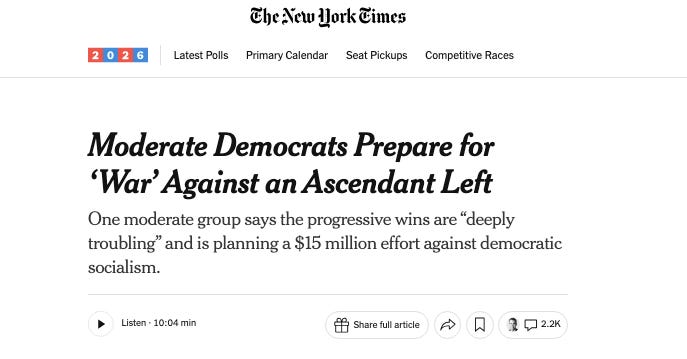
Third Way framed itself as focusing on socialism, but one of the main candidates targeted by Third Way is El-Sayed, who is not a socialist, but does disdain corporate monopolies. And indeed, that’s really the problem for Third Way. Here’s Jim Kessler, a founder of the group, articulating his view of former Federal Trade Commission Chair and corporate power foe Lina Khan: “It is critical that future national Democrats talk about issues that voters care about, not what intellectual elite progressives care about.”
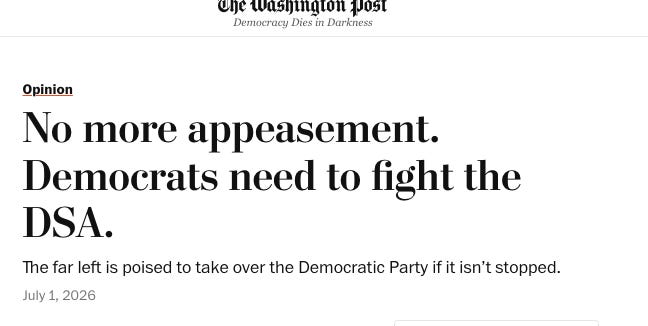
Who is Third Way? Well, it isn’t a mass membership organization, but it is a real advocacy group in D.C. with genuine stakeholders. It has an important history, connections among elite media outlets and the ability to spend money.
Their board of trustees is listed here. You might think this group, constantly quoted in the press as an organization focused on promoting “moderate” politics, would have a mix of stakeholders representing the spectrum of the Democratic Party, from labor to consumer rights to rural advocates to bankers to big business to hispanic or black leaders.
But it doesn’t. It is overwhelmingly wealthy heirs and financiers. There are 32 outside trustees, with 62.5% of them having a background at a major Wall Street bank or private equity firm, such as JP Morgan, Goldman Sachs, or Warburg Pincus. Here’s a chart breaking it down.
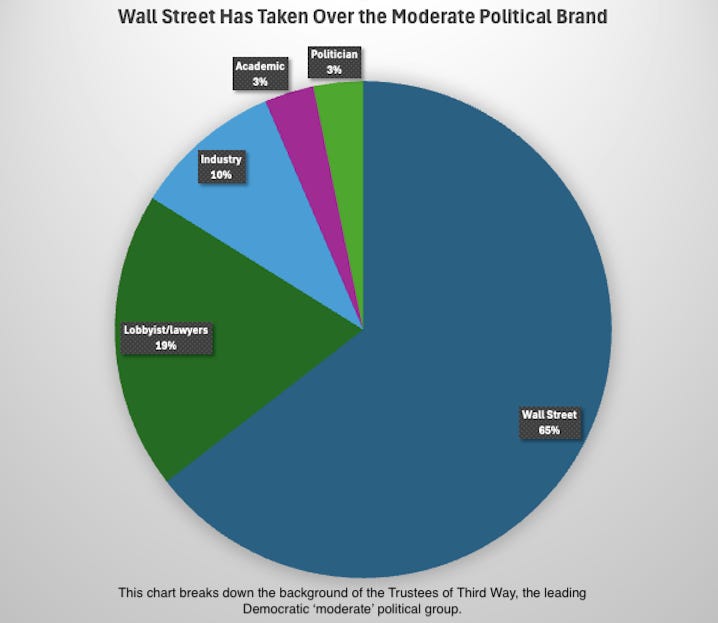
Almost a fifth of the trustees are heirs or heiresses of large fortunes, six are lobbyists or corporate lawyers, with a sprinkling of academics and one politician. Several are crypto investors, venture capitalists, and three of them are CEOs (though one inherited the company she leads). And of course, there’s not a single consumer rights or labor leader. I put a list of some of the financiers and their affiliations in the footnotes, if you want to read about alumni of fancy universities, JP Morgan, Goldman Sachs, and Morgan Stanley.1
To make a quick point, these people have clear interests in a specific kind of government policy. They profit from lower taxes on capital gains, lax antitrust, less financial regulation, and more junk fees. They may seem themselves as “moderate,” what that means to them is protecting the interests of capital, and their policy frameworks often directly or indirectly foster financialization. The last time I heard a Third Way person talk, they were encouraging Americans to invest in various ways in the stock market as part of broadening access to wealth for the middle class.
Now, Third Way is not really an advocacy group for moderation in the Democratic Party, it is more a Wall Street lobbying shop. There’s clear corruption here, and I don’t want to sideline that dynamic. But the more important question is why they have been winning, for decades, until this past year. And I think that has to do with the fact that Democrats in particular have not sought to break from the political status quo, and the status quo is what Third Way has been selling.
It’s not that Democratic voters don’t want change, they do. But they do not believe, or at least have not believed, that change in America is possible. The best they can get is the status quo, to prevent bad people like Ronald Reagan, George W. Bush, or now Donald Trump, from making things worse. What Third Way has been selling, for decades, is a sort of snake oil on how to win elections, to a set of voters that have no confidence in the government to matter.
How Bill Clinton Created the “Third Way”
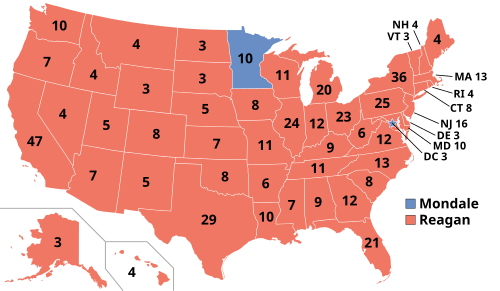
To understand why Democrats have felt so terrified, we have to go back to the generational political trauma that shattered the confidence of liberals. In the 1960s, it was simply an accepted fact of life that the New Deal was here to stay, and it had been for decades. The GOP was a fringe group, and conservatives didn’t matter. But starting in 1968, over the next twenty years, the Democrats lost five out of six Presidential races, and won more than 43% of the vote just twice. In 1980 and 1984, the uber-conservative Ronald Reagan won nearly every state. And even when that drought ended, in 1992, Bill Clinton still won with just 43% of the vote.
It is hard to overstate what happens when politicians and partisans get blown out in major national elections for multiple decades. In 1980, a whole set of liberal lions in the Senate, people who had been there for decades, got wrecked by people as seemingly radical as Reagan. And it’s important to note these losses were not narrow, they were sound repudiations by a vast majority of the American people. Looking at this electoral map from 1984, for Democrats who remembered earlier eras of dominance, was downright chilling.
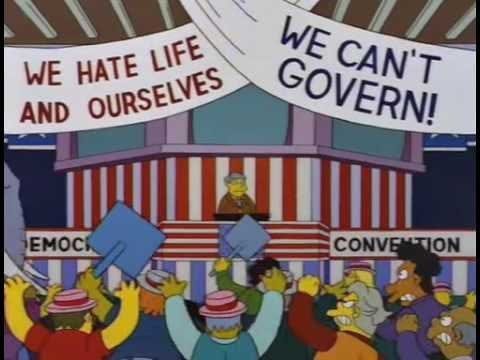
Democrats lost complete confidence in themselves, not only in terms of being able to win elections, but having any sense they could be trusted to run major governing institutions. Americans simply hated them, and they hated themselves. And that trauma remains with the Democrats today; this joke from the Simpsons was written in 1994, and it still works.
Naturally, party officials tried to figure out what had gone wrong. In the mid-1980s, a group of southern white Democratic politicians blamed this electoral collapse on a reliance on the Civil Rights coalition of black voters, unions and liberals. A strategist named Al From called this dynamic “the cancer of single interest and single constituency caucuses.”
From argued that Democrats was too liberal. It needed to win back moderates, which Democrats had lost “by an average of 15 points in the last five elections.” He was recruited to form a new group called the Democratic Leadership Council, which would reorient the party. Much of the argument was about social issues, with thinly veiled allegations about race and gender, but the political economy revamp was the keystone.
In 1986, Democratic Virginia Governor Chuck Robb, the son-in-law of Lyndon Johnson, laid out an ideological vision for the DLC, arguing that “the New Deal consensus which dominated American politics for 50 years has run its course” and that Democrats had to change. He proposed paying corporate executives with stock options and cutting Social Security benefits. “We’re revolutionaries,” he said. “We believe the Democratic Party in the last several decades has been complacent. . . . We’re out to refresh, revitalize, regenerate, carry on the revolutionary tradition.”
The DLC was an elite persuasion vehicle, shopping a small group of politicians to run in 1988 and 1992. Columnists and newspaper publishers couldn’t get enough of the turn against the New Deal. David Broder, once considered the “dean” of the Washington press corps, wrote a piece on the DLC’s push for free trade and offshoring, describing it as a “welcome attack of sanity.” The Philadelphia Inquirer’s Rob Rankin noted, “To the degree the DLC shapes the thinking of the broader Democratic Party, the party will benefit—and so ultimately will the nation.” The New York Times and Wall Street Journal gave full page treatments to DLC debates. The organization, wrote the Chicago Tribune in 1986, “has become the Democratic Party.”
The DLC organization and agenda had a natural funding base among Wall Street donors, like hedge fund manager Michael Steinhardt and media tycoon Barry Diller. With a weakened party looking for answers, amidst the dying embers of New Deal thinking, the DLC was a hit almost immediately, with 8 of 16 standing committee chairs in the Senate becoming members within a year of its formation.
It wasn’t a particularly popular shift at first. But Democrats came to appreciate the political project, because the DLC seemed to deliver on their political promise. Bill Clinton was a DLC member, and From was an advisor in his 1992 campaign. These moderates beat back the single issue groups and liberals, restoring the ability of Democrats to win the Presidency. While Democrats lost Congress in 1994, and much of the party apparatus shriveled up as labor unions died and government got privatized, in the minds of the new upper class voter universe of Democrats, currying favor with Wall Street and tech was the way to win elections. Mayors, Governors, city councilmen, Senators, everyone wanted to be part of the DLC. The old party mechanisms for being able to think institutionally got ripped apart.
The rhetoric of the project was never policy-thick, it was electoral. We must win moderates, was the argument, and to do that, one must defer to capital. Failing to do that means the awful electoral losses again. Quietly, deregulation and a ‘revolution against government’ became the party planks. From removed antitrust from the Democratic Party platform in 1992, the first time in over 120 years the anti-monopoly framework wasn’t included.
But policy wasn’t the point, governing would be done by bond vigilantes in the financial markets and giant companies like Walmart. The rise of neoliberal economics in antitrust, monetary policy, government spending and taxes, and regulations, placed policy in the hands of economists and financiers. The DLC was the center-left political arm of the technocrats. Their job wasn’t to organize thinking, it was to sit in the middle of polite opinion and claim the “moderate” brand, meaning offering deference to the economists who kept the world running.
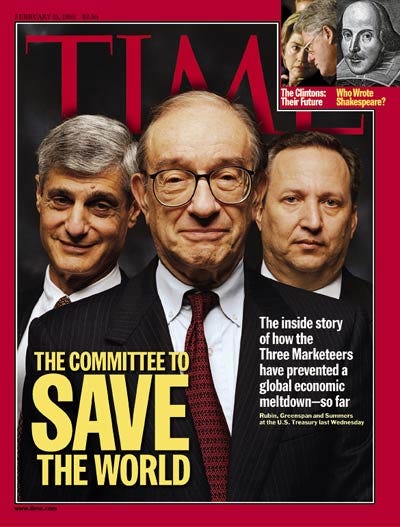
By the end of the Clinton administration, the idea of having the government take an active role in regulating finance or corporate power no longer seemed reasonable, it felt radical and weird. Despite the fact that Pentagon strategists opposed offshoring key industrial capacity to China, opponents to giant corporate trade agreements were framed as hippy anarchists and radicals. Moderate had once meant, as Teddy Roosevelt characterized it, taming the excesses of corporate evils. Now it meant deference to capital.
Al From eventually retired, and the DLC ended up shutting down. But a constellation of organizations have continued this approach to politics. In 2005, several younger operatives founded Third Way. They named their think tank after the movement to foster a finance-friendly Democratic establishment, which Bill Clinton in 1992 had called the “third way” between right and left. Many of the organization’s donors were also donors to From.
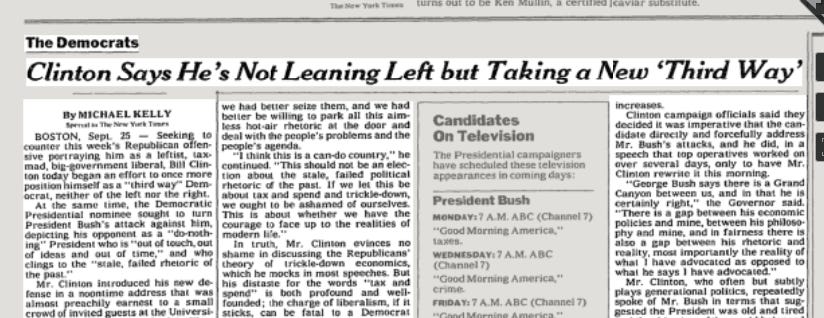
Third Way continued to press that old lesson that From articulated - you can’t trust liberals because they will lose elections. And it worked, as it was burned deep into the psyche of the voter. Since 2005, or 1985, however you want to count it, finance-friendly politicians in the frame of Chuck Robb, Bill Clinton, or Barack Obama have been effective in attracting the votes of Democratic primary voters. There is still a fundamental lack of confidence in governing, a belief that nothing that anyone does in office can draw the loyalty of American voters for very long. A new Ronald Reagan, or George W. Bush, or Donald Trump, is always around the corner.
Now, Jonathan Cowan wouldn’t think of himself as a bank lobbyist or big tech proponent, as that would require actual concern and interest in how the government works. He sees himself as an electoral strategist, and his assumption is that you let financiers run the government, and in return, they fund your poll-tested political arguments. The very idea of actually accomplishing anything through politics is besides the point, the goal is simply to make sure the bad guys aren’t occupying positions of power. And you need money to make that happen. The longest lasting effect that these groups had on the culture of the Democratic Party is to narrow politics to a mere team sport, with government as mostly irrelevant to voters. The actual policy gets done by the serious people, aka economists and finance guys.
And that brings me to why the moderate label is failing. The deal that Wall Street Democrats made with the Democratic Party voters was pretty simple. If you support us over the lefty hippy radicals, we will make sure that Trump doesn’t get into office again. We may not do what you want in office, Walmart and Amazon will run the world, but we will ensure that the Bad People Aren’t In Charge. That was Joe Biden and Kamala Harris’ promise. It was Hillary Clinton’s promise. And they didn’t honor it.
So now Democratic voters have lost trust in the idea of political moderation as a brand. The old guard of moderate types isn’t any better than anyone else at winning. Instead, Democratic voters are starting to consider a different argument, one made very clear when the various former DLC-aligned tech oligarchs became Trump boosters. Increasingly, Democrats believe that oligarchy is the defining political problem of our time. That is framed through issues like Israel or data centers, but primary voters are now picking candidates with a lot less money who are considered more radical, to represent them.
In other words, the current status quo is big tech and finance-friendly, and moderate as a brand meant you supported this framework because that was the best way to win elections. Increasingly, Democratic primary voters no longer believe that path is the route to winning.
For the last forty years, we’ve had a finance friendly Constitutional order, with economists organizing policy. So ‘moderate’ simply meant going along with the smart technocrats. It had its corrupt elements, its money-driven politics, but ultimately it meant, as it always has, going along with whatever establishment is in charge.
That establishment is now falling apart, and so the moderate label doesn’t carry the power it once did. In 20 years, when there’s some sort of new accepted governing arrangement, then moderate will once again be the defining way that most of us see ourselves. But it likely won’t mean listening to the political goals of Morgan Stanley, Goldman Sachs, and JP Morgan.
Thanks for reading! Your tips make this newsletter what it is, so please send tips on weird monopolies, stories I’ve missed, or other thoughts. And if you liked this issue of BIG, you can sign up here for more issues, a newsletter on how to restore fair commerce, innovation, and democracy. Consider becoming a paying subscriber to support this work, or if you are a paying subscriber, giving a gift subscription to a friend, colleague, or family member. If you really liked it, read my book, Goliath: The 100-Year War Between Monopoly Power and Democracy.
cheers,
Matt Stoller
Here is a partial list of the trustees, along with brief bios, which are mostly Morgan Stanley, JP Morgan, and Goldman Sachs on repeat.
The vice-chair of Third Way is David Heller, “formerly the Global Head of Equity Trading for Goldman Sachs.” He’s currently a private investor, with roles in alternative asset management and NYDIG, a bitcoin miner.
David A. Coulter is at private equity firm Warburg Pincus, formerly at J.P. Morgan in the Chairman’s office.
Bill Daley is the son of Chicago Mayor Richard Daley. He’s had lobbying roles at JP Morgan, Wells Fargo, and board seats at Boeing, Abbott Labs, Merck, and Fannie Mae.
Steve Galbraith, former Chief Investment Officer and Chief U.S. Investment Strategist at Morgan Stanley
Derek Kirkland, Co-Head of the Global Financial Institutions Group at Morgan Stanley’s Investment Banking unit.
Raj Date, Obama’s first head of the Consumer Financial Protection Bureau, is now a fintech and crypto lobbyist and investor.
Derek Kaufman runs the Inclusive Abundance Initiative. Don’t worry, though, he’s got a finance background too. He was the Head of Global Fixed Income at the hedge fund Citadel and Global Head of Fixed Income in the Proprietary Positioning Business at JPMorgan Chase.
Doug Lawrence, former JP Morgan.
Marc Spilker, former President of PE giant Apollo and former Goldman Sachs partner.
Graves Tompkins, General Atlantic and ex-Goldman.
Strauss Zelnick is the CEO of Take-Two, one of the major video game publishers.
Christine Varney, who was Obama’s antitrust chief, is now at Cravath.
Barbara Manfrey Vogelstein, formerly at private equity giant Warburg Pincus.
John L. Vogelstein, formerly at private equity giant Warburg Pincus
John Dyson is the Chair of Millbrook Capital Management, “a private investment firm that manages a manufacturing company, the vineyard and wine group, and a hedge fund.”
And there’s Peter A. Joseph, founder of private equity firms Joseph Littlejohn & Levy and Palladium Equity Partners. He’s also President of the Israel Policy Forum.
There’s Brian Frank, a financier who worked for tech billionaire Michael Dell.
There’s Michael Edwards, former merger and acquisitions banker turned hedge fund CIO turned board member of Zippy, which does manufactured home loans, an area with significant regulatory issues.
Corporate lobbyist Susan McCue
Corporate lobbyist Thurgood Marshall, Jr.