 BURST
BURST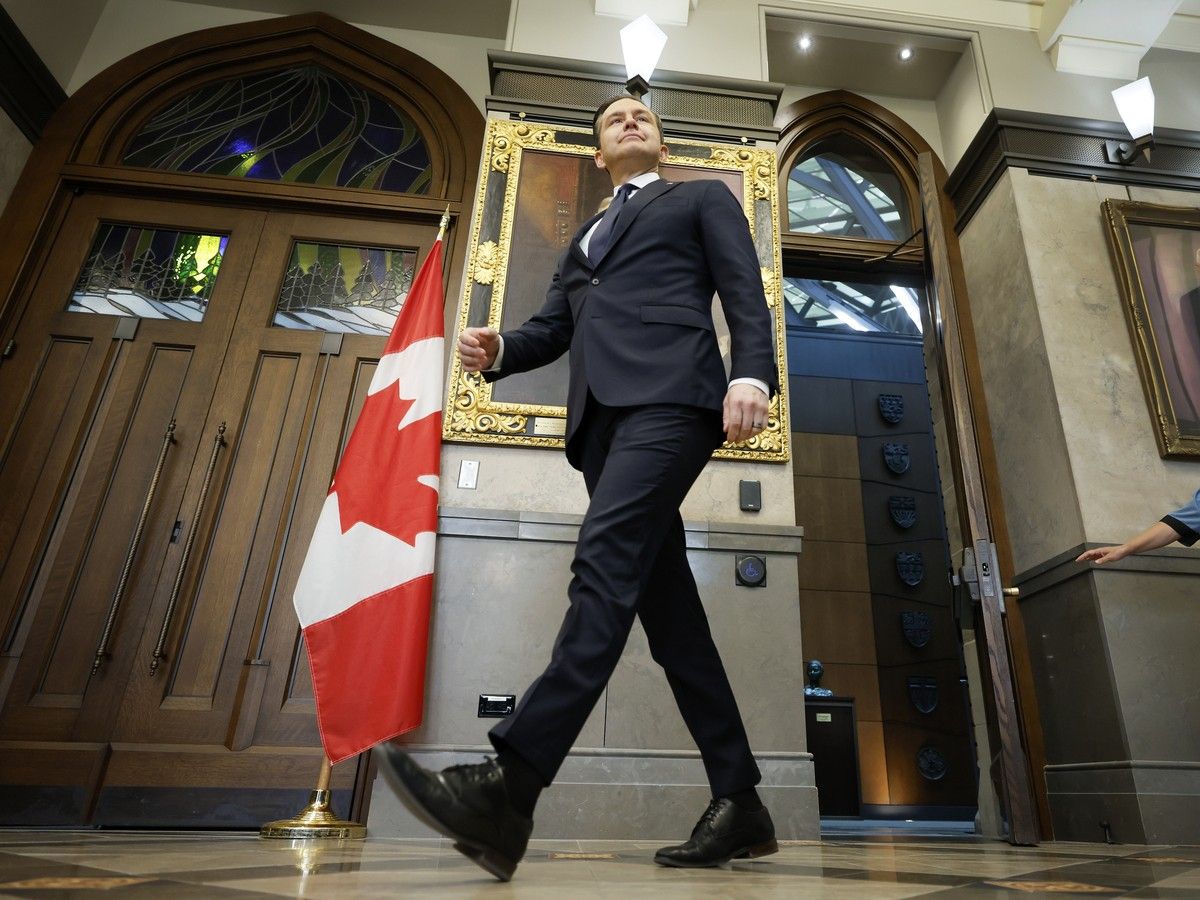
OTTAWA — If Conservative Leader Pierre Poilievre ultimately finds himself in the job of prime minister he will have completed an extraordinary journey since winning his party’s leadership in 2022: from scrappy upstart, to massive frontrunner, to election loser, to finally, comeback kid.
It’s not a unique journey, but it’s fraught with difficulty and has produced more losers than winners in politics.
Can he do it? Pollsters have both good and bad news for the Conservatives leader.
The bad news, and perhaps the most important, is that Prime Minister Mark Carney and the Liberals continue to enjoy broad support, just a few percentage points from 50 per cent in recent polls. They also show that many Canadians continue to trust Carney more than Poilievre. In one recent poll, Abacus Data found that four in 10 Canadians said that Poilievre is “a lot like Donald Trump.”
But, as Poilievre has found out more than anyone, times can change.
“If Carney is successful, Poilievre will have a very difficult time in trying to become prime minister. If Carney is not successful, Poilievre will have a chance,” Donald Savoie, an academic at the University of Moncton who has written extensively about political leadership and power in Canada.
Savoie recommended that Poilievre simply “hang tight” and wait for the political winds to start blowing in a different direction.

Fred DeLorey, a Conservative strategist and the party’s former national campaign director, said one of the obstacles in front of Poilievre’s comeback bid is that he’d like to be seen as an agent of change but many Canadians still see the Carney government as new, instead of a Liberal government that has been in power for more than a decade.
The good news for the Tories is that Canadians also continue to feel vulnerable to a range of threats, particularly affordability, an issue that Poilievre has emphasized for years.
Poilievre now faces the conundrum of needing to show Canadian voters that things in Canada aren’t working well enough without framing the landscape as so unstable that voters look to Carney who they see, at least so far, as most able to deal with instability.
So where does Poilievre, who could not be reached for comment, go from here in his comeback bid?
Poilievre has the choice to work on his perceived deficits, such as improving his listening, inching over a bit to the centre, or he could lean into his authenticity and stay on the same path, said John Malloy, a political scientist at Carleton University in Ottawa
DeLorey said Poilievre must work out precisely why the party lost another election and what needs to be done differently before voters go to the polls again. The Conservatives also need to show Canadians that they’re ready and able to govern if Poilievre is to complete his comeback bid, he added.
But the Liberals’ greatest threat — and perhaps the Conservatives’ most imposing weapon — is time.
Voters tend to build up grievances against governments as mandates advance over time, especially when the economy is weak and the party in power has been at the helm for more than a decade.
Lessons from the past
Could Poilievre and the Conservatives improve their chances by examining whether there are lessons from history about how to mount, or not mount, a political comeback?
One lesson, analysts say, is that while successful comebacks often become legendary, most fail. And that the first rule in trying to understand political comebacks is that there are no rules. Not to mention no formula about how to pull one off.
“Comebacks by definition are exceptional,” said Malloy. “Each one has its own circumstances.”
But there is some overlap in these circumstances, analysts say, among many of the great historical examples. The architects of these political comebacks, loosely defined as a political figure’s surprising return to power following a major political defeat or disgrace, do often have certain traits and involve specific tactics.
As is the case with many successful leaders, analysts say those who are able to endure a major loss, rebuild and then mount a successful comeback tend to have certain personal traits: extreme self-confidence, perhaps to a pathological degree, passion, single-mindedness, and the endurance to fight a long-term comeback battle.
“You need the fire in the belly,” said Savoie. “If it’s not in the soup, you’re not going to make it.”
In terms of their politics, comeback artists also tend to be consistent in their core beliefs.
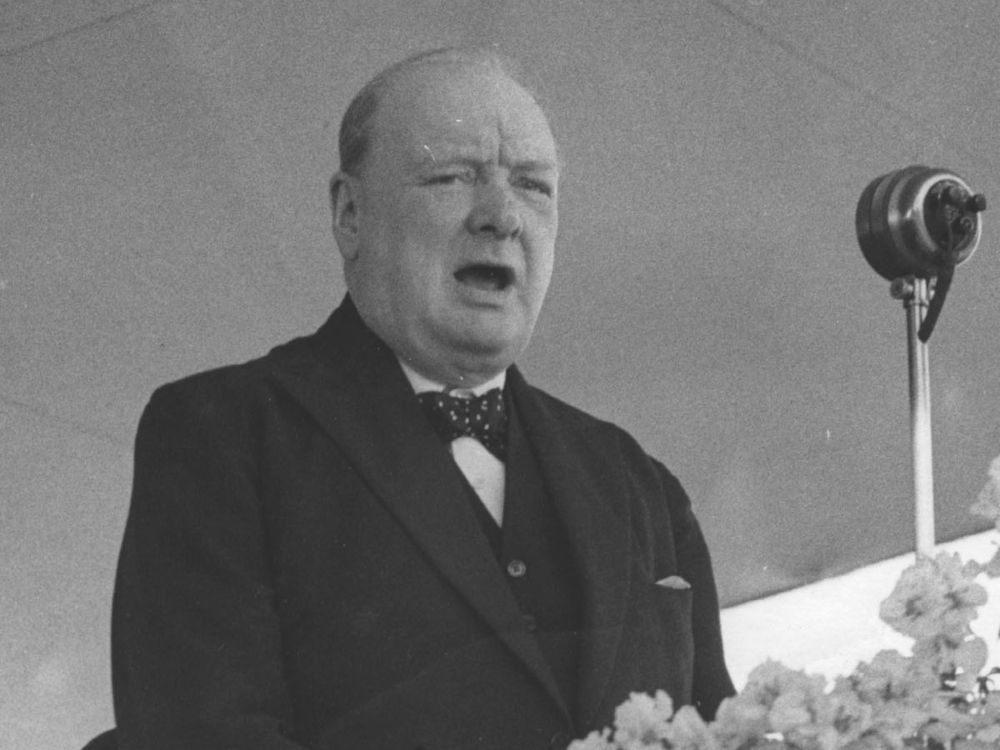
That dogged consistency was perhaps the key trait that allowed Winston Churchill to complete one of the most famous political comebacks in history.
First appointed to cabinet in 1908, after crossing the floor to the Liberals, Churchill had returned to the Tories by the 1930s but had spent much of that decade out of step with his party’s leaders. Often described as his “wilderness years,” Churchill stayed busy writing books and giving speeches about the need for a strong British military.
When Hitler took power in Germany and showed early signs of expansionist ambition, Churchill, unlike most politicians in Britain at the time, was unequivocal that the threat should not be ignored.
As Churchill’s warnings came to fruition, he regained credibility and a new role as First Lord of the Admiralty. Prime Minister Neville Chamberlain, meanwhile, had pursued a policy of appeasement, which eventually led Churchill to leading a coalition, war-time government.
Allen Guelzo, an historian at the University of Florida who has studied leadership, said one of the keys to Churchill’s comeback was that he was consistent, clear and unambiguous in the face of the Nazi threat, even when that view was far from his party’s orthodoxy.
The art of the comeback
For Poilievre, dogged consistency is right in his wheelhouse but, unlike Churchill, he doesn’t have the luxury of going off into the wilderness. He remains the leader of the Opposition and, at this point in his career, any departure from the limelight would likely be permanent.
The tactics that foster a political comeback are often so specific to the particular time and place that there’s little to be learned from the overlap, analysts say.
But one thing that many of the comebacks have in common is that the fallen leader steps away for a period of time — whether by choice or not.
Those who eventually return to power often have used that time in exile to their advantage.
In some cases, they’re given the time to work on weaknesses in their game, whether it’s skills, image, or tactics. And sometimes it just gives the public a little time to forget why they didn’t like that person in the first place.
Lori Turnbull, a political scientist at Dalhousie University in Halifax, said there are also upgrades that a comeback candidate in exile can make to their political operation or “ground game,” the behind-the-scenes parts of a political operation that includes fundraising, choosing campaign personnel and, in a contemporary setting, developing a strong social media presence.
Some comeback artists also take the time away to work on themselves.
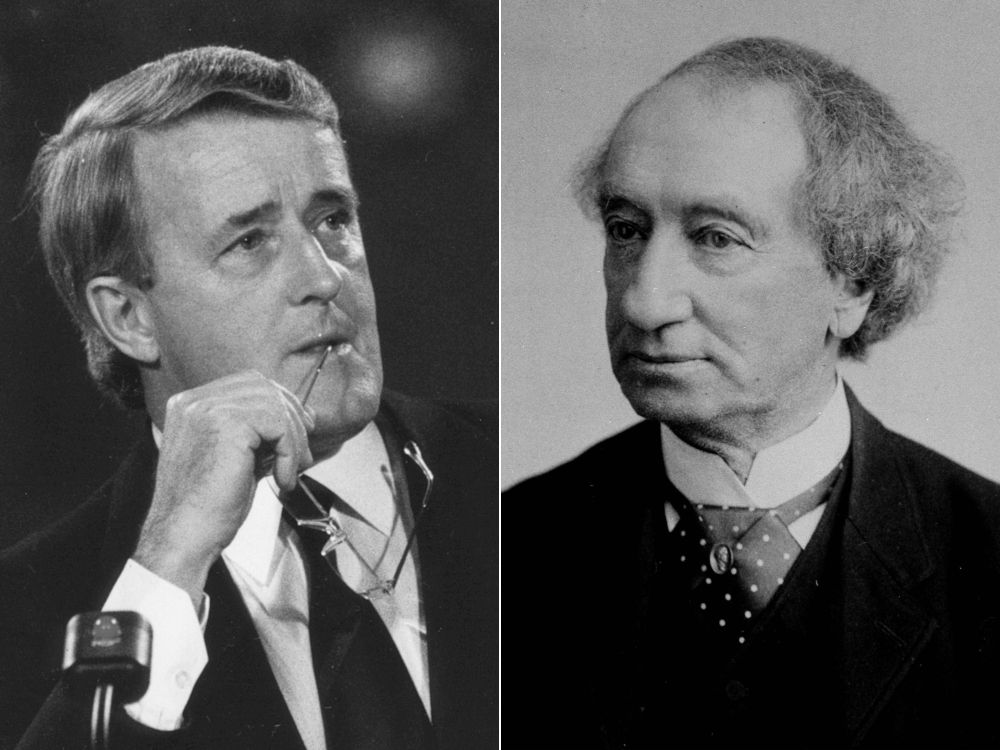
Carleton’s Malloy said sometimes aspiring leaders, for example, need time to evolve personally. In the case of former prime minister Brian Mulroney, for example, Malloy says he needed time in political exile after losing the Conservative leadership to Joe Clark in 1976 to heal his wounds and mature, not to mention change his image so that he was more Baie-Comeau, Que., less Bay Street.
“In a comeback, an important element is that a leader needs to change people’s impressions,” Malloy said.
All in good time
But perhaps most importantly, part of changing impressions is simply allowing the passage of time, analysts say, because it gives the political landscape a chance to shift.
Sometimes society changes too, leading to voters wanting something else. And sometimes the big change is that the incumbent endures a scandal or is simply seen to fail, opening the door for a comeback bid.
By 1979, many Canadians were tired of Pierre Trudeau after 11 years in power. When Joe Clark and the Progressive Conservatives won a minority that year, Trudeau initially said that he’d step down as Liberal leader. But when the Conservatives’ budget bill failed to pass in Parliament, an election was called. Trudeau was convinced to stay on and Canadians, after just nine months to set aside their grievances against the former prime minister, gave the Liberals a majority.
U.S. President Donald Trump was able to return to the White House in 2024, at least in part, because the Democrats had failed to sufficiently deal with the illegal immigration problems that had become a major irritant in many communities.
“It really helps if someone you’re running against is an incompetent goofball,” said Guelzo, who has written several books about Abraham Lincoln, who also staged a comeback after leaving national politics.
While sometimes that time away allows for the political winds to change direction, comebacks can also be helped by a broader change in society.
After losing a presidential election to John Kennedy in 1960 and then a California gubernatorial race to Pat Brown two years later, Richard Nixon famously told reporters: “You won’t have Nixon to kick around anymore.”
But that didn’t mean he had any intention of permanently leaving the public stage or giving up his presidential dream. Nixon knew that he had to use his time on the sidelines to make changes to image, his connections, and even his skills. After being seen as an inferior communicator to Kennedy during the first televised presidential campaign debate, for example, Nixon worked on his TV skills. He knew that he needed to be seen as warmer, chattier, less combative, and more trustworthy.
But Nixon’s comeback ambitions, perhaps most of all, also needed time. And in the eight years during his time out of office, the world changed dramatically — to his benefit.
Nixon is probably best remembered for the Watergate scandal that led to his 1973 resignation, and all the poor decisions that led up to it. But his 1968 win marked an incredible political comeback that was carefully orchestrated and crafted, but also rested on changing circumstances that tilted the landscape his way.
John A. Macdonald, Canada’s first prime minister, also pulled off a remarkable comeback. He resigned in 1873 following the Pacific Scandal, where his Liberal-Conservative government was accused of receiving campaign money from railway supporters.
Five years later, the Liberal government was facing a weak economy and Macdonald was able to regain support based on his “National Policy” that packaged the railway, western expansion and tariffs. The Conservatives won big in the 1878 election, completing Macdonald’s comeback.
But most political comeback bids fail, analysts say, often because they don’t include a good reason why the fallen leader should be viewed differently than they had been in the past.
“You can’t just put yourself in a freezer and expect people to come get you out,” said the University of Florida’s Guelzo.

The first ‘comeback kid’
Years before most people had heard the name Monica Lewinsky, Bill Clinton was chasing his party’s presidential nomination and was already being accused by various women not named Hillary of chasing much more than that.
But Clinton, who had been considered a strong candidate to win the Democratic nomination, was also dealing with accusations that he had dodged the Vietnam draft and had used marijuana, leading to countless jokes related to his claim that he had may have tried weed but had never inhaled.
Buried in controversy, waning opinion poll numbers, and morbid campaign narratives, Clinton looked done. He had finished a disappointing fourth in the Iowa caucuses in early February, the first big test in the presidential campaign cycle, and needed a strong result in the New Hampshire primary a couple of weeks later to save his nomination bid.
As positive results began to emerge that night, Clinton deftly pivoted to reframe the narrative of his campaign. “New Hampshire tonight has made Bill Clinton the comeback kid,” he told a crowd of supporters in Manchester, that state’s largest city, before eventually going on to win the presidency.
While he may have been the first to give himself such a moniker, Clinton didn’t invent the political comeback.
Napolean Bonaparte, was famously exiled to the island of Elba in 1814 after his failed invasion of Russia in 1812, before escaping a year later and then regaining power over France.
Deng Xiaoping, Julius Caesar, Indira Gandhi, Nixon and, of course, Trump also made famous and improbable comebacks, as did Canadian leaders such as Mulroney, Jean Chrétien and Macdonald.
Poilievre, who was ahead in the opinion polls by as many as 24 percentage points just a few months before losing last April’s federal election, is now attempting to orchestrate a dramatic political comeback.
Lessons for Poilievre
So where or to whom should Poilievre look for lessons on how to pull off a political comeback?
Turnbull said there’s some overlap between Pollievre’s situation today and Nixon’s after 1962 in that both are actively working on their comebacks — one from an elected office, one from an exile of sorts. Both were also coming off stinging election losses, with strong party support and the passion for the task ahead. Poilievre also hopes to benefit from the passage of time, as Nixon did.
The difference, Turnbull said, is that it doesn’t appear Poilievre will adopt the risky strategy of stepping away from the limelight before the next election, one of the keys to the comebacks by Nixon and others.
“It’s hard to make a comeback if you haven’t left,” she said. “Poilievre won’t let people miss him.”
National Post
Our website is the place for the latest breaking news, exclusive scoops, longreads and provocative commentary. Please bookmark nationalpost.com and sign up for our daily newsletter, Posted, here.