 BURST
BURST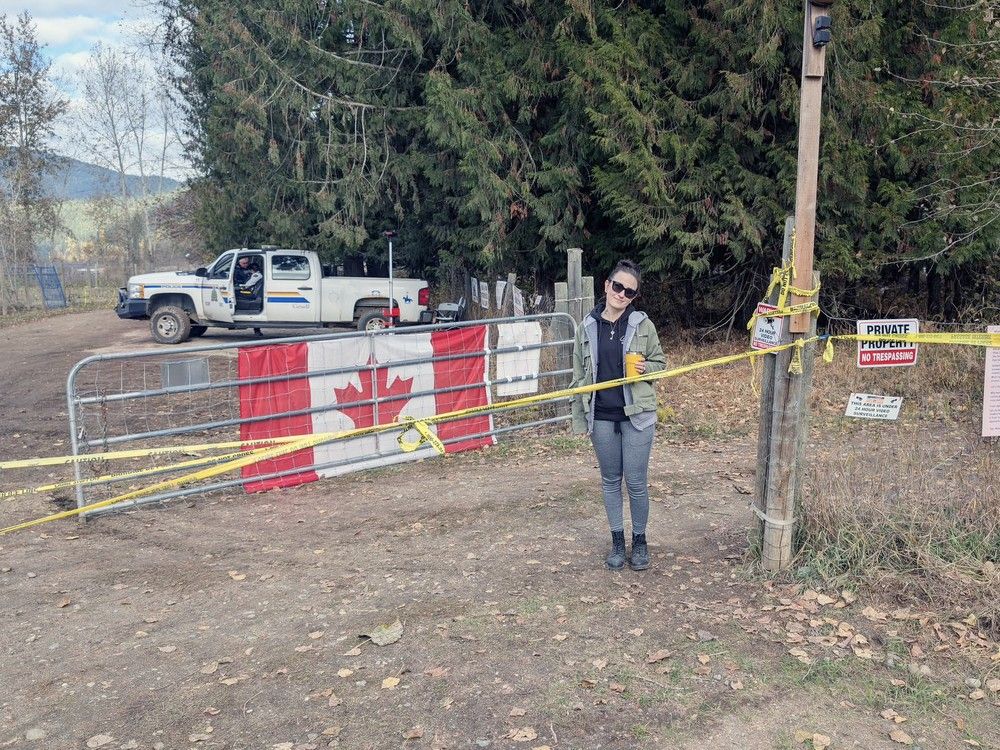
Neighbours of a B.C. ostrich farm are suing the RCMP and the Canadian Food Inspection Agency, alleging those agencies harassed them with drones and trespassed on their property as they set up to kill the birds next door.
Property owners Trevor Klug, Margaret Greba, and their daughter, Alyson Turnbull, say in the lawsuit they had nothing to do with the ostrich farm, which was owned by relatives, and that their property rights were ignored when police and the inspection agency were setting up the kill pen on the ostrich farm.
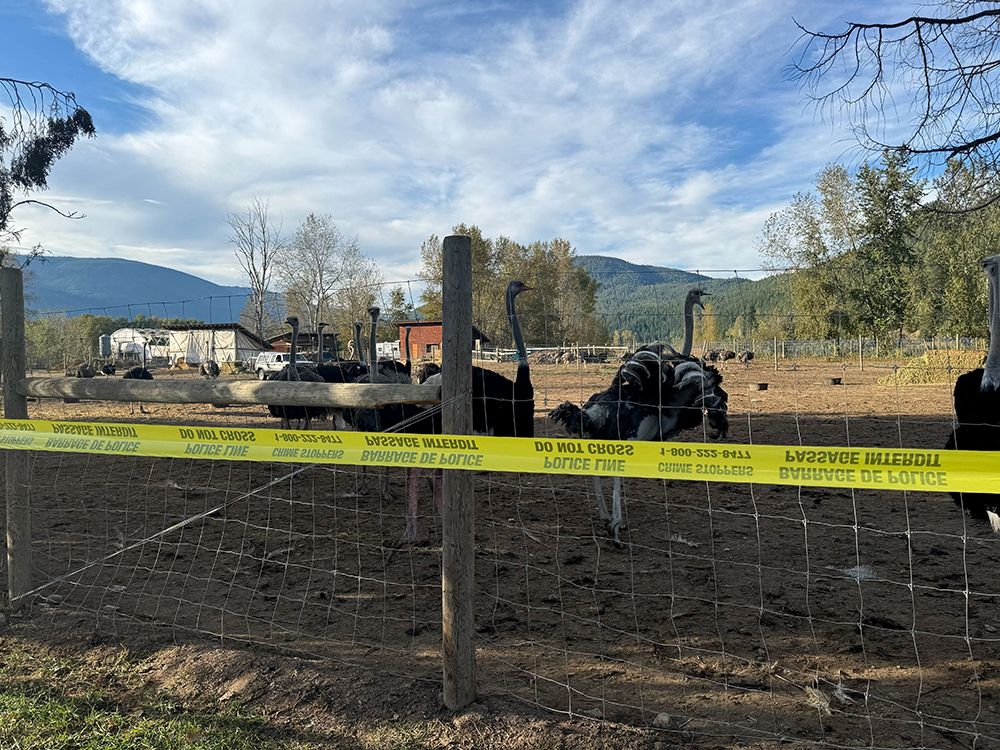
A battle over the birds between Universal Ostrich Farms and the inspection agency became a media and social media sensation last year, as the farm unsuccessfully fought an order to kill their flock of about 300 ostriches after avian flu killed 69 of the birds. The birds were shot dead in November by marksmen hired by the agency.
According to the lawsuit filed in B.C. Supreme Court in Vernon, the RCMP and inspection agency were on the neighbouring property 24 hours a day and used it as “a storage and transportation area without consent” between Sept. 22 and Nov. 13.
Turnbull said that the harassment by the drones was so persuasive that she was able to tell without looking whether she was being followed by just one, or by two or three drones.
Once a drone hovered outside her window for 40 minutes while she tried to sleep and another time when she screamed at one to stop shining a light on her, the light got brighter, she said.
Among allegations in the claim were that hay from the bales used to build the kill pen was later dragged across their property, and the family was taunted by officials.
“They were spreading the hay from the bales from the kill pen into the ruts the trucks were leaving in our fields, and my mom was crying and pleading with them not to and they just laughed at her,” she said.
The lawsuit said that they were “mocked and ridiculed,” constituting “abuse and caused mental distress.”
The police said they had the legal right to be on the property based on warrants served on the residence, the lawsuit says. Turnbull said the warrant was posted on her family’s door because they were out of town.
The warrants were obtained by the CFIA based on information supplied by someone called Heather June Willis saying she had reasonable grounds to believe the owners committed offences, including obstructing an inspector and failing to notify a veterinary officer, to comply with conditions of a notice and to produce documents, according to the claim.
Turnbull said Willis is a CFIA employee based in Edmonton.
The claim said the warrants for the next-door ostrich farm included their property, “creating the illusion without evidence that (their) property is an ostrich farm.”
Turnbull told Postmedia News that each of the three warrants was for a separate property including that of her family, that of Universal Ostrich Farm — owned by her aunt, Karen Greba, and her husband, Dave Bilinski — and that of another property adjoining the ostrich farm in which Bilinski has a part ownership.
Turnbull and her parents “were not involved in the operation of an ostrich farm nor was there any involvement of the plaintiffs in the activities forming the basis of the warrant,” the claim said.
Turnbull said all three warrants were identical, except for the property addresses, yet all three had Karen Greba and Dave Bilinski’s names on them. Her parents’ property was referred to as a secondary quarantine property, while the ostrich farm was called the primary quarantine property.
RCMP refused to discuss the warrant with Turnbull, saying it wasn’t obtained by police, and all she could get from a CFIA official was that an encroachment between her family’s property and the ostrich farm allowed them to include their property in the warrants.
She said her parents are accused of violations, such as obstructing an inspector, which didn’t happen, and not informing a veterinary inspector, which they weren’t responsible for doing.
Her family’s property is the only one of three with a residence and the RCMP surrounded the house with equipment and travelled or parked on most of the 11 hectares, she said. The family was required to ask permission to enter or leave their property and their gate was wrapped in yellow police tape.
She said the officers could see and hear them from their location and the family could hear them talking or walking around the house.
“It was disturbing,” she said.
Damages occurred from the loss of their harvest of garlic and apples, and loss of numerous trees that were 100 to 150 years old and 30 metres tall, according to the lawsuit. Turnbull said they won’t know until the spring the extent of the damage to their hay fields that were torn up by large trucks and dumpsters.
The lawsuit alleges police intimidated and unlawfully imprisoned them and interfered with the use of their property by denying them, their friends and their pets entry.
They are seeking damages because they lost income from damaged crops and because the actions devalued their land and affects their ability to finance, farm or sell it.
None of the allegations have been proven in court. The RCMP said it was aware of the lawsuit but won’t comment, and the Justice Department will review it. The CFIA said it wouldn’t comment and would respond in the courts.
Last month, the Canada agricultural review tribunal upheld a $10,000 fine against Universal for failing to report its avian flu outbreak for nearly three weeks in late 2024. Federal vets only learned of it after an anonymous call in December 2024.
H5N1, commonly referred to as avian flu, is a reportable disease because of the risk it poses to the health of both animals and humans.