 BURST
BURST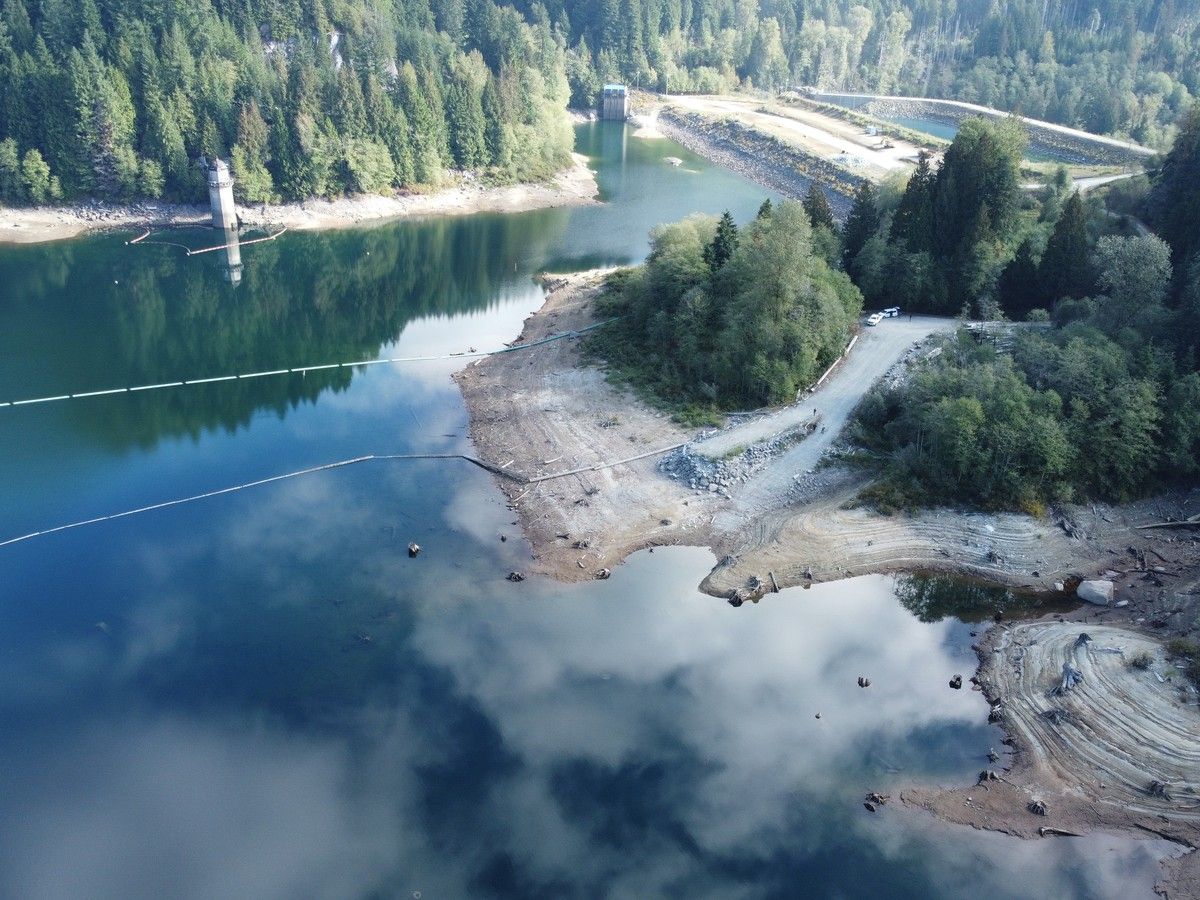
Water conservation is not enough to meet Metro Vancouver’s future demand as climate change presents significant risks to the region’s water quality and supply, regional officials say.
Plans are already underway to address supply issues, as Metro Vancouver plans to double the capacity to withdraw water from Coquitlam Reservoir, the largest of the three drinking water sources . With a deeper intake, Coquitlam Lake’s total storage capacity could increase from about 150 billion litres to almost 250 billion litres.
However, a warmer climate can lead to water quality issues because of higher turbidity, so a filtration system at the Coquitlam Reservoir will also be required, according to a recent report to the regional district’s water committee.
The report notes that climate change-related drought can also increase the risk of wildfires, which could further contaminate the water supply.
Metro Vancouver is looking at a filtration system similar to the one that was completed in 2010 for the Seymour and Capilano watersheds for the Coquitlam source , said Heidi Walsh, director of watersheds and environment at Metro Vancouver.
In a statement, Metro Vancouver said c onstruction of the Coquitlam Lake Water Supply Project — including a new water intake, water supply tunnel, and new filtration treatment plant — is expected to begin in the early 2030s and be complete in the late 2030s. A budget of $254 million has been approved to determine the scope, timeline, and costs.
Coquitlam water is currently unfiltered, so the water is treated with ozone and UV, then a small amount of chlorine is added.
Walsh said the Coquitlam Reservoir has the lowest turbidity of the region’s watersheds, but climate models predict that more frequent and intense rain storms will cause landslides and more sediment to enter the water.
“The whole Lower Mainland area has a lot of glacial deposits in the mountains, especially along the edges of all the creeks and rivers. There are a lot of really steep banks, and that glacial material has a lot of fine sediment and silt,” said Walsh.
“So when we have really intense rainfalls it gets saturated, and then it gets to a point where it’s oversaturated, and then we can have a landslide event, and then that really fine turbidity washes into the feeder creeks and then comes into the reservoir.”
The first step of the project to double the water supply was to increase all of the infrastructure downstream and build the pipeline through Coquitlam. Now Metro staff are in the early design phases for the rest of the project, which includes the intake, the tunnel and the plant.

Construction is expected to start in the early 2030s and be completed by the end of that decade.
Walsh said the region has already experienced the effects of climate change, with drier summers, and intense atmospheric rivers.
This shift in weather patterns may increase landslide and wildfire activity, and increase turbidity that could overwhelm current treatment systems, the report notes.
Metro Vancouver had a much lower than normal snowpack this year. As of April 1, the snowpack was 55 per cent of the historical average.
“If we have a lot of snow and not a lot of rain, then we have snow melt as a backup to keep the reservoirs full into the summer. But if we have not a lot of snow and not a lot of rain, that’s when we start to get worried,” said Walsh.
As for wildfires, so far Metro Vancouver hasn’t had to deal with any contaminants from any major fires and new technologies such as heat-sensing drones will help mitigate any future risk by helping crews to extinguish fires quickly.
“Early detection is our best defence,” she said. “After lightning, for example, we can fly the drones and look for any small fires so we can get on it before it grows.”
Metro Vancouver’s water supply outlook predicts the region’s water needs could grow from the current 390 billion litres of water per year to between 500 to 600 billion litres by 2120.
With files from Glenda Luymes