 BURST
BURST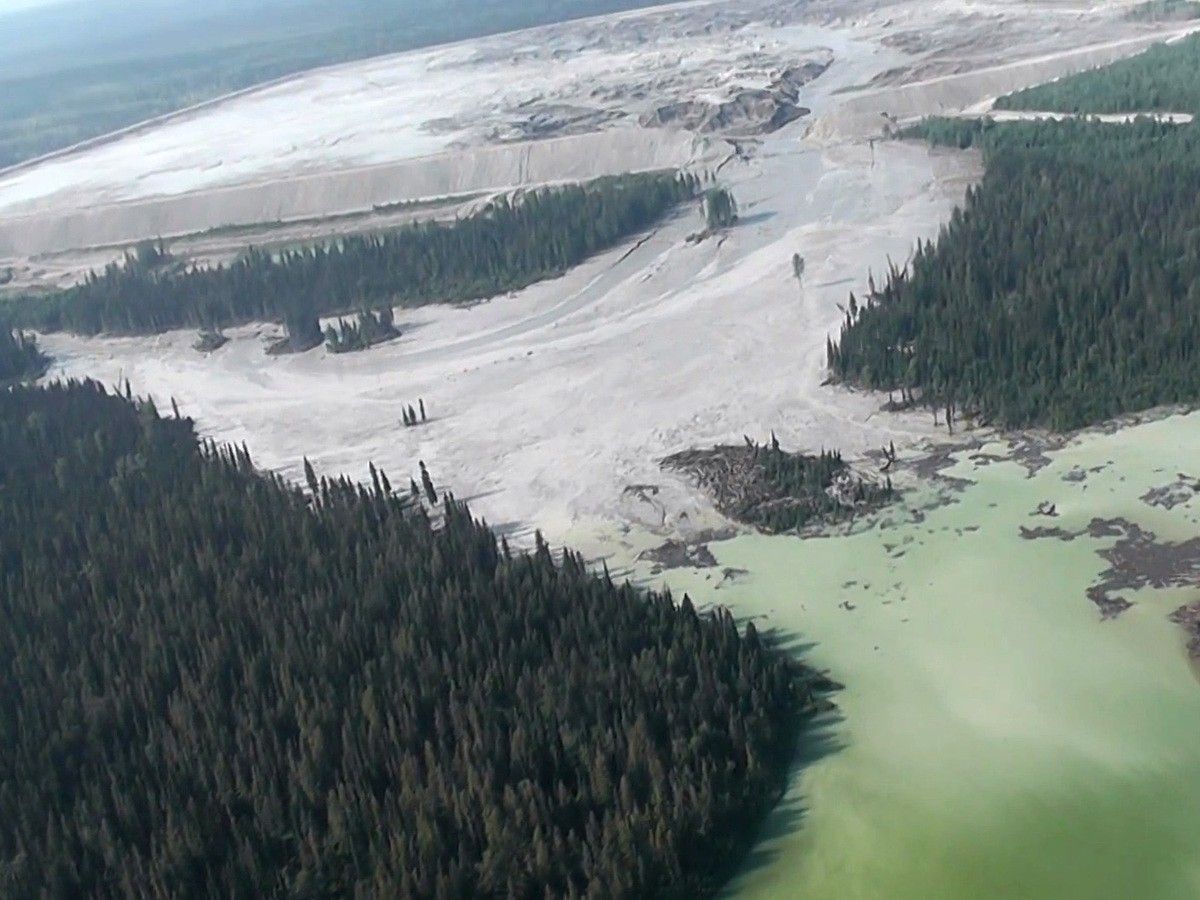
The province has granted Imperial Metals permission to increase the height of the tailings dam at its Mount Polley copper and gold mine northeast of Williams Lake, the same mine that suffered a catastrophic dam collapse in 2014.
On Thursday, Environment Minister Tamara Davidson and Mining Minister Jagrup Brar issued a consent order to Mount Polley allowing the company to raise the tailings dam 13 metres to a total height of 77 metres as part of an expansion that will extend the mine’s life by eight years.
Approval to amend the mine’s permit for the tailings facility was granted based on the Environmental Assessment Office’s conclusion that raising the height is “ not likely to result in significant new impacts compared to existing approved operations,” according to a government news release.
Raising the dam height will increase the surface area of the mine’s associated tailings pond by about 28 hectares, according to documents from the Environmental Assessment Office, but the step supports the company’s Springer Pit expansion approved by the province in 2025.
The Mount Polley mine, located 56 km northeast of Williams Lake in B.C.’s Cariboo Chilcotin region, started operations in 1997, with a hiatus between 2001 and 2004, due to low copper prices.
Operations were suspended again after the dam collapse Aug. 4, 2014, with a partial reopening in 2015 and full resumption in 2016.
The latest expansion, which will require an additional investment of $130 million, is intended to maintain the mine’s 430 direct jobs and 700 indirect jobs until its expected closure in 2033.
According to the province, the existing mine contributes $245 million to B.C.’s gross domestic province, and the mine spends about $190 million per year with B.C. suppliers.
The Xatśūll First Nation, whose traditional territory includes the Mount Polley mine, have opposed the approval, citing risks of another dam failure in an area and what they have deemed as information gaps in the Mount Polley Mining Corp.’s application.
A spokesperson from the Xatśūll wasn’t available for comment Friday, but in correspondence with the Environmental Assessment Office, characterized the regulatory process as an “approve now, study later” effort.
In 2025, the Xatśūll filed a petition seeking to set aside approval of permits related to the Mount Polley expansion. That action was dismissed by B.C. Supreme Court Justice Michael Tammen in August of 2025.
The First Nation has appealed that decision, and Imperial Metals’ latest financial report noted that the Xatśūll are not seeking an injunction in the case. A hearing on the matter is expected Oct. 22-23 this year.
In the published reasons for their decision, however, Davidson and Brar said their view is that the Environmental Assessment Office “made reasonable efforts to support the reconciliation purpose” of the applicable legislation by seeking consensus with First Nations.
“We agree that any changes to the effects from the proposed (height increase) assessed under Sec. 25 of the Act would not be significant,” the decision document said.
In its news release, the province said the 2014 dam failure at Mount Polley resulted in a substantial update to B.C.’s health, safety and reclamation code for mines, and the mine’s dam had to undergo remediation and design changes to comply with the new requirements before reopening in 2016.
That dam breach in August of 2014 released 25 million cubic metres of water and mine waste, referred to as tailings, down a creek and into Quesnel Lake. Imperial Metals and its subsidiary Mount Polley Mining Corp. still face 15 charges under the Fisheries Act related to the failure.