 BURST
BURST
As the spring legislative session in Victoria limps to its conclusion next week, the NDP government will be hoping for a summer reset after four months of being buffeted from all sides on Indigenous issues, the cancellation of numerous health-care projects and a $13.3 billion deficit burning a hole in government finances.
Premier David Eby’s approval ratings are falling, according to some polls, and the B.C. Conservatives are openly running ads that assume the premier will be replaced before the next election, with specific focus on Jobs Minister Ravi Kahlon and Attorney General Niki Sharma as possible successors.
Jeff Ferrier, a founding partner of Framepoint Public Affairs, said that the only person who knows whether the NDP will have a new leader going into the next election is Eby himself.
“I think that I would be thinking more of a cabinet shuffle. We’re almost at the halfway mark of the government’s time in office, and if they were looking to freshen things up, put a bit of a new face on government, show a bit of a new direction, I think it would be more likely to be a cabinet shuffle than anything about the leader,” said Ferrier.
Debate has also been slow-going on controversial changes to the Freedom of Information and Protection of Privacy Act, which critics say would make it harder for the public to obtain information from the province, with legislators sitting until 4 a.m. last Thursday as the government forced it through second reading and on to the committee stage.
It will still have to pass committee and third reading before it can be signed into law.
Outside of that piece of business, the NDP are also facing challenges to the two treaties they’ve agreed to with the K’omoks and the Kitselas, with multiple First Nations and the Union of B.C. Indian Chiefs calling for a pause to the legislation due to overlapping land claims.
That isn’t to mention the legislation that would have suspended the Declaration on the Rights of Indigenous Peoples Act that was pulled after Vancouver-Strathcona MLA Joan Phillip said she wouldn’t support it and numerous other MLAs voiced their concerns privately.
Ferrier said the NDP have had to navigate a number of challenges over the past few months but they have done a good job of putting forward solid improvements from the approval of critical mineral mines to signing up hundreds of U.S. health-care workers.
At the same time, he said the summer is likely to pose further challenges with the possibility of a nursing strike, the need to ensure priority projects get approved and the continuing issues with Indigenous relations.
Hamish Telford, a University of the Fraser Valley political scientist, said the government has had a tough few months and needs a reset.
“They have a lot of work to do, and it may be the case that they’ve just been a little bit too cautious trying to please as many people as possible, spreading themselves thin, as it were, and not really satisfying anybody, and so they might want to think about how they could be bolder in some areas to try and shore up support,” he said.
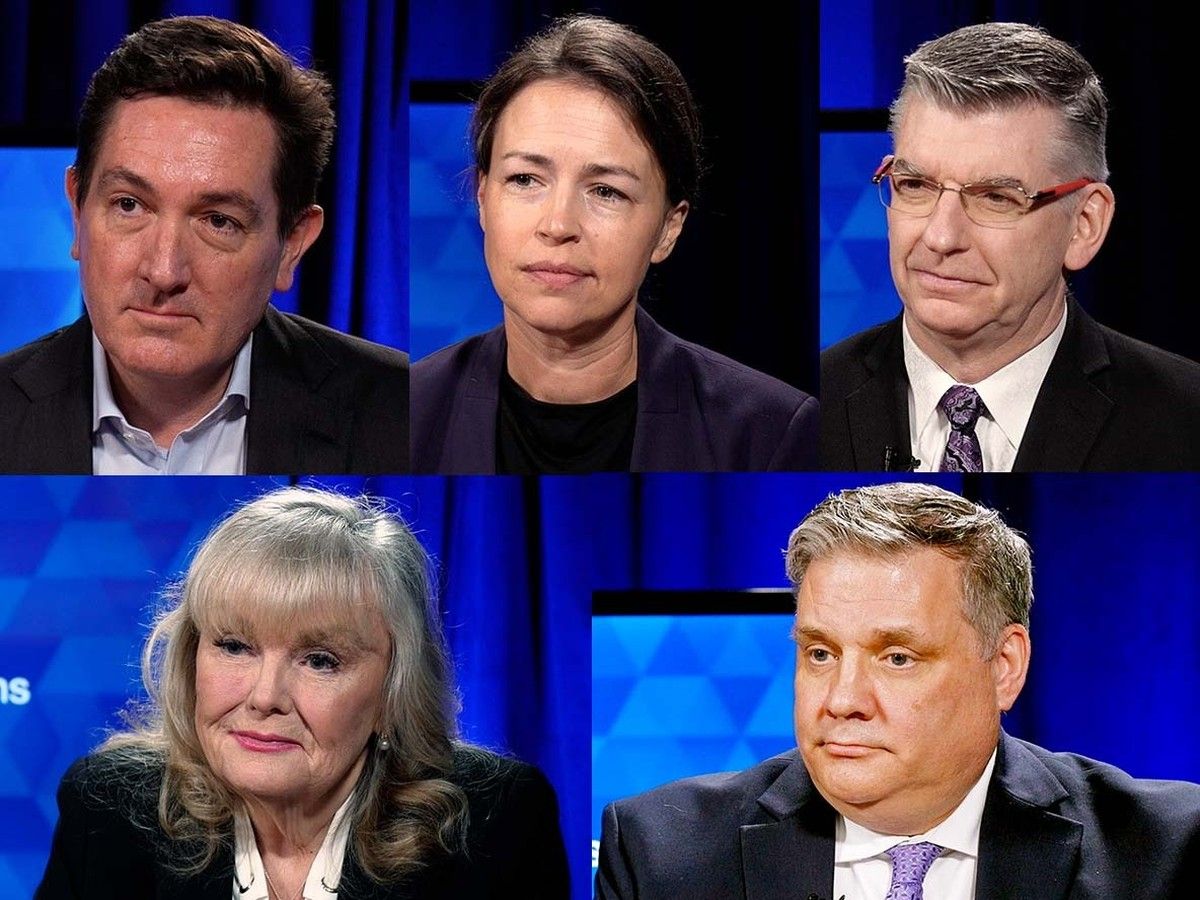
All of the challenges faced by the NDP have benefited the B.C. Tories who have seen a rise in support but are also in a state of limbo until the end of this month when they will find out who among Caroline Elliott, Iain Black, Peter Milobar, Yuri Fulmer or Kerry-Lynne Findlay will lead the party going forward.
One of the immediate challenges for any of those five will be in figuring out a way to keep the coalition assembled by former leader John Rustad together.
In just the last year-and-a-half since the 2024 provincial election, six MLAs have either been kicked out of the Conservative caucus or have resigned and it remains unclear whether the party can successfully get its MLAs who are more on the progressive conservative side of the spectrum to coexist with the right-wing populists that populate its ranks.
Telford believes that the Tories choosing a new leader will benefit the NDP if whoever takes over the official Opposition is unable to unite the party. At the same time, if the new leader is able to bring the fractious coalition together it could spell trouble for the government.
Conservative interim Leader Trevor Halford said he is proud of the time he has spent helming the party and believes that whoever takes it over will be in a good position with the Conservatives beating out the NDP in fundraising last quarter and seeing an uptick in support in certain polls.
“I think that we positioned ourselves well as a government in waiting. I believe that whoever wins on May 30 will be the next premier in this province, and they will have my full support,” said Halford.
As for the Greens, there appears to be a bit of a disconnect between the left-wing populism put forward by Leader Emily Lowan and the more traditional policy positions of MLAs Jeremy Valeriote and Rob Botterell.
Jillian Oliver, a Green strategist and former press secretary, said that so far the trio appear to be working together well and that the key will be in meshing the policy positions of the MLAs with the strategy of Lowan.
“It’s gonna be really interesting to see the interplay of that as they get closer to an election time, and the issues get more salient and tangible for voters, but right now it seems like they’re working well together,” said Oliver. “I think it’s still a question if they can organize a broader tent into a cohesive brand and keep everybody united, but that’s no different than what the other parties do.”