 BURST
BURST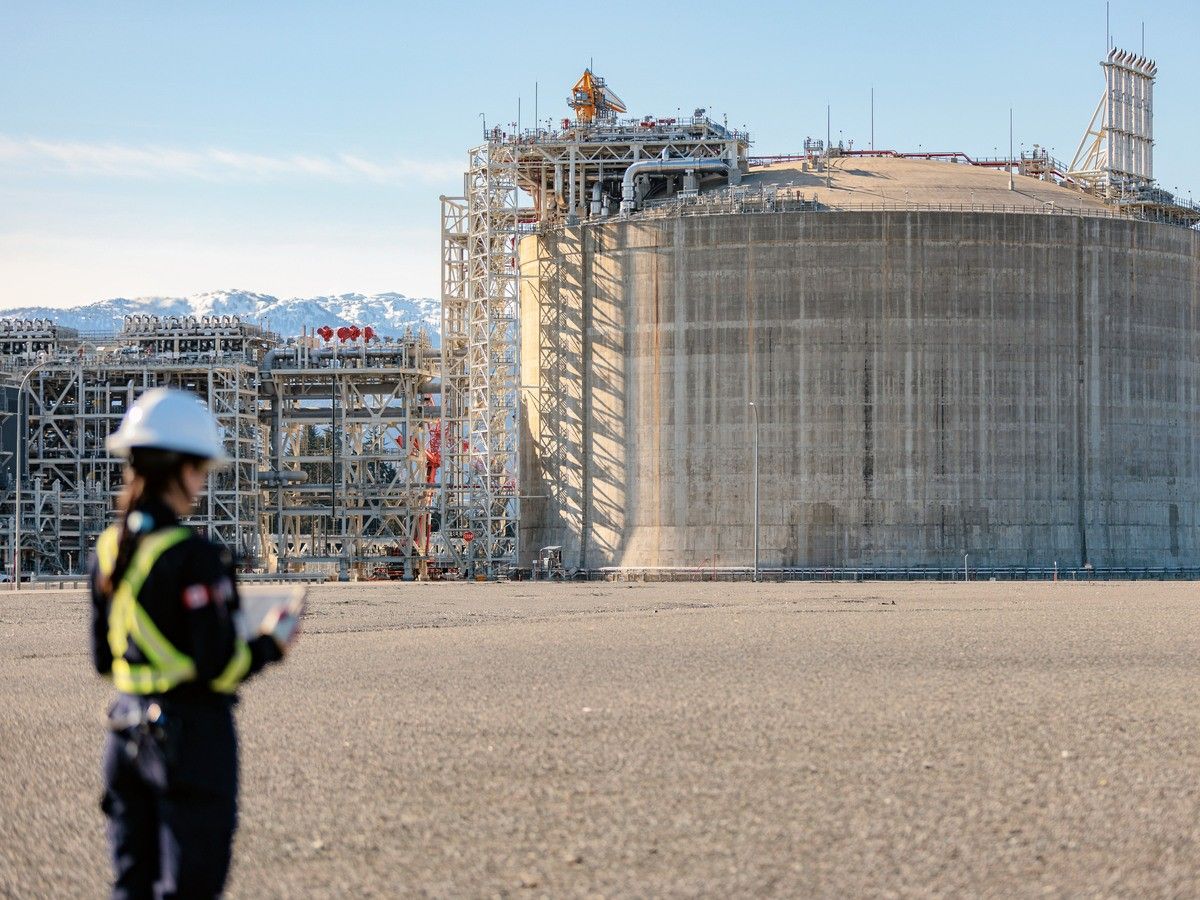
LNG Canada is giving five northwestern B.C. First Nations the option to buy a significant stake in the proposed expansion of its liquefied natural gas plant at Kitimat on the province’s north coast.
The company and First Nations unveiled the agreement on Tuesday, offering to give the Nations an option to invest up to $1 billion in the purchase of the expansion’s massive LNG storage tank.
Under a partnership named MNT Investments LP, LNG Canada would lease back a central component in a plant’s operation over the project’s lifespan.
LNG Canada CEO Chris Cooper called the arrangement a creative pathway for First Nations to take an equity position in the Phase-2 expansion, and represents one of the largest Indigenous ownership positions in a major Canadian infrastructure project.
“This agreement recognizes that Indigenous nations should have the opportunity to participate in major investments like Phase-2, not only through jobs, training, procurement and community benefits, but also through long-term ownership and value creation on a global scale,” Cooper said.
Haisla First Nation Chief Councillor Maureen Nyce said the agreement “marks a defining point” in her Nation’s 15-year relationship with the LNG Canada project, “in a manner that creates generational prosperity for the Haisla Nation and neighbouring Nations.”
Besides the Haisla, in whose territory the project is located, the MNT partnership includes the Gitga’at, Gitxaała, Kitselas and Kitsumkalum Nations. A representative from each praised the deal during Tuesday’s announcement.
“Many hands, each doing a lot of heavy lifting, ensure this partnership will deliver benefits to the region and all involved for many generations,” said Gitga’at Chief Councillor Arnold Clifton.
MNT partnership president Aaron Sinclair said the important feature of the deal is its potential for recurring revenue that is not exposed to commodity prices.
“That means durable, predictable benefits for current and future generations, and a seat at the table for the life of the project,” Sinclair said in an email response to Postmedia questions.
Sinclair added that the deal was three years in the making, during which “LNG Canada engaged early and took the time to understand how commercial participation in Phase-2 could work.”
“This transaction demonstrates that First Nations can be sophisticated commercial participants capable of advancing major projects in partnerships on their own,” Sinclair added.
News of the deal was also welcomed by the Indigenous industry group First Nations Natural Gas Alliance, whose CEO Karen Ogen heralded it as “what Indigenous LNG looks like.”
“Ownership changes everything,” Ogen said. “Jobs, training, procurement and community benefits matter, and they always will.”
“Equity means a seat at the table for generations, revenue that funds our schools, our elders and our languages, and a say in the decisions that affect our lands and waters,” Ogen added.
The agreement also comes at an important point for the Phase-2 proposal as LNG Canada’s joint-venture partners work through a final investment decision for the multi-billion-dollar expansion, which company spokesperson Paul Hagel said is still expected by the end of this year.
LNG Canada is a partnership of energy giant Shell, Malaysian state-owned Petronas, PetroChina, Japanese utility firm Mitsubishi, and South Korean utility Kogas.
The project’s initial phase, a $40 billion investment between its 14-million-tonnes-per-year capacity natural gas liquefaction plant at Kitimat, 400 km northwest of Vancouver on the north coast, and the 670 km Coastal GasLink pipeline, started operations in June of 2025.
A Phase-2 expansion would add up to two additional production units, called trains in the industry, and an additional supercooled storage tank that would more than double its production capacity to a potential 30 million tonnes of LNG per year.
Both Premier David Eby and Prime Minister Mark Carney stated that the expansion is a critical project in their respective ambitions to diversify trade away from the U.S. Carney’s goal is to double Canada’s non-U. S. trade by 2035.
Hagel said the deal with MNT Investments “improves the economics and competitiveness of Phase-2, creating a stronger business case for potential (joint venture partnership) investment by the end of the year.”
Sinclair said financing for MNT Investment’s end would be contingent on approval of a final investment decision and be finalized in conjunction with that development.
He added that MNT is seeking financing, including through available Indigenous loan guarantee programs, but expects it would be “on a non-recourse basis,” supported by the long-term revenue from its leaseback arrangement with LNG Canada.
The new storage tank would be a twin to the massive, 56-metre-tall, 92-metre-diameter facility — equivalent to a 16- to 19-storey building — already on site, which is the largest LNG storage tank in Canada and one of the largest in the world.
The project still faces opposition from other First Nation groups. Hereditary groups within the Wet’suwet’en First Nation in B.C.’s Central Interior consider LNG Canada’s development an “continuing violation of Wet’suwet’en rights and title,” according to Na’moks, a hereditary chief.
In a letter co-signed by the Union of B.C. Indian Chiefs to 10 Canadian pension funds and Export Development Canada, they warned that the Phase-2 expansion “will be met with fierce opposition.”