 BURST
BURST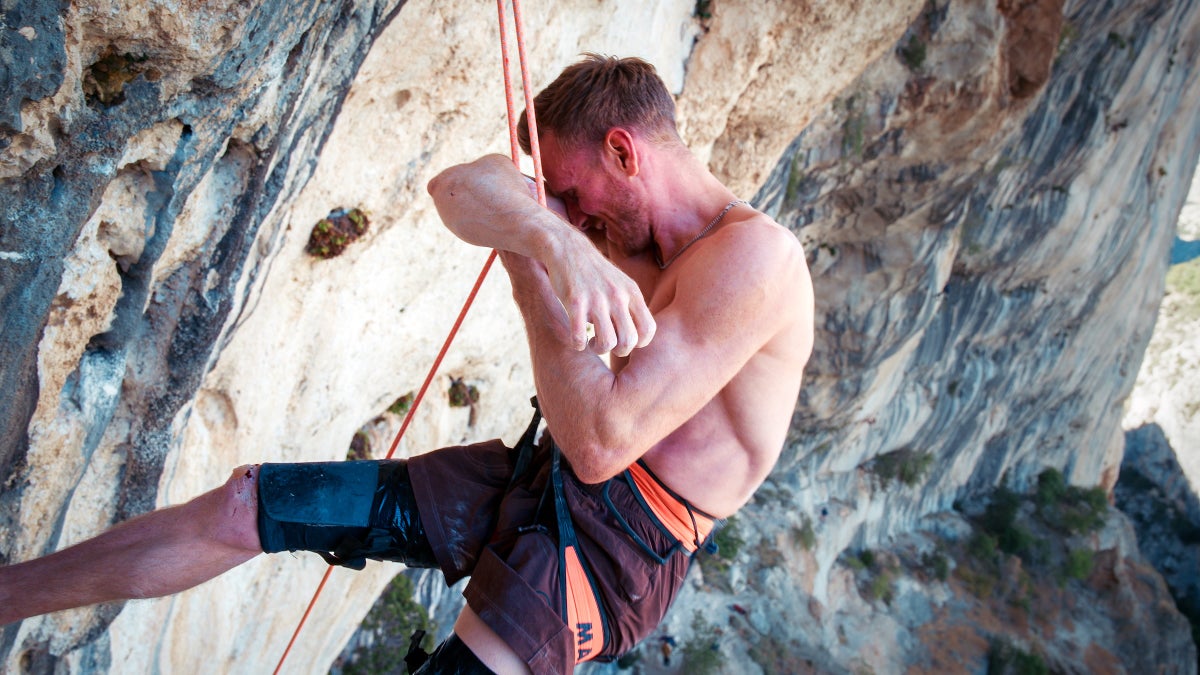
In the near-decade since Adam Ondra established Silence (9c/5.15d) in 2017, the world’s hardest sport grade has remained only theoretical. Since then, four more climbers have proposed routes at the grade, but none had been repeated. That just changed.
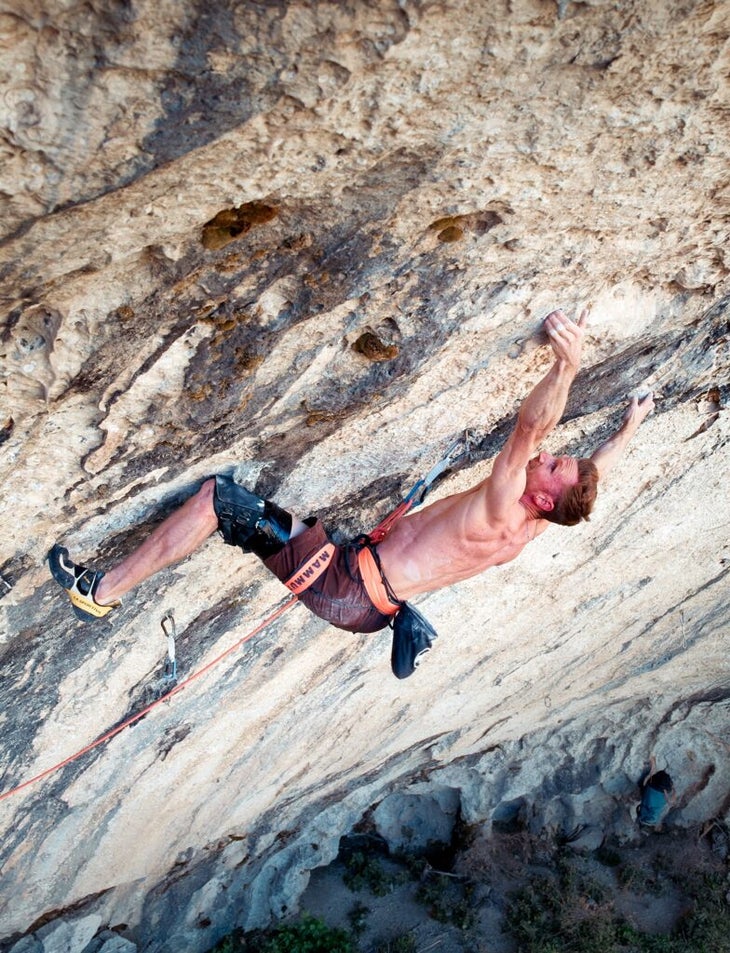
On the afternoon of October 10, Austrian climber Jakob Schubert made the second ascent of DNA (9c/5.15d), a 55-meter route in France’s Verdon Gorge. French climber Seb Bouin made the first ascent of DNA in 2022. “I’m really happy,” Schubert told me over the phone the next day. “I would never trade this story for anything.”
With DNA, the 35-year-old Schubert has become both the first climber in history to repeat a proposed 5.15d route, as well as the first to climb two. His line B.I.G., in Flatanger, Norway, was the world’s third 5.15d proposal in 2023. Since Schubert has aligned with Bouin on his proposed grade, this also makes DNA the world’s first confirmed 5.15d route.
Is DNA the world’s hardest route?
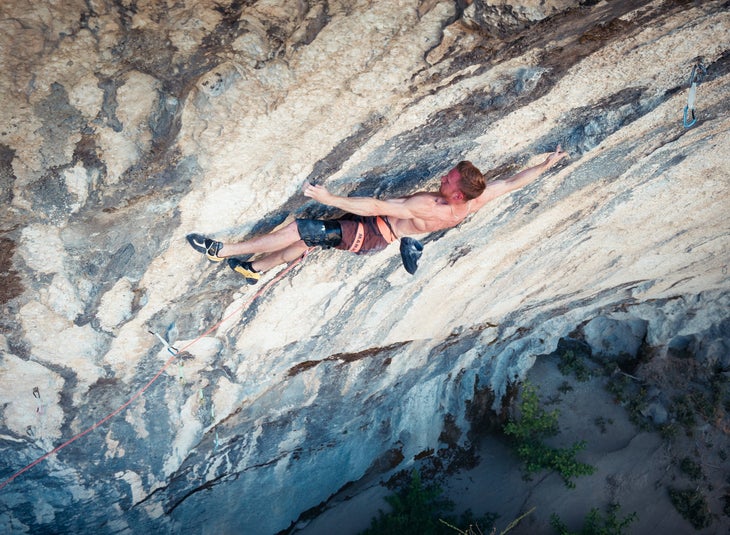
Schubert has tried every 5.15d except the newest line at the grade, Jorge Díaz-Rullo’s Café Colombia. He told me that DNA feels harder than his route B.I.G., and could be the hardest route at the grade. Partly, however, this is because of how height and reach-dependent DNA is.
“It’s a very morphological route,” explained Schubert, who stands 5’9”. “The shorter you are, the harder the route gets. At some point, it would probably be impossible. I’m only borderline tall enough.” Both DNA and B.I.G. rely on power endurance, but Schubert thought that the climbing on DNA felt more technical. “I’ve never done these crazy kneebars before,” he explained. “You really have to learn them on DNA, otherwise, certain moves are just impossible.”
Schubert said DNA felt similar to B.I.G., and he felt it’s certainly a 5.15d climb, but the projecting process was more daunting, due to the complex beta. “There’s so many more small, hard sections you need to learn,” he explained.
So although the route took Schubert fewer overall redpoint attempts than B.I.G., he invested far more time in preparation. In the end though, he said difficulty at the sport’s highest grade is largely subjective. At least at this early stage in the grade’s evolution, it’s almost impossible to say that any one proposed 5.15d line is harder than the other. All the 5.15ds are hard, they’re just hard in different ways.
“I think every [5.15d] climber would name a different route as the hardest for them,” Schubert observed. “Adam would maybe say B.I.G. I would feel like, ‘Whoa, Adam, you’re crazy. B.I.G. is the easiest for me.’ Adam would say for him, Silence is the easiest, for sure. Seb [Bouin] would say DNA is the easiest.”
“You get to a point where you feel perfect on the wall”
As Schubert made the first 5.15d repeat in history, some 180,000 people were watching. The 35-year-old climber livestreamed his DNA ascent on YouTube, just as he did with B.I.G. back in 2023. In fact, you can find all of his redpoint attempts on the route over the past several days on YouTube.
But Schubert said that although livestreaming offers an intimate look at what a 5.15d ascent looks like, he noted that by the time he’s doing redpoints, he’s already put in the hardest work.
“Some people read ‘ninth live attempt’ on YouTube, and think this is basically my ninth try on the route, which is obviously far from the truth,” Schubert said. Since first trying DNA in 2024, he has put in at least 30 days on the route spread across multiple trips. But underlying these 30 sessions is also a deep bedrock of training and planning.
“You don’t see all the work that I’ve put in before I even did any redpoint tries, all the mental preparation I’m doing every day between tries, even on rest days,” he said. “I’m thinking over and over about the route, climbing it in my head, thinking about very small details that I could change … It’s a lot of work to get to this point.”
How Schubert approached projecting DNA
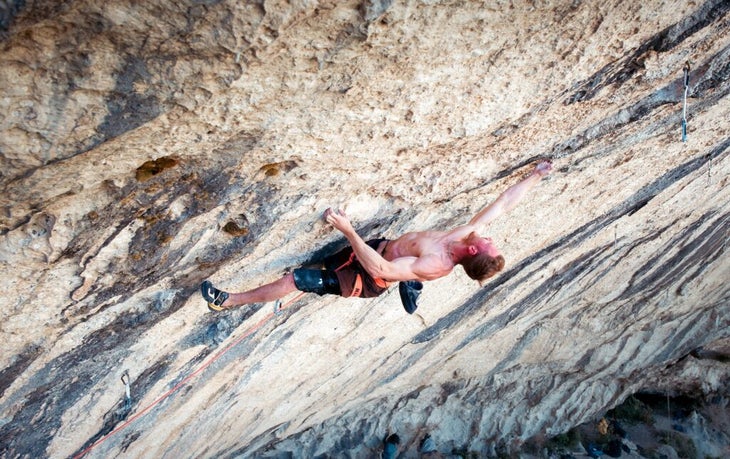
The DNA projecting experience, he said, was also made far easier by Bouin’s transparency and the footage of his first ascent. “We had the video from Seb, and he did a crazy job checking out the perfect beta for the route,” Schubert said. “I had to change a few [pieces of beta] because I’m way shorter than him, but I could copy a lot of beta, which saved a lot of time.”
Schubert, who has won more IFSC gold medals than any male climber in history, and podiumed at both Olympic Games, is likely the world’s most accomplished male competition climber. He said that the pursuit of perfection is precisely what makes projecting a route like DNA, compared to competition climbing, so meaningful to him.
“I could never climb this perfectly on a competition route, because it’s an onsight attempt,” he said. “That’s the cool thing about projecting. You can get to a point where you feel perfect on the wall, and that’s so amazing to achieve.”
Not just an athlete, but an entertainer
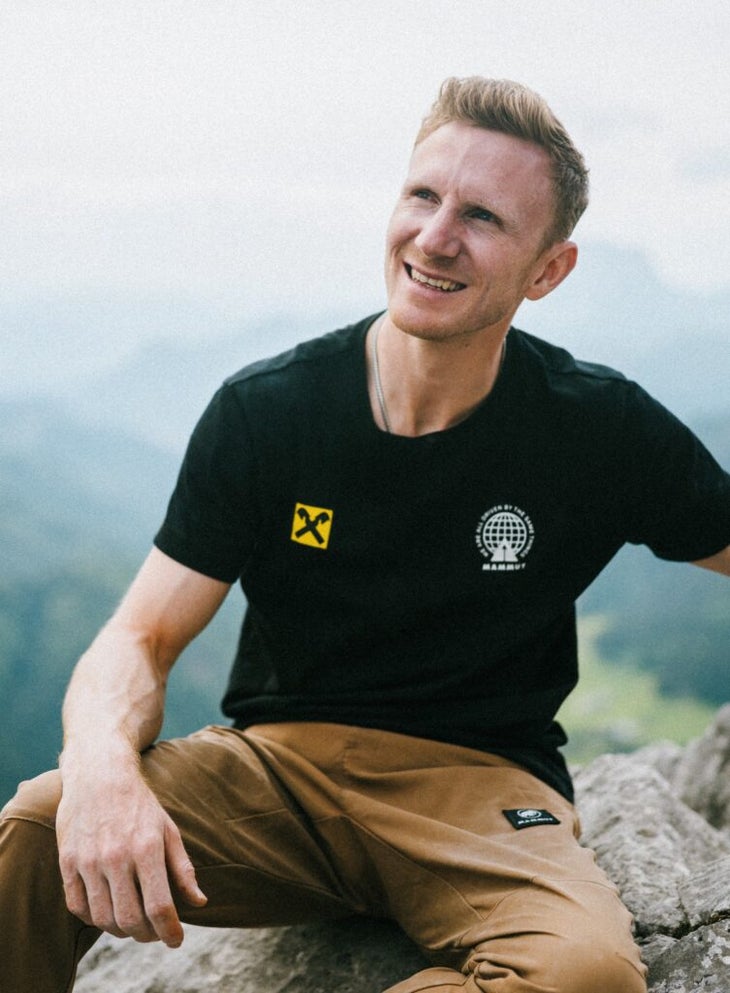
The top comment on Schubert’s YouTube send video came from Adam Ondra, who congratulated him on his success, but also on his ability to handle the pressure of the livestreamed attempts. But Schubert told me that although livestreaming added some pressure, overall it actually made the send more enjoyable. He also clarified that he was the one who wanted to livestream his attempts—not sponsors or anyone else.
“It filled me with so much happiness, reading all the comments of people enjoying being part of the process,” he said. “It made [the climb] even more of a special experience.”
Schubert’s YouTube followers certainly seemed to agree. “I stopped everything to see the attempt, and I´m so grateful [for] the emotions you made all of us feel!” wrote one commenter. “Thanks for reminding me what a human being is capable of,” said another.
“I VERY rarely shout at the screen when I’m watching sports … but I did on this occasion when you stuck the crux move,” typed a third.
The two diametrically opposed trends in sharing send news
Uncut footage and livestreamed ascents are becoming more commonplace in hard sport climbing and bouldering. Scottish climber Will Bosi, for example, was also livestreaming his attempts on Silence this week. (Schubert is the only climber so far to livestream a successful 5.15d ascent.)
However, there is an equally well-established trend of the world’s best climbers intentionally working hard projects away from the spotlight. Some even keep their sends close to their chest for months afterward. Sean Bailey didn’t publicize his ascent of Duality of Man, another proposed 5.15d, until nearly a year after he clipped the chains. Shawn Raboutou took months to announce his V17 proposals Megatron and Alphane.
But Schubert said that as a professional climber, he sees himself as not just an athlete, but an entertainer. He wants to reduce the barriers between himself and his fans, climbing as transparently as possible.
“It filled me with so much joy,” he said of the response to his DNA livestream. “It felt like I got a lot of people even more psyched on climbing, inspired people, and that makes me really happy [because] I feel that’s also part of my job as a pro climber. We are, after all, like singers or actors or artists. We are trying to inspire people and get them psyched, and make their life better.”
No more 5.15ds from Schubert?
I was somewhat reluctant to ask the guy who just climbed what is perhaps the world’s hardest route, “What’s next?” but when I did, Schubert admitted that he certainly has ideas. He tentatively plans to travel with Ondra to project Exodia, the world’s hardest proposed boulder problem (V18), first sent by Elias Iagnemma in Italy last November. He also hopes to work the Stefano Ghisolfi route Excalibur (5.15c).
Schubert did seem reluctant, however, to set his sights on another 5.15d, even in the distant future. “I don’t know how many more times I’m going to try [5.15d],” he said. “There’s a lot of effort and time you have to put in. It’s also a tough mental process.”
After all, only a few other routes proposed at the 5.15d benchmark exist in the world. Projecting them would entail multiple trips, each likely weeks long, which Schubert admitted is a time commitment he’s not sure he wants to make again. He’s also gunning for a third showing at the Olympics, in Los Angeles in 2028. “That’s something I obviously have to work hard for, which means a little bit less time for huge projects like this,” he said.
Then he paused. I was reminded that I was talking to him less than 24 hours after he clipped DNA’s chains. “Like I said, I have a feeling like maybe DNA is actually the hardest [5.15d] for me and the process could get a bit easier,” he said. “So we’ll see.”
The post Less Than 24 Hours After Becoming First to Repeat 5.15d, Jakob Schubert Tells Us What It Took appeared first on Climbing.