 BURST
BURST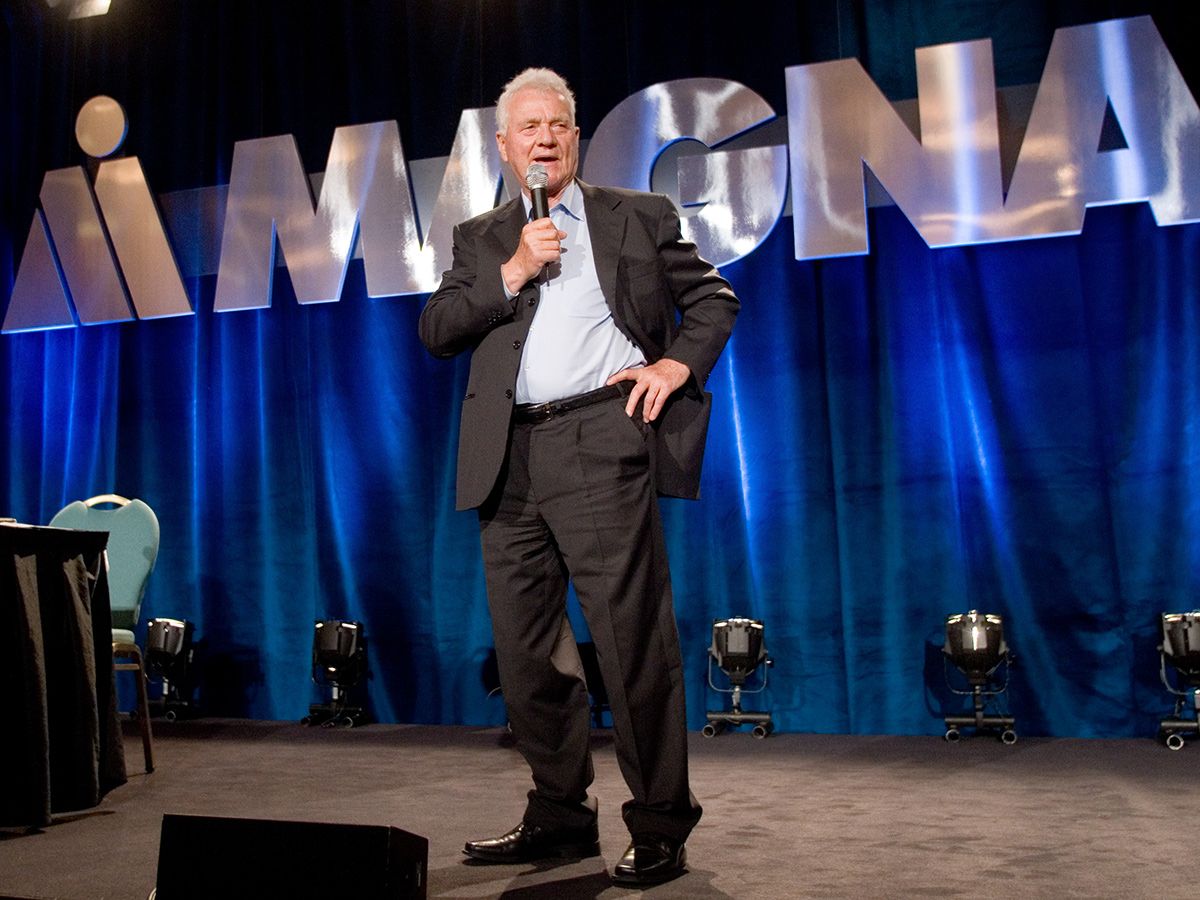
He arrived in Canada from Austria over seven decades back at the age of 21 with little money and rudimentary English.
Frank Stronach, now 93, went on to become a tycoon in a Hollywood movie mould.
He was visually striking, fit and energetic, with piercing blue eyes, his hair turning silver in the 1980s. He kept iron-fist control of his companies, installing directors at a whim, and showed distain for shareholders who questioned his judgment.
“I built a company from scratch that is today recognized as the premier automotive supplier in the world … generating close to $30 billion in annual sales, with no debt and $1 billion cash sitting in the bank,” Stronach said in his 2012 memoir titled The Magna Man: My Road to Economic Freedom.
“The company produces parts for virtually every car and truck on the road today.”
Canadians who watched Stronach’s incredible rise to billionaire tycoon status as the founder of Magna International over decades were stunned two years ago to learn Peel Regional Police had charged him with a series of sexual assault allegations spanning more than four decades.
On Friday, a judge found him guilty of one count of sexual assault and one of indecent assault over historical claims involving two women. In both cases, he and his victim remained fully clothed. He was originally facing 12 charges involving seven women but is not guilty on the other ten charges.
“Any time somebody with that kind of influence who has been that successful in business and those stories come out, it is shocking,” said David Soberman, a professor of marketing at the University of Toronto’s Rotman School of Management.
He doubts the outcome of the trial will have any effect on Magna, which bills itself as one of the world’s largest automotive suppliers.
“He’s not really involved in the day-to-day operations of the business,” Soberman said Thursday.
Though Stronach was “absolutely” a party-of-one running Magna for many years, he said.
“Right now, it’s more of a side show where Magna is in the article, but not really affected by it,” Soberman said.
Stronach always had a knack for drawing powerful people close to him. Former management included former federal cabinet minister Brian Tobin, and his boards of directors included former Ontario premiers Bill Davis and Mike Harris.
Not surprising for a man with opinions as strong and vociferous as Stronach’s, he dabbled in politics. As a vocal opponent of the Canada–United States Free Trade Agreement, he resigned as CEO of Magna in 1988 — but kept control of the firm — to run as a Liberal candidate in the federal election.
He ruffled feathers with his talk that kindled notions of a Messiah complex: “When I bring forth ideas, they are so well-balanced, so precise, they’re so well thought out that the public — once they get to know it — will say that’s what we would like to have, that’s the kind of government we want to see,” he was quoted saying.
He easily won the Liberal riding nomination battle and retorted to complaints of high spending by saying: “The history of mankind has been dominated by the golden rule: He who has the gold, makes the rules.” He had the gold, but he lost the election.
His company, Magna, went global and its success lifted investors, his workers, York Region, where his headquarters was, and most of all, Stronach himself. In 1997, he was paid as much as the bosses of the big three automakers — General Motors, Ford and Chrysler — combined and wasn’t shy in saying he deserved it because he was smarter and worked harder than all of them.

“He had intended Magna to be a monument that would at once define his life and become a dynamic legacy confirming his status among history’s thinkers and doers…. As its emperor, he so closely identified with Magna that he had become it, as it had become him,” wrote Wayne Lilley, the author of an unauthorized biography of Stronach, published in 2008.
Lilley called Stronach “Canada’s most fascinating corporate figure.”
What’s remarkable about Stronach’s story, is his humble beginnings.
One business historian dubbed him the “quintessential 20th century rags-to-riches story in Canadian industry.”
Named Franz Strohsackin when born in Austria in 1932 to two factory workers, he was raised partly during the Nazi regime before getting a job as an apprentice machinist for the post-war reconstruction.
Stronach’s memoir recounts him applying to immigrate to Australia, the United States, South Africa and Canada. Canada responded first, and he packed his bags, arriving by ship in 1954 at age 21, with little money and rudimentary English.
Rebranding himself as Frank Stronach, he washed dishes in a hospital in Kitchener, Ont., while he saved money and practised his English. Stronach recounts in his memoir how he frequented a nightclub in Kitchener, which has a large German population.
“There was a lot of slow dancing in those days, and sometimes the girls I was dancing with would ask me what I did for a living. ‘I work in a hospital,’ I would say. And the girls would usually say, ‘Your hands are so smooth. Are you a surgeon?’ Sometimes I would play along, but I would always eventually tell them the truth, that I was really just a dishwasher. When I said that, most of them didn’t want to dance as close anymore — after all, what girl wants to go out with a dishwasher? But those that stayed close — that was true love,” Stronach said in his memoir.
When he had saved enough, he started a tiny tool-and-die business in Toronto, working long hours and watching it grow. Taking on a business partner, Burton Pabst, they secured their first auto part contract — metal clips for a car’s sun visor — in 1959 and moved the business north to Richmond Hill in York region in 1961.
The two men were single and becoming wealthy. Pabst told Lilley that Stronach had a reputation as a “lady’s man” who still didn’t take his eyes off business. “He’s always been like that, from the day I met him,” Pabst is quoted saying. “He doesn’t need the sleep I do.” Stronach outlived both Pabst and Lilley.
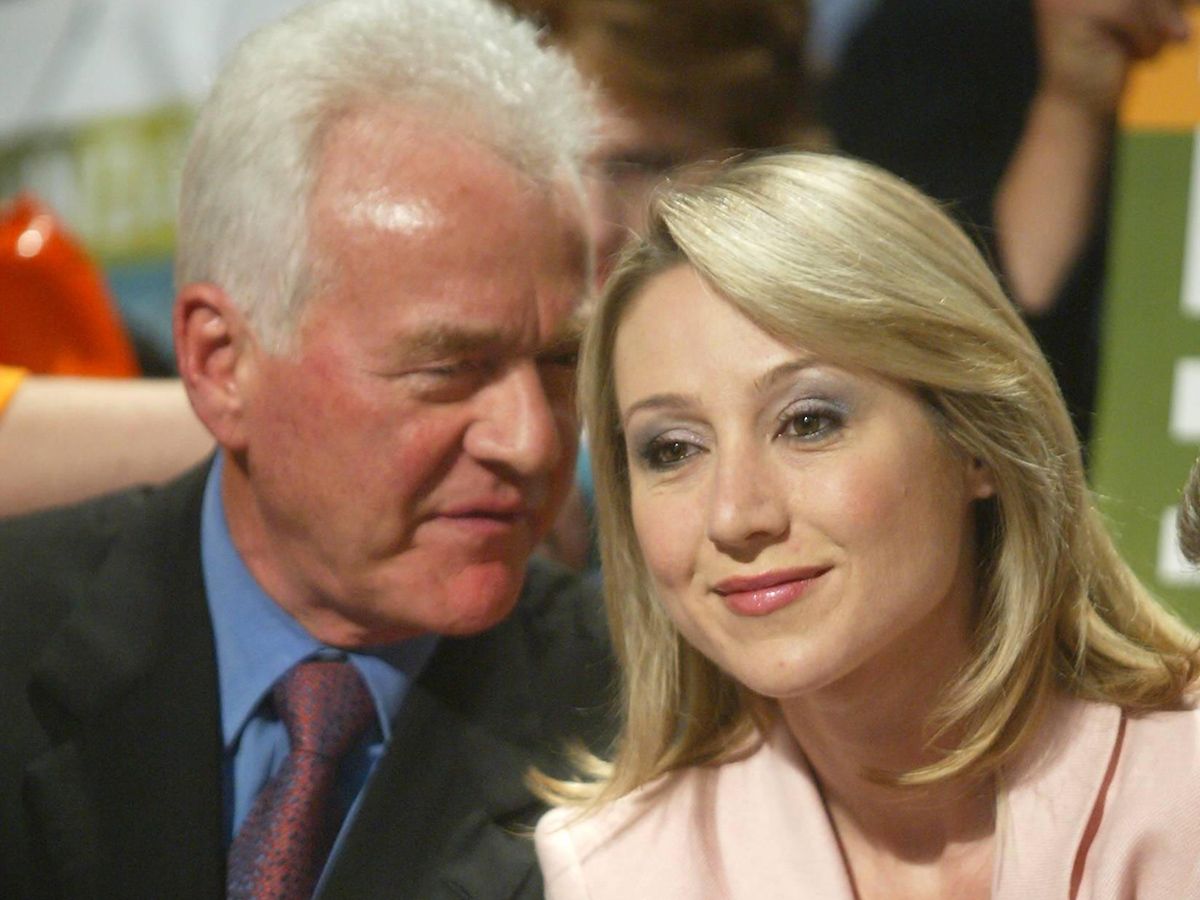
When Stronach returned to Austria for a visit in 1960, he was looking for a wife as well as a reunion with his parents. Stronach had, “and would continue to have, an eye for attractive women,” Lilley wrote. Stronach found a pretty, blonde woman in the daughter of a furniture maker in his old hometown, named Elfriede Sallmutter.
They were married in Toronto in 1964 and had two children: Belinda, who followed her father into the Magna business and then made headlines when, after being elected as a federal Conservative MP, she crossed the floor to become a Liberal cabinet minister; and Andrew, who largely remained out of the public eye while working at and owning a piece of the family businesses.
The year after his marriage, Stronach received another boost, an economic one, from the Auto Pact, an agreement that eliminated tariffs between Canada and the United States in the automotive industry.
It allowed Magna to become a colossus.

Stronach worked up a business philosophy he called Fair Enterprise, which he expounded without restraint, on any occasion, often with diagrams. He loathed bureaucracy, demanded perfection in production, insisted on small, manageable business units and offered employees a profit-sharing plan that kept the powerful auto unions at bay.
“Magna is much more than a company,” Stronach said in his memoir, “it is a whole new economic culture.”
Media pumped out stories over decades on the quotable Stronach and his Magna miracle, with unbridled descriptors: maverick, controversial, flamboyant, outspoken, contrarian, eccentric. He was called a czar, “Mr. Success,” a modern-day Citizen Kane, a “well-dressed Rambo.”
In 1999, when Stronach was gobbling up large U.S. horse racing tracks, a feature profile in Maclean’s magazine titled “Canada’s most flamboyant industrialist” noted that people had trouble understanding Stronach: “Nobody seems to know for sure what makes this guy tick,” it reads. “Twenty years after he and Magna came to the attention of the Canadian business scene, people are still asking the same questions. Is Stronach a genius or a total flake? Why does a man risk losing so much — money, reputation and some of the best managers in his industry — by putting his company through such dangerous hoops?”
The story noted Stronach “has already spent much of his adult life in the company of fast horses and beautiful women.”
Stronach built a sprawling compound in Aurora, north of Toronto, in York Region, that not only enclosed his home, the homes of his two children and their families, but also his global corporate headquarters, and space for his passions: breeding stables for thoroughbred horses and a manicured golf course. He donated generously in health care, sports and humanitarian aid.
It all gave him enormous influence.
Increasingly aggressive shareholder activism, though, eventually ripped Magna out of Stronach’s grip. He had maintained control through a dual class share system that gave his shares a majority vote even though he owned only a sliver of the company’s share value.

In 2010, in a deal brokered by Mike Harris, Magna’s board approved paying Stronach and his family nearly $900 million, plus regular shares, to end the dual class share structure.
Magna and Stronach were finally untethered.
With a sudden abundance of time, at the age of 80, Stronach shifted focus to his native Austria, where he launched a political party in 2012 with a personal endorsement from former U.S. President Bill Clinton. He called the party Team Stronach für Österreich, German for Team Stronach for Austria. It drew about six per cent of the national vote in 2013 and dissolved a few years later.
When he returned to Canada, he became embroiled in a family feud featuring lawsuits and countersuits that started in 2018, pitting Frank and his wife, joined by their son, against his daughter and a company official over control of the family firm, called The Stronach Group. They settled in 2020 with a split of assets.
He kept dishing his opinion and even had a column in National Post for a time, where he railed against red tape, the demise of manufacturing, the “paper-shuffling” economy, the Liberal budget, the tax system, and in favour of healthy food, electric vehicles, profit sharing, farmers and tradespeople.
In his memoir, Stronach said: “Life has been incredibly good to me. I’ve met kings and queens, presidents and prime ministers, the rich and the famous, a lot of colourful characters, and plenty of decent, down-to-earth people. Even though I’ve experienced the lowest of the lows and the highest of the highs, it is the hardships I’ve endured that have made me the person I am today.”
Our website is the place for the latest breaking news, exclusive scoops, longreads and provocative commentary. Please bookmark nationalpost.com and sign up for our daily newsletter, Posted, here.