 BURST
BURST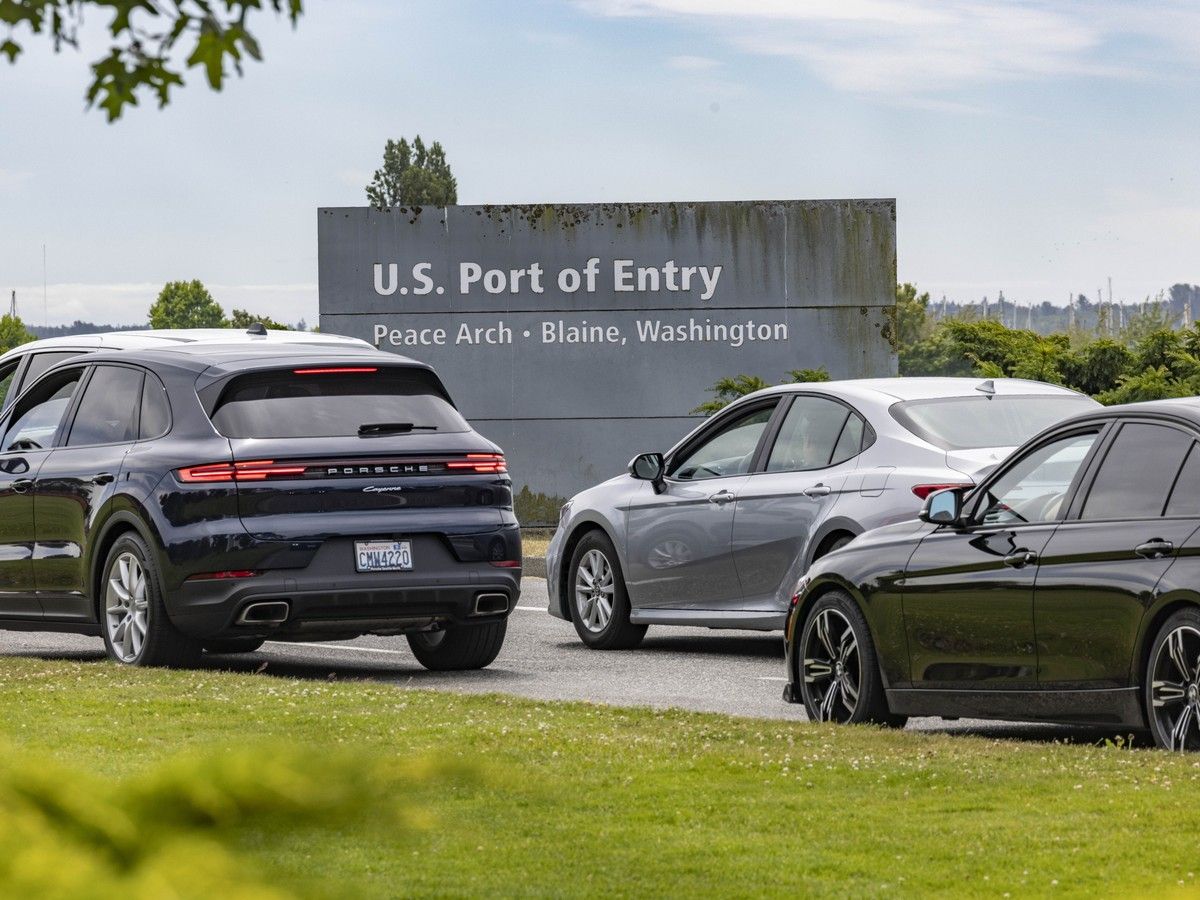
Businesses along the B.C.-Washington state border are likely to bear the brunt of the impacts of tariffs that went into effect over the weekend.
Laurie Trautman, director of the border policy research institute at Western Washington University in Washington state, said harsh rhetoric towards Canada from the Trump administration would likely revive calls for Canadians to boycott U.S. goods and travel, just as the number of Canadians crossing the border was starting to pick back up.
“This feels like one step forward, 10 steps back,” she said.
Trautman said a recent survey of about 60 businesses in Whatcom county, just south of the border, found they were already laying off employees, increasing prices, reducing hours and limiting inventory as a result of existing tariffs, inflation, and a decline in Canadian tourism, among other struggles.
“The small businesses are the ones that are already getting hit, whether that’s by tariffs or by a lack of Canadians, and they’re the ones that are going to feel the pain the most,” Trautman said of the new tariffs.
According to a June 2026 report from the Washington Council on International Trade, total tariffs paid by Washington state businesses on Canadian goods were nearly five times higher between April 2025 and March 2026 than the previous year, even though the value of imported goods was $3 billion less.
“In total, Washington businesses paid $94 million in additional tariffs on steel and aluminum, $12 million on timber and lumber, and $9 million on autos and auto parts between April 2024 and March 2026,” the report authors wrote.
The effect was most pronounced on lumber. From April 2025 to March 2026, Washington state paid $11 million in tariffs on lumber, up from just $1,000 the year before, according to the report . The value of lumber imported during the same period fell by nearly $200 million.
“If you are a business that is importing from Canada and you’re importing something that’s going to fall under these tariffs, or even exporting to Canada and they fall under the counter-tariffs, I mean, you’re just facing death by a thousand cuts,” Trautman said.
Trautman said she’ll be closely watching whether Canada imposes retaliatory tariffs or an export tax on energy exports to the U.S., which would likely prompt an aggressive response from the Trump administration.
She said the period of tight integration between B.C. and Washington state that led to cross-border programs like enhanced driver’s licences and the Nexus program wasn’t going to return.
“We’re never going back to where we were. But there will be a new relationship,” she said.
“The geography is not going to change. We are going to continue to trade together. We’re going to continue to cross borders. It’s going to look different than it did before,” Trautman said.