 BURST
BURST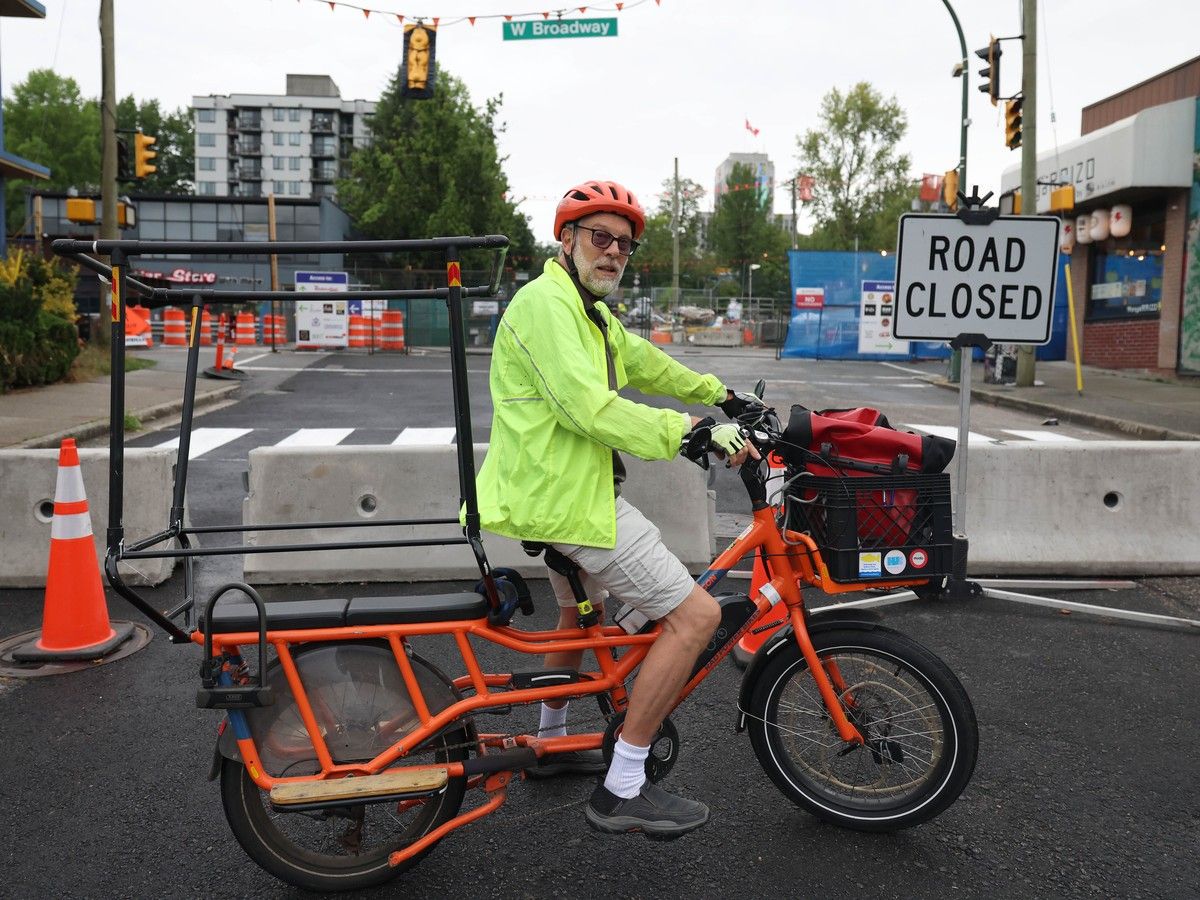
David Finnis has biked around Broadway for a decade, and lately he keeps noticing the same thing: cars where they don’t belong.
Finnis, 68 and retired, rides most weeks, often along 10th Avenue, a designated bike route. Lately, he said, drivers have been treating it like a shortcut.
“There’s more and more drivers on 10th, going five or six blocks — people who obviously aren’t from the neighbourhood,” he said.
They don’t move over, Finnis said, even when there’s room.
That problem got worse last week, when the city closed part of Broadway for subway construction.
On July 20, two blocks of West Broadway between Cambie and Alberta streets closed to traffic for about six months while crews rebuild the road above a new Millennium Line station going in at Broadway and Cambie. Drivers and buses are being detoured one block north, onto West 8th Avenue.

But by pushing traffic off Broadway, advocates say, the closure also sends drivers onto the quieter side streets on either side — including the bike routes on 7th and 10th, which aren’t part of the official detour. Vision Zero Vancouver, a local road-safety group, is watching those streets closely, because of what happened the last time Broadway closed.
Earlier this year, when construction shut Broadway near Main Street, drivers migrated to 10th Avenue, said Margie Sanderson, the group’s director of organizing. During that closure, Vision Zero said, more cyclists were struck on that stretch than in a normal entire year.
For Finnis, there’s an irony in it. He said when the city debated adding bike lanes to Broadway a few years back, cyclists were told they didn’t need them — the side streets would do.
“We’ve got 7th and we’ve got 10th — you don’t need anything on Broadway,” he said, recalling how the argument went.
This time, the city tried to get ahead of it.
Before the closure, Sanderson said, staff sat down with Vision Zero and HUB Cycling, showed them draft plans and asked what they thought — something she said didn’t happen last time.
In a written statement, the city said the feedback from the earlier detour “was used to inform the traffic calming measures implemented in advance of this current detour.”
Those measures include a vehicle diverter on Alberta Street at 12th Avenue, new turn restrictions there, bike warning signs on Heather Street and signs pointing cyclists toward a separated bike path on 6th Avenue.
On a nearby block, Ontario Street between Broadway and 10th has been made bikes-only.
Sanderson gives the city some credit: On the whole, she said, this detour is going better than the one at Main Street.
Her worry now is 7th Avenue.
Vision Zero has been counting cars there, and Sanderson said the numbers jumped fast. In the same 45-minute stretch of a weekday morning, on 7th just west of Cambie, the group counted 72 vehicles on July 14, before the closure, and 134 on July 23, after the closure — an increase of about 86 per cent. The number of people biking and walking stayed about the same, she said — more cars squeezing onto a street with just as many riders.
No crashes have been reported on 7th yet.
“We’re seeing a spike in volume on these smaller streets, and with that, I expect to see a spike in crashes — and I hope that I’m wrong,” she said.
The group asked the city to add flexible posts on 7th, between Cambie and Yukon, to put something solid between bikes and cars. Sanderson said the city told them the lane there is too narrow to fit them safely. To her, that answer is the whole problem.
“When you’re riding a bike lane that can’t safely fit a one-foot pole, there’s no margin for error,” she said. “No room to make a mistake — for you as a cyclist or for a driver.”

For its part, the city said it’s watching the detour “daily and is prepared to adjust the traffic calming measures if required,” and asked for patience while traffic settles over the coming weeks. It said it tracks collision data from police, ICBC and Vancouver Coastal Health, but that the information is often delayed and only captures formally reported crashes.
Asked for its own crash data from the earlier detour, the city said it hasn’t received that yet — which is close to Sanderson’s own point: the official numbers arrive long after the risk does.
Finnis’s fix is a plain one: make it harder for through-traffic to get onto the bike routes in the first place.
“There needs to be more of those little diverters through a lot of these streets, just to make it awkward” for drivers cutting through, he said.