 BURST
BURST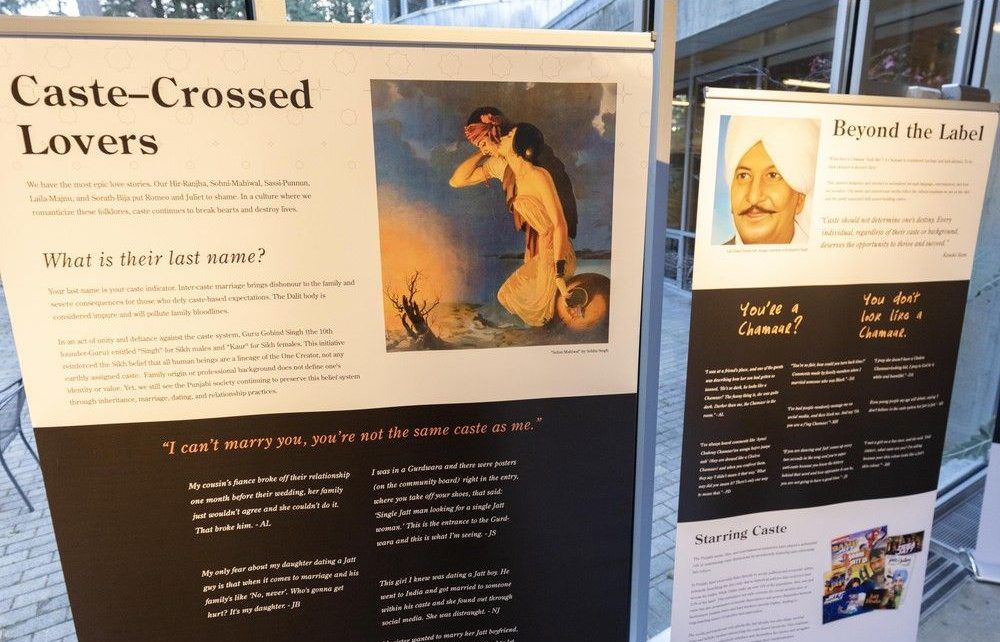
What’s your last name?
The question may be easy to answer for some. But for those who have experienced caste discrimination, the answer can lead to further marginalization.
Now an exhibit at UBC aiming to shine a light on the “hidden realities” of caste discrimination in Canada is receiving blowback from several gurdwaras in B.C. claiming the exhibit is “a racist and discriminatory attack against Sikhs.”
While caste discrimination can seem like a distant concept only experienced in India, Anita Lal knows firsthand how it affects the diaspora in B.C.
Lal’s great-grandfather migrated to Canada in 1906 and was recorded as the first person from the Dalit community in North America, she said.
“Since then, my family’s been here over 100 years and the fact that we’re Dalit, the fact that it keeps showing up in the lived stories and experiences of myself, my family, my friends — I know how relevant caste still is,” Lal said.
Caste systems are practised in various cultures and areas of the world. It creates a social hierarchy based on ancestry and passed down through family names. For many Indians, the caste system continues to impact social standing, employment and whom one chooses to marry.
The Dalits, who were once referred to as “untouchables,” were often placed on the bottom of the caste hierarchy.
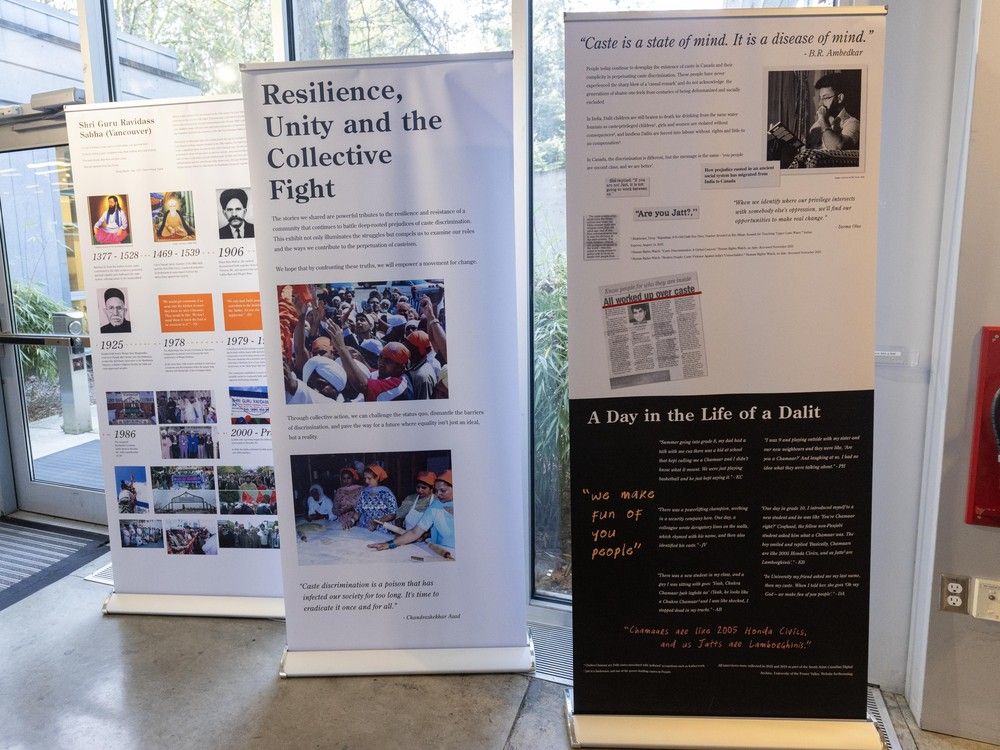
The community’s stories of oppression and resiliency are highlighted in the exhibit titled Overcaste, which is showing at the University of B.C.’s Liu Institute for Global Issues, curated by Lal and Sharanjit Sandhra.
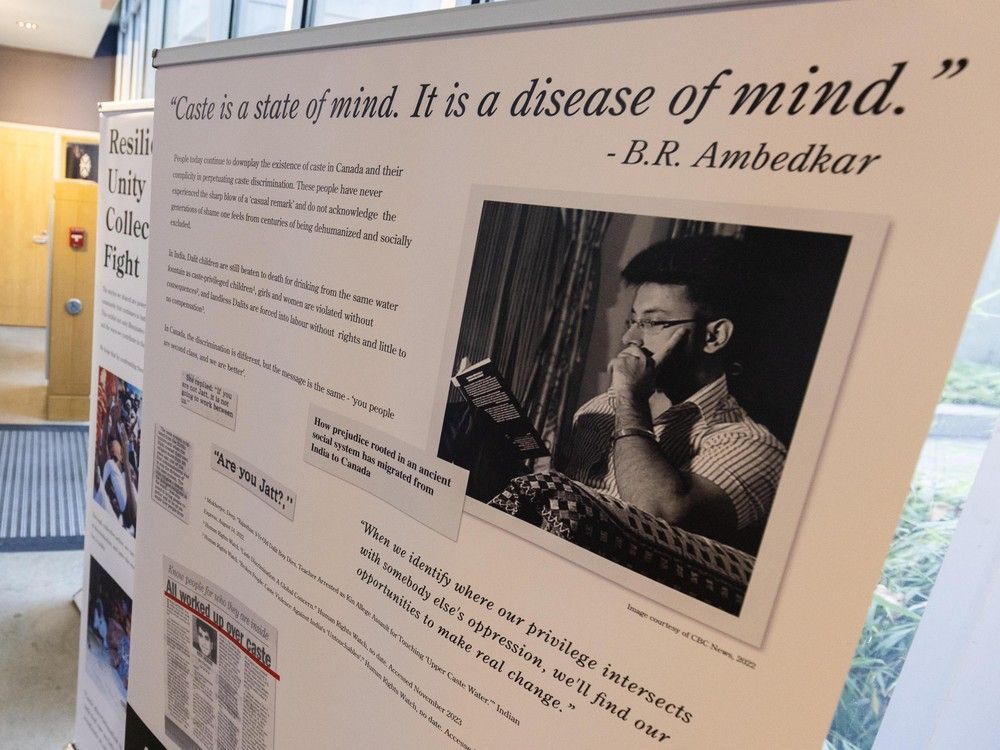
Sikhism has a clear stand against the caste system, but that doesn’t mean it doesn’t exist anymore, Lal said.
“Majority of the people we interviewed were youth who were born and raised here and their experiences (of discrimination) are everyday experiences and it’s across many different spaces,” she said.
Most of the Dalit interviewed for the exhibit shared anecdotes of having relationships end due to their caste or youth being bullied in school because of their last names. Some shared stories of feeling outcast when their names were displayed on the backs of sports jerseys, leading to questions and judgment.
As a recent example, in 2023, Dalit man Manoj Bhangu was awarded more than $9,000 in a B.C. Human Rights Tribunal case that found he was discriminated against and physically assaulted at a work Christmas party in 2018 where he was also called a slur against Dalits.
Overcaste received a lot of support when it first debuted in 2024 in Burnaby, even being opened by Jagmeet Singh, then-leader of the federal New Democrats. The UBC exhibit was also supported by Senator Baltej Dhillon and many others in the South Asian community, the curators said.
But not everyone is happy with the exhibit and the topic.
Several gurdwaras across B.C. and Canada have called for major changes in the exhibit and an apology from UBC for hosting what they are calling a violation of the “moral integrity of the Sikh faith.”
“The exhibition misrepresents Sikh gurdwaras and distorts sacred institutions of faith under the guise of scholarship and art,” reads a letter from the Sri Guru Singh Sabha Gurdwara Association in Surrey.
“Any portrayal suggesting that gurdwaras practise exclusion or discrimination is false and deeply harmful to Sikh doctrine and ethics.”
Overcaste documents Dalit experiences of discrimination at some gurdwaras in Vancouver, naming the Akali Singh Sikh Society Gurdwara as one of the locations.
“Following several discriminatory incidents in Vancouver, particularly within langar halls and kitchens, the (Dalit) community ceased hosting events at the gurdwaras,” reads a portion of the exhibit, describing alleged incidents from 1979-82.
Rupinder Singh Kahlon said he had issues with this part of the exhibit, and said the Surrey gurdwara has members who attest to there not being any discrimination in the kitchens.
Kahlon, general secretary of the Surrey gurdwara, admitted he hasn’t seen the exhibit but said the temple was told by a representative from the World Sikh Organization that the exhibit was “largely objectionable.”
“The gurdwara in Vancouver has already sent them a notice. Why they are blaming that society?” Kahlon said.
The World Sikh Organization had concerns with the exhibit, said Gurpreet Kaur, the group’s regional president for B.C. But she stopped short of saying they support the letters sent by the gurdwaras and the social media campaign against the exhibit.
“For an organization or entity to draw attention to a particular caste within the religion is problematic because we abolish all castes,” Kaur said.
“We’re not disregarding the fact that people of certain castes have discrimination or unique challenges that maybe other caste members don’t or haven’t, we’re not ignorant to that, we’re aware of that. But from a purely religious perspective, there were concerns we had.”
The World Sikh Organization also hasn’t seen the exhibit’s final result, Kaur confirmed.
Lal and Sandhra have seen the backlash and invite the gurdwaras to see the exhibit before coming to any conclusions about it.
“We’ve seen the gurdwara letters and we blame the misinformation campaign and the caste privilege or fragility that is coming along,” Sandhra said.
“Our focus is really uplifting Sikhi but also putting that mirror reflection into the truths that are taking place and nothing is more powerful than somebody’s story, finally, having light shed on it.”
The response from those who have seen the exhibit has been nothing but positive, said Lal.
“There’s nobody who can look at the portfolio of work we’ve done and call us anti-Sikh or anti-gurdwara. We’re not anti anything except anti-discrimination and anti-racism.”