 BURST
BURST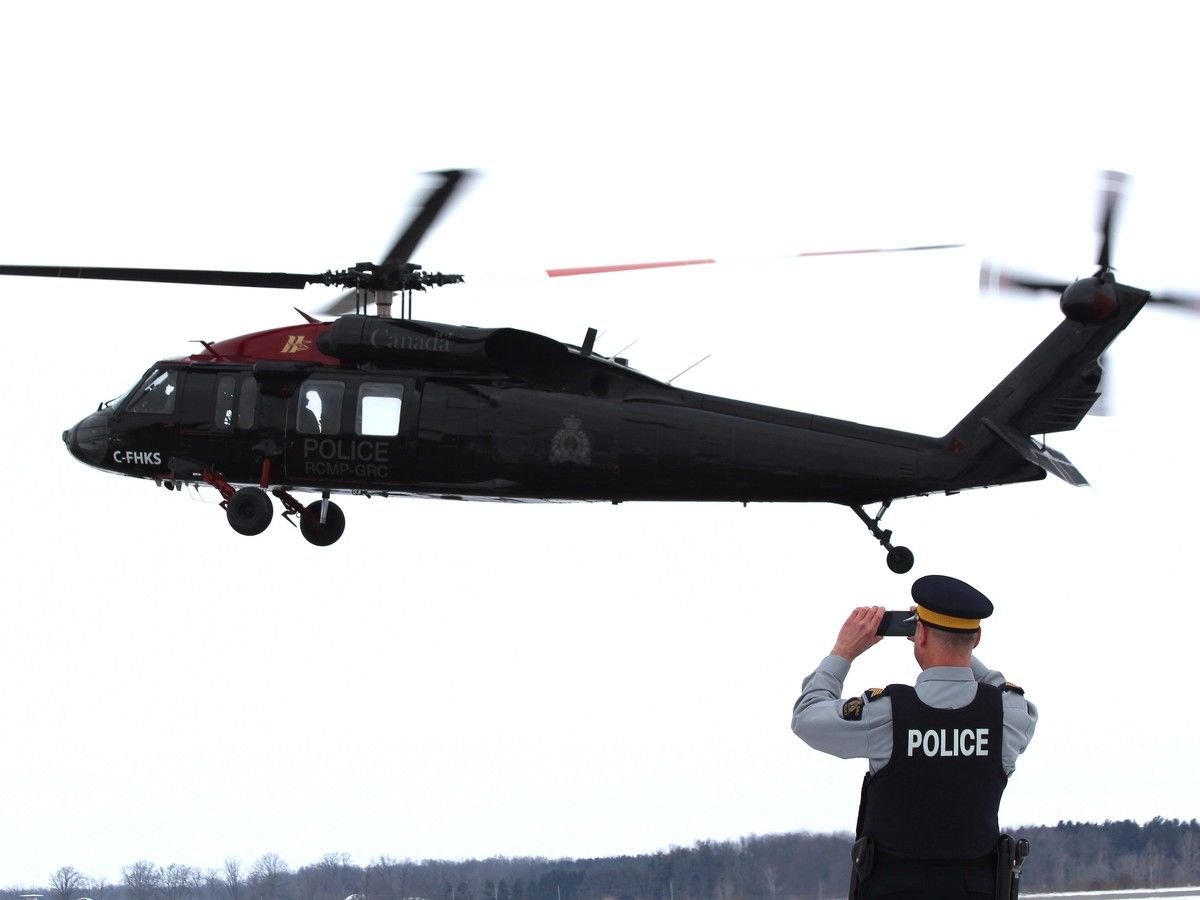
On a recent morning, Carol Lott was feeding her donkeys when she heard a familiar whomp-whomp-whomp in the distance. She waved as a dark helicopter cruised into view, then made a small loop around her Surrey farm before moving east along the Canada-U.S. border.
“I love that they fly over, because I love helicopters,” she said. “When it flew over the first time, I thought, ‘Oh my God, it actually is that huge.'”
The RCMP began using two Black Hawk helicopters to patrol the border in early 2025 as part of a $1.3 billion plan to increase border security in response to U.S. President Donald Trump’s threats to impose tariffs on Canadian goods. A third Black Hawk was added to the program a few months later.
After living near the border for 11 years, where she once encountered a border jumper near her sheep pasture, Lott said she feels the helicopters are a good investment. But questions about the program’s value, and its future, continue to dog the Canadian government and the RCMP as the contract to charter the three Black Hawks is set to expire on May 31.

The RCMP has renewed the contract for the helicopters about five times since the program began in January 2025, according to federal documents tabled in Parliament. The RCMP said the total cost for the three helicopters from January 2025 to the end of March 2026 was $39.9 million — $3.4 million of which was spent on fuel.
Postmedia asked the RCMP for specific data on the helicopter that is often used on B.C. patrols — a Sikorsky UH-60A Black Hawk with the tail registration C-FHKS. Aviation records show the helicopter was built in 1985 and used by the U.S. Army before it was purchased and imported by a Canadian company in 2023 under a special exemption. It was contracted to the RCMP by Helicopter Transport Services Inc. in January 2025. Since June of last year, it has been flying mostly in Western Canada.
The RCMP was unable to provide information on any specific B.C. investigations involving the Black Hawk , but provided national data showing that since the program began, the three helicopters have completed 857 patrols and reported 144 “flight sightings,” including suspicious activity, border crossing trails and smuggling.
Across the country, the helicopters responded to 24 calls for assistance from groundcrews and inserted police or equipment into an area that would otherwise be hard to reach, said a RCMP statement. There were also 53 events at the border where RCMP ground teams reported Black Hawk involvement, leading to a total of 70 arrests.
To find out more about the helicopters’ activity in B.C., Postmedia conducted its own analysis of publicly-available flight data on the tracking website ADS-B Exchange, which showed the Black Hawk with the tail registration C-FHKS made 123 flights in the province between June 2025 and April 2026, compared to 53 flights in Alberta. Many of the flights took place in the Lower Mainland during the day over Delta, Surrey, Langley and Abbotsford, but there were also flights to Prince George and Kelowna. On Friday, the helicopter was in Medicine Hat, Alberta.
British Columbians who live near the border have taken note.
On a recent spring day, the helicopter was seen near Vedder Mountain between Abbotsford and Chilliwack, flying over tractors plowing fields for corn seed and people mowing their lawns between breaks in rain showers.
It also flew over White Rock beach, prompting a flurry of social media posts from people in South Surrey concerned about surveillance. That’s not uncommon when the helicopter makes an appearance, said Marissa Hadland, one of the administrators of a resident Facebook group.
“We get posts sometimes a few times a week inquiring or complaining about those black helicopters, ever since last year,” she said. “Mostly about the noise over the beach from residents and visitors.”
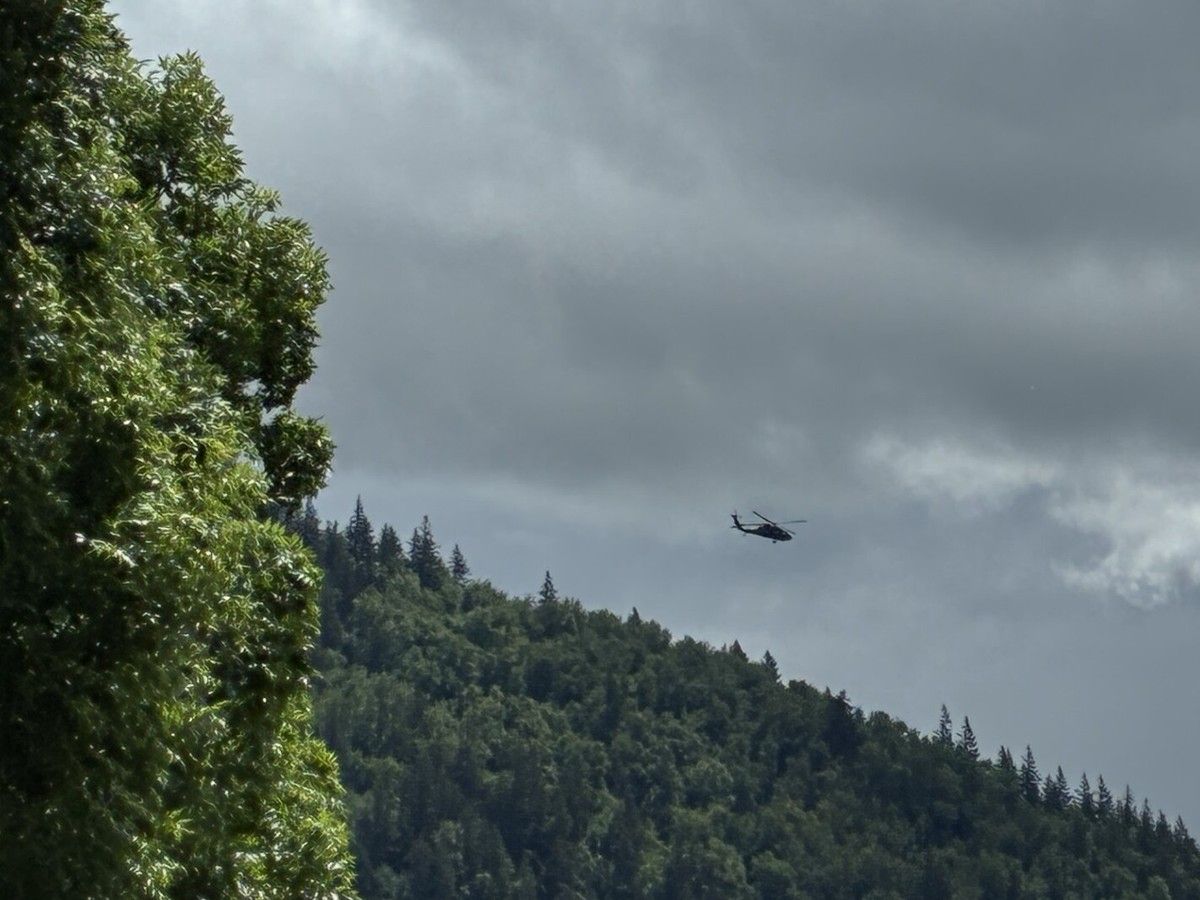
In South Langley a few blocks from the border, Jasmin Marten can hear the Black Hawk from inside her house.
“When our kids are also outside playing, you can hear it and see it flying overhead, and it flies very low,” she said.
While the Black Hawk seemed to go over almost every day at the start of the program, now it is more sporadic, flying over several days in a row and then disappearing for a week, she said. It often makes five or six passes on a single trip.
“For the price, I honestly do not notice a difference from the last five years to what I see now,” she said.
That is a common criticism of the program.
In a recent article in the Toronto Star about the costly contracts for the Black Hawks, Wesley Wark, a national security and intelligence expert at the Centre for International Governance Innovation, questioned whether the helicopters were the most effective tool to protect the border, pointing out that drones could be cheaper and more stealthy.
“I think they’re more symbolic than truly useful,” he said about the helicopters.
The RCMP said the Black Hawk program has been effective.
“Indicators show they are a strong deterrent to illegal activity, assist us in gathering critical intelligence, and improve our ability to respond quickly to incidents along the border, especially in isolated terrain like you would find in British Columbia,” said a statement.
U.S. Customs and Border Protection said it does not comment on specific operational tactics or equipment, but values its “ongoing collaboration with Canada.”
“CBP works closely with Canadian law enforcement agencies, including the RCMP, to secure our shared border and address cross-border threats. Our partnership is built on regular communication to address northern border challenges, information sharing, and co-ordinated enforcement efforts to prevent illegal activity, including the movement of illicit goods and unauthorized border crossings,” said a statement.
With files from Nathan Griffiths