 BURST
BURST
Here’s the latest news concerning climate change and biodiversity loss in B.C. and around the world, from the steps leaders are taking to address the problems, to all the up-to-date science.
Check back every Saturday for more climate and environmental news or sign up for our Sunrise newsletter HERE.
In climate news this week:
• B.C. to scrap requirement that all new vehicles be zero-emission by 2035
• Momentum builds at COP30 for road map from fossil fuels
• Billions and ballooning: Hidden costs of natural disasters in Canada are unsustainable, new report says
• The B.C. CDC wants to hear from residents with climate-related health concerns
Human activities like burning fossil fuels and farming livestock are the main drivers of climate change, according to the UN’s intergovernmental panel on climate change. This causes heat-trapping greenhouse gas levels in Earth’s atmosphere, increasing the planet’s surface temperature.
The panel, which is made up of scientists from around the world, including researchers from B.C., has warned for decades that wildfires and severe weather, such as the province’s deadly heat dome and catastrophic flooding in 2021, would become more frequent and intense because of the climate emergency. It has issued a code red for humanity and warns the window to limit warming to 1.5 C above pre-industrial times is closing.
According to NASA climate scientists, human activities have raised the atmosphere’s carbon dioxide content by 50 per cent in less than 200 years, and “there is unequivocal evidence that Earth is warming at an unprecedented rate.”
As of Nov. 13, carbon dioxide in the atmosphere was 424.87 parts per million, down slightly from 425.48 ppm last month, according to the latest available data from the NOAA measured at the Mauna Loa Observatory, a global atmosphere monitoring lab in Hawaii. The NOAA notes there has been a steady rise in CO2 from under 320 ppm in 1960.
Climate change quick facts:
• The Earth is now about 1.3 C warmer than it was in the 1800s.
• 2024 was hottest year on record globally, beating the record in 2023.
• The global average temperature in 2023 reached 1.48 C higher than the pre-industrial average, according to the EU’s Copernicus Climate Change Service. In 2024, it breached the 1.5 C threshold at 1.55 C.
• The past 10 years (2015-2024) are the 10 warmest on record.
• Human activities have raised atmospheric concentrations of CO2 by nearly 49 per cent above pre-industrial levels starting in 1850.
• The world is not on track to meet the Paris Agreement target to keep global temperature from exceeding 1.5 C above pre-industrial levels, the upper limit to avoid the worst fallout from climate change including sea level rise, and more intense drought, heat waves and wildfires.
• On the current path of carbon dioxide emissions, the temperature could increase by as much 3.6 C this century, according to the IPCC.
• In June 2025, global concentrations of carbon dioxide exceeded 430 parts per million, a record high.
• Emissions must drop 7.6 per cent per year from 2020 to 2030 to keep temperatures from exceeding 1.5 C and 2.7 per cent per year to stay below 2 C.
• There is global scientific consensus that the climate is warming and that humans are the cause.
(Sources for quick facts: United Nations IPCC , World Meteorological Organization , UNEP , NASA , climatedata.ca )

Latest News
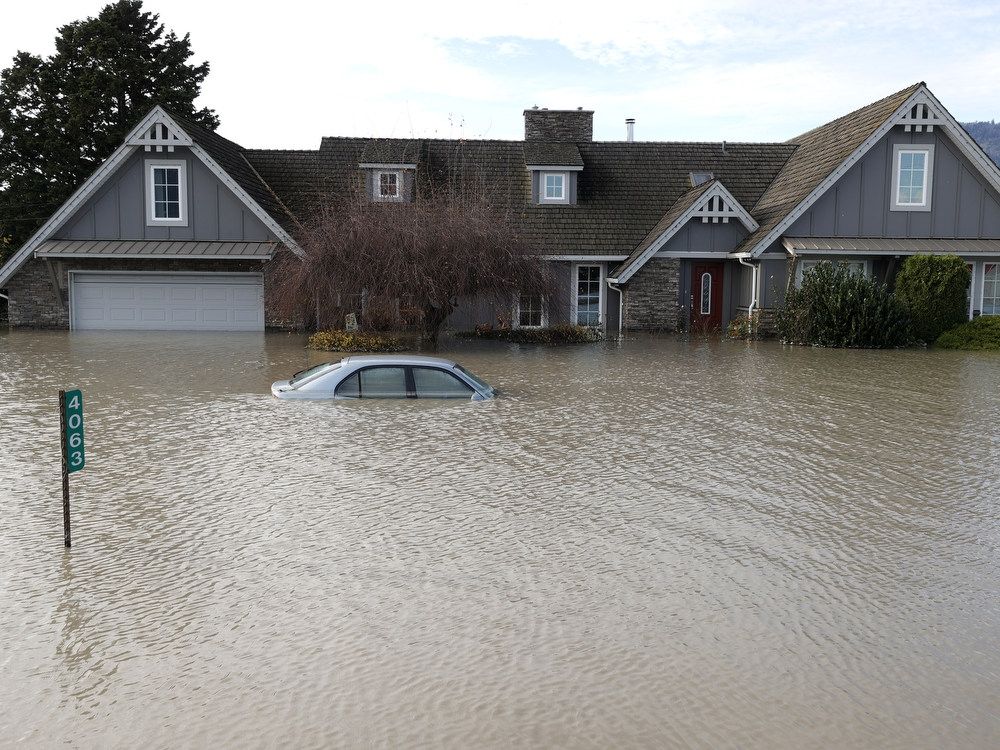
Billions and ballooning: Hidden costs of natural disasters in Canada are unsustainable, new report says
The costs of emergency response and repairs for floods and wildfires in the past decade are billions of dollars in B.C. and the rest of Canada.
But these staggering figures don’t include other ballooning costs such as uninsured losses to residential and commercial buildings, business interruption, damages to utilities and transportation, the social costs of carbon emissions linked to the disasters, and casualties.
The non-profit, Toronto-based Institute for Catastrophic Loss Reduction has reported, for the first time, figures that show these disaster costs have been rising significantly in the past four decades. The report also considered catastrophes from hail, wind and winter storms, sewer backups, lightning and earthquakes.
The losses total $9.2 billion a year on average between 1983 and 2024, equal to three per cent of construction spending in Canada, or the equivalent of two weeks of annual construction spending, according to the report.
If the growth rate continues, at 9.4 per cent a year, or doubling every eight years, disasters will eat up one month of construction spending a year by 2038, and two months by 2050, the report estimates.
—Gordon Hoekstra
The B.C. CDC wants to hear from residents with climate-related health concerns
If your health and well-being has been affected by B.C.’s catastrophic flooding, wildfires or intense heat and drought, the B.C. Centre for Disease Control wants to hear about it.
British Columbians can now share personal stories about how climate change is affecting their physical and mental health on ecolens.ca, a new website launched by the centre.
Ecolens.ca allows people to share insights into how climate change is affecting their lives through writing, art and photos, according to a news release Thursday.
Officials say the information will help scientists and health professionals better understand climate change impacts and inform the development of adaptive strategies.
“There is a lot of data showing that climate change is affecting people’s health. We can see it from medication use, calls to emergency services, and visits to health care providers,” Angela Yao, the senior scientist in environmental health at the centre, said in a statement.
—Tiffany Crawford
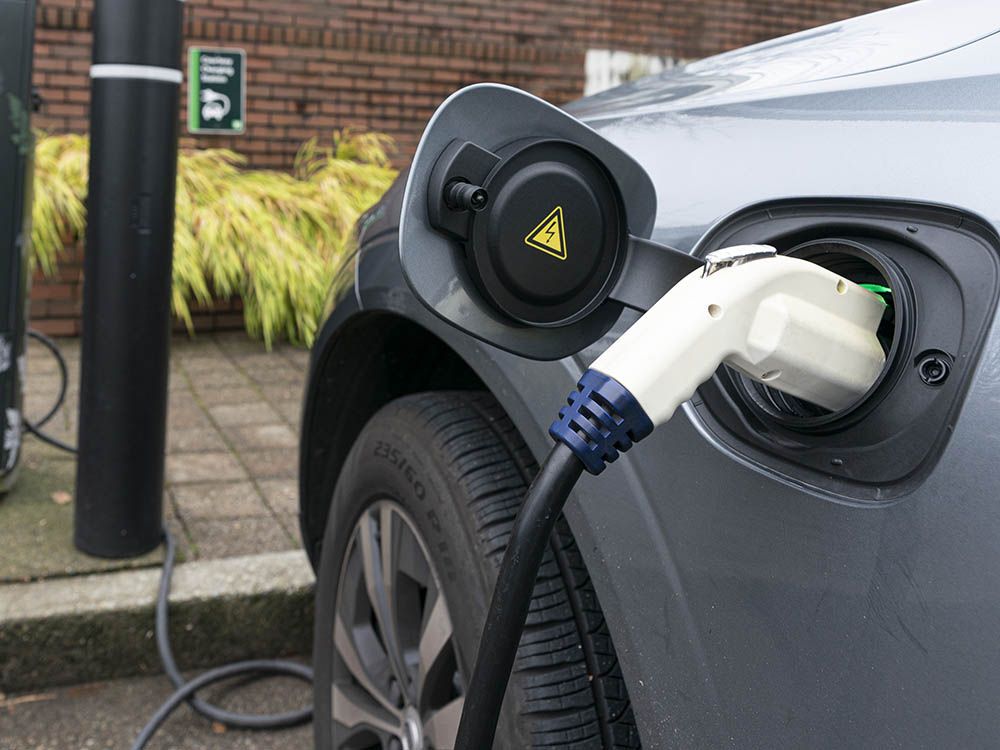
B.C. to scrap requirement that all new vehicles be zero-emission by 2035
Six years ago, B.C. became the first jurisdiction in the world to legislate zero-emission vehicle sales targets.
Two years ago, it accelerated those targets, mandating that 100 per cent of new, light-duty vehicles sold had to be zero-emission by 2035.
On Tuesday, the province acknowledged it is nowhere close to meeting that goal. Energy Minister Adrian Dix told reporters he will be introducing legislation next spring to modify those targets and bring them in line with the reality that electric vehicle sales are falling across North America, including in B.C.
“People will know that those current targets, which are at 90 per cent by 2030, and 100 per cent by 2035, are no longer realistic,” he said, blaming the federal government’s ending of its rebate program and the policies of U.S. President Donald Trump for declining EV sales.
Asked what the new targets will be, Dix said he and his team are awaiting a review of the government’s climate plan and will use its findings to work with Ottawa on a new target that he hopes will be implemented across Canada.
—Alec Lazenby
B.C. says it was not included in rumoured pipeline talks between Ottawa and Alberta
The B.C. government says it knows nothing about a rumoured deal between Ottawa and Alberta on a pipeline to B.C.’s north coast, with Premier David Eby telling reporters he learned about the negotiations through a news article.
In a statement Thursday, the premier said it is his understanding that First Nations in the region have also not been consulted by the federal government and that he would prefer to focus on projects like the Ksi Lisims LNG terminal and the North Coast hydro transmission line that have already been added to Prime Minister Mark Carney’s major projects list.
“Real jobs and prosperity are put at risk from this extremely early stage and unfunded proposal of a heavy oil pipeline. That’s something that B.C. and Canada cannot afford at this time,” said Eby, who has stated repeatedly in recent weeks that First Nations could reverse their support for these projects if Ottawa forces through an oil pipeline.
Haida President Gaagwiis Jason Alsop said there has been no consultation with coastal First Nations on the potential for a pipeline and that he hopes the federal government continues to keep the tanker ban in place, as the eight member nations of the Coastal First Nations and the province have asked them to do.
“In reality, it’s not a feasible project. It’s a non starter. And it is not something that’s again, supported by either the Coastal First Nations or by the B.C. government,” said Alsop.
—Alec Lazenby

Preparing for a riskier world is becoming a bigger part of climate talks
As the COP30 climate summit in Brazil draws to an end this week, negotiators are still struggling over an agreement over how to transition away from fossil fuel — and those difficulties make another aspect of the talks, over how to adapt to an inevitably hotter world, even more crucial.
Adaptation has drawn renewed focus from high-profile climate philanthropists like Bill Gates, who recently called for governments to “pivot” towards funding those types of interventions. A record amount from philanthropic foundations flowed to adaptation last year, and this funding more than doubled to $870 million between 2021 and 2024.
But almost a decade after adaptation goals were first established as part of the Paris Agreement at COP21, it’s proven difficult to mobilize support. Diplomats at COP30 have been looking for agreement on a specific list of 100 indicators that can be used to measure progress and make it easier to direct funds. In the second week of the summit, however, these efforts have stalled. Developing countries most vulnerable to the effects of climate change are worried that formulating goals without also agreeing sufficient funds risks making this exercise meaningless.
By 2035, developing countries will need somewhere between $310 billion and $365 billion per year for adaptation projects, according to estimates by the UN Environmental Programme. That dwarfs the $40 billion a year by 2025 agreed at the COP26 summit in 2021.
One problem is that cutting emissions is, if anything, less expensive than protecting vulnerable populations. “Low-carbon technologies are already cheaper, easier to build and increasingly widely available,” said Gareth Phillips, who works on climate finance at the African Development Bank Group, and is attending COP30. “Whilst mitigation gradually takes place, we need to now start focusing on adaptation.”
—Bloomberg
Momentum builds at COP30 for road map from fossil fuels
Dozens of countries are pushing for the COP30 summit to deliver a road map away from fossil fuel use as its key outcome, setting the stage for a frantic few last days of talks.
In a packed conference room Tuesday at the United Nations meeting, representatives from the Marshall Islands, Colombia, the U.K., Germany, Kenya and Sierra Leone led a group of about 20 countries in calling for a path to shift away from oil, gas and coal. Organizers of the push claimed to have more than 80 nations supporting the effort.
It marked the most concerted attempt so far to fulfil a landmark pledge that countries made two years ago, at COP28 in Dubai, to transition away from fossil fuels. Supporters said that none of the options to accelerate the shift included in a draft agreement Tuesday were sufficient, and they called on Brazil, the host of COP30, to do more.
“Let’s get behind the idea of a fossil fuels road map,” said Tina Stege, climate envoy for the Marshall Islands. “The current reference is weak, and it’s an option. It must be strengthened and adopted.”
“We’ve had many COPs and many attempts to silence this issue. The time is now. History demands that we act,” said Colombia’s Environment Minister Irene Vélez Torres.
—Bloomberg News

Like B.C.’s orcas, sea otters have now been found with toxic forever chemicals
Researchers at the University of B.C. have discovered toxic PFAS, also known as forever chemicals, in sea otters in B.C. waters.
The peer-reviewed study, published in the journal Environmental Toxicology and Chemistry, follows other UBC research that found that high levels of PFAS — per-and polyfluoroalkyl substances — are harming orcas.
These human-made chemicals, used in manufacturing every day items such as soap, non-stick cookware and waterproof clothes, have also been linked to serious health issues such as cancer in humans.
Lead author Dana Price, a master’s degree student at UBC’s institute for oceans and fisheries, says this study raises concerns about how widespread these chemicals are in the marine environment. Because it is a first of its kind study in B.C., she said it also provides a baseline so they can compare levels found in otters now with future levels.
Sea otters are important to the ecosystem balance because they eat a lot of food, including the sea urchins that can devastate kelp forests, which are important carbon sinks vital in the fight against rising greenhouse gas emissions and climate change.
—Tiffany Crawford
What Trump quitting the energy transition means for the world
The world has reached a hinge moment in the energy transition. Leaps in technology are making it possible to cut emissions faster and more cheaply than ever. At the same time, U.S. President Donald Trump is reversing efforts to decarbonize the world’s second- biggest polluter.
Drawing on scenarios built using a detailed model of the global economy and energy system, combined with input from energy research group BloombergNEF, Bloomberg News has assessed what Trump’s policy pivot means and what happens if other leaders follow his example.
Assuming everyone else stays the course, the U.S. economy gains from backing out of the transition. By 2050, gross domestic product is 0.8% higher than it would otherwise have been. But decarbonizing becomes more costly for countries that stay the course. Global emissions climb almost 10%, modestly raising the risks from global heating, but not dramatically.
If other countries follow the U.S., they dodge transition costs, but the damage caused by climate change intensifies. Carbon dioxide emissions are 75% higher, with hotter, poorer countries hit hardest. With temperatures rising, by 2050, Vietnam loses just over 3% of GDP, sub-Saharan Africa nearly 2% and India about 1.7%. The U.S. and China face losses of about 1% and 1.5%, respectively.
—Bloomberg News

Pope Leo XIV calls for urgent climate action: Report
Pope Leo XIV on Monday warned that climate change is accelerating faster than political will, urging world leaders at COP30 to take “concrete actions” before the window to keep warming below 1.5 C closes, according to a report in France 24.
He called for unwavering global solidarity behind the Paris Agreement, the report stated.
“Creation is crying out in floods, droughts, storms and relentless heat,” the pope said. “One in three people live in great vulnerability because of these climate changes. To them, climate change is not a distant threat, and to ignore these people is to deny our shared humanity,” he added.
— France 24