 BURST
BURST
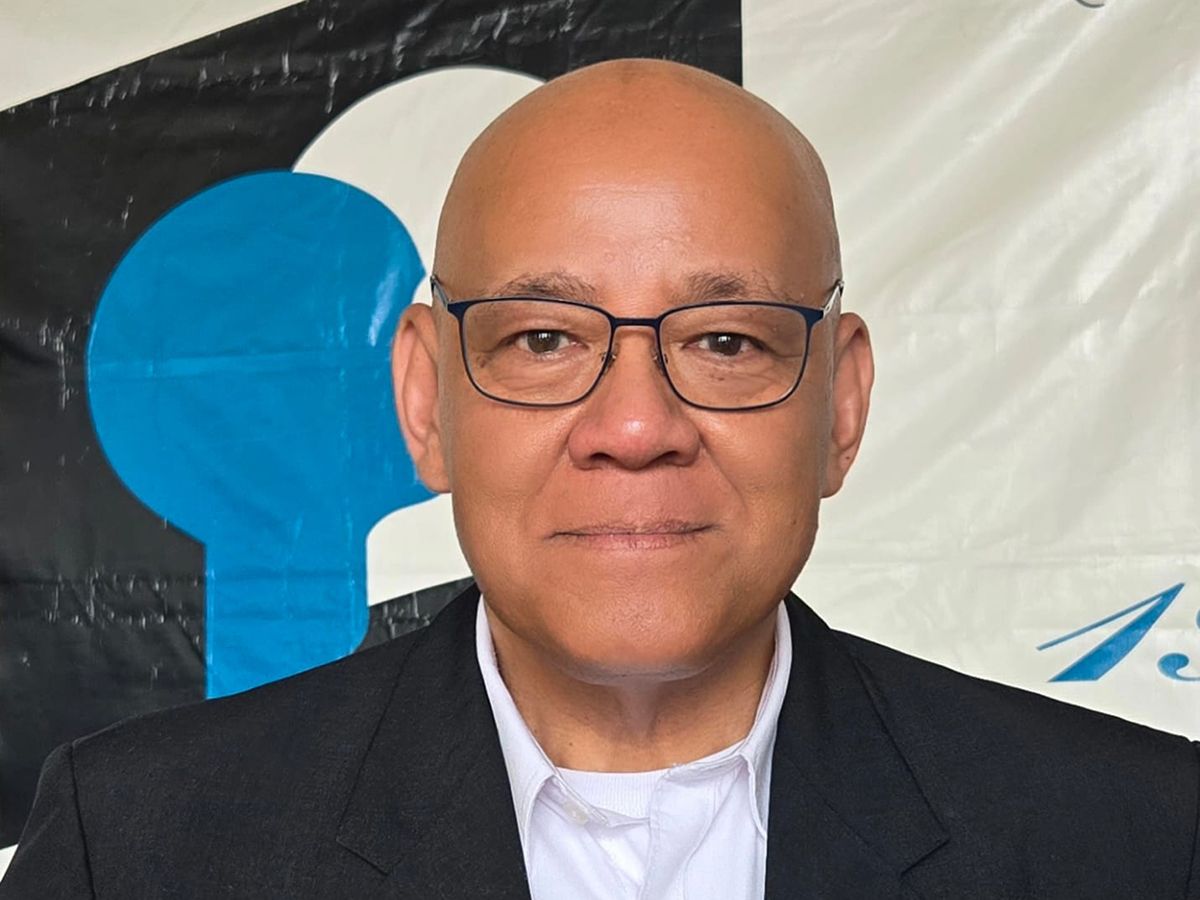
In the emerging movement of non-Jews speaking out against rampant antisemitism in Canada, Fo Niemi and his coalition of Asian community groups in Montreal stand out as veterans.
When a city synagogue was firebombed last month, the Centre for Research-Action on Race Relations (CRARR) brought together a coalition of Asian communities – ranging from Cambodian, Chinese, Vietnamese and Filipino – to denounce antisemitism and support the Jewish community.
These were, in his words, “small steps to heal, bond and build solidarity.”
Niemi, a co-founder and executive director of the nonprofit, said the goal was “to do something concrete. We don’t want to just talk. We want to build things that could be lasting, so it can be better evidence of how much we have in common.”
CRARR, whose mandate is to promote racial equality and combat racism, also held a multi-faith, multi-ethnic dedication service on June 30, to honour Constable Mohamed Lamine Benredouane, killed while responding to a June 22 shooting in Côte-des-Neiges, and 68-year-old bystander Michel Moshe Mizrahi, who was killed in the same incident.
Niemi was the recipient of the Quebec Justice Award in 1995, the Queen’s Commemorative Silver Jubilee Medal in 2002 and the Queen’s Diamond Jubilee Medal in 2012. He has advised police and served on multiple boards including the Canadian Race Relations Foundation and the Canadian Bar Association’s racial equity committee. He has been honoured by the Indigenous Bar Association, the Chinese Neighbourhood Society, the National Association of Canadians of Origins from India, the Muslim Council of Montreal, and the Lord Redding Society (Montreal Jewish Bar Association).
Dave Gordon interviewed Niemi for the Post. Some excerpts:
On how CRARR got started in 1983:
We quickly realized that to deal with racism, we have to deal with the broader issues of, among other things, intolerance and hate-based violence. So eventually, within a short period of time, we made combating hate crime one of our priorities, to address hate in different forms.
Of course, at the heart of that is antisemitism. We also address hate based on race, and sexual orientation.
In 2004, the Jewish library in Montreal was burned, as a target of arson. One of the things we did was we brought together different voices from different backgrounds and communities to publicly denounce it. We call it ‘the common experience of the common humanity.’ I would say that it’s about bringing people of goodwill together.
As well, right after October 7th, when there was a rise in the violent targeting of Jewish institutions, schools, and synagogues. What brought together a group of 10 women from different backgrounds to speak out against that act of violence and hate, from a mother’s and grandmother’s perspective.
Now, we also try to work at the legislative and the policy level, to ensure that the laws and the policies work for people, and to provide what we call ‘effective protection.’ So that’s why we help people bring cases to the Human Rights Commission, and work with the Montreal Police Hate Crimes Unit, in order to make people understand more what the Hate Crimes Unit does, and how to access it, and how to work with police when people are victims of hate crimes.
On the group’s successes:
One of our most concrete achievements in dealing with hate-based homophobia, is the case of a gay male couple, bringing the case to the Human Rights Commission. And eventually, the Human Rights Tribunal issued the first decision about homophobic harassment.
Last August, Montreal City Council was about to adopt the first anti-racism policy, in which there was no mention of hate crimes or antisemitism.
So we brought together a few groups, black groups, Asian groups, to go public, to deplore the exclusion, and ask that hate crimes be explicitly mentioned as an urban safety issue, and to add antisemitism and Islamophobia into the policy. And it was adopted by city council. We hopefully change the policy and the legal landscape to provide greater legal protection and legal tools for people to seek justice.
On fighting antisemitism through common experience:
For example, the president of the Cambodian Community Centre (spoke in a talk about) what it means to be a victim of genocide. They understand the trauma that survivors and their descendants still experience. Out of that, there’s a discussion of maybe going to work more with the Jewish community to address the issue of genocide-related trauma, especially when it’s intergenerational.
So it’s more than just coming out to speak, but also coming out to speak and create opportunities and things to do together in the short and long term.
For the Vietnamese community, it’s about recalling how the Jewish community helped the boat people in the 70s, when people fled persecution in Vietnam. And for the Chinese community, what we’ve started to do is we’re looking at the commonality of both communities.
One of the things we found through our work dealing with heritage preservation is that in Chinatown in the 1880s and in 1890s up to the early 20th century, there was a synagogue in what is now Chinatown, and a lot of people in the Chinese community don’t know that. In the most marvellous experience of visiting the synagogue for everyone, it was the first time that they visited a synagogue. Can you believe it? Wow.
So coming together is not about just to denounce violence, but also to build bridges and create opportunities for long-term cooperation. This is how we can help send a message, and help reduce antisemitism and anti-Jewish stereotypes. We want to look at the human dimensions of it, and the shared experiences.
On what’s to come:
Montreal does not have any kind of infrastructure to celebrate Asian Heritage Month. So we hope that next year we’ll try to integrate some of our activities in such a way that we can address the common heritage of Jews and Asians.
In the Chinese community, we talk about the experience of the Chinese diplomat (Ho Feng-Shan) in Austria who gave visas to Austrian Jews, during the Second War to go to Shanghai. And we want to tell the story of also the Philippines at the time. They welcomed a lot of European Jews (during the Holocaust), as a way to escape. There’s a history of helping, and fighting intolerance. Hopefully that can be a very powerful educational tool, especially when you deal with real people in real communities today.
Our website is the place for the latest breaking news, exclusive scoops, longreads and provocative commentary. Please bookmark nationalpost.com and sign up for our newsletters here.