 BURST
BURST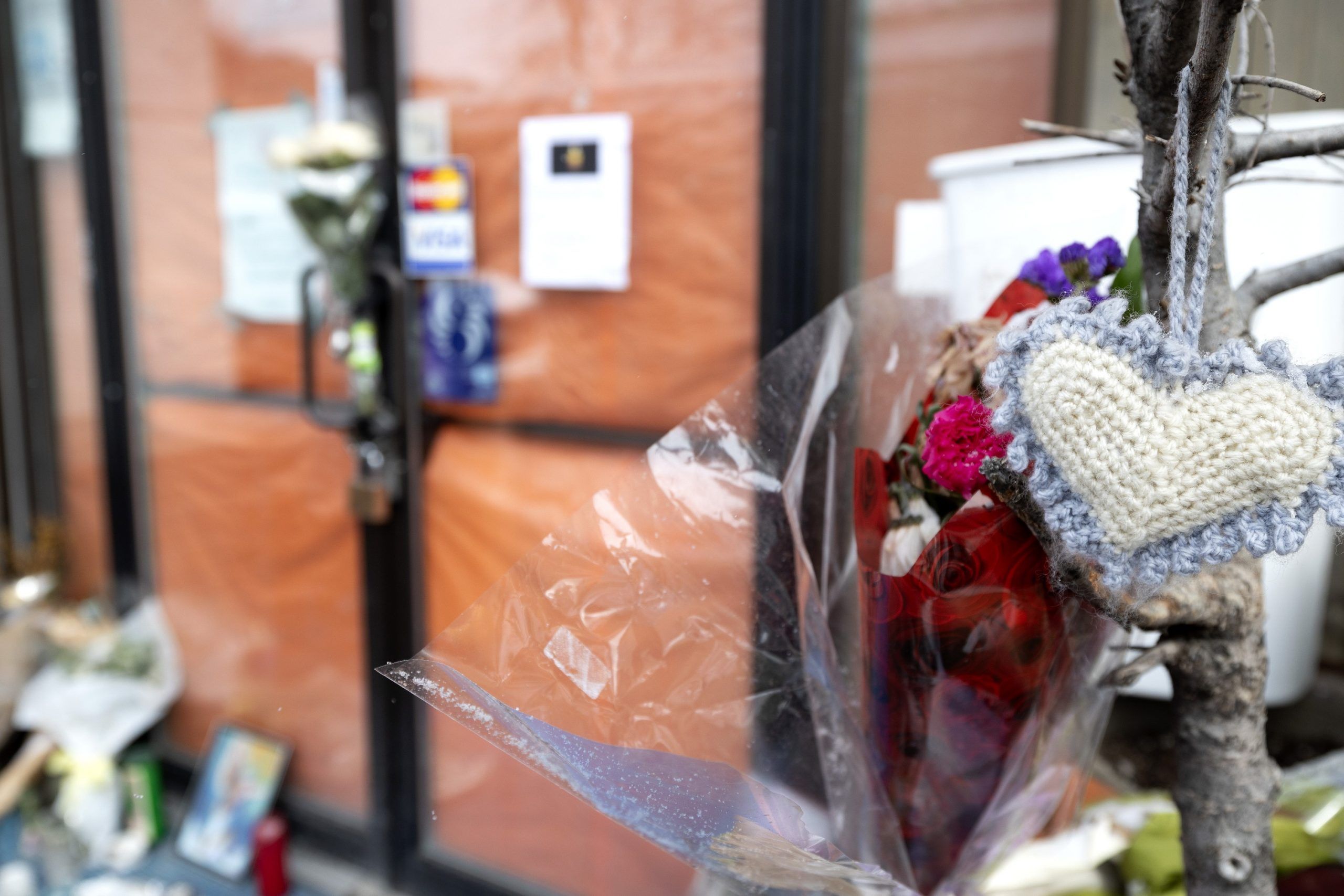
Psychiatrists are welcoming a reform of Quebec's mental health law that would lower the threshold for involuntary hospitalization, while lawyers and advocates for patients warn the changes could infringe on rights without addressing a lack of mental health resources across the province.
Health Minister Sonia Bélanger tabled Bill 23 — the overhaul of Quebec's mental health law, known as P-38 — on Tuesday. Premier François Legault had promised to make the changes following the death of Quebec police officer Maureen Breau, who was killed by a man experiencing a mental health crisis in 2023. The man had been allowed to live outside of an institution despite being considered "a significant risk to public safety." The bill also comes two weeks after Plateau-Mont-Royal dépanneur owner Chong Woo Kim was stabbed to death by a man who had a violent criminal past , and who police had attempted and failed to preventatively detain in hospital in August.
In addition to lowering the threshold for involuntary hospitalization from a "serious and immediate" danger to situations where there is a risk of danger — allowing earlier interventions — the overhaul would also allow some procedures, like psychiatric evaluations, to happen without consent. Some decisions related to involuntary hospitalization would also be handled by an administrative tribunal instead of the courts.
Bélanger said the change is aimed "primarily at better supporting individuals whose mental state could pose a risk to their own safety or that of others."
"After more than 25 years, it was time to modernize our tools to intervene more humanely and earlier," she wrote in a statement.
The overhaul is welcomed by forensic psychologist Marie-Michèle Boulanger of the Institut national de psychiatrie légale Philippe-Pinel. She said under the current criteria, "you almost have to wait until the person actually does something dangerous" to keep them in hospital.
"I’ve never spoken to a psychiatrist who didn’t think those criteria were too restrictive," she said. "So often in the emergency room, we have to let people go even though they seem dangerous to us because they don’t meet the criteria, they’re not yet 'dangerous.' But we know that, given the course of their illness, they likely will be soon, either to themselves or to others, and there’s nothing we can do.
"That’s why you keep seeing it in the news: Someone commits a violent act, and it turns out they had been in the ER a week earlier and were released. People wonder: 'Why were they let go? They were clearly unwell.' But that’s exactly why: They didn’t meet the legal criteria to be held in hospital."
But Patrick Martin-Ménard, a health law lawyer who represents patients in proceedings for involuntary confinement and court-authorized treatment, said the current version of P-38 is already used "very broadly."
"Coercion is already widely used in the current system, and it primarily affects the most vulnerable: People experiencing homelessness, people with intellectual disabilities, people who are generally not in a position to defend themselves," he said.
When it comes to the killings that led to the proposed changes, Martin-Ménard said "the best way to prevent these kinds of situations is to have a system with sufficient resources to ensure proper follow-up and provide appropriate services."
The man who killed Breau, Isaac Brouillard Lessard, who was shot dead by police, had schizoaffective disorder and was still considered dangerous when a Quebec mental health tribunal allowed him to live outside of an institution. He had been required to follow treatment recommended by professionals.
A coroner’s inquest heard of numerous failings in the assessment and supervision of Brouillard Lessard, who had been found not criminally responsible for offences five times between 2014 and 2018 because of mental illness. Witnesses testified he was resistant to treatment and wasn’t following court orders regarding medication.
The coroner said the deaths of Breau and Brouillard Lessard highlighted the need for the province’s mental health board to revise its approach to surveilling people who are resistant to treatment.
"If the system is well funded and functioning properly, then the professionals within it can use the tools that already exist to prevent these situations," Martin-Ménard said Thursday. "You can make the criteria as strict or as coercive as you want, but if the underlying system doesn’t have the resources to provide the care these individuals need, and the follow-up required, tragedies ... will continue to happen."
Speaking more generally, François Winter, spokesperson for the Association des groupes d’intervention en défense des droits en santé mentale du Québec (AGIDD-SMQ), said being exposed to excessive coercion can create resentment toward the system among patients.
"For many, being locked somewhere you can’t leave is traumatic," Winter said. "This isn’t an escape room. This is serious. It’s a loss of liberty without having been accused of a crime. That’s extremely serious in a society governed by the rule of law."
Martin-Ménard had similar concerns, highlighting the repercussions of that trauma.
"When they actually need help, they no longer turn to it," he said. "They become more marginalized, and at that point are at greater risk of deterioration. It becomes a vicious cycle."
Martin-Ménard also said the shift to an administrative tribunal instead of the courts when it comes to decisions regarding involuntary hospitalizations and treatment removes the only procedural safeguards that exist for patients to defend themselves.
Winter said the AGIDD-SMQ is "very concerned" about the proposed changes to the law, in part because they're inconsistent with some of the recommendations made following consultations by the Institut québécois de réforme du droit et de la justice (IQRDJ) — notably when it comes to access to mental health services.
"The IQRDJ didn’t propose changing the hierarchy of the courts in the process, and it didn’t propose redefining the concept of dangerousness," he said. "This bill does both."
Winter said he's already heard from people who are worried about the proposed changes.
"This bill is creating anxiety and even panic," he said.
Asked about the reaction from patients' rights advocates, Boulanger called their role important.
"They want involuntary hospitalization to remain a measure of last resort and to prevent abuse, because being hospitalized against your will is extremely traumatic," she said. "We don’t do it lightly. It’s only when it’s necessary. It’s normal and important that there are groups making sure the law doesn’t become too permissive. ... But among psychiatrists, there’s pretty broad agreement that the criteria needed to be revised. Police and families also tend to agree."
Speaking of patients with schizophrenia who experience recurring psychotic episodes, she said psychiatrists want to intervene when they see an episode beginning, "before it's too late."
"When patients are ill, they don’t want to be kept ... otherwise, there wouldn’t be a problem. We wouldn’t need a law. But when they get better, they often ask us: 'Why didn’t you keep me when I was in hospital?'" she said.
Some have been brought in multiple times by police or family while unwell, she explained, but didn't meet the criteria to stay.
"Meanwhile, their condition worsens, and because they’re ill, they do things they would never do otherwise," Boulanger said. "They put themselves in danger, drive recklessly, spend all their money. By the time they finally reach the threshold for involuntary hospitalization, the illness is much more advanced and much harder to treat. And when they recover, they ask why we waited until everything fell apart."
Like Martin-Ménard, Winter said there needs to be better funding for mental health services in Quebec.
“In the end, we’re still facing a situation where we’re in a social crisis, a public services crisis," he said. "There’s a wall in front of us, and instead of turning and going in another direction, we’re pressing the gas pedal and turning up the radio so we don’t hear anything."